
Advertising Trojans become top mobile malware threat
Mobile malware detection almost tripled in 2016 and advertising Trojans exploiting super-user rights became the top threat.
These are among the findings of Kaspersky Lab's 2016 Mobile Threat report released today, which looks at reports generated by the company's mobile products.

Performance issues and high failure rates continue to plague iPhones
We reported back in August that failure rates of iOS devices had overtaken those of Android for the first time.
The latest State of Mobile Device Performance and Health report from Blancco Technology Group shows that this trend is continuing with the iOS failure rate at 62 percent in the final quarter of last year.

What can enterprise mobility experts learn from BI market?
I recently had the opportunity to meet with about 40 executives from a large international construction company. They operate in many different countries and you won’t be surprised to hear that they have a complex application environment. I’d ask someone a question like "How do you keep track of tools and supply inventories at various sites?" and invariably, the answer was a question: "In which country?", "For commercial or residential?" or "For corporate to track it or the site managers?"
They made it clear that while they had a myriad of needs for mobility, there were process differences, regulations, and legacy investments across their operations that made it hard to roll out a single technology solution to any particular business problem.

Parallels on Azure helps streamline remote desktop delivery for SMBs
An increasingly mobile and flexible workforce means greater demand for virtual desktops that can be delivered to any device. But complex and expensive to achieve, putting it beyond the reach of smaller organizations.
Cross platform solutions specialist Parallels is aiming to simplify things with the launch of its Parallels Remote Application Server on the Microsoft Azure Marketplace.
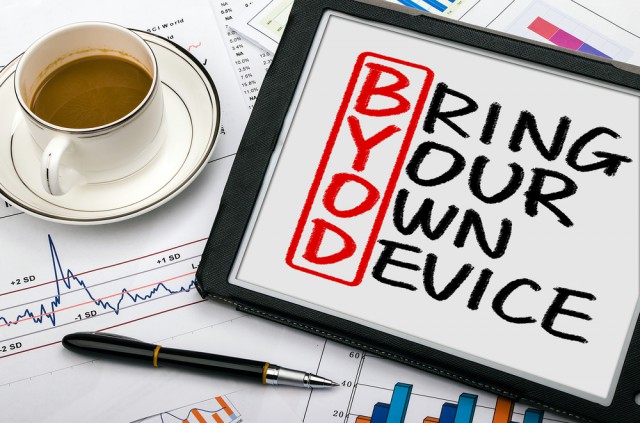
Employees who embrace BYOD feel judged
There is a strange side-effect to the Bring Your Own Device initiative, and one that's slowing it down. Apparently, many employees refrain from bringing their own devices to work for the fear of being judged.
No, not because their devices are old or slow, but because others will think they're using them for personal instead of professional reasons.
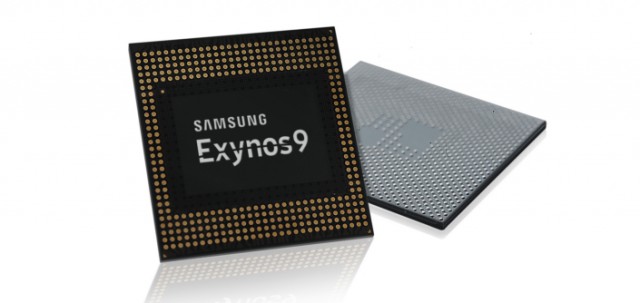
Samsung unveils Exynos 9 Series 8895 flagship processor -- will likely power the Galaxy S8
Samsung started manufacturing new mobile processors using the 10nm FinFET technology last year, but it is not only until today that we learn about its first product to take advantage of it. It's called Exynos 9 Series 8895, and it is the high-end chip likely to power its upcoming flagship, the Galaxy S8.
Being a flagship mobile processor, the Exynos 9 Series 8895 has all the bells and whistles and the performance credentials to match its status. The boost in performance can be attributed to the transition to the 10nm FinFET manufacturing technology, which made way for a 27 percent improvement in terms of performance and a 40 percent decrease in power consumption, compared to the 14nm FinFET process.

Windows 10's strong security will make mobile devices a more attractive target
As enterprises move to Windows 10, and take full advantage of the advanced security features offered in the operating system and in Microsoft Edge, cyber criminals will increasingly look towards the mobile ecosystem for exploits.
This is according to Fujitsu's latest report, which believes 2017 will see an even bigger increase in attacks against the mobile world.

5 things mobile developers need to consider in 2017
Android or iOS? Or both? It’s a question anyone who’s been involved in building a mobile app will have asked. Android is still the major player in the development world, due to the simple fact of the size of the market, but it’s foolish to write anything that’s grown from Apple off.
As with just about every trend in technology, it appears that flexibility and fluidity is the choice route. Here are five things developers will need to consider to stay relevant in 2017 and beyond.

New challenger takes on US inter-carrier mobile messaging duopoly
In the US a duopoly exists between SAP and Syniverse for inter-carrier mobile messaging. Carriers and other communication service providers are forced to choose between these two vendors to exchange messages across networks.
This makes the carriers vulnerable to price hikes and sub-par quality of service. New provider tyntec is seeking to disrupt the market and create more competition with its new Inter Carrier Messaging Service (ICMS).

89 percent of consumers don't pay for mobile malware protection
A new survey reveals that a large majority of mobile users do not currently pay for malware protection. However, 61 percent say they do want, and are willing to pay for, protection services from their service provider.
The study from security solutions company Allot Communications shows that rather than independently seek out, evaluate and download security apps for each of their mobile devices, consumers would like a one-stop-shop for online protection for themselves and their families. This presents communication service providers (CSPs) with an opportunity to sell an extra service, which many of them are not taking advantage of.

Brits will spend €27bn on mobile devices in 2017
This year, the UK will spend more than £27 billion on mobile devices, new figures from VoucherCodes.co.uk and the Center for Retail Research show. This means there will be a 26 percent jump compared to last year.
Consequently, online retail sales will also grow, by 11.5 percent compared to 2016. British shoppers are expected to be quite the spenders this year, spending a total of £1.428.39 per head online. That’s a third higher than the EU average of £1,003.54.

Majority of enterprises use more than 10 mobile business apps
Almost 80 percent of companies are using more than 10 mobile apps for business, according to a new report.
The third edition of the Mobile Security and Risk Review by MobileIron also finds that 18 percent of companies use Apple's Volume Purchase Program (VPP) to streamline their app deployment.
Microsoft teams up with Skycure to fight mobile threats
Cyber threats to enterprises aren't confined to the desktop, mobile systems are at risk too and businesses are looking for solutions that can combine security with ease of management.
Mobile threat defense company Skycure has announced that it's working with Microsoft to integrate its Skycure platform with Microsoft Enterprise Mobility + Security (EMS).

ZTE leads the way in unwanted call protection
Phone spam from robot calling systems is a major issue in the US and around the world, prompting regulators to look at controlling the problem.
Smartphone maker ZTE is taking a proactive approach and teaming up with caller profile service Hiya to integrate caller identification, spam detection and call blocking into its latest Axon 7 handset.

Exploit acquisition program aims to patch mobile vulnerabilities faster
Even after new mobile threats have been identified the number of devices in use means it can take time for patches to be rolled out to all users.
Mobile threat defense company Zimperium is hoping to tackle this problem with the launch of a $1.5 million bounty program to purchase N-day exploits which have been identified but are still usable on unpatched devices.