
Mobile ad-blocking will get out of control in 2017
It wasn’t just the news of Trump and Brexit that dominated headlines in 2016 -- adblocking also remained high on the news agenda after experiencing a roller-coaster year. Murmurs among the industry claimed that 2016 would represent a possible adblocking Armageddon, while the IAB’s CEO and president, Randall Rothenberg, spewed the words of Adblock Plus (ABP) as "extortionists, internet killers, an unethical, immoral, mendacious coven of techie wannabes."
But that wasn’t all. In August, an epic back-and-forth battle between ABP and Facebook kicked-off as we successfully circumvented each new update made by the social media giant to uphold the users’ rights of blocking ads on the desktop version of the site. And if that wasn’t enough, in late November we once again proved that adblocking is 100 percent legal after a sixth court win, this time over German publisher Spiegel Online.

Why advertisers need to wake up to mobile games
Mobile devices are increasingly used for many aspects of our lives and that includes playing games. But what does this mean for enterprises looking to promote their brands?
New research from mobile engagement platform Tapjoy suggests that consumers are twice as likely to say they feel relaxed when playing mobile games than they are when using social apps and that means more potential for advertisers to get their message across.

Businesses not prepared for the risk from mobile and IoT apps
Despite widespread concern about the security of mobile and IoT applications, organizations are ill-prepared for the risks they pose, according to new research.
The study from threat prevention company Arxan Technologies, IBM Security and the Ponemon Institute reveals that 60 percent of respondents believe it’s either certain or likely their organization has experienced a material data breach or cyber attack over the past 12 months that was caused by an insecure mobile app.

Businesses missing out by not engaging customers with SMS
Consumers want to communicate with businesses using SMS according to a new study, but companies are failing to grasp the opportunity this offers.
The research from mobile engagement specialist OpenMarket unveils a missed opportunity for financial service providers, retailers and hospitality companies that don't make use of SMS-powered chatbots to more effectively engage with customers.

Android overtakes iOS in mobile ad revenue
Analysis of data from billions of mobile ad impressions served during the third quarter of 2016 shows that for the first time Android has passed iOS in terms of revenue generated.
The report from real-time advertising platform Smaato shows that based on eCPM (effective cost per thousand impressions) in the third quarter of 2016, Android accounts for 55 percent of global mobile ad revenue generated by publishers compared to 41 percent for iOS, the share of which is eroding.
Social apps dominate mobile activity
Yahoo's mobile analytics arm Flurry has released its State of Mobile report for 2016, looking at mobile app activity and trends from the last year.
Over the last year, Flurry tracked more than 940,000 applications, across 2.1 billion devices, in 3.2 trillion sessions. Compared to 2015 overall app usage grew by 11 percent and time-spent in apps grew by 69 percent.
Apple paid $20 billion to developers in 2016
Apple users tend to spend a lot of money on apps. That much is obvious by looking at how much App Store developers earned last year. Apple puts the figure at a massive $20 billion, which, after taking into account the fact that it takes a 30 percent cut, would mean that the App Store generated -- at least -- $28.5 billion in revenue in 2016.
The actual revenue is likely to be higher -- though not by much -- because Apple also makes money in other ways, like through ads shown in the App Store's search results or Developer Program subscriptions. It just goes to show why so many major developers like it.

A closer look at Qualcomm's new Snapdragon 835 flagship mobile processor
Qualcomm announced the Snapdragon 835 last year, but at the time it did not reveal much about what's new in its latest flagship mobile processor. Today, right before CES 2017 officially kicks off, the US chip maker is giving us more information about improvements it introduces.
We know the basics: the Snapdragon 835 is Qualcomm's first mobile processor built using the 10nm FinFET manufacturing processor, comes with Quick Charge 4, real-time thermal management, and is, as you might expect, faster and more energy-efficient than the previous range-leader, the Snapdragon 821. Now, let's take a closer look at the changes in the new flagship.
Nielsen: Top 10 smartphone apps of 2016 -- Facebook and Google dominate
When it comes to mobile operating systems, apps still reign supreme. To highlight which ones were most popular in 2016, Nielsen conducted a study of Android and iPhone smartphone users.
Not surprisingly, two major players in the mobile space -- Facebook and Google -- lead the pack.
App update prevents users going viral on Instagram by pretending to be in Singapore
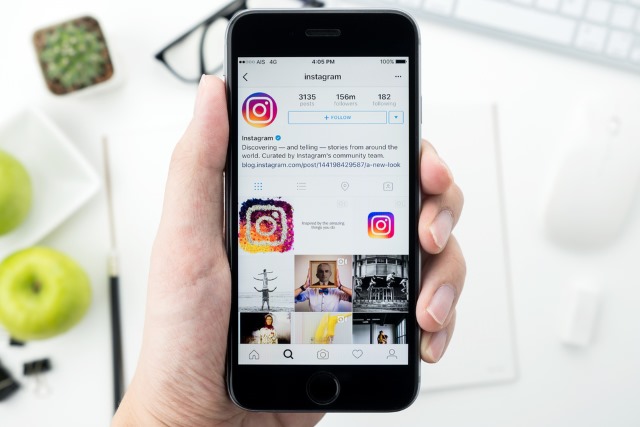
Instagrammers around the world recently discovered a quick and easy way to gain greater attention and increase the likelihood of going viral -- tagging their images as if they were in Singapore.
A flaw in Instagram's algorithms meant that images geotagged on the Malaysian island were more likely to be picked to be featured on the Explore page. Greater publicity equals greater views equals viral status equals win. Or at least it did.

Employees' bad security habits put businesses in danger
Employees have poor security practices and use completely unsecured private devices for work, putting their organizations at huge risk of cyber-attacks, a new report by WinMagic says. After polling workers in the UK, the report says more than four in ten (42 percent) use private devices for work, accessing corporate data and e-mail accounts.
More than half (52 percent) use private accounts, including enterprise file sharing services (EFSS), which they use to either store or access corporate files. Only a third (34 percent) say they had never done so. Laptops, smartphones and USB devices are the top three personal devices used for work, and Hotmail, Gmail and Dropbox are the top three online services used by employees.

Would a Trump administration allow Google to sell Motorola to Lenovo?
I don't want to start an argument about politics. My sentiment this lovely day derives from what the incoming White House is, not what so many people here in California want it to be. I wonder: If Google bought Motorola during a Trump presidency, rather than Obama regime, would later sale to Lenovo be allowed or closing of the Texas phone-assembly factory about 18 months after opening?
The question arises from a pique of sadness as I look at the FedEx tracking information for two Motorola phones purchased directly from Lenovo. City of origin: Wuhan, China. My last Moto came from the Lone Star State, here in the USA. I pine for what might have been, remembering my excitement about Google's $12.5 billion Motorola Mobility acquisition, in August 2011. My opinion expressed then remains: "The acquisition is bold for its risks, which are no less great than the benefits". I was no fan of the later sale to Lenovo.

Optimizing your website for Google's mobile-first index
Google have begun rolling out their new mobile-first index. This update will prioritize the mobile version of your website for its ranking signals, falling back on the desktop version when there is no mobile content. In short, this means Google will create and rank its search listings based on the mobile version of content (even for listings that are shown to desktop users).
If you have neglected mobile SEO in the past, it’s now more important than ever that you up your game. Here are 10 tips to future-proof your website, and make sure it succeeds in the new mobile-first index.

Consumers ignore security risks and turn to mobile for their holiday shopping
Mobile is expected to be the most popular online shopping route this holiday season with 71 percent planning to use it.
Next-generation mobile security company Trustlook has carried out a survey of Android users to dig deeper into the expected mobile shopping behaviors for the 2016 holiday season.

The UK government's latest deluded idea: 'banning' underage sexting on social media
When the UK government is not busy looking for ways to invade internet users' privacy, it's looking for ways to restrict what they are able to do online -- particularly when it comes to things of a sexual nature.
The health secretary Jeremy Hunt has made calls for technology companies and social media to do more to tackle the problems of cyberbullying, online intimidation and -- rather specifically -- under-18-year-olds texting sexually explicit images. Of course, he doesn't have the slightest idea about how to go about tackling these problems, but he has expressed his concern so that, in conjunction with passing this buck to tech companies, should be enough, right?