Peephole attack could leave more than a billion Android devices open to clickjacking
Earlier this year we reported on the risk Android devices faced from a technique called Accessibility Clickjacking which would allow attackers to monitor all of a user's activity.
At the time of that story the company that uncovered the vulnerability, Skycure, thought that it could affect around half a billion devices. It now believes that despite additional protection being added from Android Lollipop, more than a billion devices may be at risk.

Android devices suffer higher failure rates than iOS
People have become increasingly reliant on smartphones and as a result they have become less tolerant of poor performance and device problems.
Blancco Technology Group has released a report based on the latest results from its SmartChk diagnostic platform, showing higher failure rates in Android devices than in iOS ones, and revealing some interesting trends.

Brands are not ready to meet consumer mobile expectations
New research shows that a majority of brands are unprepared when it comes to implementing a mobile strategy and aren't allocating enough resources to improve the mobile experience to meet consumer expectations.
The study by experience management software company Sitecore shows that although 97 percent of brands believe a good mobile experience impacts customer loyalty, 41 percent of respondents have either no mobile strategy in place at all, or have a mobile strategy that has yet to be implemented. In addition, 70 percent of these brands believe that their organization will not deliver on a mobile experience strategy for at least another six months.
Facebook's mobile ads boosting revenue
Facebook has put other tech giants to shame by comfortably beating analyst expectations in the last quarter, with revenues over 50 percent up thanks to surging mobile advertising sales.
As mobile web browsing continues to grow throughout the world, advertisers are realizing that taking a mobile-first approach has the potential to be extremely lucrative. Facebook has looked to capitalize on this by improving its mobile app and expanding its live video solution, both of which have attracted advertisers.

More apps and websites leak credit card data on enterprise handsets
In its latest quarterly Mobile Data Report, Wandera has revealed a significant rise in apps leaking credit card data on enterprise mobile devices.
The company, which specializes in mobile data security and management, compiled the report by analyzing the data usage trends and traffic patterns across its global network of enterprise mobile devices. Between Q4 2015 and Q1 2016, there has been a 17 percent increase in apps and mobile websites leaking credit card data.

Merchants are not security savvy
More than a third (38.5 percent) of merchants don’t even know what type of risks new technologies such as mCommerce bring. They most likely wouldn’t recognize a fraud threat even if they were right in the middle of it.
Those are the conclusions written in the new 2016 Mobile Payments & Fraud Survey, released by Kount. The figures are quite a surprise, knowing that mobile fraud increased by 81 percent between 2011 and 2015.
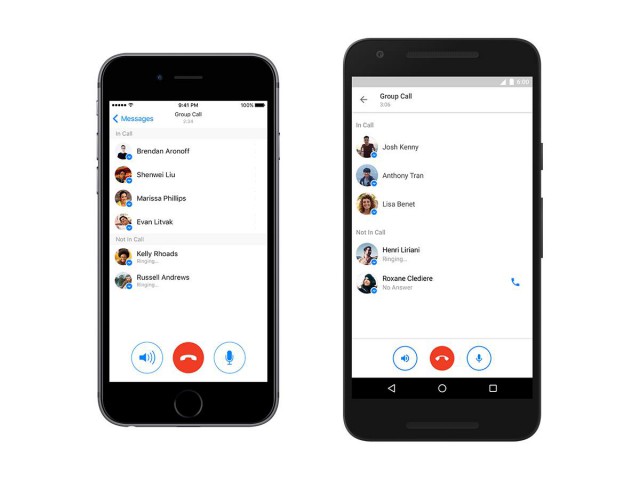
Facebook Messenger adds group calling
Facebook Messenger is one of the most popular messaging services today, boasting over 900 million monthly active users. However, since competition in this market is increasingly fierce, to maintain momentum the social network has to keep improving its service.
Earlier this month, at its F8 developer conference, Facebook announced support for chat bots with the purpose of enabling businesses to deliver better customer support, and now it is rolling out group calling to Messenger users across the globe.
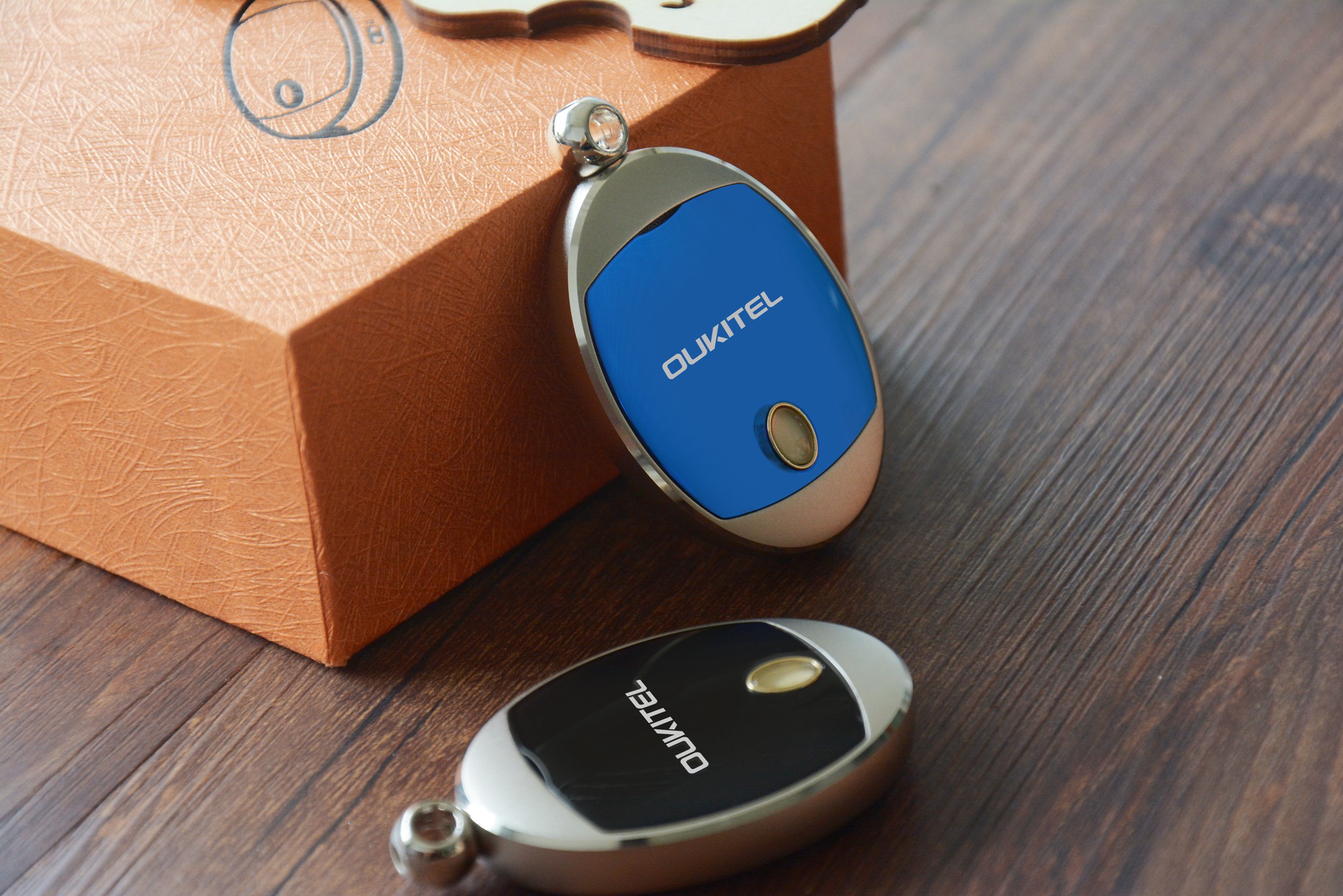
Jewelery meets gadgetry in the Oukitel A8
Bluetooth tracking devices to help stop you forgetting your phone have been around for a while, but they've generally been quite functional in design, looking like a remote car key.
Chinese smartphone maker Oukitel is launching its own take on the lost phone finder with a new gadget that looks like a piece of jewelry but also functions as more than just an alarm to tell you you've left your phone behind.

Why it's vital for retailers to have a mobile strategy [Q&A]
We already know that having a mobile friendly site is important to search rankings, and with Google's announcement in March that it will start to rank mobile-ready sites even higher, companies are likely to focus even more on the mobile experience.
It's particularly important for retailers to connect with millennial shoppers who are more likely to research or buy using their mobile devices. We spoke to Aaron Shook, executive software architect of digital transformation specialist PointSource, to find out why a mobile strategy and good design are key to success.

Behavior ID strengthens mobile and web security
Whether it's down to stolen credentials, weak passwords or bot-based attacks, the threat of an account takeover is one of the major worries for most users.
Mobile identity company TeleSign is launching Behavior ID, a new offering that enables web and mobile applications to measure and analyze a user's behavioral patterns to provide continuous authentication, even after the user has been verified with traditional security measures like passwords.

The right PC can improve job satisfaction
Do you want satisfied workers? Give them a well-designed PC, a good and secure mobile device, and let them work when they want to, where they want to. Those are, in a nutshell, the results of a new research by Redshift Research, which had polled 1,016 people, across France, Germany, the UK, Italy, Netherlands, Spain and Switzerland.
For 90 percent of IT decision makers, device security is a current concern, because in the last 12 months, a quarter of Europe’s businesses have been breached. That has resulted in less than a third (32 percent) being completely confident in the level of security offered by their current devices.

New study finds strong demand for service-based messages
Over the last few years consumers have increasingly come to expect to receive messages keeping them up to date with appointments and transactions.
Mobile marketing company Vibes has announced the results of a study of over 1,000 people which finds that mobile phones are the number one preferred device for service-based messages with 70 percent preferring to receive service-based messages this way.

Smartphone sales to reach 1.5 billion units in 2016
Now that Gartner has released its smartphone sales forecast for 2016, it is easy to understand why Microsoft is not pushing the Windows Phone agenda at Build 2016. With sales expected to reach 1.5 billion units this year, the software giant and its fellow Windows Phone vendors would have to ship hundreds of millions of handsets for the platform to be taken seriously by developers. And that, as you may be well aware of, is unlikely to happen, when just last year the tiled operating system's market share barely passed the one percent mark.
Gartner says that smartphone sales growth will be in the single digits for the first time this year, with an expected increase of just seven percent over 2015. The phone market as a whole could reach 1.9 billion units at the end of the year.
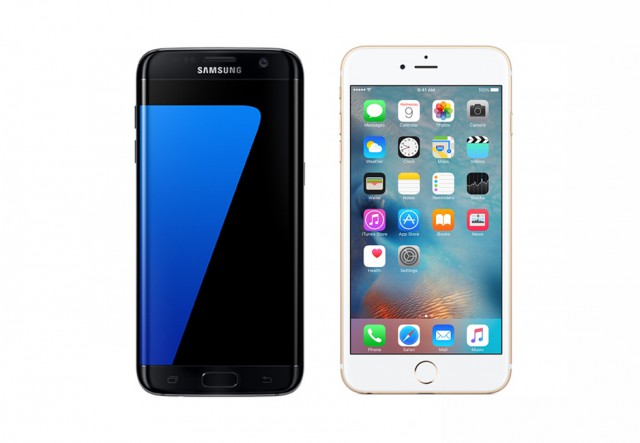
iOS 9.3 is more stable than Android 6.0 Marshmallow
Every major iOS release seems to come with some annoying bugs these days. In the case of iOS 9.3, users have reported crippling activation errors and crashes and hangs in some of the built-in apps, leading Apple to release updated builds. However, despite these problems, iOS 9.3 seems to be very reliable.
According to a new report by Apteligent, iOS 9.3 is actually the most stable iOS release since iOS 8. Its crash rate stands at 2.2 percent, besting iOS 9.2, iOS 9.1, iOS 9 and iOS 8 over an eight-day period. Not only that, but iOS 9.3 is also claimed to be more stable than Android 6.0 Marshmallow.
The biggest barriers to adopting BYOD
Thanks to the benefits that it offers in terms of productivity and employee satisfaction, BYOD remains a popular option for many companies and the market is predicted to be worth $360 billion by 2020.
But a new report from Crowd Research Partners in conjunction with some leading data security vendors -- including Bitglass, Blancco Technology Group, Check Point Technologies, Skycure, SnoopWall and Tenable Network Security --provides a conflicting portrayal of BYOD security barriers and adoption trends in the workplace.