
IT budgets will mostly go towards buying mobile devices, security
IT budgets for businesses in the US will be mostly spent on security, and mobile devices allowing employees remote working, a new survey has shown.
According to a new survey by Wakefield, 30 percent of US businesses will spend most of their IT budgets on network and data security, and 28 percent will spend it on mobile devices allowing employees to work remotely.

The importance of in-store mobile technology
Over the last decade we’ve seen a significant increase in mobile technology and it is now becoming the heart of customer experience; forcing retailers to figure out how the digital and physical relationships can work together.
Retailers must now decide whether to equip their personnel with mobile devices, introduce more self-service kiosks or expand mobile technology even further; all in the aid of delivering a personalized approach and improving the in-store experience for shoppers.
The dangers of using public Wi-Fi hotspots
There are hundreds of thousands of free public Wi-Fi spots throughout the UK. Widespread connectivity and free accessibility are two appealing features that tempt users to open up their devices for on-the-go convenience.
However, uncontrolled access to public Wi-Fi hotspots and robust mobile security often conflict with one another. Cyber-criminals now find it increasingly easy to attack public Wi-Fi networks using Man-in-the-Middle (MitM) techniques which allow the attacker to clearly view all information transmitted across networks.

You might want to hold off on upgrading to iOS 9.3, OS X 10.11.4 El Capitan [Update]
Apple earlier this week released new versions of its mobile and Mac operating systems, namely iOS 9.3 and OS X 10.11.4 El Capitan. They come with a significant number of changes, like Night Shift mode, extended Wi-Fi calling support and lots of security fixes, but also introduce bugs which are causing major issues for some early adopters.
It is not unheard of a new iOS or OS X release to break things, as Apple seems to be dealing with these kind of things quite frequently nowadays. Not everyone may be affected, but if you have an iPad 2 or use Apple's messaging services often on your Mac you might want to hold off on performing the upgrade.
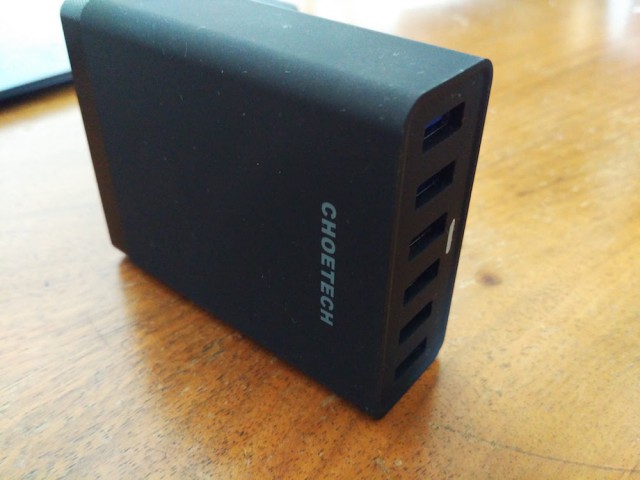
Choetech 6 port USB charger: The quick way to charge multiple devices [Review]
Having multiple mobile devices is great. Charging them? Not so much. If you need to top the battery on a few smartphones and tablets at the same time, you are going to need as many wall chargers to be plugged in. But there is a better way -- enter the multiport USB charger.
A multiport USB charger can allow you to charge a significant number of handsets simultaneously, freeing up sockets in the process. I have been using Choetech's six-port USB charger for the past couple of weeks to find out how good it is and, ultimately, whether it's worth buying.

Ads are eating your mobile data allowance
A new study has revealed that ads on smartphones account for between 18 and 79 percent of downloaded data. The astonishing statistic gives mobile users another reason to despise ads on top of the annoyance, security and privacy concerns they already bring about.
With most mobile users having to stick to a monthly allowance, the suggestion is that it's time for mobile pages to go on a diet. The research carried out by Ender Analysis also found that JavaScript accounted for between 6 and 68 percent of downloaded data.
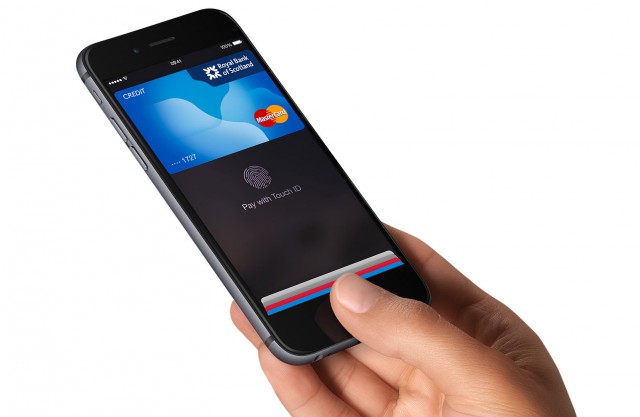
Explaining the struggles of Apple Pay and mobile payments
Apple Pay was introduced 18 months ago to rave reviews from the press and technology analysts. It was billed as an example of "mobile payments done right" -- simple, intuitive and painless. And yet, its impact has been muted at best, even in key western markets. According to a recent survey, 80 percent of iPhone 6 users had never used the service and just 3 percent used it regularly. Customer satisfaction among Apple Pay users remains high, but word-of-mouth appears to have had no impact on adoption. What is the cause of this divergence?
Looking at these figures, it appears that Apple Pay is struggling to "cross the chasm" between early adopters and mainstream consumers. Early adopters genuinely looking for a mobile payment solution would have no doubt been delighted by Apple Pay's implementation. However, most "normals" aren't specifically looking for a mobile payment solution. Any substitute to existing payment solutions has to be superior enough to existing offerings to break long established habits (in this case, pulling out a credit card). And it is here that Apple Pay, and mobile payment solutions in general, face a key challenge.

Businesses struggle to provide unified communications for remote workers
Unified communications are becoming increasingly critical for businesses, with 83 percent of organizations expecting the number of remote workers they have to increase in the coming year.
But findings from a new survey by Dell of professionals responsible for managing UC platforms show that 95 percent of respondents face challenges in delivering a quality UC service to their remote workers.

There are now over 1 billion 4G LTE users
LTE networks are growing in popularity, a new report by 4G-Reports suggests. Not only has the number of users surpassed one billion, but the number of networks also seems to be growing, while prices are declining, quite rapidly.
According to the Global LTE Pricing Tariff Tracker for Q4 2015, total number of users reached 1.05 billion. Unsurprisingly China, the US and Japan account for almost two-thirds of all subscribers.
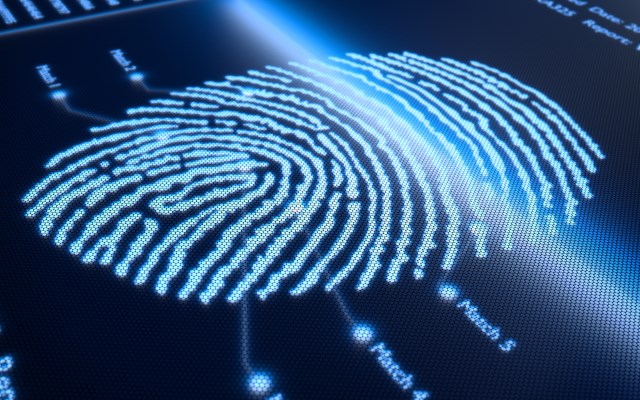
A printed fingerprint can fool your expensive smartphone
You could, quite easily, pull off a McGyver on a Samsung Galaxy S6 or a Huawei Honor 7 phone. Security researchers have discovered a way to trick these two phones and unlock them through the fingerprint scanner, using an inkjet printer, a few drops of conductive ink and special paper usually used for printing electronic circuits.
Here’s what they did: they took scans of a couple of fingers, and just printed them, in two dimensions, on paper using conducive ink, which conducts a charge. They printed it on special paper used for printing electronic circuits and other charge-carrying systems. Pressing the prints against the fingerprint scanner managed to unlock the two phones.

Android Lollipop now reigns supreme, surpasses KitKat
The adoption of new Android distributions rises at a glacial pace so you should not expect the latest -- and, arguably, the greatest -- of the bunch to gain traction quickly. In fact, up until this month, the landscape was dominated by KitKat, which is now two and a half years old, and not Marshmallow, which Google introduced last October.
However, going into March, things have changed. KitKat no longer reigns supreme, as Google reveals that Lollipop is now finally running on more devices than its older brother. The usage share difference is relatively small, however, suggesting that it may take a while before KitKat will be as irrelevant as, say, Ice Cream Sandwich.

Plan your next vacation with 'Destinations on Google'
One of my favorite things to do each year is go on a cruise. Since I am not wealthy, it is a great way to take a vacation without breaking the bank. While the trip itself is great, knowing that a holiday is on the horizon keeps me happy and motivated to work hard during the rest of the year -- a light at the end of a tunnel, if you will.
Planning a cruise can be simple, but more in-depth vacations can be much more difficult. Deciding on travel, hotels, rental cars, food, and more can be dizzying. Luckily, the always-helpful Google wants to make your vacation-planning easier. If you want to make your plans using a mobile device, the all-new 'Destinations on Google' should make you very happy.

FBI should break Apple's encryption and keep it a secret
At the end of last month, Apple released a letter to its customers protesting about a US court order that could force the company to give the FBI a back door entry to individual iPhones. The case has brought the debate about government access to personal data and the protection of civil liberties to the fore once again. It has also made society and industry look more closely at the mechanics of data encryption and ask what makes the technology effective.
At its most basic, encryption provides a layer of protection for data at every stage of its journey from sender to recipient. If anyone tries to intercept or access the data without permission, they find themselves with a screen full of unintelligible gobbledygook. But encryption is only strong if there are no weak links in the chain. Apple argues that the FBI’s court order requesting a back door into its OS (Operating System) would force the company to create such a weak link in its encryption. This would undoubtedly speed up investigations of high profile crimes, but would come at high cost to the millions of law abiding iPhone users.
New WordPress plugin lets anyone create Facebook Instant Articles
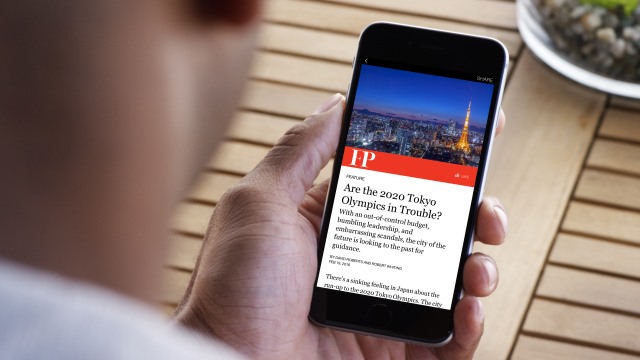
Facebook's biggest news recently has been the global roll out of Reactions. But bubbling away in the background over recent weeks have been changes to the Instant Article program. Initially made available only to larger publishers, Facebook Instant Articles help to improve user-engagement by providing articles that load internally up to ten times faster than linking to external sites.
Facebook then announced that Instant Articles would be made available to publishers of all sizes, and today a WordPress plugin has been launched that means any blogger can take advantage of the feature. The partnership between Facebook and Automattic opens up Instant Articles to millions of users.
Choetech Choe Qi is an affordable fast wireless charging pad [Review]
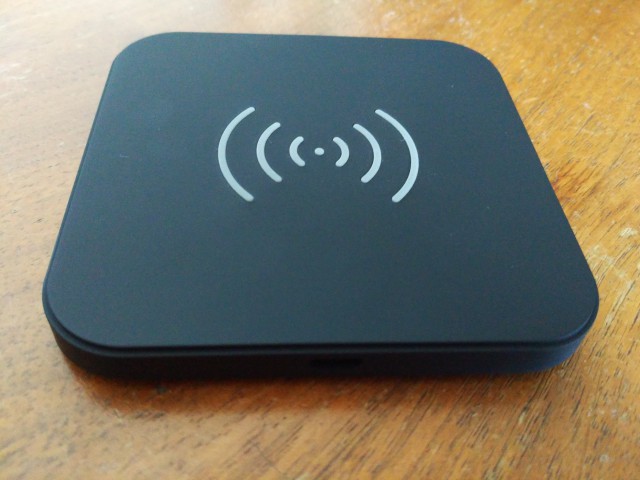
Wireless charging is one of the nicest and most convenient features added on smartphones in the past couple of years. Increasingly seen on mid-range and high-end offerings, it enables devices to charge simply by resting on a small pad. After experiencing the benefits, you will not want to go back to using a wall charger and cable again.
It is not enough to have a smartphone that offers this feature, as you also need a compatible pad to wirelessly charge it. A very interesting proposition is Choetech's Choe Qi, which offers fast wireless charging at an attractive price point. I have been using it for a few weeks to find out whether it's worth buying, and here are my impressions.