
Some people are fine with using a phone in church, but not walking down the street
The thing with a mobile phone is, thanks to the fact it is mobile, it can be used -- just about - anywhere. But just because something is possible, it doesn’t mean that it should be done. PewResearch conducted a survey into phone etiquette, and the findings show that people are somewhat divided about where and when it is OK to use a phone.
Some of the results are not exactly surprising. A huge majority of those questioned were not cool with the idea of using a phone in a movie theater or during a meeting (95 and 94 percent respectively). But there are also some interesting quirks in attitudes to mobiles -- 4 percent of people, for instance, see no problem with using a cellphone in the middle of a church service.
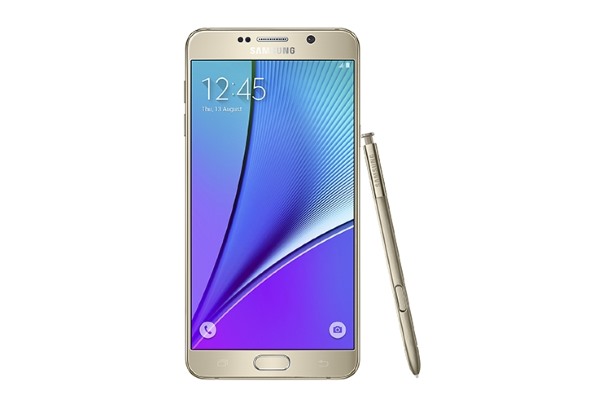
Samsung is giving away paid apps and magazine subscriptions with Note 5 and S6 Edge+
The retail price of the Galaxy Note 5 starts at around $740 (off-contract) and $250 (2-year contract). Similarly, the Samsung Galaxy Edge+ will set you back by at least $820 (sans contract) and $300 (2-year contract). If that seems like a lot of money to you for the said devices, Samsung is offering an interesting set of goodies -- called Galaxy Gifts -- to offset the otherwise a bit pricey label.
The company is giving away a package of premium apps and subscriptions consisting of paid games including Hearthstone: Heroes of Warcraft, Driver Speedboat Paradise, PES Club Manager, and Empire: Four Kingdoms. You also get paid apps like Art Rage, Komoot, and Sketch Book for no extra charge. Worth pointing out that some of these are already free via the Play Store, and the company is taking care of in-app purchases, in such cases.

Opera Max can now compress Netflix and YouTube videos, lowering data consumption
Video streaming is one of the quickest ways to max out a data plan. This is especially true for high-definition videos, which are the commonplace on websites like Netflix and YouTube and, understandably, the obvious quality choice for many mobile viewers. Since not everyone can afford or have the option to use an unlimited data plan, we often have to sacrifice how much content we watch to not pass the traffic limit.
However, an update to Opera Max for Android promises to let us watch more videos without sacrificing much in terms of quality. The app can achieve such results through compression, and the feature is now enabled for Netflix and YouTube.
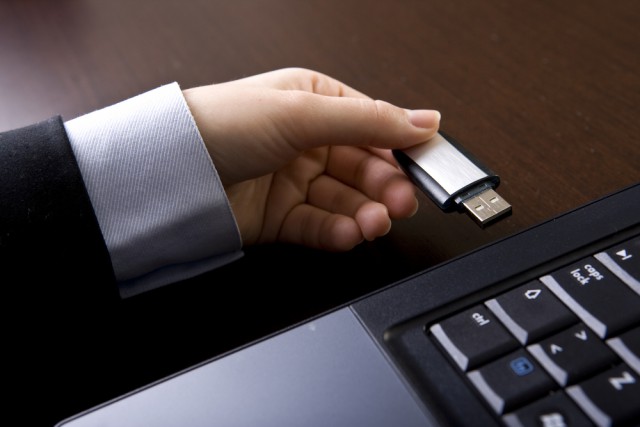
How connectivity affects hardware design [Infographic]
Connectivity has changed dramatically over the last 30 years or so, as devices have become smaller and more powerful and we as a species have become more mobile.
To chart this change, Bluepost Digital has created an infographic of the devices we used to know and love, starting all the way back in the 1980s. At this time, Floppy Disks were used to store files, computer screens were introduced by IBM and an external CD ROM drive cost around $1,000 (£6420.
Half of all Internet users are on Facebook
Approximately half of the world’s online population accesses Facebook on a monthly basis, the social media giant has reported.
By the end of Q2 2015, 1.49 billion people accessed the website at least once in a month, up 13 percent from the same period last year and representing half of the estimated global online population of 3 billion, Facebook said.

Angry Birds 2 launches for mobile gamers
Today marked a major milestone for mobile gaming studio Rovio. The Finland-based company is releasing it's latest version of the Angry Birds, this one aptly named Angry Birds 2. It follows up on the success of many predecessors, from the original to Space, Star Wars and more.
Like all previous versions, it's the tried and true "birds versus pigs" formula. There are a few strange things about it. For one, early levels are intent on telling you where to aim. For another, some levels force you to choose a different bird, You have no choice -- you can't fire until you've done it.
How shadow IT threatens the enterprise and what to do about it
Increasing adoption of BYOD and use of mobile devices means that employees have the ability to access business data from anywhere. However, this can come into conflict with company security policy.
Policies are often seen as too invasive, hard to understand and not always in tune with how employees work. This can lead to workers finding their own alternative solutions. Companies need to come up with strategies that safeguard data in use, in transit and at rest to let employees focus on their work.
TeleSign SDK streamlines verification on mobiles
Many of the latest cyber attacks focus on mobile platforms as they're often seen as inherently less secure, particularly when handling account logins and important transactions.
Mobile identity solutions company TeleSign is today launching its TeleSign Auto Verify, a new lightweight software development kit (SDK) for mobile app developers that streamlines the account verification process while providing a more reliable and cost-effective method than SMS-based verification alone.

Which US airports offer the best mobile data coverage?
With hundreds of millions of passengers passing through US airports every year, mobile networks often struggle to keep up with demand, which can result in poor and unreliable data performance.
Twice a year, RootMetrics tests mobile coverage at the 50 busiest airports in the US, using off-the-shelf smartphones to measure performance at all the places where passengers are most likely to use their phones. The latest US Airport Network Performance Review, which covers the first half of 2015, features some surprising results, including one of the busiest US airports ranking at the top and another major US airport landing near the very bottom.
Financial services companies turn to mobile messaging
With financial services companies more at risk from the consequences of a data breach than other businesses, they're on the look out for the safest, most secure communication channels to interact with customers and employees.
New research from IDC and mobile engagement specialist OpenMarket reveals that mobile messaging is the top tool many are utilizing to accomplish this task with 80 percent of global financial services organizations using Global SMS/mobile messaging to communicate and share sensitive info.
A short history of text messaging
The text message has become such a key part of our modern lives that it's hard to believe that the concept behind it dates back 31 years. Email to SMS gateway service Neon SMS has produced an infographic tracking how SMS has evolved.
The first text message was sent in 1992, although it had to be from a PC because it was the following year before Nokia introduced the first SMS-enabled phone. In 1997 the Finnish company produced the 9000i Communicator, the first mobile phone to feature a full keyboard.
Wi-Fi Aware could be what the Internet of Things has been waiting for
The Internet of Things -- or IoT if you will -- is much more than just a buzzword. It's also much more than 'the next big thing'; it could be fundamental to the future of technology and how we interact with it. When we talk about the Internet of Things, we tend to do so in reference to the home and business -- but there is more to it than that.
There's a lot to consider when it comes to working with data gathered by various sensors built into smart devices, and the most recent game-changer has been unveiled by the Wi-Fi Alliance. Wi-Fi Aware certification has just been opened up with a view to enabling the creation of smart devices that can wirelessly exchange data directly, react to location, and discover other devices. This, rather than a connected fridge or oven, is what is exciting about the Internet of Things.

A VMI strategy is the optimum solution for BYOD adopters
In the BYOD era, enterprises are searching for the optimum mobile work environment -- one that will strike the right balance between security and user needs.
The enterprise’s goal is to achieve the highest level of security. Employees, on the other hand, want the simple, fun user experience they get as consumers. A Virtual Mobile Infrastructure (VMI) strategy can be the ideal solution.

How personal devices are changing the American workplace
We're all familiar with the idea of BYOD and allowing employees to use their own devices for work. But how much impact is it having out in the real world workplace?
Workspace as a service provider Workspot has produced an infographic based on a survey of 500 US workers sheds some interesting light on things. High numbers of Americans are using their own devices for work, with 64 percent admitting that they sometimes do so. Those that do use their own devices do so for between 10 and 30 percent of the work day.
How mobile access is changing the Internet
Mobile Internet doesn't just liberate us from the constraints of a wired connection, it offers hundreds of millions around the world their only, or primary, means of getting online.
The latest Global Internet report from the Internet Society focuses on mobile usage and how it has changed, and is changing, the way we use the Web.