
Government websites top the charts for online trust
The Internet Society's Online Trust Alliance (OTA), which identifies and promotes online security and privacy best practices, announced today the results of its latest Online Trust Audit and Honor Roll.
The Audit finds that 70 percent of analyzed websites qualified for the Honor Roll, the highest proportion ever, and up from 52 percent in 2017, driven primarily by improvements in email authentication and session encryption.
Mozilla criticizes Apple's iPhone privacy claims, launches online petition
Apple is one of the most privacy-focused tech companies. It has consistently protected its users, going so far as to defy the US Government by refusing to unlock an iPhone for the FBI. Conversely, Google makes a lot of its money from advertising and tracking users, while Microsoft has extreme telemetry in Windows 10.
And that's why it is so surprising that Mozilla -- another privacy-focused organization -- is criticizing Apple. You see, the Firefox-maker is calling out Apple for allowing advertisers to track iPhone users. Mozilla is going so far as to launch a petition, hoping to get Apple to change an important iPhone default setting.

Beta and nightly builds of Firefox now protect against fingerprinting and cryptomining
Mozilla has added new protective features to the nightly and beta versions of Firefox. Through a partnership with Disconnect, the browser is now able to block cryptocurrency mining and fingerprinting scripts.
The new features mean that users are protected against scripts that can be used to track them online, as well as those that use CPU cycles to mine for cryptocurrency. Mozilla says it is part of its mission to protect people from "threats and annoyances on the web".

Facebook updates its terms and conditions in Europe to clarify personal data usage
Facebook has faced numerous battles and controversies around the world, but the social networking giant has come under particular fire from Europe. Today, in response to concerns raised by the European Commission, Facebook has agreed to update its terms and conditions in the EU to make it clear to users how their personal data is used.
The new terms clarify how user data is shared with third parties, and how it can be used to target advertising. They also explain how users can close their accounts if they want, and detail reasons for which accounts can be disabled.
Data of 540 million Facebook users exposed in latest privacy cock-up
It is only a couple of weeks since we learned that Facebook has been storing user passwords in searchable plain text, and now there is -- yet another -- privacy scandal. This time, the private data of over half a billion Facebook users was left exposed on publicly-accessible Amazon servers.
Security firm UpGuard discovered that the private data of 540 million Facebook users was exposed in Amazon Web Services S3 buckets. Now removed, the data included identification numbers, comments, reactions and account names. In some instances, names, passwords and email addresses were also exposed.

Companies overconfident in management of sensitive data
A new study into how enterprises manage sensitive data reveals overconfidence in knowing where private data resides, and the use of inadequate tools such as spreadsheets to track it.
The research from Integris Software shows 40 percent are 'very' or 'extremely' confident in knowing exactly where sensitive data resides, despite only taking inventory once a year or less. Yet a mere 17 percent of respondents are able to access sensitive data across five common data source types.

Taxpayers worry about online fraud but offline habits could be putting them at risk
As we approach the tax return season, a survey from document destruction and information security company Shred-It reveals that 38 percent of US taxpayers say they are worried they will become a victim of tax fraud or tax identity theft.
Yet according to the study 45 percent admit to storing tax paperwork in a box, desk drawer or unlocked cabinet at home or work. What's more, 19 percent admit they don't shred tax paperwork or physical documents containing sensitive information before throwing them away.

Cloudflare announces free VPN service, Warp, to complement its 1.1.1.1 DNS resolver
Online privacy has become such a concern that VPN tools -- once used only by technology experts -- have now started to become far more mainstream. Android users can take advantage of Opera's built-in VPN, and there are many other services to choose from.
Adding to this list, Cloudflare has announced a new free VPN service called Warp. It will become part of the company's existing privacy-focused 1.1.1.1 DNS resolver, and just as 1.1.1.1 was designed to simplify using a DNS tool, so Warp is being billed as a "VPN for people who don't know what V.P.N. stands for".

Mark Zuckerberg's calls for internet regulation are just an attempt to shift the blame from Facebook
Over the weekend, Mark Zuckerberg set out what he described as "four ideas to regulate the internet". Were these ideas put forth by someone else, it might be possible to refer to this as an impassioned plea -- but this is Zuckerberg we're talking about.
He suggests GDPR-style privacy regulation in the US. He wants more control of hate speech. He believes more needs to be done about political advertising, particularly around the time of elections. And he likes the idea of data portability. These are reasonable ideas and -- importantly -- there is nothing to stop Facebook from implementing them now. To lead the way. There is no need to call for, or wait for, legislation.
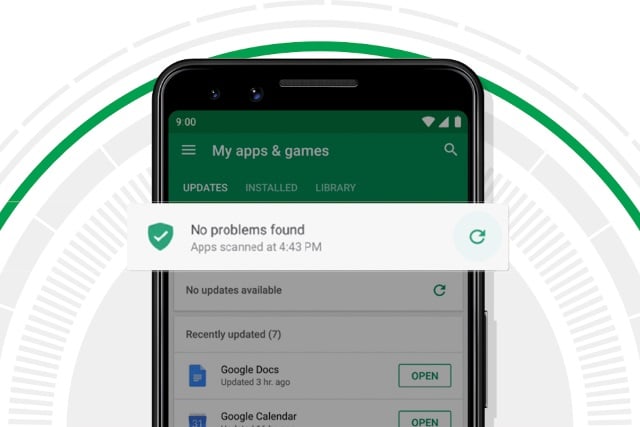
Google publishes its Android Security & Privacy 2018 Year in Review
Google has published its fifth Android Security & Privacy Year in Review, this time looking back at 2018. While the report draws attention to some of the security and privacy improvements the company has made, it is not just about Google blowing its own trumpet.
The report shows that payouts made through Google rewards programs -- payments made to outside researchers and individuals for bringing security issues to the company's attention -- reached $3 million in 2018. Google also says that in the fourth quarter of the year, 84 percent more devices received a security update than in the same quarter in 2017.

Russia orders NordVPN, ExpressVPN, HideMyAss and other VPNs to block numerous sites
VPNs are frequently used by people to increase security, improve privacy, to browse the internet as if in another country, and to bypass restrictions put in place by ISPs and governments. Aware of this, authorities in Russia have ordered ten big-name VPNs to block access to various sites banned in the country.
Among those to have been contacted by the authorities are NordVPN, ExpressVPN, IPVanish, HideMyAss and TorGuard. At least one of these VPN providers has decided to pull out of Russia.

Privacy for the win! Startpage.com defeats Google and Bing to become best search engine
Google may be the world's most popular search engine, but that doesn't necessarily mean it is the best. Don't forget, Google is notorious for tracking users and logging search activity. Not to mention, there are many other search engines out there, such as Microsoft's Bing, Yahoo, and DuckDuckGo to name a few.
Believe it or not, a lesser-known search engine, Startpage.com, has defeated Google (and all others) to become the search champion! You see, following an in-depth investigation, German organization "Stiftung Warentest" has declared the search engine to be the best. Not familiar with that organization? Please know, it is similar to Consumer Reports in the USA. So yeah, this is a big deal. And yes, Startpage.com also defeated fellow privacy-focused search engine DuckDuckGo.
More than half of internet users think complete digital privacy is impossible
According to a report from Kaspersky Lab, 56 percent of internet users feel that complete privacy in the modern digital world is impossible.
For many people, their worries about digital privacy may come from personal experience. Kaspersky's research finds that 26 percent of people have had their private data accessed by someone without their consent, rising to almost a third (31 percent) among 16- to 24-year-olds.

Panic Button secures data -- by destroying it
One of the biggest worries about someone gaining unauthorized access to your computer is that they can view and steal your data.
The CyberYozh security group has launched a product that protects your sensitive files, browser data and more, by taking the nuclear option of destroying it.

Opera for Android now includes a free and unlimited VPN
Opera has added a free VPN service to the Android version of its mobile web browser. Opera 51's newly-added VPN is not only free from charges, it is also free from limitations.
The feature has been added as the Norwegian software developer seeks to improve the security and privacy of web browsing for its users. The company says that it "marks a new standard for privacy and security in mobile browsing".