
Popular business apps come with major security risks
The security firm Wandera SmartWire Labs has released a new report detailing how many popular business apps used by large enterprises leak data and present a multitude of security risks.
The company assessed the threats that exist on popular business apps and how they could be potentially damaging to large companies in Europe, the US and Asia. Wandera’s report was able to shed light on 10 apps, widely used by enterprise employees, that failed to employ secure data storage and protect information that could personally identify users.

Mozilla asks the FBI for details of Tor vulnerability that could also affect Firefox
Mozilla is fighting to force the FBI to disclose details of a vulnerability in the Tor web browser. The company fears that the same vulnerability could affect Firefox, and wants to have a chance to patch it before details are made public.
The vulnerability was exploited by FBI agents to home in on a teacher who was accessing child pornography. Using a "network investigative technique", the FBI was able to identify the man from Vancouver, but Mozilla is concerned that it could also be used by bad actors.

New solution targets threats to containerized apps
Running applications in containers is increasingly popular, but whilst it offers benefits in terms of the flexibility to run apps anywhere, it raises fresh challenges for keeping them secure.
A new set of automated capabilities that defend against active threats targeting container environments is being launched by security solutions company Twistlock. Twistlock Runtime is fully automated and designed to detect and stop sophisticated runtime attacks -- including APTs and zero-day exploits.
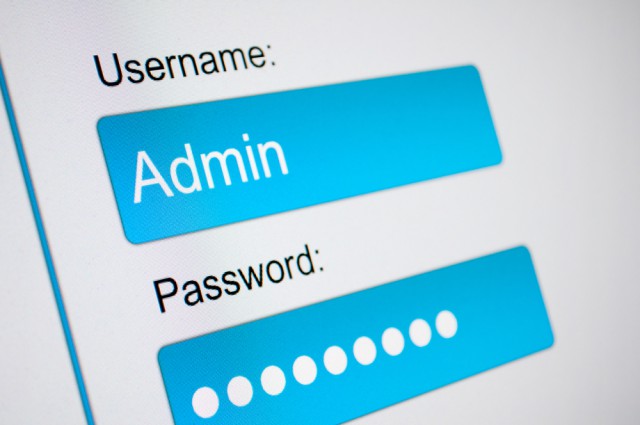
Why changing your password is never enough
It’s become more common than not in recent years to experience a security breach -- whether it’s your company records or your personal social media accounts, data on the web today is not as safe as it once was.
Often, people think that because their personal information is protected with a strong password, it’s enough to ward off hackers and cybercriminals. This, however, couldn’t be further from the truth. Let’s learn why.

New Webroot solution uses threat intelligence to secure IoT gateways
As the Internet of Things takes off, gateways are increasingly being used to connect legacy and next generation devices, but they often don't have the security features to protect critical infrastructure.
Endpoint security specialist Webroot is launching a new threat intelligence solution for IoT gateways to secure them against advanced and persistent network based threats.

90 percent of financial services IT security pros fear security breaches
A new survey of IT security professionals working in the financial services sector reveals that 90 percent feel vulnerable to security breaches and 44 percent have actually experienced one -- 19 percent in the last year.
These findings come from enterprise data protection specialist Vormetric which, in conjunction with 451 Research, has issued a financial services edition of its 2016 Data Threat Report.

Businesses open to hiring ex-hackers to beef up security
The Hollywood scenario where people hire ex criminals to do their bidding, as no one else seems to have the necessary skills, has been replicated in real life, according to a new report by cyber-security service provider SecureData.
SecureData says more than a third of businesses (34 percent) would have no problems hiring an ex hacker to compensate for the lack of in-house cyber-security skills. I just wonder how you classify someone as an "ex hacker".

Most enterprise Windows environments are not secure enough
A new survey, from the real-time IT management company ManageEngine, has revealed that 70 percent of global IT administrators believe that their Windows environments are at risk of malicious attacks.
The survey, titled "Global Active Directory and Windows Server Security -- Trends and Practices Survey, 2016", gathered the opinions of over 325 IT administrators from organizations around the world.

Anonymous teams up with GhostSquad to attack major banks
Anonymous has joined forces with GhostSquad to launch successful cyberattacks on eight international banks that were forced to shut down their websites.
The hacktivist collective alongside the hacker group GhostSquad have launched a new operation called Op Icarus which aims to punish corrupt banks and individuals in the financial sector.
India has mobile forensic tools to hack into iPhones
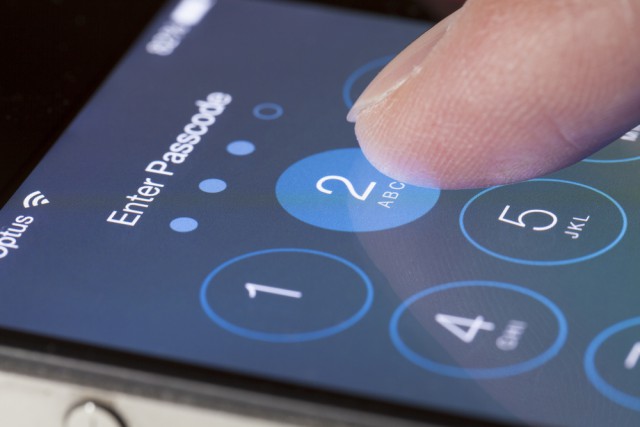
The case of the FBI seeking to force Apple to provide backdoor access to the San Bernardino shooter's iPhone focused attention on security and encryption once again. The agency may have been able to gain access to the phone with help from a third party, but the Indian government has gone one better.
Communications Minister Ravi Shankar Prasad has revealed that the government has a tool that can be used to gain access to, among other devices, Apple's iPhone. This is not to say that a tool has been created that bypasses encryption, rather that a method for getting past the lockscreen has been developed.

Outdated software on BYOD devices puts business data at risk
When people used office workstations managed by the IT department it was relatively easy to manage security because there was a defined perimeter.
In the modern era of mobile devices and BYOD though security becomes much harder. Authentication specialist Duo Security has released a new report on the security health of user devices, based on data gathered from more than two million devices used by businesses worldwide.

Think Android security updates take too long to roll out? So do the FTC and FCC
Both the Federal Communications Commission (FCC) and Federal Trade Commission (FTC) are starting to ask the questions that Android users have been asking for years: why do updates and upgrades take so long to roll out?
If you're in possession of a flagship or recent handset, the chances are you're in line to receive timely updates for the foreseeable future. But Android's fragmentation means that older handsets quickly drop off the radar, get forgotten and remain unpatched. The FCC and the FTC both want to know why security patches are slow to hit phones, and the agencies have launched separate, but parallel, investigations.

New security vulnerability affects one in four Android devices
A security vulnerability on Google’s Android OS has exposed users’ text messages, call histories and other sensitive data for the past five years.
The security firm FireEye has released a blog post detailing how it affects smartphones running Android 4.3 Jelly Bean as well as earlier versions of the OS. The bug, which has been indexed as CVE-2016-2060, allows apps to access sensitive user data by taking advantage of Android’s permission system.

Security concerns keeping IT pros up at night
Security is still the main reason IT professionals are up at night, new reports from BCS, The Chartered Institute for IT say.
BCS has asked 444 IT experts about their thoughts and fears revolving their company in 2016. The results, released in the 2016 Digital Leaders survey, show a mix of "predictable" and "thoughtful" ideas, as the BCS puts it.

Lenovo fixes yet another major security vulnerability
This past year hasn't been kind to Lenovo. The company has had quite a few security problems on its hands, most affecting its Windows software. The PC maker has issued patch after patch to address them, but it now looks like the saga is far from over.
A security researcher has uncovered a new vulnerability in the Lenovo Solution Center software, which comes preloaded on the company's desktops and laptops to help users monitor things like battery life and driver updates.