
Tim Cook: Apple won't weaken encryption, but is willing to cooperate with UK government
In a recent interview with the Irish Independent, CEO Tim Cook has once again said Apple will not weaken the encryption it uses in its mobile communication devices.
He did, however, say that the company he runs will work closely with the UK government to help create a quality legislation.

SecuSUITE for Enterprise enables secure calling and messaging
BlackBerry and its subsidiary Secusmart have announced the release of SecuSUITE for Enterprise, a new voice encryption solution that protects mobile calls on the Android, iOS and BlackBerry operating systems.
By using the VoIP, software-based, cloud-hosted solution, employees will be able to conduct secure conversations worldwide and be able to send encrypted text messages of any length.
DHL customers targeted by new phishing scam
With the approach of the holiday season there's a spike in online shopping which means many people will be expecting the delivery of packages.
This of course is a window of opportunity for cyber criminals looking to steal personal information. It's perhaps not surprising then that Comodo Antispam Labs has identified a new global phishing threat, targeted at businesses and individuals who use DHL shipping.

What's so different about Paris? Facebook reveals why it enabled Safety Check after French attacks
The shootings and suicide bombings in France this week grabbed the attention of the global media. To help those caught up in the aftermath to let loved ones know that they were OK -- and to enable others to check on friends and relatives in France -- Facebook enabled its Safety Check feature for the disaster.
While this was welcomed, it also raised questions. Why had this not been done for other such disasters? Why were shootings in other countries treated differently? What was so special about France that it warranted extra attention from Facebook? Were the lives lost in other atrocities seen as less important? Facebook's Alex Schultz has stepped up to the plate to answer these concerns.

Microsoft details four commitments to help rebuild trust in the cloud
In a lengthy, rambling blog post, Microsoft President Brad Smith explains how what has happened in relation to security over the past year is shaping the company's attitude to the cloud. He says that "it's time to rebuild the world's faith in the technology that empowers us all".
He takes a while to get to the point, meandering slowly around anecdotes about Windows 10, Edward Snowden, terrorist attacks in Paris, hacking, and governmental desires to weaken encryption. He says that these and other events "show it's crucial to have a conversation about worldwide information security".
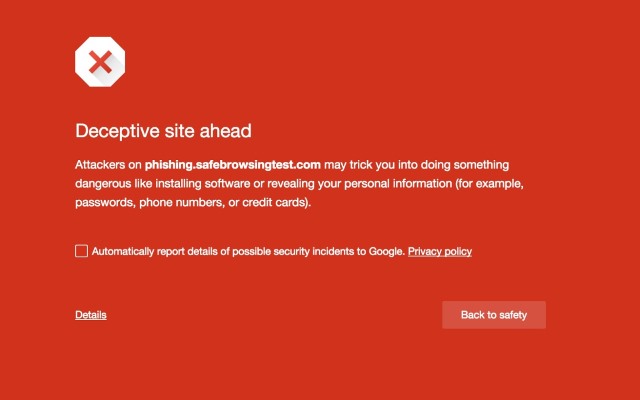
Google extends Chrome's Safe Browsing protection to fight social engineering
Online attacks take a number of forms, and phishing is one of the more recent problems. Chrome has long featured Safe Browsing to notify people when they visit potentially dangerous websites, and today Google announces that the feature is growing to include social engineering.
Google describes social engineering as being a much broader category than traditional phishing. Typical examples include sites that trick visitors into imparting passwords or credit card details, and those which purport to be an official website when they are in fact malicious. The Safe Browsing expansion offers protection against a range of social engineering attacks that Google provides examples of.

It is your duty to use an ad blocker, says Edward Snowden
Ad blocking tools are rarely out of the news these days. In times of heightened awareness about online privacy, more and more people are turning to things like Adblock Plus to banish ads and clean up their web browsing experience. For many people an ad blocker is seen as essential.
Edward Snowden goes further. The former NSA contractor says that it is a web user's duty to protect their computer by blocking potential attack vectors such as Flash and JavaScript-riddled advertisements.

How to avoid online surveillance -- the essential guide
It would appear that mass surveillance of the Internet is here to stay. We can rage against the machine, but ultimately we're powerless to stop the likes of the NSA and GCHQ prying into whatever they want to pry into. More and more people are turning to the dark web to help cover their tracks, but even the supposedly anonymous haven of Tor can be cracked for a price.
Last week in the UK, the draft Investigatory Powers Bill was published outlining proposals for ISPs to retain user's browsing histories for a full year. Governments want to weaken encryption. The FCC ruled that Do Not Track requests are essentially meaningless. The NSA finds and takes advantage of vulnerabilities. It's little wonder that privacy groups are up in arms -- the erosion of online rights continues with terrifying speed. But all is not lost. There are still things you can do to help maintain your privacy. If you're concerned, here's what you can do.

How BSIMM improves security by letting developers compare security practices [Q&A]
Every organization believes that it's making its systems secure, but because they usually work in isolation from competitors and other businesses they have no way of knowing how they compare.
The Building Security In Maturity Model (BSIMM) aims to quantify security practices and present them in a measurable way to allow companies to compare their performance.
Top 50 UK websites expose your browser to unknown scripts
How much risk are you facing just by visiting a website? Do you know what scripts are running and which other sites they're pulling data from?
Malware prevention company Menlo Security scanned the Alexa top 50 UK websites to find out what their users were being exposed to. The findings show that on average, when visiting a top 50 UK site, your browser will execute 19 scripts.

Gmail to issue warnings about emails sent without encryption
Google, like many other companies, is pushing people towards using secure internet connections. HTTPS is becoming the norm, but not everyone has caught on. To keep the security-conscious informed, Gmail is set to issue warnings about emails that are received through unsecure connections that do not use encryption.
A joint study involving Google, University of Michigan and the University of Illinois found that email is "more secure today than it was two years ago", with an increase in the number of encrypted emails sent. That said, there are still plenty of people who are not using secure connections and Google is keen to keep its users informed when they receive communication through unencrypted channels.

Emsisoft Anti-Malware 11 ships with native 64-bit build
Emsisoft has announced the release of Emsisoft Anti-Malware 11 and Emsisoft Internet Security 11. Scanning has improved with better detection of ransomware, file-less malware, and threats which try to exploit script parsers and other host processes.
The products are smarter, too, and are now able to block many intrusion and exploitation attempts without annoying alerts.

Vormetric adds encryption and access control capabilities for Docker
Businesses are turning to encryption as a means of meeting compliance and data storage requirements and to guard against breaches and data loss.
But with the rapid evolution of enterprise IT data may be stored in a variety of environments in-house, in the cloud, which presents new security challenges.
The price of de-anonymization -- FBI paid $1m to Carnegie Mellon to crack Tor
Tor has long been thought of as offering a level of privacy, security and anonymity that enables people to do whatever they want online; it also facilitates access to the so-called Dark Web. Despite this, law enforcement agencies were able to crack Tor and identify a Silk Road 2.0 user. Now it seems that the FBI was helped out by researchers at Carnegie Mellon University.
It was previously known that the FBI tracked down Brian Richard Farrrell using information from a "university-based research institute". The Tor Project itself believes that the FBI paid researchers at the university at least $1 million to attack the network and gather data from Tor relays that could be analyzed and used to identify users' IP addresses.
Built-in safety measures create a false sense of security
It's increasingly common for hardware manufacturers and software developers to build in various security measures to protect users.
However, a new survey by cloud encryption company Alertsec reveals that these standard security precautions may be creating a false sense of security for PC and mobile users.