Twitter comes clean about serious security incident affecting millions of accounts
Twitter has confirmed that a hacker was able to exploit a security vulnerability on the social platform earlier this year, gaining access to the private data of millions of users.
In total, 5.4 million accounts were affected, with the attacker able to link account names to email addresses and phone numbers. While the incident took place back in January this year, Twitter has also revealed that the exposed user data was made available to buy just last month. In what will be regarded by many as something of an understatement, the company says that "it is unfortunate that this happened".

Instagram rolls back changes that drew the ire of Kim Kardashian and Kylie Jenner
Following a backlash from ordinary users, as well as influencers and celebrities such as Kim Kardashian and Kylie Jenner, Instagram has announced that it is rolling back a number of recent changes to the social platform.
One of the new features that caused widespread irritation was a TikTok-aping video-focused recommendation system which means users were no longer seeing as much content from accounts they actually follow. Another unpopular change was a new full-screen view for posts. Instagram owners Meta says that after the rollback it will "take the time" to get the changes right.
If you're daft enough to pay for Twitter Blue, prepare to dig deeper into your pockets
It was hardly a surprise when Twitter launched a subscription service in the form of Twitter Blue. In exchange for $2.99 a month, anyone keen to gain access to extra feature could help top up the social media company's coffers.
But it seems that the coffers have not been topped up enough as Twitter has announced a price hike. The cost of a Twitter Blue subscription jumps by two thirds for new subscribers with immediate effect, and existing subscribers can expect to pay the new, higher price in the near future.
Facebook is finally restoring the chronological feed
Facebook's love of algorithms has meant that there has been a highly polarizing focus on recommended content in users' feeds rather than posts from friends, family and pages of genuine interest. But this is changing.
In a move that will please millions of Facebook users who have become increasingly frustrated with the way recommended content is pushed into their feed, Mark Zuckerberg has announced that iOS and Android users are being treated to feed split over two tabs. While one of these will remain populated with content surfaced by Facebook's "discovery engine", the other is a chronological feed of content from friends, groups and Pages.
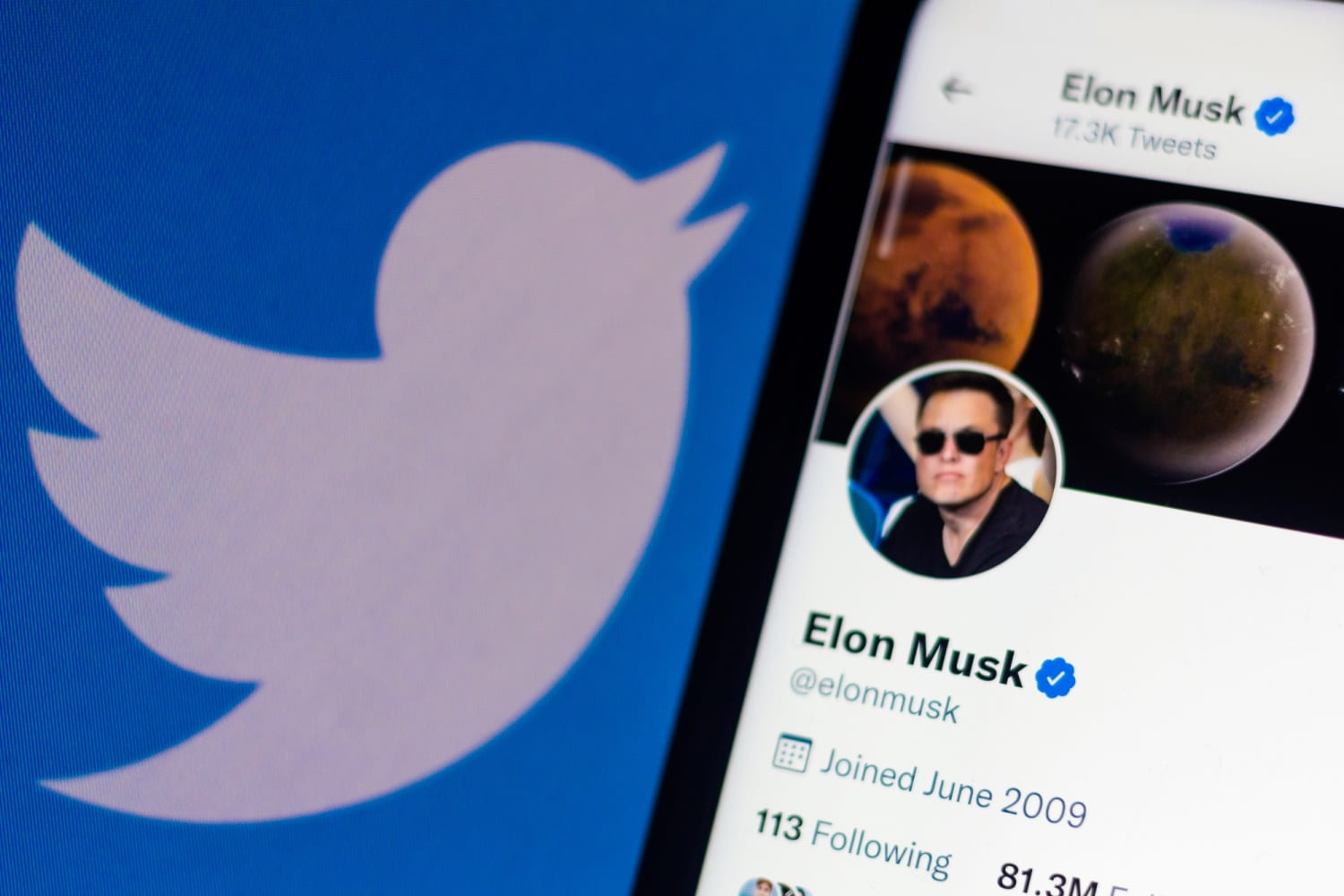
Elon Musk pulls out of Twitter purchase, but Twitter plans to sue to force the deal
When the richest person on Earth offered to buy Twitter for $44 billion, the eyes of the world pivoted to Elon Musk to watch the drama unfold. And the drama did not disappoint, played out over several month.
There has been speculation for some time that Musk's plans to buy Twitter would fall through, and those who predicted this may just have been proved right. Musk's lawyers have written to the social media company to say that the deal is now off, citing Twitter'ss failure to provide information that had been requested. Twitter has responded saying that it intends to sue Musk and force him to complete the merger.

Instagram to use video selfies as one method of age verification
Like most social media platforms, Instagram has a minimum age for users -- in this instance, it is 13 years old. But verifying ages online -- particularly for non-adults -- has long proved difficult. Now Instagram thinks it has come up with a solution.
As part of measure to enforce age limits more strongly, Instagram is preparing to use a variety of techniques to confirm that younger users are the age they claim to be. One of the options that will be available to such users is uploading a video selfie which will be shared with age-checking agencies.

While it works on an 'edit tweet' option, Twitter adds the ability to step away from mentions
Elon Musk's recent colossal investment in Twitter made him the largest shareholder in the company. His tweets after this became public made it seem as though he was going to be something of a trouble-making disruptor, stirring things up with talk of an edit button, but it soon transpired that Twitter really is working on the option to edit tweets.
It's hard to say quite when the feature will be made available, and it is likely to be limited to Twitter Blue subscribers -- at least to start with. In the meantime, users who are not willing to pay for extra features can enjoy another new option: Unmention

Pinterest bans climate change misinformation with new policies
Pinterest has become the first major social network to implement a ban on users posting misinformation about climate change.
The image-focused social platform is putting in place new rules that means it will no longer be possible to post content that denies the existence or impacts of climate change, the human influence on climate change, or that climate change is backed by scientific consensus. Misleading posts, including those that misrepresent scientific data will also be banned.
Elon Musk asks, as Twitter's largest shareholder, if users want an Edit button
Elon Musk, the CEO of both Telsa and SpaceX, recently went shopping. He splashed $2.89 billion on Twitter stock, making him the largest shareholder in the company, with a hefty 9.2 percent holding.
While it is not yet clear what Musk intends to do with the influence he now undoubtedly wields, he is certainly not going to be sitting quietly. In a tweet posted overnight, the entrepreneur tweeted a poll asking if Twitter users would like an edit button.
Meta is clamping down on irritating 'watchbait' videos on Facebook
The idea of clickbait is nothing new. Sensational headlines have been used since the early days of the press to draw in users, and it is something that has continued into the internet age. But there is also a related problem that blights social media platforms such as Facebook: watchbait.
The idea is much the same as a clickbait headline; videos are given misleading, overblown headlines and descriptions that often omit key details in a bid to get people to watch to the end. Now Meta has announced that it is taking action, including using an automatic detection system that will reduce the distribution reach of offending videos.
Twitter now lets all users add sensitive content warnings to photos and videos
Twitter is giving everyone the ability to obscure individual photos or videos. The new feature is something that was tested last year and is now rolling out to all users.
In addition to blurring out select multimedia content, the new feature gives Twitter users the opportunity to add warnings to tweets. This can be used to indicate that a particular post includes nudity, violence, sensitive content or is in some way NSFW. There are, however, limitations.
Twitter's latest direct message test is criticized for harassment potential
Twitter has announced that it is testing a new way to start direct message conversations with users on the platform, leading to criticism from those concerned about the potential for abuse.
The new system means that it will be possible to start a DM conversation by simply clicking a newly added direct message button in individual tweets. While Twitter says that the move is about making it easier to start conversations, critics point out that it is likely to be used for harassment.
The chronological feed is coming back to Instagram
The head of Instagram, Adam Mosseri, has revealed details of tests that are currently underway that will change the way feeds are displayed on the platform. Among the options that are on the way is the much-requested ability to see a chronological feed.
In all, there are three feed viewing options that are undergoing testing -- something Mosseri describes as giving "you more control over your Instagram experience". Of the three views, two of them allow for chronological scrolling through posts.
Now you can embed your Instagram profile on websites
Instagram has been busy adding new options and features recently, with no fewer than three rolling out this week. Head of the visual social network, Adam Mosseri, shares details about Instagram Playback, Reels Visual Replies, and Profile Embed.
Instagram Playback is a perfect end-of-year feature, giving users the ability to share their favorite Stories from the year in a new post. The company has also made it possible to reply to commends with Reels, and -- assuming you live in the right part of the world -- to embed a miniature version of your Instagram profile in websites.
Meta explains why it is taking so long to bring end-to-end encryption to Facebook Messenger and Instagram -- and what it is doing in the meantime
Meta recently announced that the protection, privacy and security offered by end-to-end encryption will not be coming to Facebook Messenger or Instagram until some time in 2023. Until then, anyone looking to send secure messages through Meta's platform will have to turn to WhatsApp.
What was not made particularly clear at the time of the announcement, however, is just why there is such a delay. Now Meta has opened up and revealed some of the thinking behind holding back on the roll-out of end-to-end encryption across all of its messaging services.