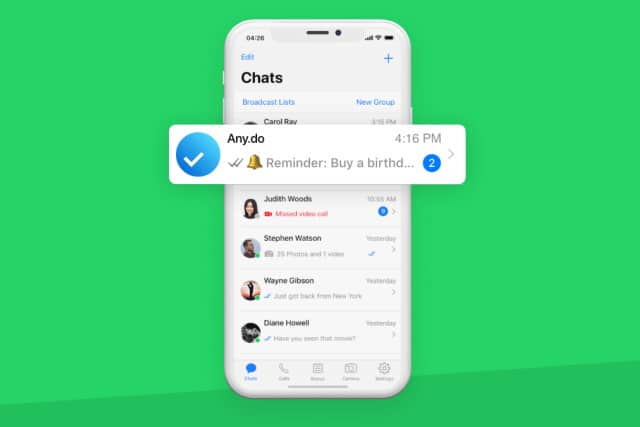
New Any.do integration lets you create tasks and reminders in WhatsApp
While WhatsApp is primarily a communication tool, a new integration from Any.do also makes it possible to extend the capabilities of the chat app to create tasks and reminders using natural language.
As WhatsApp is often used in both the business and personal worlds to discuss a set up meetings, appointments and get-togethers, the ability to set reminders at the same time as discussing plans makes perfect sense. Like Any.do and WhatsApp themselves, the new feature is cross-platform, and can be found on iOS, Android, Mac, Windows and the web.
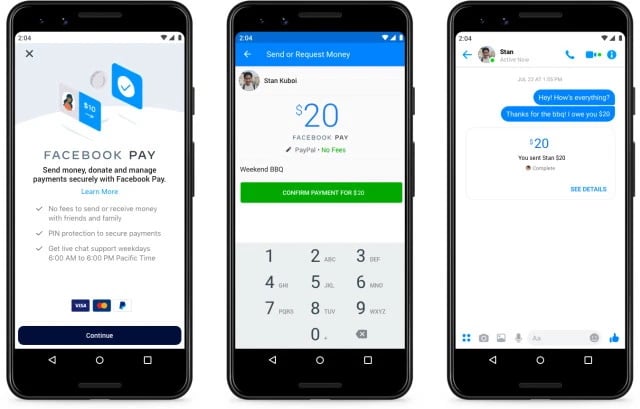
Facebook Pay launches in the US, with payment options in Facebook, Messenger, WhatsApp and Instagram
Facebook has launched a new payment service that can be used to send money and buy goods and services from within its apps -- and it's nothing to do with Libra.
The service is called Facebook Pay; it's available in the US for now, but it will expand into more countries in due course. The service allows for payments to be made in Facebook, Facebook Messenger, WhatsApp and Instagram. Given the social network's reputation for privacy, it remains to be seen whether people trust it as much as the likes of Google Pay and Apple Pay.

WeChat and WhatsApp: How to safely embrace these business essentials
In today’s digital workplace, taking advantage of digital collaboration and social media tools is a business imperative. With global social media use greater than ever before, and still very much on the rise, it comes as no surprise that it has embedded itself into the workplace. Just like email, social media and instant messaging apps like WeChat and WhatsApp are becoming business essentials.
We’re all familiar with the shadow IT problem and how many IT departments are still unaware of all the applications and channels their employees are downloading and using for business conduct. Today, the social media channels and instant messaging apps needed to communicate with customers and cultivate new business are both easier for an average employee to use and come with much greater risks. This ease of use and popularity also means that several departments within a company like marketing and sales are both vulnerable to and responsible for preventing a variety of threats that they’re simply not equipped to handle.
Facebook is renaming WhatsApp and Instagram
Being such globally recognized names, you would think that a rebranding of WhatsApp and Instagram would be a crazy exercise... but that's precisely what Facebook is doing.
In a move that is more than a little surprising -- and, many would argue, somewhat pointless -- the social networking giant is to rename the two products Instagram from Facebook and WhatsApp from Facebook. The renaming will make it clear that the company people love to hate is behind the chat and social networking tools.
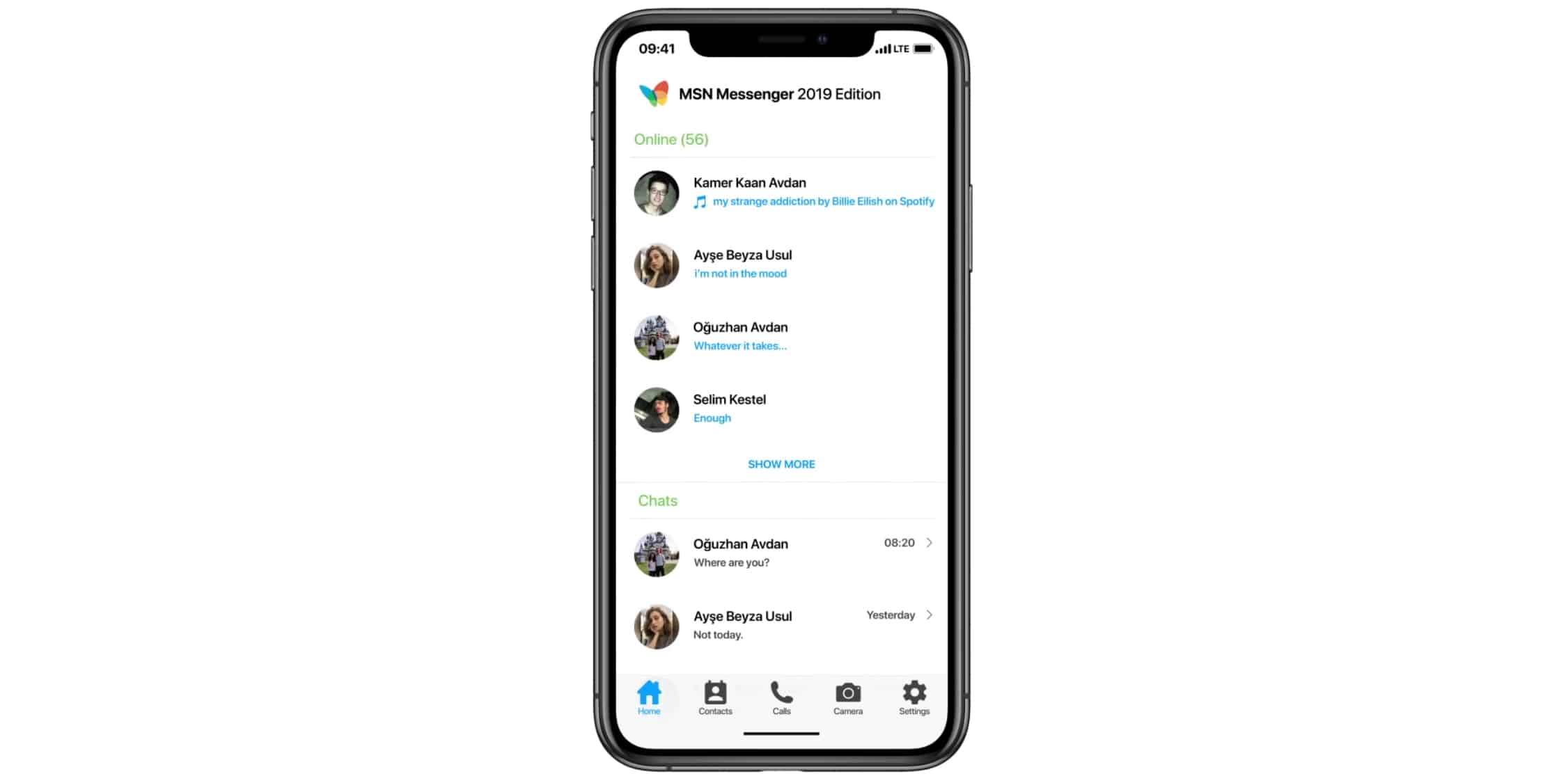
MSN Messenger 2019 Edition is the messaging app you didn't know you needed
These days, if you want to chat with friends and family you probably do so through one of the many mobile messaging choices -- such as WhatsApp, Facebook Messenger, or Snapchat.
Before mobile communications really took off, Microsoft’s cross-platform MSN Messenger (later rebranded Windows Live Messenger) was the chat tool. At its peak, some 330 million users a month were logging into the instant messaging client. MSN Messenger was discontinued in 2014, with Microsoft’s acquisition of Skype from eBay largely to blame for its demise, but if you’ve ever wondered what the chat tool might look like if it was revived today, then MSN Messenger 2019 Edition is the answer.

Why it might be time to ditch WhatsApp for Signal or Telegram
By now you’ve heard the news: WhatsApp is currently rolling out an urgent update to all app users to close a major vulnerability that leaves unpatched phones at risk of being targeted by hackers. WhatsApp is owned by Facebook, and if you plan to stick with the platform, don’t wait for an update notification: access your phone’s app store now to force install the update.
Except maybe now is the time to go one step further: perhaps it’s the perfect opportunity to switch to a different messaging platform. One that’s not owned by one of the major tech companies, is equally -- if not more -- secure, and which works on more than just your phone. Enter stage left, Telegram, and stage right, Signal.

WhatsApp users urged to install app update to patch serious spyware vulnerability
Users of WhatsApp could be infected by dangerous spyware just by receiving a call. The spyware, which is thought to originate from Israeli cyber intelligence firm NSO Group, can be installed just by calling a target -- there is no need for the call to be answered.
A security advisory on the Facebook website does not go into much detail about the exploit, which takes advantage of a buffer overflow vulnerability. WhatsApp says it was discovered earlier this month, and with 1.5 billion users, there are a huge number of people that are potentially affected.

Facebook suffers huge outage, along with WhatsApp and Instagram
If you've had trouble accessing Facebook today, you're not alone. Users in the US, Europe and Asia struggled to access not only Facebook, but also the WhatsApp and Instagram services owned by the social media giant.
Facebook has said little about this incident which comes just a month after it suffered its worst outage ever, causing problems for users for over 24 hours. This weekend's outage led to #FacebookDown, #instagramdown, and #whatsappdown hashtags trending on Twitter, and numerous reports of problems were posted to Downdetector.
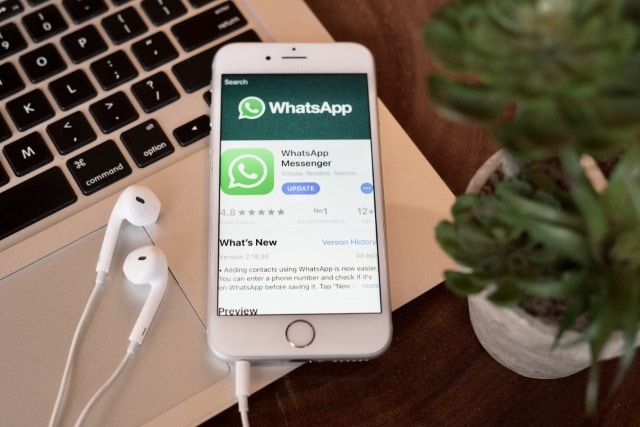
WhatsApp now lets you block people from adding you to a group chat
Facebook is hardly renowned for respecting privacy, but with WhatsApp the company is taking a small step to give users greater control.
A change to privacy settings for groups means that it is now possible -- at last -- to avoid being added to a group chat you don't to be involved in. WhatsApp has announced that "we're introducing a new privacy setting and invite system to help you decide who can add you to groups".

Germany bans Facebook from combining user data collected from Instagram and WhatsApp
The German cartel office, the Bundeskartellamt, has imposed new restrictions on how Facebook processes the data it gathers about users of Instagram, Facebook and WhatsApp.
Germany's antitrust watchdog has hit the social network with a ban on combining user data it gathers from different sources, unless it has explicit consent from users. While Facebook is still free to gather data about Instagram users and WhatsApp users, this data cannot be automatically combined with data gathered via a users' Facebook account.
Insiders say Mark Zuckerberg plans to unify WhatsApp, Instagram and Facebook Messenger
Like Google constantly launching and closing services, the appalling disparate mess of apps produced by Facebook is something of an industry joke. Mark Zuckerberg is well-aware of this, and it seems he wants to do something about it.
Insiders at the company say plans are afoot to change the way Facebook Messenger, WhastApp and Instagram function, unifying their messaging system for better integration. On top of this, Zuckerberg also wants each of the three messaging services to feature end-to-end encryption.

WhatsApp imposes five-recipient limit on forwarded messages to limit 'misinformation and rumors'
All social networks and messaging tools have been used as platforms to distribute fake news. Companies have taken various steps -- such as introducing fact-checking -- to help curb these problems, and now the Facebook-owned WhatsApp is introducing new measures that limit the number of people users can forward a message to.
The company has previously allowed messages to be forwarded to up to 20 people, but now -- in a bid to limit the spread of "misinformation and rumors" -- this has been reduced to just five.

Facebook, Instagram, Google, Spotify, WhatsApp and more reimagined as tech products from the 1980s
It’s a fair bet that we’d never have heard of Facebook, Instagram, Google and WhatsApp if the internet hadn’t been invented, but London-based graphic designer Thomas Ollivier has put his skills into re-imagining how some of today’s top tech brands might have looked in the pre-internet days of the 1980s.
The collection of images, which he’s titled Re:Birth, provides a fun glimpse into how technology has changed in the past 30 years. And boy has it changed.
WhatsApp is getting ads in the Status section
It had to happen eventually. Ads are coming to WhatsApp.
The monetization of the messaging app through advertising has been talked about for years, and the acquisition by Facebook served only to make it more likely. Now the company's vice president Chris Daniels has confirmed that ads are arriving in WhatsApp's Status section.
WhatsApp now lets you backup to Google Drive without using any of your cloud storage quota
Facebook and Google have struck a deal that benefits WhatsApp users. Starting later in the year, users will be able to store WhatsApp backups on Google Drive without using up any of their storage space.
The new arrangement means that WhatsApp users now essential have unlimited storage space available to them free of charge. But the company has also issued a warning that people need to take action if they want to avoid backups being deleted.