
Universal Music Group and Nvidia partner on AI for music creation and discovery

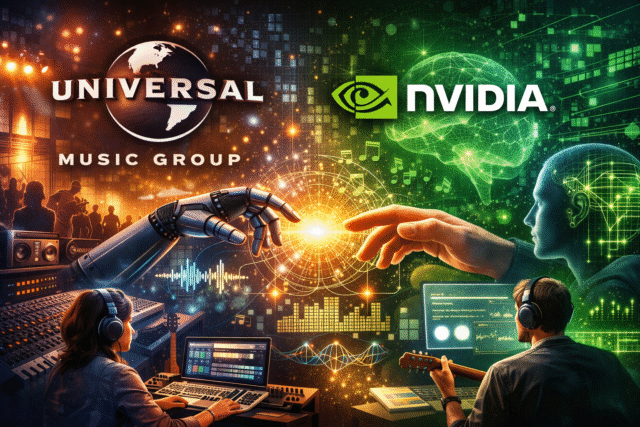
Universal Music Group has announced a new collaboration with Nvidia that centers on using AI to support music discovery, artist tools, and fan engagement. The work draws on Nvidia’s AI infrastructure and Universal’s catalog of recorded music, with a focus on systems that account for copyright, attribution, and artist involvement.
The collaboration brings together Nvidia’s research in audio and machine learning with Universal Music Group’s catalog, which spans millions of recordings across genres and eras. The plan is to apply AI to music search, recommendation, and creative workflows, rather than replacing human creators or existing rights frameworks.
Nvidia Music Flamingo
Universal Music Group and Nvidia intend to carry out joint research and development, combining technical work with feedback from artists, songwriters, producers, and labels. Part of that effort involves extending Nvidia’s Music Flamingo model, which is designed to analyze full-length music tracks rather than short clips.
Music Flamingo is based on Nvidia’s Audio Flamingo architecture and processes tracks of up to 15 minutes. The model analyses musical elements such as harmony, structure, instrumentation, lyrics, and broader context. Nvidia says this allows music to be interpreted beyond genre tags or basic metadata, supporting more detailed descriptions and search queries.
SEE ALSO: Warner Music and Suno agree new partnership but what does this mean for AI generated music?
In discovery and listening scenarios, the technology can enable music exploration based on factors like mood, structure, or narrative qualities within a track. Rather than relying only on tempo, genre, or popularity, it can surface music through deeper musical and contextual relationships.
The collaboration also extends into artist-facing tools. Universal Music Group and Nvidia plan to establish an artist incubator that brings musicians and producers into the development process for AI-based creation and analysis tools. The aim is to test these systems in real creative workflows, with artists involved in shaping how the tools function.
Sir Lucian Grainge, Chairman and CEO of Universal Music Group, said, “We’re excited to establish this ground-breaking strategic relationship which unites the world’s leading technology company with the world’s leading music company in a shared mission to harness revolutionary AI technology to dramatically advance the interests of the creative community and the role of music in global culture. We eagerly embrace the opportunities that AI presents, and the fact that Nvidia is choosing to take a leadership position in the tech industry in their commitment to responsible AI principles is critically important."
Sir Grainge concluded, "We look forward to working closely with Nvidia to direct AI’s unprecedented transformational potential towards the service of artists and their fans as we work together to set new standards for innovation within the industry, while protecting and respecting copyright and human creativity.”
Nvidia has previously worked with Universal Music Group’s Music and Advanced Machine Learning Lab, which trained models using Nvidia AI infrastructure. This expanded collaboration will rely on that infrastructure while also creating physical and virtual spaces for collaboration.
Those efforts include the use of studio facilities such as Abbey Road Studios in London and Capitol Studios, where technical teams and creative professionals can provide input on how AI tools interact with real-world music production.
Richard Kerris, Vice President and General Manager of Media at Nvidia, said, “We’re entering an era where a music catalog can be explored like an intelligent universe, conversational, contextual, and genuinely interactive. By extending Nvidia’s Music Flamingo with Universal Music Group’s unmatched catalog and creative ecosystem, we’re going to change how fans discover, understand, and engage with music on a global scale. And we’ll do it the right way: responsibly, with safeguards that protect artists’ work, ensure attribution, and respect copyright.”
What do you think about AI being used to reshape music discovery and creative tools at this scale? Let us know in the comments.



