
Linux distro Ubuntu 14.04 Trusty Tahr Final Beta available now
There are so many Linux distributions nowadays, that it can be overwhelming for a new user to choose. However, a safe bet for a Linux newcomer is Ubuntu. It is popular, easy to install and well supported by a large community. Hell, it looks rather sexy too -- modern and classy.
Unfortunately, while Canonical releases new versions twice a year, a Long Term Support (LTS) version only comes every two years. If you aren't familiar, an LTS version gets longer support than a normal release -- 5 years rather than 9 months. This is quite the considerable difference. Today, Ubuntu 14.04, which will be an LTS version, reaches Final Beta status.

Government requests at Google increase 120 percent -- your privacy is under attack
When you choose to establish a relationship with a company, there is a certain level of trust. You hope that the company "has your back". However, you can never be 100 percent sure. After all, companies are run by real people and human beings are not infallible. Things get muddied further when governments get involved. Quite often, a company may be forced to do something against its users' wishes, due to a government order. Even worse, the same government may ban the company from speaking about it.
Google is a company that many users trust. Nowadays, you almost have to, as the company's tentacles expand to the furthest reaches of the Internet. While Google allegedly participated in the NSA Prism program, it still seems to have its users' privacy in mind. To showcase its commitment, the search-giant began publishing a transparency report in 2009, which highlighted the number of government requests. Today, the company announces that those types of requests have skyrocketed a staggering 120 percent since the report began.

Linux desktop environment GNOME 3.12 available
One of the great things about Linux distributions is the customization. In contrast, an operating system like Windows 8 is rather limited. Sure, you can change some colors, wallpapers and sounds, but pretty much, it is what it is. What you see is what you get. That is probably fine for most people, however, Linux users are not most people.
With an operating system such as Ubuntu or Fedora, the user can choose the interface in which they will interact. There are many desktop environments to choose from too, such as KDE, Mate, or my favorite, GNOME 3. Today, the open-source community is treated to the newest version of GNOME -- 3.12. Linux users can start salivating now.
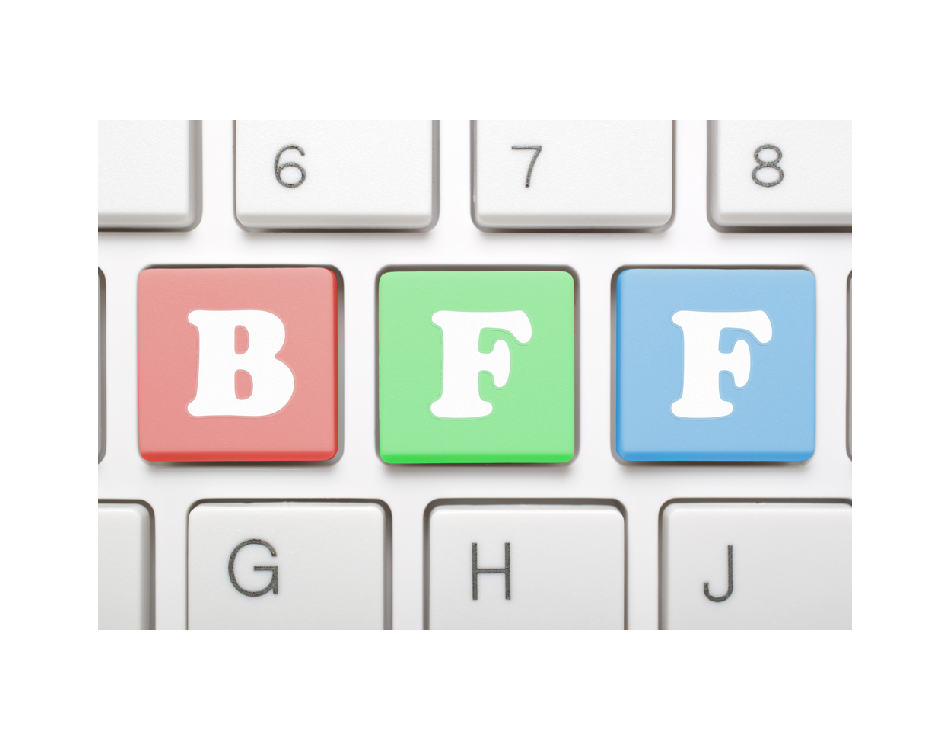
Microsoft and Dell still BFF -- sign patent licensing agreement for Android, Chrome and Xbox
Peanut butter and jelly. Fish and chips. Salt and pepper. Dell and Microsoft. These are all things that go great together. Sure, Dell has strayed a bit, offering things like laptops with Ubuntu and tablets with Android. However, Windows has been and will likely continue to be the manufacturer's bread and butter.
In the technology world, Dell and Microsoft are "BFF" -- best friends forever. If the companies were teen girls, they'd be braiding each other's hair and gossiping about boys. Today, Dell and Microsoft have signed a monumental patent agreement -- tantamount to BFF's exchanging friendship bracelets.

Maxthon web browser comes to Linux -- move over, Chrome and Firefox
When it comes to Linux distributions, there is quite a lot of software available. However, it is not always great. Many programs are third-rate, and the ones that are good, aren't the big name brands. Windows and OS X definitely have a superior selection of popular software.
One place where Linux does not lack, is web browsers. With the exception of Internet Explorer and Safari, all the other big-boys are represented -- Chrome, Firefox and Opera to name a few. One browser, Maxthon, was not available for Linux -- until now.
New Mozilla CEO is allegedly anti-gay marriage -- Firefox developers boycott
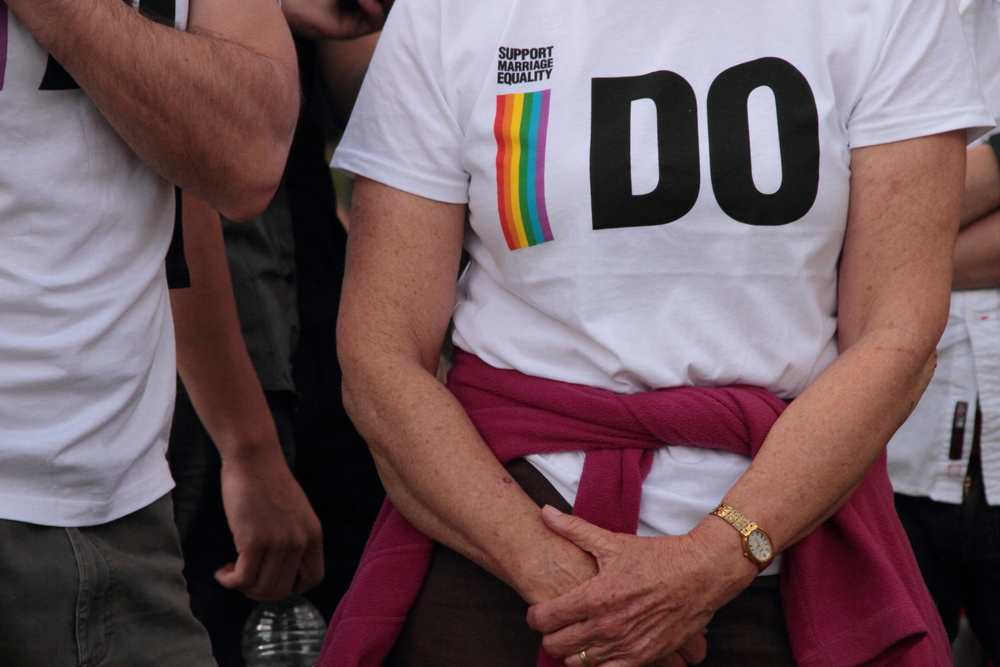
Gay marriage is not a gay issue, nor is it liberal or conservative. It is an equality issue, since basic rights of Americans, who happen to be gay, are threatened. As more and more people wake up from the slumber of ignorance and see the light in supporting gay marriage, there are still people that refuse to evolve. You can hate anyone you want, and if you hate gay people, that hate is your burden to live with. Quite frankly, gay people do not need your love or approval, although I'm sure it would be appreciated. What they do need though, is to be treated equally by the government that they live under and pay taxes to.
When people donate money to anti-gay causes, they can sometimes fuel hatred and anti-American values. After all, equal rights are the foundation of the USA. Sadly, the new CEO of Mozilla, Brendan Eich, who was appointed today, allegedly donated $1,000 to support a ban on gay marriage. Two developers, Hampton Catlin and his husband Michael, are boycotting Mozilla as a result.

Microsoft declares Office 2003 dead -- long live Office 365!
It's fun to remember. When old friends get together, nostalgia often takes over, and conversations turn to "remember when". Recalling years past can bring back feelings of yore -- old girlfriends, your first car, your first kiss -- all that jazz.
However, do people look back on old software with the same fondness? Microsoft seems to think so, as it looks back at Office 2003. The Office Suite will die the same day as Windows XP -- April 8th, 2014. You see, on that date, Office 2003 will still work, but the company will end support for the popular software. Microsoft would like Office 2003 users to switch to 365, but should they?

Lonely Windows Phone owners can now find dates with eHarmony app
The life of a Windows Phone user is a lonely one. With such a low market share, the odds of meeting a fellow user in public is quite rare. This is in contrast to Android and iPhone, where it seems like you can see those users everywhere you look.
However, some of these users may be lonely in another regards too -- dating and mating. In today's fast-paced world, it can be hard to find a date in person, so online dating has become all the rage. Unfortunately for Windows Phone users, there was no app for eHarmony; one of the most popular and successful dating sites. Today, however, that changes as eHarmony is available for Windows Phone. Get your online dating on y'all!

Google wants Australians to code -- inspire wonder Down Under
The future is paved with technology. Regardless of profession, new advances in computers are impacting us all. However, a big part of some technology-based educations, are computer-science and coding. The problem is, the sciences are hard and many modern students like things to be easy. This is particularly true in the USA, where much has been made of a lack of science majors.
However, the problem does not just affect the USA -- many other countries need students to be interested in things like computer-coding too. One such country is Australia. Google is looking to motivate young people to take an interest in computer coding.
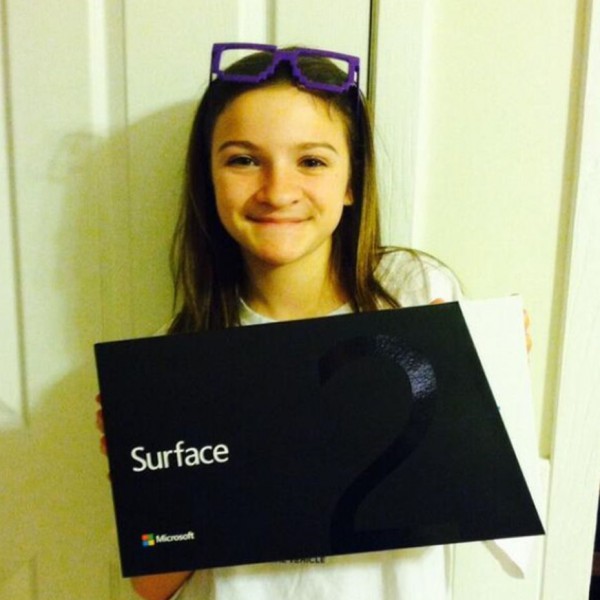
Microsoft convinces 12-year old girl to abandon dreams of iPad Mini for Surface 2
I have no idea what 12-year old kids are interested in -- I am guessing Justin Bieber and Instagram; lord only knows. However, as a tech-guy, I always have my eye on what smartphones and tablets people are using in public. From my observations, iPhones and iPads still reign supreme for tweens. And so, it is not surprising that 12 year old Victoria asked her dad for an iPad Mini.
While many kids are whiny brats nowadays, she took a more responsible approach and created a presentation as to why buying it is a good idea. Her father, rather than simply giving in and buying it, instead tweeted Microsoft to give it a chance for rebuttal. Microsoft responded to her presentation in epic fashion.

Microsoft wants to buy your Windows XP computer for $100, but there is a catch
It used to be that people would upgrade their computers when they wanted to. However, there also used to be more compelling reasons to upgrade. Personal computers used to see huge hardware improvements every year -- faster processor, more RAM, etc. Consumers saw hard evidence of why an upgrade was necessary.
Nowadays however, computers have become "fast enough" -- they are lasting longer and longer. More importantly, people actually saw a benefit in upgrading to Windows 95, 98 and XP. Conversely, there haven't been huge selling points to upgrade to Windows 7 or 8.x for the average casual computer user. Microsoft is ending Windows XP support on April 8th, so it wants consumers to upgrade. In a potentially desperate move, the company announces that it will buy your old, dust-filled XP machine for $100 -- a crisp Benjamin.

Sorry Netflix, but you should pay 'tolls' to ISPs
Money doesn't grow on trees and neither does bandwidth. For internet providers, there is a cost for providing the service. For the most part, with broadband connections such as cable, bandwidth is shared between users. And so, if too many users abuse the service -- torrents, ftp servers, media streaming -- it can slow things down for others.
Entire companies are run from the backs of ISPs. One such company is Netflix. If you aren't familiar, the company provides streaming videos for a monthly fee. However, the videos are streamed over third-party internet providers. In other words, Netflix is profiting by using the providers' bandwidth and is sharing none of the money.

Happy 8th Birthday Twitter! Celebrate by reliving your first Tweet
Social media has become so entrenched in modern society, that it is hard to remember life without it. It almost feels as if services like Facebook have always been with us. Remember though, these networks are still relatively new phenomenons.
That said, Twitter is surprisingly rather long in the tooth. Even though it feels like a newcomer to the social media scene, it will be 8 years old tomorrow. Rather than celebrate with cake or presents, the company has decided to give users a new "First-Tweets" tool.

Google and New York City could ruin communities and lower property values
Poverty tends to breed crime. While I am not defending criminals, the financial status into which a person is born has a huge impact on their likelihood to become a criminal. Being born poor does not guarantee a person will be a criminal, but it definitely increases the odds. Being born into a wealthy family definitely lessens a need to steal. Not only that, but the wealthy can afford a better education for their children.
Sadly, this often becomes a vicious cycle -- poverty is handed down from generation to generation. For example, a poor person is more likely to steal, and people that are caught stealing are more likely to end up in jail, which will give them a criminal record. Last year, New York City passed a law requiring the creation of a crime map. The city partnered with Google, to accomplish the goal. Unfortunately, this is a horrible idea which can potentially ruin communities and lower property values.

Alienware and Crytek join forces for Linux gaming
It used to be that if you were a gamer, you needed to run Windows or buy a console. For the most part, that is still true -- Windows is the king of PC gaming. However, gaming on OS X and Linux has made incredible progress. One of the biggest game-changers for Linux gaming has been Valve's SteamOS. This is a specialized Linux distribution that focuses on game playing and management.
While Valve deserves the appreciation of the Linux community, it is never a good idea to put all of your eggs in one basket. The old saying is that absolute power corrupts absolutely. With that said, the future of Linux gaming cannot be trusted with Valve alone -- nothing against the company, of course. Today, Dell's Alienware division announces a partnership with game-developer Crytek to further the progress of Linux-gaming.