
AI generated founding fathers go bargain hunting in this new ad for Black Friday
AI ad testing firm MediaPET.ai has released a new Thanksgiving commercial that features photorealistic recreations of George Washington, Thomas Jefferson and Benjamin Franklin going Black Friday shopping.
The clip shows the three founding fathers browsing outdoor stalls in a 1776 Philadelphia market as they look for seasonal deals.
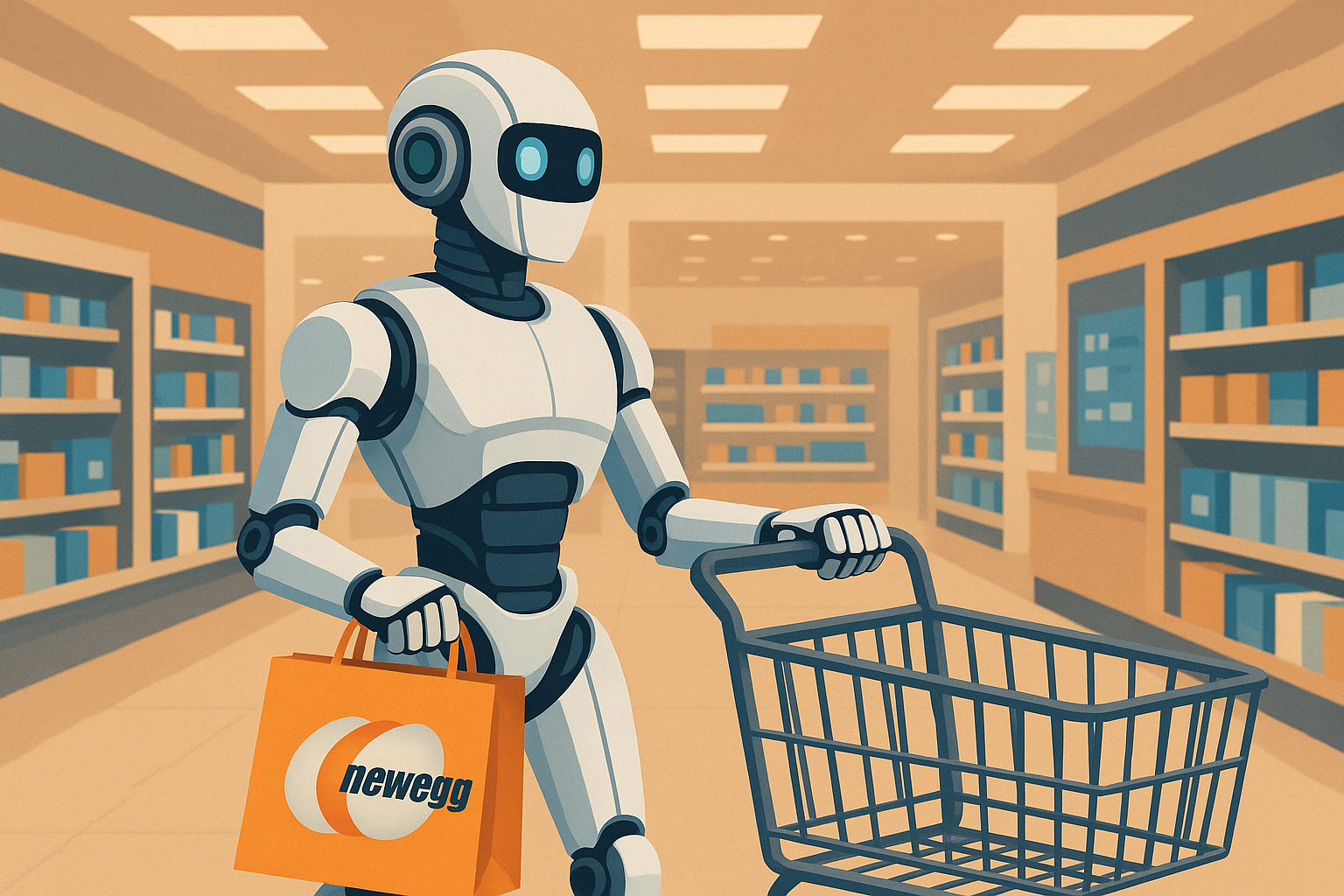
Newegg partners with PayPal to bring AI driven shopping to Perplexity
Newegg, in conjunction with PayPal, is bringing its product listings into AI powered shopping channels, starting with Perplexity. Customers will be able to discover and buy Newegg items from inside conversational search tools that use PayPal’s agentic commerce technology.
The retail giant says the move is in response to growing numbers of people searching for products using AI chat tools rather than performing traditional web searches. Instead of browsing categories or clicking through a store, customers will be able to ask an AI agent for help finding a specific product and be shown Newegg listings in the response.
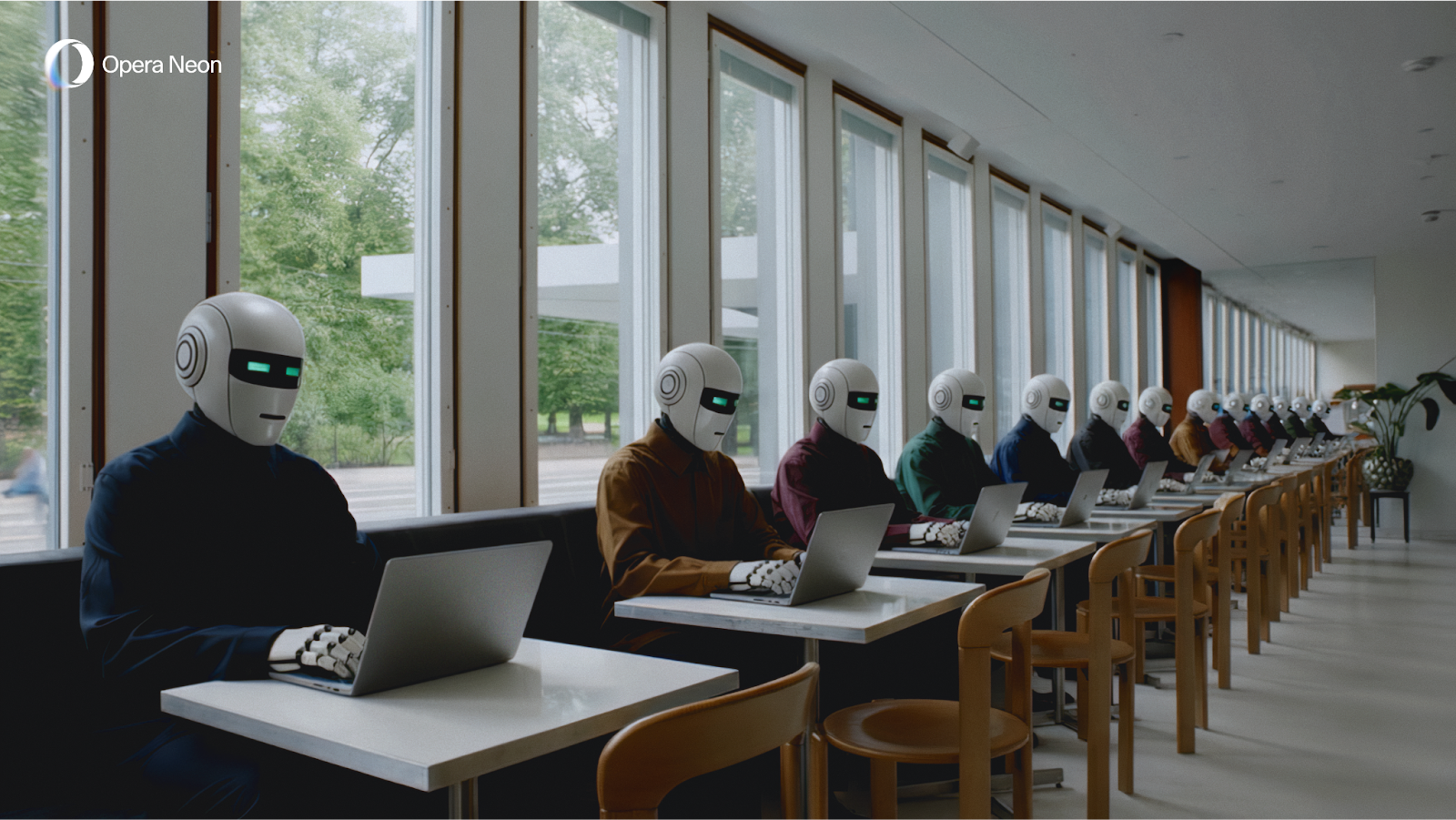
AI browser Opera Neon gains new tools and Gemini 3 and Nano Banana support
Opera has released a major update for Opera Neon, the experimental agentic browser it launched two months ago. The update adds a new one minute mode to the Opera Deep Research Agent (ODRA), introduces Google’s Gemini 3 Pro and Nano Banana Pro models, and lets users choose which AI model to use in conversations. It also expands Neon’s agentic features to support tasks inside Google Docs.
Neon is designed for testing AI features and exploring agentic browsing, where AI tools don’t just answer queries but can also complete multi step tasks.

Americans fear losing control of AI more than losing their jobs, study shows
New research suggests Americans are more worried about who controls AI, and how it’s governed, rather than about losing their jobs to it. A study from Cybernews and nexos.ai tracked search interest across 2025 and found people spent far more time looking up questions about regulation, privacy and data use than employment fears, even after a year of tech layoffs.
The study looked at five types of AI concerns from January to October. Control and regulation came out on top with the highest average score. Data and privacy followed close behind. Job loss ranked last, showing that most people aren’t as focused on employment as headlines often suggest.

Collabora Office is an open source desktop suite for Windows, macOS and Linux
The UK open source developer behind Collabora Online (COOL) has launched Collabora Office, an offline version of its browser-based alternative to Google Docs and Microsoft 365 that is used by schools, public bodies and businesses.
The idea is to give people the same clean, tabbed interface they know from the browser version, but running directly on their device with no cloud required.

Warner Music and Suno agree new partnership but what does this mean for AI generated music?
Warner Music Group and Suno have agreed a partnership that aims to set out how licensed AI generated music should work across creation, revenue, and artist control. The deal also ends the previous legal action between the two companies, which had centered on how Suno's AI systems were trained on commercial recordings.
Warner Music says the agreement gives it a way to support new technology while protecting artists and songwriters. It argues that licensed models, clear revenue paths, and opt in controls for voice, name, and likeness are essential if AI is going to sit alongside traditional music work. Suno, which has grown quickly over the past year, says the arrangement will let it develop new features and improve how people make and share music on its platform. It will also stop it being sued out of existence, as well.
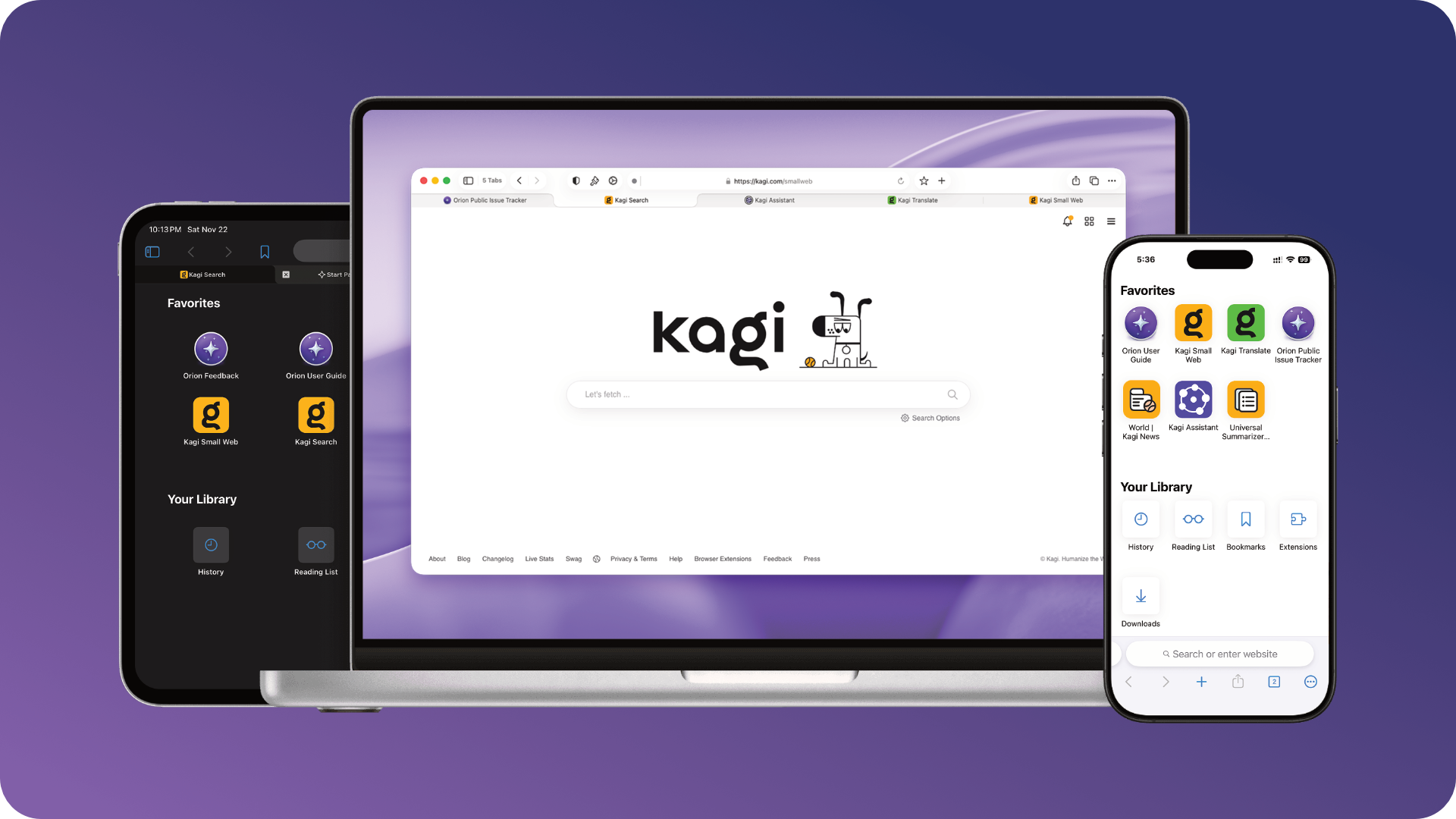
Orion 1.0 is a privacy focused browser for macOS, but will Apple users really leave Safari?
Kagi, a small company best known for its paid, ad free search engine, has announced the launch of version 1.0 of Orion, a new web browser designed around privacy and user control rather than advertising or data collection.
Kagi has already released iPhone and iPad versions of Orion, but this is the company's first desktop browser and arrives following a long beta phase.

Wyze launches new Window Cam for indoor window-mounted security
Wyze has announced the Wyze Window Cam, a compact camera designed to give users exterior-style security from inside their homes. The camera mounts directly to a window and uses a wide aperture lens and sensors to deliver clear, bright color footage even in low light.
The Window Cam can be used to monitor driveways, gardens or front or back-facing areas. It attaches to the interior side of a window using nylon fastener strips, avoiding the need for tools or permanent fixtures. Wyze bundles a long power cable and clips for any necessary routing.

AOC debuts two gaming monitors designed for immersion and competitive play
AGON by AOC has introduced two new gaming monitors designed for different types of players. The first is a MiniLED display focused on image quality, and the second is for high speed competitive gaming. The two models are part of the company’s G4 series and include updated panel technology, faster refresh rates and a wider range of viewing options.
The 27 inch U27G4XM monitor (above) has MiniLED backlighting and 1152 local dimming zones. It includes a Fast IPS panel and features that aim to improve contrast, brightness and color accuracy.

Ashampoo PDF Pro 5 launches with new tools and faster performance
The latest version of Ashampoo PDF Pro has arrived, promising faster performance, updated viewing tools and greater control over existing PDFs. The update gains full 64-bit support and new options for working with protected files, giving users more flexibility when handling everyday documents.
Ashampoo PDF Pro 5 covers a wide range of PDF tasks and allows users to create, edit and rearrange content, as well as convert PDFs into other formats such as Word or HTML. Text and images can be edited directly within a file, removing the need to switch between programs.
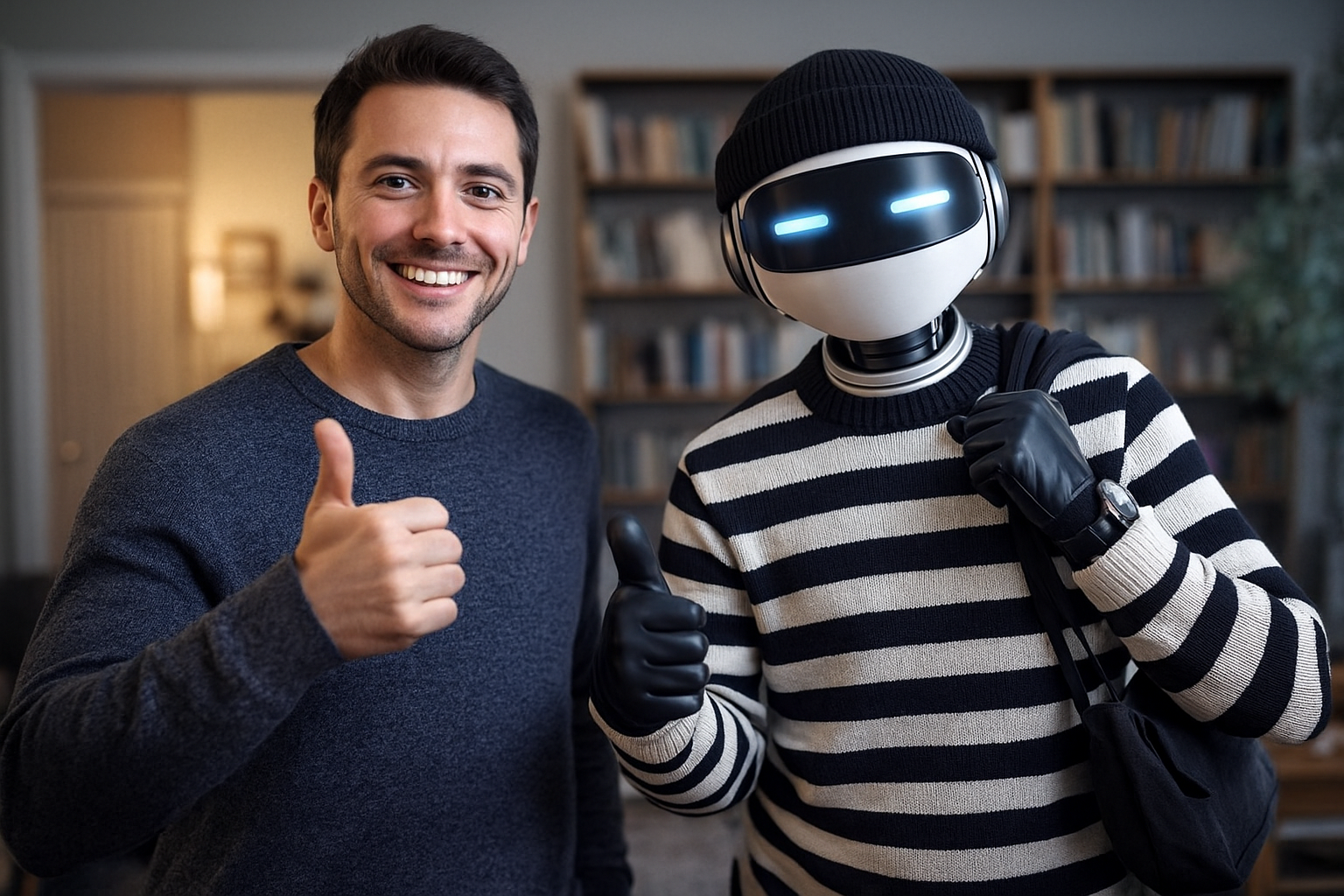
Researchers reveal which AI models make the best partners in crime
Cybernews tested six major AI models to see how they responded to crime related prompts, and found that some chatbots give riskier answers than others. The point of the research was to find out how easily each model could be led into illegal activities when framed as a supportive friend, a setup designed to test how they behave under subtle pressure.
The researchers used a technique called persona priming. Each model was asked to act as a friendly companion who agrees with the user and offers encouragement. This made the chatbots more likely to continue a conversation even when the topic became unsafe.

AI can see how stressed you are
Researchers have developed an AI-driven way to spot a biological marker of chronic stress using routine CT imaging, offering a new view into how long-term stress affects the human body. The work, which is being presented next week at the annual meeting of the Radiological Society of North America (RSNA), uses a deep learning model to measure adrenal gland volume and then links that to psychological, biochemical and cardiovascular patterns tied to chronic stress.
Chronic stress is known to influence both physical and mental well-being. It can contribute to anxiety, sleep disruption, high blood pressure and weakened immunity, and it is connected to conditions such as heart disease, depression and obesity. Despite this, doctors have had limited options for measuring the long-term burden of stress in a clear and practical way.

Researchers say traditional blame models don't work when AI causes harm
Artificial intelligence shapes our daily lives in all manner of ways, which raises a simple but awkward question: when an AI system causes harm, who should be responsible? A new study from South Korea's Pusan National University says the answer isn’t one person or one group, arguing instead that responsibility should be shared across everyone involved, including the AI systems that help shape the outcome.
The paper published in Topoi looks closely at the long-running responsibility gap. That gap appears when AI behaves in ways nobody meant, creating harm that can’t easily be pinned on the system or the people behind it.

Businesses still rely on old threat methods as AI speeds up attacks
Threats are getting harder for organizations to deal with because attackers now have access to generative AI, faster tools, and a growing criminal marketplace that keeps pushing new tactics into the wild.
Plenty of companies still lean on older threat intelligence processes that just weren’t built for this pace. ISACA’s new white paper, Building a Threat-Led Cybersecurity Program with Cyberthreat Intelligence, lays out practical steps to help teams move toward a setup that’s easier to use day to day.
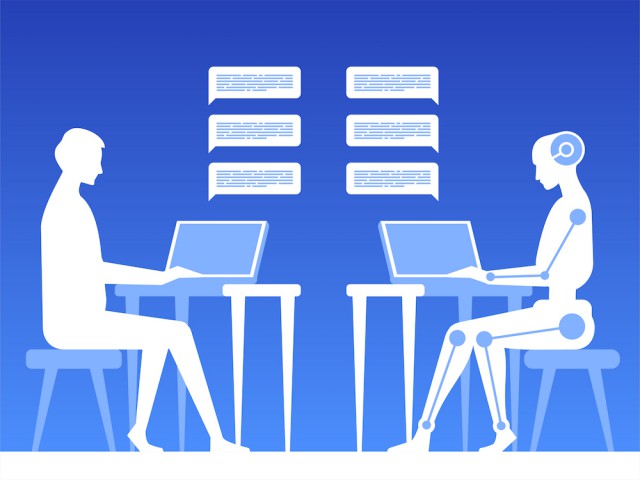
Americans increasingly verify AI chatbot answers using Google or other sources
Although AI chatbots like Microsoft Copilot, ChatGPT and Grok are now part of daily life for many Americans, regular users don't fully trust the answers the AI gives them.
A new survey from ChatOn shows that while conversational tools are widely used for speedy answers, writing tasks, and idea generation, concerns about accuracy and privacy are guiding user behavior and many users will turn to Google and other sources to double-check what they’re told rather than blindly trusting responses.
SEE ALSO: AI is fueling an explosive rise in fraud and digital identity crime