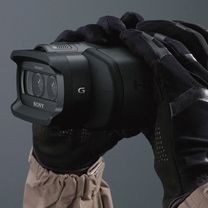
Sony unveils 3D HD video binoculars for long-distance lurkers
Sony today debuted two new sets of video binoculars, the DEV-3 and DEV-5, which are capable of 2D and 3D image capture using the new AVCHD 2.0 format.
Though images captured in the original AVCHD standard have shown a slight lack of clarity when compared to HDV because of its 13 to 17 mbps MPEG4-AVC compression in real-world trials; the AVCHD 2.0 standard, which debuted earlier this year, bumps up the maximum system bitrate to 28 Mbps, adds the capacity for 1080p 50i, 1080p 60i, and 3D image capture.

Which Firefox is right for you -- 6, 7, 8 or 9?
The browser market moves at a hectic pace these days, and so while a month ago most people were happily using Firefox 5, Mozilla has released Firefox 6, Firefox 7 beta, Firefox 8 Aurora, and even Firefox 9 via the Nightly channel.
Perhaps unsurprisingly, most of the changes are internal and will make little immediate difference to most people. We ran a few benchmarks on the various builds, for instance, and found Firefox 9 had around a 4 percent lead over Firefox 6, but otherwise the performance of Firefox 7, 8 and 9 proved very similar.

Lost a Windows Registry key? Yaru can recover it
It's no secret that working in the Registry can be dangerous, and the standard Microsoft advice has always been to back up your Registry before you begin. If you're confident in your PC abilities, though, it's tempting not to bother, especially once you realize that most simple editing tasks are entirely safe.
If you don't make a backup, though, the day may come when you really do delete or change something important. And then there's no easy way to reverse the damage; even using a previous system restore point might cause problems with your installed applications.
Viber vies for Skype's free-calling crown
There is no shortage of VoIP apps available for both Android and iOS platforms, but most of them fall down in one of several ways. The first sticking point that can mar an otherwise perfect app is the presence of advertisements. If these are not present it is likely that you will need to purchase credits in order to make call or send messages. Add to this the possibility for an app to just be bad, and any VoIP app vying for attention has to be something pretty special to avoid criticism. Viber falls into this latter category, being as it is, free, well designed, free from advertisements and lacking the requirement to purchase credits.
As a VoIP app, Viber is pretty much what you would expect. It enables you to send text messages and make phone calls using a WiFi or data connection. If you have the app installed on a phone, you can use it to keep in touch with people without racking up a huge bill and without eating into your monthly call and text allowance; if you have it installed on a non-Phone device, you can add phone functionality free of charge.

Nielsen: Most Android apps used sparingly
Apple and Google like to puff out their chest frequently on the number of apps in their respective app stores. But a new study from Nielsen suggests that may be irrelevant.
Android users spend 43 percent of their time on the top 10 apps, and 61 percent on the top 50. This means the over 249,000+ apps that make up the rest of the Android Market are fighting over that remaining 39 percent of user's short attention spans on their mobile phones.
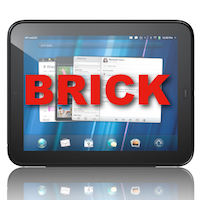
You bought HP TouchPad, it's discontinued, now what?
Six weeks after the first TouchPads reached retail and two months after preorders started, HP killed the tablet. That's right -- in a stunning announcement made just a few hours ago.
What we want to know: Did you buy TouchPad? Are you willing to admit it? What do you plan to do with it? What do you think of HP's decision to ice TouchPad -- your tablet -- in less time than European summer vacations? Please tell us, in comments or email joe at betanews dot com.
HP: Oracle's halt for Itanium support is "anti-customer"
There were a lot of sour notes in Hewlett-Packard's third quarter earnings call this evening: the bad economy is having a negative impact on hardware purchasing in both the consumer and public sectors, which impacts PCs, Printers, and Mobile devices. HP's CEO Leo Apotheker also pointed out the serious challenges for its Business-critical systems unit (a segment of its Enterprise servers, storaging and networking hardware [ESSN] division) that could possibly have been prevented.
Last March, Oracle announced it was stopping all software development for the Intel Itanium platform, and that it arrived at that decision because of the overall discontinuation of support by Intel, Microsoft, and RedHat. Oracle singled out HP and said, "HP CEO Leo Apotheker made no mention of Itanium in his long and detailed presentation on the future strategic direction of HP."
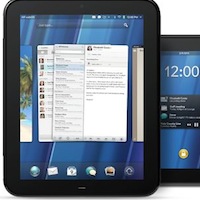
iPad kills HP TouchPad, is BlackBerry PlayBook next?
One day after reports that HP TouchPad was selling poorly at Best Buy, the world's No. 1 PC company discontinued the product. It was an unexpected announcement among others. HP also is looking to ditch its PC division.
In a press release, HP says "it plans to announce that it will discontinue operations for WebOS devices, specifically the TouchPad and WebOS phones. HP will continue to explore options to optimize the value of webOS software going forward".
HP considering PC biz spinoff: Is this the return of Compaq?
Just hours ahead of Hewlett-Packard's quarterly earnings call (which we were already eagerly anticipating), Bloomberg posted a report saying the Palo Alto based computer company will be spinning off its PC business into a separate company, and that it is acquiring the United Kingdom's second largest software company, Autonomy Inc., for $10 billion.
HP has since confirmed both rumors, saying it plans to announce in its earnings call that the HP board of directors has "authorized the exploration of strategic alternatives for its Personal Systems Group (PSG). HP will consider a broad range of options that may include, among others, a full or partial separation of PSG from HP through a spin-off or other transaction."
How much is a patent worth? By Google math $510,204.08
It appears as if Google is attempting to set a baseline for the value of a patent, according to some analysts who took a closer look of its acquisition of Motorola Mobility. Industry watchers widely believe that the Mountain View, Calif. search giant's primary interest in the acquisition was the massive portfolio of patents that could be used in defending Android.
Motorola holds about 24,500 patents, and it gives Google a huge shot in the arm when it comes to intellectual property. It paid $12.5 billion for the phone manufacturer, but it appears that the hardware business had little to do with the company's perceived value.
Is Windows 8's app store better late than never?
I sure hope so, but Microsoft should have done this in 2006.
Perhaps in an alternate universe Microsoft shipped Windows Vista with an app store and leveraged it to Windows Mobile. In that universe Microsoft's app store revived developer excitement about Windows; helped them to make more money (by diminishing piracy); gave businesses, consumers and developers an exciting reason to commit to Windows Mobile smartphones (with apps scaled from PC to mobile to Xbox); and made it nearly impossible for Apple to succeed in the smartphone market. Over there, Microsoft, and not Apple, is the cherished consumer brand. But, alas, we live over here.

Rocky stock markets shake tech stocks
It's another day of insanity on Wall Street, as fear grips investors. The Dow dropped by more than 500 points in early trading. Tech stocks couldn't escape gravity's pull downward.
These cycles of mayhem are becoming all too familiar as the market takes on greater cycles of increasing manic activity, with the Dow way up one day and down the next. Suddenly I feel good for not being an investor.
AT&T leaves customers with only two texting options: pay-per-text or unlimited
United States wireless carrier AT&T is is scheduled to begin only offering a single unlimited text messaging plan for its customers on August 21.
This presents customers with only two options: pay for the unlimited messaging plan, or pay per message which costs 20¢ per SMS text and 30¢ per MMS.

Got excess Skype Credit, and WiFi isn't free? There's an app for that
Skype users are familiar with the idea of buying credit in order to make online calls. If you should find that you have surplus credit that you just don't know what to do with, a solution may be at hand thanks to the release of the new Skype WiFi app, available for iPhone, iPod and iPad. This free app enables you to use Skype credit to connect to wireless hotspots at a range of locations all over the world.
Using Skype WiFi is simplicity itself. Once you have downloaded the app, sign into your Skype account and ensure that you have some available credit. When you want to get online at a restaurant, airport or other location, fire up the app, and choose from one of the available providers. Each provider has its charges listed so if there is more than one available you can opt for the one that offers the best deal.
Too soon to call HP's TouchPad a failure? We'll see tonight
Unnamed sources from electronics retailer Best Buy have suggested this week that HP's TouchPad is not selling and that as few as 25,000 of the retailer's stock of 270,000 have sold. The mobile tablet was first available for pre-order on June 19, and it first hit retail on the first of July. It is the first non-phone device to be powered by WebOS, and it's already being called a flop.
The time between July first and Wednesday of this week was a span of 47 days, so that means Best Buy has been selling an average of 531.9 TouchPads per day. That is not exactly the most auspicious beginning when one considers that there are 1,099 Best Buy stores in operation in the United States (Source: Best Buy) and that means the average store is selling about one TouchPad every other day.