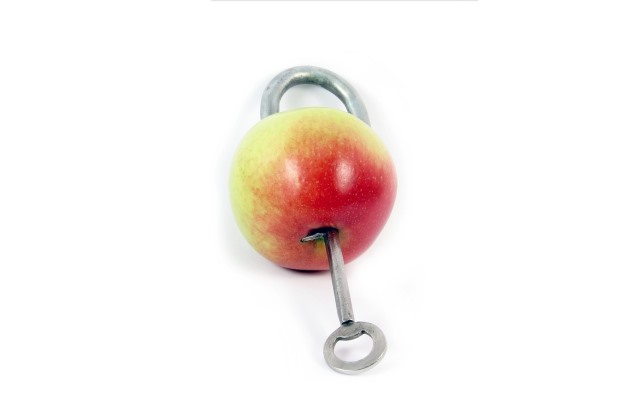
Apple re-hires security expert of PGP, Blackphone and Silent Circle fame
Following the company's very public stand-off with the FBI over the San Bernardino shooter's iPhone, Apple is demonstrating that it has a great interest in security by re-hiring encryption expert Jon Callas.
Best known for founding security-focused firms PGP Corp and Silent Circle -- the company behind the ultra-secure, privacy-centric Blackphone -- Callas has worked for Apple on two previous occasions.
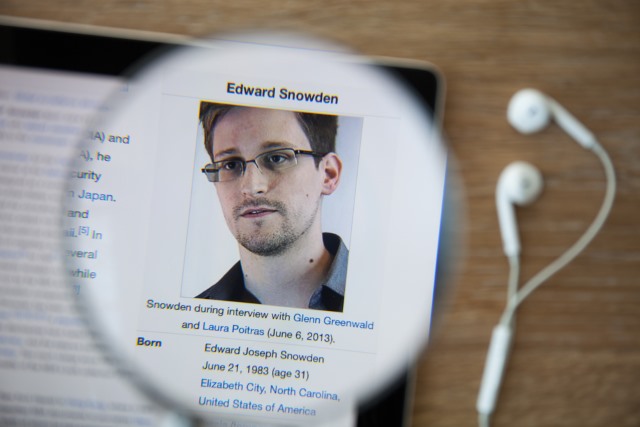
Edward Snowden warns about the dangers of using Google Allo
When Google announced the launch of two new messaging apps, the world wondered why. Duo is focused on video calling, while Allo is a more traditional messaging tool, albeit one with a Google assistant built in.
But while the world shrugged, Edward Snowden issued a stark warning. He says that Allo should be avoided, pointing out that the lack of end-to-end encryption makes it "dangerous".
TeslaCrypt ransomware shuts up shop and releases free decryption key for everyone
Ransomware is not exactly a new problem, but it's one that seems to be getting increasingly serious. Every week there's a new high profile attack out there including the likes of CryptXXX and PETYA. One of the biggest names, TeslaCrypt, has suddenly thrown in the towel and offered up a free decryption key for its victims.
The surprise move comes just a couple of months after version 4 of TeslaCrypt gained what was described as "unbreakable encryption". The closure is somewhat bittersweet. The shutdown comes as attackers switch to using CryptXXX instead, but perhaps the most surprising aspect is the fact that the site formerly used to accept Bitcoin ransom payments is now where you'll find the decryption key needed to gain access to your files.
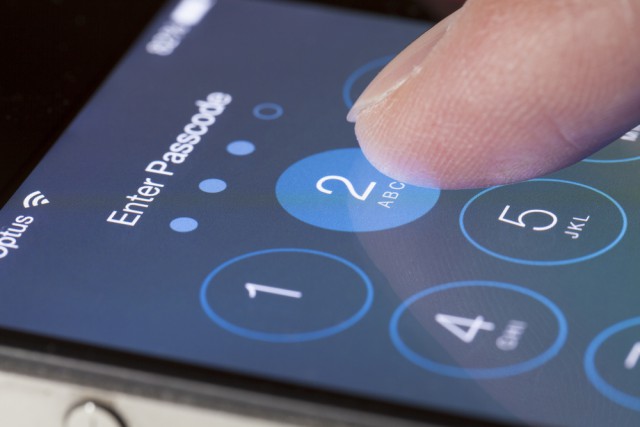
India has mobile forensic tools to hack into iPhones
The case of the FBI seeking to force Apple to provide backdoor access to the San Bernardino shooter's iPhone focused attention on security and encryption once again. The agency may have been able to gain access to the phone with help from a third party, but the Indian government has gone one better.
Communications Minister Ravi Shankar Prasad has revealed that the government has a tool that can be used to gain access to, among other devices, Apple's iPhone. This is not to say that a tool has been created that bypasses encryption, rather that a method for getting past the lockscreen has been developed.

LAPD hacks iPhone 5s, but how?
The iPhone 5c belonging to San Bernadino shooter Syed Rizwan Farook is not the only iPhone that the US authorities have managed to hack this year. According to a report by Los Angeles Times, the Los Angeles Police Department has "bypassed the security features" of an iPhone 5s.
The iPhone 5s in question was used by April Jace, the wife of The Shield actor Michael Jace, who is facing murder charges, being accused of killing his partner on May 19, 2014. And, according to court documents reviewed by the publication, on March 18 the LAPD claimed to have found a "forensic cellphone expert" who could hack the device, which is believed to hold important evidence in the trial.
Messaging apps provide a false sense of security
In the last couple of weeks we have seen consumer messaging giants WhatsApp and Viber retrospectively add end-to-end encryption technology to their communications platforms. The notion of providing users with improved security is certainly to be applauded, and seeing messaging apps adopt encryption as a necessity as opposed to simply a nice-to-have feature, is long overdue.
However, the manner in which providers are increasingly introducing encryption technology within apps as an afterthought is potentially providing a false sense of security to the billions of people that use them on a daily basis.

Bitcoin creator Satoshi Nakamoto revealed to be Australian entrepreneur Craig Wright
For some time, the person who created the cryptocurrency Bitcoin has been known as Satoshi Nakamoto. We know that was nothing more than a pseudonym, and now Australian entrepreneur Craig Wright has revealed that he is the man behind the mask.
It brings to an end years of speculation about the inventor's real identity, and Wright has been able to provide technical proof to the BBC to back up his claims. The IT and security consultant's home was raided in recent days as part of an investigation by the Australian Tax Office, and documents leaked from the inquiries pointed towards Wright. He has now confirmed his identity.
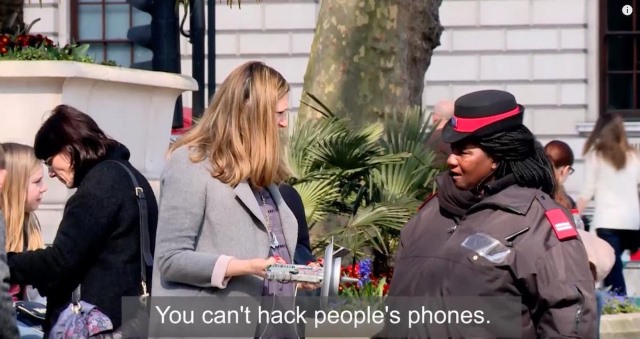
Human rights group Liberty rips into Snooper's Charter with video highlighting privacy issues
The Snooper's Charter -- or the Investigatory Powers Bill -- is a highly controversial piece of legislation the UK government is trying to bring into force to allow for the bulk collection of data, NSA-style. Outside of government, it is widely regarded as a massive invasion of privacy, and the human rights group Liberty is just one of the organizations that is very vocally opposed to it.
The bill will require ISPs to record customers' browsing histories for an entire year, and will permit the government to remotely hack phones and computers, as well as requiring tech companies to provide backdoor access to encrypted data. To highlight what is at stake, Liberty is running a No #SnoopersCharter campaign, and has released a video that attacks the notion of 'if you have nothing to hide, you have nothing to fear' head on.
Remove CryptXXX ransomware with Kaspersky's free decryption tool
Security firm Kaspersky has released a tool that can be used to decrypt files on computers hit by the CryptXXX ransomware. Rather than paying the ransom demanded to regain access to files, victims are now able to turn to the free RannohDecryptor utility.
CryptXXX had been identified by ProofPoint earlier in the month and described as being closely linked to the Reveton ransomware operation and Angler/Bedep. The ransom of $500 is considered to be quite high, but Kaspersky's free decryption tool means that files can be retrieved without having to part with a cent.

More apps and websites leak credit card data on enterprise handsets
In its latest quarterly Mobile Data Report, Wandera has revealed a significant rise in apps leaking credit card data on enterprise mobile devices.
The company, which specializes in mobile data security and management, compiled the report by analyzing the data usage trends and traffic patterns across its global network of enterprise mobile devices. Between Q4 2015 and Q1 2016, there has been a 17 percent increase in apps and mobile websites leaking credit card data.

It cost HOW MUCH to crack the San Bernardino iPhone?!
There are a lot of questions still to be answered about the San Bernardino iPhone that saw the FBI and Apple go head to head. After something of a battle, the FBI found someone to crack the iPhone. But who exactly did it? How did they do it? Will Apple be told how to do it in private? But one question that has also been lurking in the background is just how much it cost to hack into a single iPhone.
Now we know the answer. Not precisely, but we have a pretty good idea. Perhaps unsurprisingly, cracking the iPhone at the center of one of the most interesting technology cases in recent history, was not cheap. In a somewhat roundabout way, FBI Director James Comey revealed that the cost was more than $1.34 million.
EFF sues Justice Department to discover if secret orders are used to decrypt user data
EFF (the Electronic Frontier Foundation) has filed a Freedom of Information (FOIA) lawsuit against the Justice Department. The digital rights group wants to learn whether the government has made use of secret court orders to force tech companies to provide access to encrypted user data.
After the Apple vs the FBI battle, there has been renewed interest in how companies handle not only encryption, but government requests for access to such data. With services such as WhatsApp enabling end-to-end encryption, attention has now switched to what might be happening in the background without users' knowledge. While Apple very publicly refused to provide decryption keys, EFF -- and others -- are concerned that secret court orders may be used to hide what is really happening.
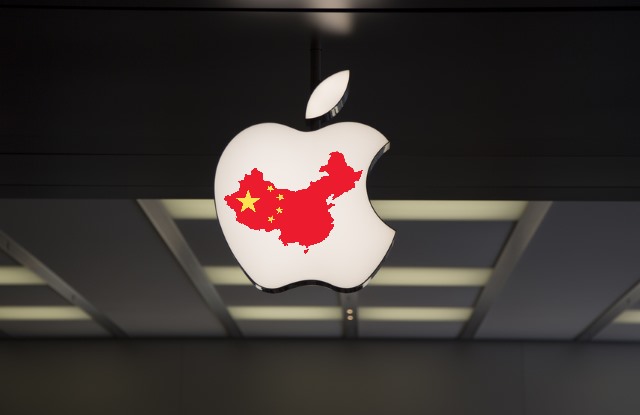
China wants Apple's source code, but Apple refuses to hand over the goods
Apple has revealed that Chinese authorities have asked for access to the company's source code in the last couple of years. The revelation was made by Apple general counsel Bruce Sewell as he tried to deflect accusations that have sprung up in the wake of the San Bernardino iPhone case.
The battle between Apple and the FBI rumbled on for a while as authorities asked the iPhone manufacturer to crack encryption or provide a backdoor into the phone at the center of the case. Apple refused to help the FBI, leading to accusations that the company was failing to help US authorities whilst assisting those abroad. Apple categorically denies handing over information to the Chinese authorities.
Viber introduces end to end encryption
The major messaging services are now placing a greater emphasis on their users' privacy and security, following the heated encryption debate started by Apple and the FBI. Viber has just announced end-to-end encryption support, making it the second leading player this month to introduce this feature after WhatsApp.
Viber has over 700 million users across the globe, but its end to end encryption feature will not be available everywhere right away. The company is focusing on Belarus, Brazil, Israel and Thailand first, with other markets to get the same treatment in the weeks that follow.
'Let's Encrypt' exits beta -- backed by Cisco, Akamai, Mozilla, Google, Facebook, and more
Ever since hero Edward Snowden's bombshell document leaks, the technology world has wide eyes for encryption. Sure, it was a topic prior to Snowden, but many failed to give it the focus it deserved. Thankfully, companies are now better implementing encryption, and some of them, such as Apple, are fighting for our rights too.
Today, the encryption initiative, 'Let's Encrypt', finally leaves beta. Josh Aas, ISRG Executive Director says "we set out to encrypt 100 percent of the Web. We're excited to be off to a strong start, and with so much support across the industry". If you are wondering what he means, please know that big players such as Cisco, Akamai, HP, Mozilla, Google, and Facebook are sponsoring it. But what exactly is Let’s Encrypt?