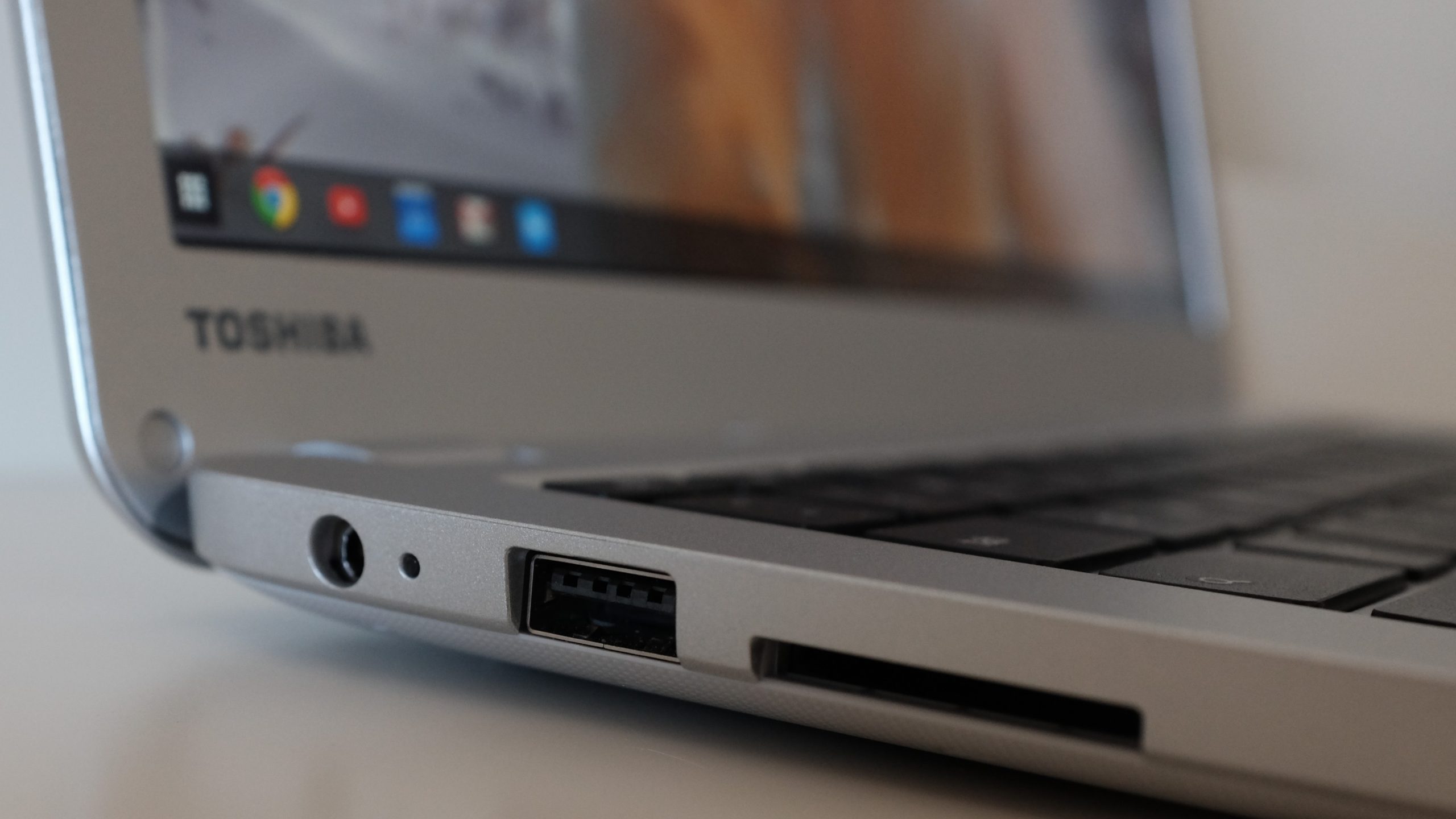
Euro currency crisis raises Chromebook's sales appeal
What if you manufactured a low-cost, underpowered laptop -- and the configuration suddenly turned into a massive marketing advantage? That may well be the opportunity ahead for Google and its Chromebook OEM partners; if they seize the opportunity.
As we reported Wednesday, Gartner predicts that currency devaluation will compel major computer manufacturers to raise prices by as much as 10 percent, particularly across Europe and in Japan. Higher prices mean more customers will do with leaner configurations, and choose sub-$500 systems. Meanwhile, PC makers will give purchasers less for more money, cutting back features to preserve margins while shifting sales priorities to markets where currencies are more buoyant. What is Chromebook already? A lean, low-cost PC in that price category but better optimized for hardware.

Shazam and TuneIn Radio gain 'OK Google' Android music identification and playback
The older I get, the less aware I am of the current popular musicians. If I hear a pleasing song while I am at the store or chilling at Starbucks, it would be awkward to ask one of the younger and hipper people to identify it for me -- that is about as uncool as one can get. Luckily, thanks to technology, I can use my smartphone to discover name of both the song an artist.
Today, both Shazam and TuneIn announce a partnership with Google to integrate their app functionality into the Google app on Android. What does this mean? You can call upon Google with the familiar "OK Google" followed by "Shazam This Song". The Shazam app will then attempt to identify a song using your devices microphone. You can use similar functionality to play music with TuneIn Radio.
Google's open source addressing system could replace longitude and latitude
Google often decides to go about things in its own way, and is frequently found approaching common problems from a unique angle. The latest candidate to receive the Google treatment is the humble address. Not web addresses or email addresses, but regular postal addresses. So what's the deal?
While street names and numbers usually get you to where you want to go, that's not always the case. You could opt to use longitude and latitude instead, but what sane person wants to do that? This is the very question Google asked before it came up with Open Location Code, an open source addressing system the company hopes developers will latch onto.
What Google's looking for in a manager
Being a manager at a company is a difficult task. You need to help people, motivate them to work, plan their projects, and make decisions. Even though a lot of people dream of becoming a manager, or any sort of boss at a company, not everyone is fit for that kind of pressure and expectation.
But when it comes to Google, being a manager is a completely different experience. The reason? It’s kinda hard to manage people that are most likely a lot smarter than you.

Google's open source 'Password Alert' protects your login credentials from phishing attacks
Google is life. Well, not really, but for some people it kind of is. For many of us, a Gmail account became a gateway to an entire Google lifestyle. One password logs us into numerous services, which is super convenient, but also quite scary. Over time, it is easy to let your guard down and fall for phishing sites that pretend to be a legit Google login. If your Google credentials are intercepted, you are going to have a bad time.
Today however, the search-giant releases an open source Chrome browser extension aimed to thwart these stinky phishing goons. Called "Password Alert", it will hopefully protect your credentials and keep the sun shining on planet Google.

Microsoft offers free Skype calls in Nepal, Facebook donates $2 million
The terrible repercussions of the earthquake in Nepal and the aftershocks continue to be felt. With thousands of people yet to be accounted for, Google and Facebook have already launched services to help connect with people in the affected areas.
Now Microsoft has entered the fray, offering free Skype calls to both landlines and mobiles in Nepal. Starting immediately, Skype users can make calls from within Nepal, or place them to the country regardless of whether they have any credit.

Google wants to buy your patents from you
Got a spare patent or two lying around, gathering dust and cluttering the place up? Google might be interested in taking those patents off your hands in return for cold, hard cash. Today the search giant announces details of the Patent Purchase Promotion which will run for two weeks in May.
The move is an attempt to "remove friction from the patent market", with the added benefit for Google that it will help the company to expand its patent portfolio. The online patent-selling portal will run from May 8 to May 22 and has been designed to be accessible to smaller players.

Google and Facebook offer support after Nepal earthquake
When disaster strikes, technology can often be put to good use. Following the devastating earthquake that struck Nepal this week, Google and Facebook are among the companies helping those in the area, as well as people looking for friends and relatives.
Google's People Finder does very much what it says on the tin. It's a very simple website that enables people to publish requests for information about loved ones, as well as giving those with information somewhere to share it. Facebook's Nepal Earthquake Safety Check provides a similar feature.
Aggressive Android app ads annoy and interfere
Avoiding online ads can be fairly easily achieved by installing a tool such as AdBlockPlus, but it's a different matter when it comes to ads in mobile apps. Security researchers at Doctor Web have discovered that a number of Android apps found in Google Play are plagued with aggressive ad modules.
Advertising is considered aggressive if it appears on top of other windows, interferes with the use of applications, and makes normal use of a smartphone or tablet difficult.
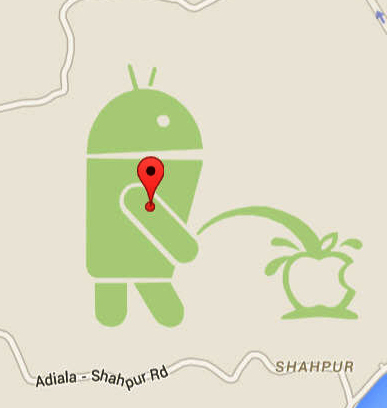
Android pisses all over Apple -- in Google Maps [Updated]
Google hides lots of Easter eggs in its products and services. Usually fun little extras designed to amuse. However, the latest one discovered in Google Maps is of questionable taste.
Tucked away in Pakistan, close to the New Islamabad International Airport, is a cartoon image of Google’s Android urinating on an Apple logo. Nice.

Send directions from your desktop to Google Maps on your Android phone
Dedicated satnav units are less popular than they used to be, and this can be attributed in part to the rise of direction-providing smartphone apps like Google Maps and Waze. If you are invested in Google Maps, you may well check out directions on your desktop computer and then have to get them set up on your phone as well.
Today that changes. Google has unveiled a feature that makes it possible to push directions from your desktop computer or laptop to your phone. This eliminates a step and makes the whole process of getting from A to B much easier.

Celebrate YouTube's 10th anniversary by going back to where it all began -- the zoo
Google’s video service celebrates a very special milestone today -- it’s ten years to the day since the first video was uploaded to the site. "Me at the Zoo", in all its 240p glory, has racked up close to 20 million views, which isn’t bad (especially as it wasn’t made public initially), although it pales into insignificance when compared with the likes of "Charlie Bit My Finger -- Again", with its 817 million views.
A lot has happened to YouTube in that time. It officially launched in May 2005 (so expect another birthday post next month) and was acquired by Google in 2006. It has spread across a wide range of platforms, batted off numerous legal challenges, and become a massive part of our lives.
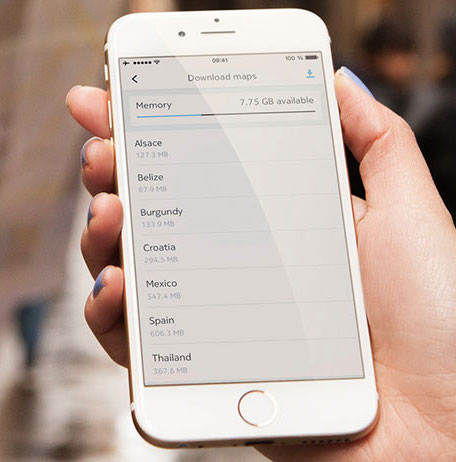
What if Apple buys Nokia's HERE?
It is no secret that Nokia is pondering the sale of its HERE division. The Finnish company wants to focus on the telecommunications market, and HERE, which offers location services, mapping and navigation software, seems to be nothing but extra weight to lug around. Seeing as a sale is inevitable, the question is, who is going to buy it?
A rumor that's floating around now suggests that Nokia has pitched the sale of HERE to Apple, among other companies. The Cupertino, Calif.-based corporation would certainly stand to benefit from acquiring the technology that powers HERE, as its own attempt at offering navigation software to iOS users has not gone particularly well. Such a purchase, while extremely interesting for Apple, would have deep implications for HERE's current clients, which will most certainly not be favored by it. Here's what it could entail.
Google Project Fi is calling -- will you answer?
The waiting begins. This afternoon I asked the great Google god to bless me with an invite. If my homage is accepted, someday soon I can pay for the privilege of using the company's new piggyback cellular phone service. The thing is so exclusive, only one smartphone is supported. It's Nexus 6, or nothing, baby. I own one, so happens.
Project Fi switches between Sprint and T-Mobile cellular networks for core connectivity alongside wireless hotspots. That's why I call it a piggyback service; Google is not building out its own infrastructure. Fi is contextually conceived and consumed. Nexus 6 switches networks based on location and availability. Your phone number traverses devices, providing access on laptops and tablets, too. Context is what differentiates this service from every other.
Safari is king of the mobile browsers -- which could be bad news for Google
Google’s dominance of the web is best illustrated by Mobilegeddon. The search giant has made changes to its algorithm, prioritizing sites that are "mobile friendly" and demoting those that aren’t. Google says that mobile-friendliness is just one of 200 signals that it uses to determine the ranking of results and that sites which don’t have mobile versions won’t disappear as a result of this change. That said, the truth is if Google says you need a mobile site -- that it approves of -- then you need a mobile site.
But while Google is forcing sites to offer mobile friendly versions or suffer the consequences, it’s Apple’s browser that the majority of people are using to access the web while on the go.