
Hillary Clinton questioned by FBI about personal email server
It's the issue that just won't go away for Hillary Clinton -- her use of a private email server while serving as secretary of state. Today the Democratic presidential hopeful has been questioned by the FBI about her emails.
The Justice Department's investigation aims to determine if Clinton used the email account to send communication relating to national security, and whether this is illegal. She says the account was created for convenience and has denied using it to send classified information.

Facebook's new multilingual composer will let you post status updates in multiple languages
Facebook has announced a new tool that aims to break down language barriers. Previously available for Pages on the social network, the multilingual composer is set to make its way to individuals' accounts as well.
Previously anyone who wanted to post bi-, tri- or multilingual status updates would have to either type out each language as a separate post, or post a lengthy status featuring multiple translations. The latest change means that you can write in, say, French, and only friends and followers with their language set to French will see it.

UK's mobile networks have the highest speeds but lack 4G LTE coverage
The UK has the fastest mobile internet in the world, according to Akamai’s new State of the Internet report. The report found that during the first quarter of 2016, mobile users in the UK experienced average speeds of 27.9 Mbps. Of all the countries surveyed by Akamai, the UK has the highest average speeds.
The UK's speed is far higher than the rest of Europe by about 10 Mpbs. It is also significantly higher than the US which has a recorded average speed of only 5.1 Mbps when tested through Akamai’s platform.
Google's 60 Tbps undersea cable connecting US and Japan is live
Japan’s Internet is set for a large speed boost as Google’s 9,000km undersea Internet cable that connects the country to the United States is now officially up and running.
In 2014, the company announced that it would lay an undersea cable connecting the two countries that would have a 60 terabits per second capacity. Google’s senior vice president of technical infrastructure, Urs Hölzle, said the cable has a capacity that is "more than any active subsea cable" and is "10 million times faster than your cable modem".
Facebook uses Irish headquarters to skirt privacy laws
Facebook has won an appeal against a court ruling that said the social network could not store data about people who did not have an account. It had been ruled that Facebook could not gather data about non-users in Belgium; Facebook responded by blocking access to those without an account.
Back in 2015, Facebook was told to stop this blocking or face hefty daily fines. Facebook felt that the ruling was unfair and appealed. In a new ruling today, the Brussels Court of Appeal said: "Belgian courts don't have international jurisdiction over Facebook Ireland, where the data concerning Europe is processed".
Facebook opens up about how it controls your newsfeed
Earlier today, Facebook announced the latest tweak to newsfeeds. Having denied being politically bias towards Brexit, or having a liberal leaning, Facebook continues to face question and criticism about how its news feeds and trending topics are formulated.
As well as updating the way newsfeeds are populated, Facebook today revealed just how it choses what appears in your newsfeeds. This isn’t a case of full transparency, but it is an interesting insight nonetheless.
Facebook tweaks its newsfeed, yet again, so you'll see more posts from people you actually know
When it's not messing around with privacy settings and manipulating trending topics, there's nothing Facebook seems to like more than to tinker with timelines. Today the social network announces the latest changes to your newsfeed -- now you should see more posts from your friends and family.
The problem we currently face, Facebook says, is that there is "far too much information for any one person to consume". This is where algorithms come into play, meddling with timelines and newsfeeds in ways that never please everyone. The latest change promises that content from "the friends you care about" will appear "higher up in your News Feed".

Google's creepy My Activity page reveals the terrifying amount of data collected about you
That Google gathers data about you is not news. If you use Google products, it's something you've decided to put up with -- either that, or you live in blissful ignorance of. Whether you're using Gmail and YouTube online, Google keyboard on your Android smartphone, Chrome across platforms, or whatever, being a Google user means handing over an awful lot of personal information.
But just how much does Google know about you? If you use the voice-activated "OK, Google" feature of your phone, there are probably lots of recordings of you stored online; what about everything else? Google has now launched My Activity, a portal which reveals everything the company knows about you. Every search you’ve made, the apps you've used, the videos you've watched, and everything in between.
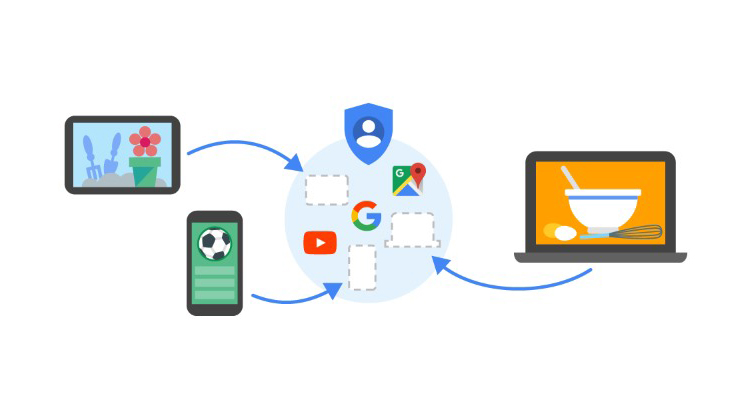
Ad personalization from Google -- giving power to the people, or a privacy nightmare?
Online ads aren’t going away anytime soon, and that'll keep the likes of Adblock Plus in business for the foreseeable future. But if you choose not to use an ad blocker and are therefore going to be bombarded with ads, they might as well be ads that are relevant to you, right?
Google is rolling out a new feature that enables users to choose the topics they are interested in so the ads they see will be more appropriate to them. But as well as improving the ad experience for users, the new scheme means that advertisers are handed even more information about people that can be exploited for financial gain. It also enables Google to use information it gathers about users to tailor ads.
Evernote ramps up its prices by a third and imposes restrictions on free users
Evernote has today announced that it is increasing the prices of its paid-for packages, whilst simultaneously increasing the restrictions on free Basic accounts. Both the Plus and Premium tiers are increasing in price by a third, while those looking to avoid having to pay will find that they are now limited to syncing data between just two devices.
Evernote says that the price increase reflects a "significant investment of energy, time, and money" that will be needed "to deliver the Evernote we envision" -- something the company admits it has a "long way to go" before achieving.

Google teams up with LyricFind to show song lyrics in search results
"Son and heir", not "sun and air". Excuse me while I "kiss the sky", not "this guy". If you've ever struggled to interpret the lyrics to a song, you've probably scurried online to look up what is actually being sung. By teaming up with LyricFind, Google just made this much quicker and easier.
No more jumping from site to site. No more ad barrages. Now Google will display song lyrics directly in search results from the world’s largest lyric licensing service. As well as making things easier for searchers, the deal means that artists get paid royalties as their lyrics are viewed.
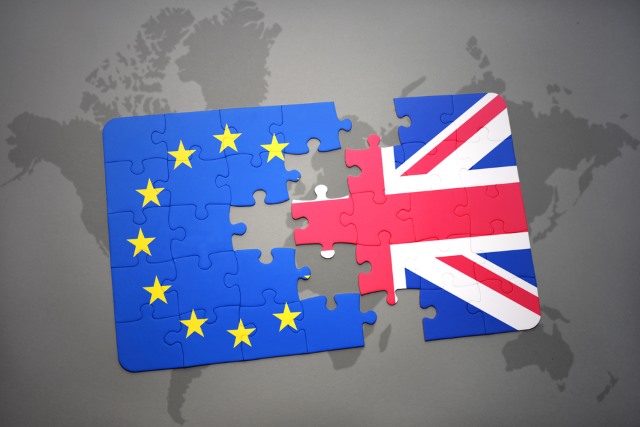
Post-Brexit, an online campaign for a second UK referendum gains huge support
The UK may not yet have introduced online voting -- nor is it likely to any time soon -- but it does have a website that can be used to raise petitions for debate. The House of Commons website is home to a huge number of such petitions, and any that gain 100,000 signatures will be raised in Parliament.
After the UK referendum on EU membership saw the country narrowly voting in favor of Brexit (even if they didn’t know what this meant), a petition calling for a second referendum has been signed more than 3 million times. Ironically, the petition was set up by a pro-Brexit, anti-EU politics student a month before the referendum actually took place. His plan was to call for a re-run in the event of a narrow vote to remain in the EU, but his wording is such that it could (although it's unlikely) backfire on him.

EU-US Privacy Shield: White House promises not to spy on European data
The replacement for data protection arrangement Safe Harbour, the EU-US Privacy Shield, has undergone final amendments. Safe Harbour has already been deemed invalid, and frantic talks have been underway to finalize its successor.
Despite gaining the backing of Microsoft, EU-US Privacy Shield has faced a great deal of criticism. In the wake of the Brexit vote in the UK referendum on EU membership, the UK may be forced to comply with the rules even though it is in the process of exiting the Union. One of the most significant changes to come about -- and one that will be welcomed by privacy advocates -- is a promise from the White House not to engage in indiscriminate bulk data collection of European data.
Check your privacy settings -- Facebook is (probably) sharing your employment history
Somewhat out of the blue, Facebook has decided to change the way it displays certain information on your profile. Not content with showing your current place of work -- whether this is real, or some clever pun you've engineered -- it now also shows your employment history.
This is not a direct change to privacy settings as it does not make public anything that had been previously set to be private. It does, however, broadcast your previous places of work to people looking at your profile. You might not like this. You might want to do something about it.
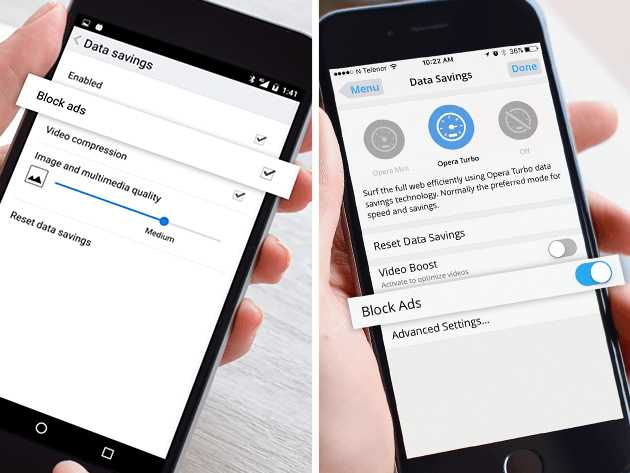
Opera now lets you block ads on Android, iOS and Windows 10 Mobile
Opera Software made a bold move earlier this year when it introduced a native ad-blocker in its desktop Opera browser. While controversial, this feature is not enabled by default though promises to offer some major benefits, like a 40 percent boost in performance compared to an extension like AdBlock Plus.
However, folks are not only saying "No" to advertisements on their PCs but also on their smartphones and tablets. In fact, mobile ad-blocking usage has seen a 90 percent rise year-over-year, with more than 400 million devices said to run an ad-blocker. The latest versions of Opera Mini for iOS and Windows 10 Mobile and Opera for Android now cater to that growing audience too, as they too feature a built-in ad-blocker.