
Want cheap broadband? Head for Sudan
Analysis of data on over 3,700 broadband packages from 219 countries around the world shows that if you want the cheapest deal you should consider moving to Sudan.
The study by Cable.co.uk shows Sudan offers the world's cheapest broadband, with an average cost of $2.30 per month. By contrast another African nation, Burundi, is the most expensive place in the world to get fixed-line broadband, with an average package price of $383.79 per month.

Google kills off the Chrome Cleanup Tool for Windows
With the release of Chrome 111, Google is waving goodbye to the Chrome Cleanup Tool that has been available for a number of years.
After 8 years of service, Google has decided the Chrome Cleanup Tool -- which, the company explains, helps users to "recover from unexpected settings changes, and to detect and remove unwanted software" -- is simply no longer needed.
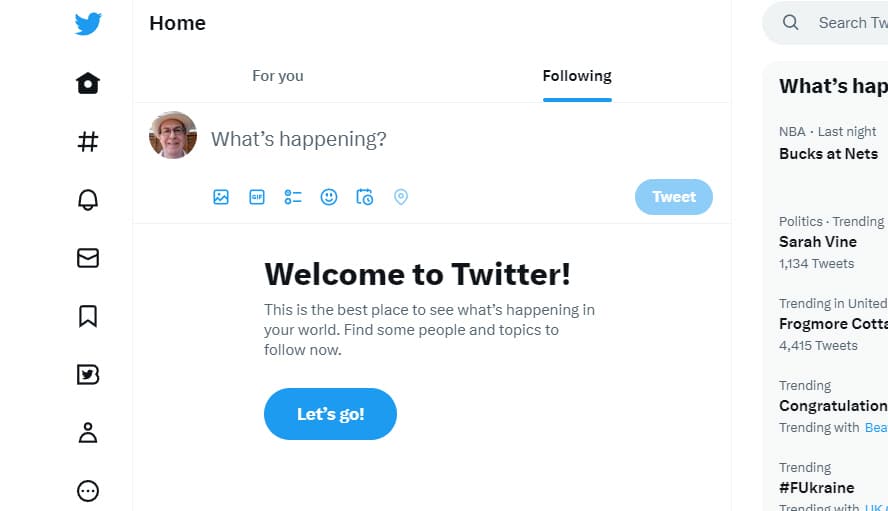
Welcome to Twitter, who are you again?
If you've visited Twitter this morning you may have found that the platform appears to have forgotten that you exist.
Users around the world are being presented with a friendly 'Welcome to Twitter' message urging them to find some people to follow, despite having been on Twitter for years and already following hundreds of people.

Is it worth paying for an enterprise browser? [Q&A]
Why would you pay for a browser when all of the popular ones are available for free? If you're an enterprise it could be because a paid browser can address some key problems.
We spoke to CEO and co-founder of enterprise browser specialist Island, Mike Fey, to find out more about this category and what benefits it can offer.

Ethical web scraping and data rights [Q&A]
Web scraping, automatically harvesting and extracting data from websites, can be a useful tool for businesses to learn about their customers.
But it's easy to fall into the trap of harvesting data just because it's there, leading to information overload not to mention privacy concerns for the consumer. To find out more about web scraping and how it can be used in an ethical way we spoke to founder and CEO of Rayobyte, Neil Emeigh.

61 percent of Americans rely on free antivirus programs
A new report on the antivirus market from Security.org reveals that almost three-quarters of Americans still strongly believe computers need antivirus to protect their devices and 61 percent are relying on free options like Microsoft Defender.
The number relying on free solutions has held steady, down only one point since 2021. Interestingly, only eight percent of free antivirus users have experienced a breakthrough virus in the past year, compared to 10 percent of paid users.

Google is giving Chrome a new Password Manager -- here's how to enable it
For anyone who struggles to remember the growing list of endlessly complicated passwords needed to gain access to the plethora of online accounts we all now have, a password manager is near-essential. Chrome, like many of the web browsers, has long-featured a tool for storing and automatically entering passwords, and now Google is giving it a much-needed upgrade.
Until now, Chrome's password manager has been functional, but far from being adorned with bells and whistles. Now Google is giving it a new user interface as well as an important injection of new features.

Three out of four people feel unsafe online -- and cybersecurity doesn't help
A new report finds that even as internet users spend around a third of their lives online, most feel risks are increasing, and cybersecurity is too complex.
The report from F-Secure finds three out of four internet users worry about their safety online, while almost seven out of ten (69 percent) of those surveyed said they don't know who to trust online.

Striking the right balance between development and security [Q&A]
Developers need access to many devices and internal services in order to build software. But many of these devices and services are exposed to the public web, creating gaps in security.
Add in the challenges of securing remote working and it's clear that there's a tricky balancing act needed to enable development while keeping the organization secure. We spoke to Avery Pennarun, CEO and co-founder of VPN service Tailscale, to find out how this can be achieved.

Google launches new security and privacy features to mark Safer Internet Day
Google is using today's Safer Internet Day to announce a number of new security and privacy initiatives.
Among these are new ways to fill out passwords easily and securely in Chrome, more privacy protection for the Google app, improvements to Google Password Manger, and an expansion of SafeSearch to protect against explicit images.

Microsoft Teams Rooms on Windows is getting an amazing new look
Microsoft has revealed details of an upcoming visual update to Microsoft Teams Rooms on Windows which is due to hit general availability by the end of this quarter.
"Vivid" and "vibrant" are words Microsoft is using to describe the new look and feel that will be making its way to the software soon. A quintet of new themes will be added for greater customization options, and there are new buttons, an updated calendar and better alignment of interface appearance across Windows and Android.

Real time data collection is needed for eCommerce companies to reach their full potential
According to new research, 62 percent of eCommerce organizations say that real-time data collection will be at the forefront of their priorities for 2023.
The study, carried out for Oxylabs by Censuswide, surveyed over 1,000 senior data decision-makers, split between UK and US eCommerce companies. It finds that as companies begin to rely more on efficient and low-cost data collection methods such as external data gathering, used by 40.54 percent of respondents, there is a clear shift towards gaining more actionable insights.

Microsoft is working on a major Edge update known as Phoenix -- and you can try one of the best features right now!
Since consigning Internet Explorer to the trash can and adopting the Chromium engine, Microsoft has developed Edge quite rapidly and it has evolved into a browser that does a lot to make up for its predecessor.
And Microsoft is showing no signs of slowing down. The company is currently working away on a revamped version of Edge, code-named Phoenix. In addition to a more Windows 11-like look, there are some new features on the horizon, including the ability to split an Edge window into two tabs -- and you can even try this out in the preview builds of Edge right now to get a taste of what the future holds.

Island integrates ChatGPT into its enterprise browser
Since it was launched towards the end of last year ChatGPT has created quite a buzz, both for its legitimate uses and its potential to be abused.
Now though Island is announcing the integration of ChatGPT into its Island Enterprise Browser. It aims to provide deep contextual awareness, so you receive prompts that are informed by your behavior and relevant to what you're working on, as you work on it.

If you don't know what you're exposing, how can you protect it? [Q&A]
The move to the cloud has meant the days of external exposure being defined by the set of IP ranges in your firewall are gone. Today's attack surface is made up of many internet-facing assets with exposure being controlled at the domain level.
This means web applications have fast become an attractive target for attackers, particularly unknown and forgotten assets -- which are plentiful in modern environments. So how can businesses defend themselves?