
Kaspersky 2017 brings VPN, better adware blocking and removal
Kaspersky Labs has released Kaspersky Anti-Virus 2017, Kaspersky Internet Security 2017 and Kaspersky Total Security 2017 in the US and Canada. New features include Secure Connection, a virtual private network which automatically kicks in to protect you when using wifi hotspots, web banking sites and more.
An Installation Assistance tool looks out for adware and other pests that get silently installed with some free software, and the Software Cleaner helps you decide what to remove.

Microsoft tightens up Windows 10 security by requiring kernel mode drivers to be digitally signed
Windows 10 will not load unsigned kernel mode drivers, starting with version 1607 of the operating system. This is something that had been announced back in 2015, but is only just being implemented.
The decision was taken in order to improve the security of Windows 10, but Microsoft says that "due to technical and ecosystem readiness issues, this was not enforced by Windows Code Integrity and remained only a policy statement". Now it is a reality, and it's something developers and users need to keep in mind.

Google.com gets safer with HTTP Strict Transport Security (HSTS)
For any site you visit nowadays, HTTPS should be offered by default. I don't care about the content of the site -- there is no reason to go HTTP only in 2016. Security matters, folks.
Google.com -- one of the world's most popular domain names -- is aiming to get even safer by implementing HSTS. The search giant has recently enabled this technology for the benefit of its users, and it should start paying security dividends immediately.

Security pros find it hard to measure ROI on spending
The majority of IT security experts actually struggle to measure the return on investment in security measures, Tenable Network Security says.
Based on a survey of 250 IT security professionals, conducted during the Infosecurity Europe 2016 summit, it says that the majority can only measure the return on less than 25 percent of their security spend.

Russia becomes main target for DDoS attacks
There has been a huge increase in the number of DDoS (distributed denial of service) attacks in the second quarter of this year, a new research report by security experts Nexusguard says.
According to Nexusguard’s Q2 2016 Threat Report, there has been more than 182,900 attacks in Q2 this year, with the majority falling onto Russia.

The SwiftKey keyboard app is busy leaking email addresses and phone numbers to strangers
Who doesn't love a good AI-driven keyboard, eh? Well, people who have discovered that the keyboard is sending their email address and phone number to strangers, for starters. And that seems to be precisely what's happening with SwiftKey.
The Microsoft-owned company has disabled the syncing of data between devices after users complained not only about the appearance of unknown email addresses and phone numbers in suggestions, but also suggestions in unknown foreign languages. The problem became apparent when users who saw the random email address suggestions contacted the owner of the address.
New platform detects mobile threats at the app level
Increased reliance on mobile devices opens enterprises up to a new range of threats. While mobile management solutions can do a good job of protecting the device, it's harder to guard against attacks on individual apps.
Mobile security company Appmobi is launching a new solution that detects and resolves attacks at the app level.
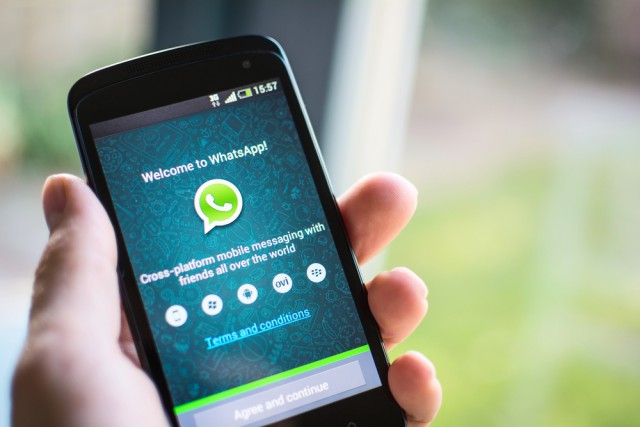
WhatsApp doesn't properly delete 'deleted' chats
A security researcher is warning WhatsApp users that their chats can be retrieved even after they have been deleted, cleared, or archived. Jonathan Zdziarski says that even using the 'Clear All Chats' option leaves behind a 'forensic trace'.
He warns that the only way to be certain that your chat history is deleted, is to get rid of the app entirely. The problem appears to stem from WhatsApp's use of SQLite which fails to overwrite deleted data by default, rendering it recoverable.

Cybersecurity at the election has been less than spectacular
At a time when computer security has been front and center in the Election news, given the Clinton private server scandal and the DNC hack, not to mention one candidate calling on a foreign nation to hack our systems -- something he later walked back on, saying it was sarcasm -- this is a bad time to put additional questionable practices on display.
Now that things are wrapped up and we have two official nominees, we also have a report of the major failures that were on display (not just politically).

Financial services need to beef up crime protection and prevention
Financial services need to rethink crime protection and prevention because the current measures are simply not cutting it, according to PwC. In the company’s new paper, it examines the industry to find out to what extent it is complying with the latest rules and regulations, whether it is investing heavily in protection and prevention, and what are the results.
Basically, financial institutions have always been, and it seems as they will continue to be, cyber-criminals’ most wanted target. They are under intense scrutiny by regulators, and they are investing heavily in both protection and prevention.

Creating a security-aware mobile culture
Historically hackers have pursued and targeted individuals more frequently than they have targeted businesses as they are typically the path of least resistance. However, the number of organizations worldwide falling victim to major cyber attacks is dramatically rising. More and more, hackers are infiltrating businesses of all sizes -- and not just through traditional system hacks, but now increasingly through social engineering.
Tricking people to access money or sensitive information on the Internet is by no means a new concept -- these cleverly disguised emails were behind the infamous ‘Celebgate’ hacking case, which exposed nude photos of celebrities. Except now, fraudsters are doing their homework to perfect their technique.
New solution helps enterprises guard against chat-based phishing
Slack is the largest enterprise chat platform in the world with more than 2.7 million daily active users who spend an average of 140 minutes per day using it.
Not surprising then that alert attackers see it as an opportunity to expand their social engineering campaigns. The fact than many people use Slack without the IT team's knowledge creates a further security issue.

61 percent of Americans fear having their cars or home security cameras hacked
As more and more devices get connected to the Internet of Things, so their susceptibility to hacking increases too.
New research from enterprise data protection company Vormetric in conjunction with Wakefield Research shows that this is a concern for many people.

Xen hypervisor has 'fatal' security vulnerability
Security expert Jérémie Boutoille from Quarkslab says that he has found a critical bug in the Xen hypervisor. The open-source hypervisor, which has the likes of Amazon, and IBM on its cloud clients list, has had a bug which could lead to potential privilege escalation.
The bug, identified as CVE-2016-6258, affects all versions of Xen. However, only PV guests on x86 hardware should be worried. Hardware virtual machine (HVM) and ARM guests are deemed invulnerable.
Microsoft changes minimum hardware requirements for Windows 10 to improve security
Today -- the day before the free upgrade to Windows 10 expires, and just a few more days before the release of Windows 10 Anniversary Update -- Microsoft is tweaking the minimum system requirements for the operating system.
Specifically, hardware manufacturers will have to include TPM 2.0 in PCs, smartphones and tablets if they are to be considered Windows 10 compatible. TPM 2.0 (Trusted Platform Module) is an added hardware-based security layer that helps to protect user data,