
Security is a major concern for Internet of Things users
A survey by mobile and Internet security firm BullGuard of over 6,000 UK residents has illustrated just how widespread the Internet of Things (IoT) has already become, while also highlighting serious security concerns among consumers.
IoT is growing and will become more pervasive in the near future as consumers, whether knowingly or not connect more smart devices to the internet. Many consumer household items are now smart or internet enabled by default. Additionally over a quarter of consumers in the survey are planning to buy IoT devices in the next 12 months alone.
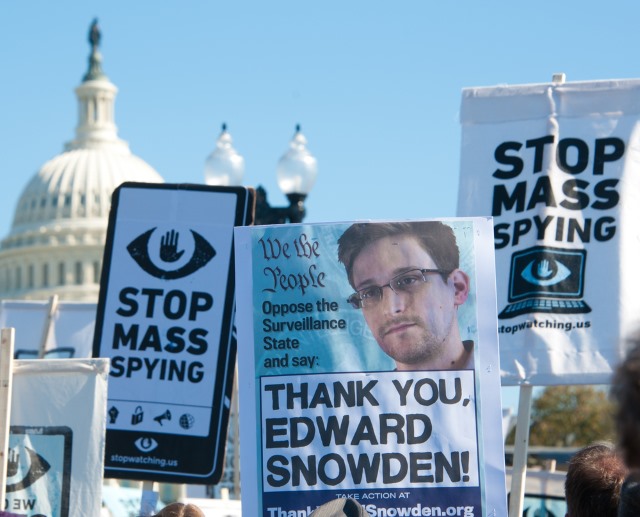
Snowden: I couldn’t trust Microsoft so I used free software like Tor, Tails and Debian
At the Free Software Foundation's LibrePlanet 2016 conference, Edward Snowden credited free software with enabling him to blow the whistle about government surveillance. Speaking via video link from Russia, the former NSA contractor said that "what happened in 2013 couldn't have happened without free software".
But as well as indicating his preference for free, open source software, Snowden revealed that he refused to use Microsoft software because he "couldn't be sure" that there weren't backdoors built in.
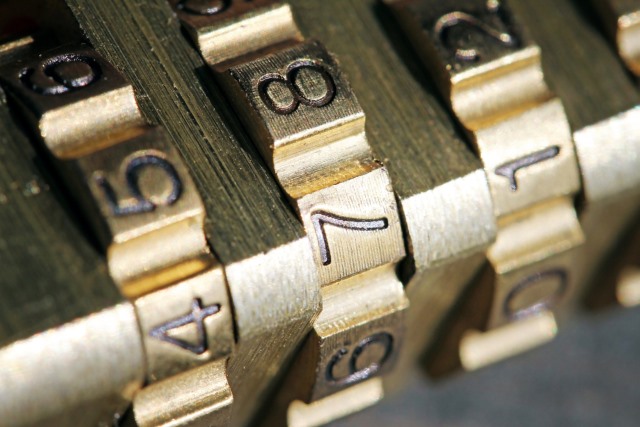
TeslaCrypt 4 ransomware now features unbreakable encryption and is even more dangerous for victims
Apple might be currently talking about its unbreakable encryption and how it's a good thing for privacy, but the FBI ruing it. The privacy arguement certainly stannds up to scrutiny, but strong encryption can also be used as a weapon, as demonstrated by countless examples of ransomware. There are numerous breeds of ransomware out there, but one of the most prolific is TeslaCrypt.
It's just a year since the first version of TeslaCrypt appeared on the scene, and it's gone through various updates and iterations over the ensuing months. Now it's hit version 4 and as well as continuing to threaten victims with sharing their files online, it also boasts what is being referred to as 'unbreakable encryption'.

Apple's fight with the FBI is about LGBTQ issues as well as privacy
As the battle between the FBI and Apple rumbles on, the debate about encryption has intensified, bringing with it renewed discussion about privacy. There are few people who would want to give up their right to privacy and allow unrestricted access to their personal communication, but there are some for whom privacy is even more important.
Tim Cook is just one of the voices shouting that a backdoor for the government would be a backdoor for anyone. Most people and companies have sided with Apple saying that rather than backdoor access, what's needed is stronger encryption, greater security, even more robust privacy. It's something that has the support of people from all walks of life, but it's an issue that's very close to the hearts of the LGBTQ community.

More than a third of UK universities are under attack every hour
VMware today announced research revealing that over a third (36 percent) of UK universities are under attack by a cyber attack, on not just on a daily basis, but each hour. Furthermore, the attacks are so frequent and widespread that 83 percent of universities believe that cyber attacks are increasing in frequency and sophistication.
VMware’s research shows that a high percentage of University campuses are being singled out and attacked due to their open architecture.

Off-the-shelf BYOD systems bring privacy and security risks
When companies allow staff to use their own systems to access corporate data, the devices used can often be outside of IT department control.
But how much of a security and privacy hazard is presented by a new off-the-shelf laptop? Security company Duo Labs set out to discover the risks by buying a number of OEM Windows 10 machines in the US, Canada and the UK and testing them for vulnerabilities.

Cooperating with the good guys: Is NSA snooping really that bad?
Ever since Edward Snowden, a former US National Security Agency (NSA) contractor, leaked information about the internet spying activities conducted by the NSA, there has been an unrest among Americans. The main concern for most people is that their privacy has been intruded without their permission.
Many Americans are also worried about the things that the NSA and the US administration could do with access to such "private" data. And the revelation about several tech giants, including Yahoo and Google, being involved has probably made people even more circumspect about using online services based in the US.
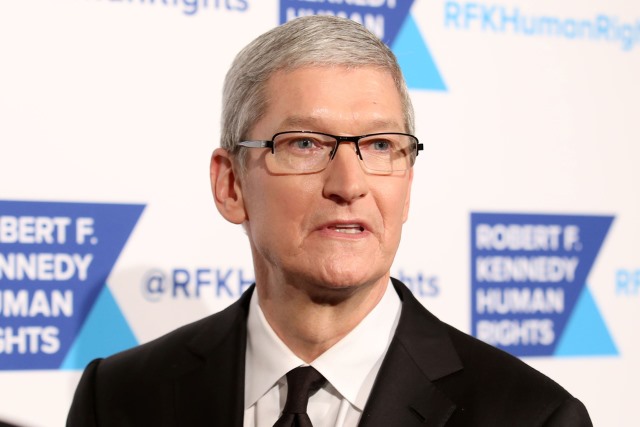
Apple vs FBI: Tim Cook concedes helping authorities is a theoretical possibility
In the Apple vs FBI fight, the issue is very black and white for many people; you support Apple's position of standing firm against the FBI, or you believe the FBI should have unfettered access to whatever data it wants, regardless of the consequences.
Tim Cook has been steadfast in his position, but in an interview with TIME the Apple CEO admits that the situation is not entirely binary. Presented with a thought experiment Cook appears to concede there are gray areas, opening up the possibility of assisting the FBI to break into the San Bernardino shooter's iPhone.

IT pros: Security solutions are slowing down our systems
Despite the inherent insecurities of the cybersecurity industry, a new report from Barkly, an endpoint security company, reveals that the biggest issue IT security teams have to face with current security solutions is that they slow down the system.
When asked about the options of productivity vs security and the potential downfalls of security solutions, 41 percent of respondents said that they were dissatisfied with their current solution, not because it failed to deliver security, but because it slows down their system.
LastPass Authenticator aims to make two-factor authentication simpler
LastPass has released LastPass Authenticator 1.0 for Android, iPhone and Windows Phone. It’s aimed at LastPass users who want a simple and convenient way to add two-factor authentication to their major online accounts.
The app is TOTP-compliant, so works with the same services as the better known Google Authenticator app, but aims to carve a niche for itself with a unique proposition for end users.
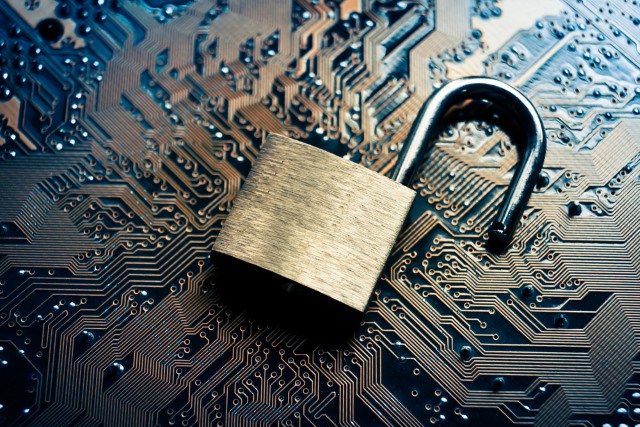
Android Marshmallow's Factory Reset Protection may be useless on your smartphone
Last year, Google introduced a kill switch in Android to prevent lost or stolen handsets from being reused. Formally known as Factory Reset Protection, this security feature has been designed to, among other things, only allow the intended owner to use the device after a factory reset has been performed. In theory, it is a great idea, so much so that some markets have actually made a kill switch mandatory, in an attempt to deter smartphone theft.
In practice, however, Factory Reset Protection is not as effective as you might expect -- it can be bypassed on the latest version of Android, 6.0.1 Marshmallow, and in the latest Android N preview.
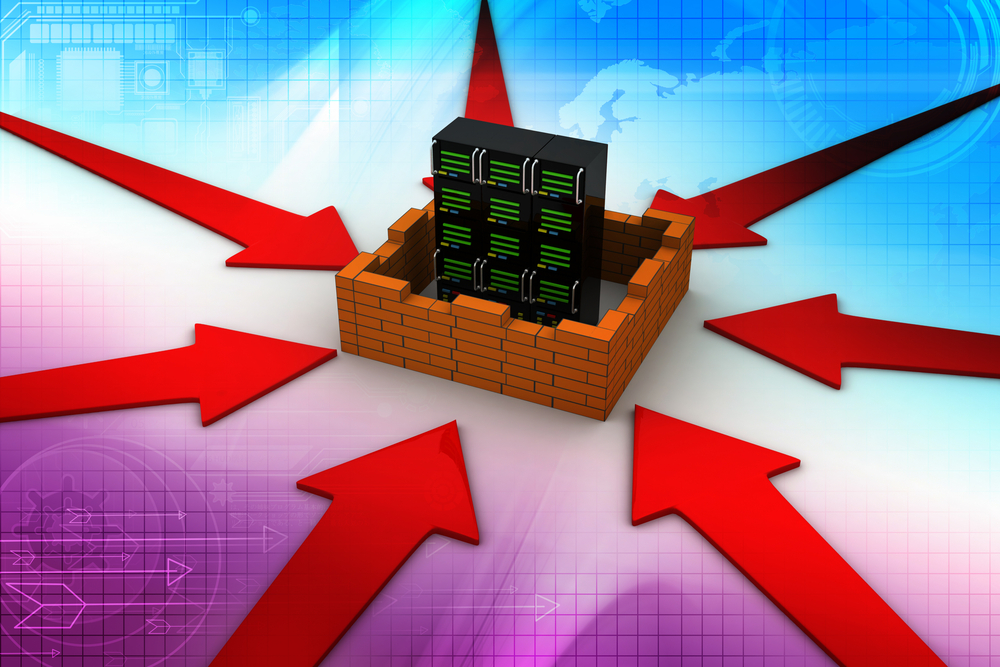
Javelin attack simulator spears security gaps
Web gateways remain one of the most attractive attack routes for hackers, and many of the most commonly used gateways remain vulnerable.
According to attack detection specialist Seculert popular gateways have allowed more than 40 percent of malicious communications to succeed in 2015. To combat this the company is launching a new outbound attack simulator called Javelin.
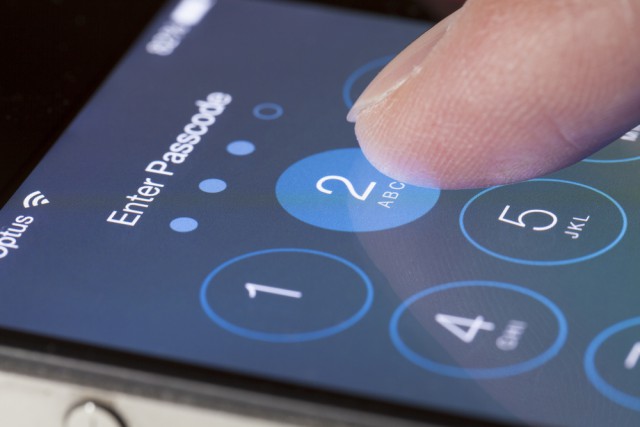
Third-party encryption renders iPhone backdoor useless
Let’s assume for a minute that the FBI got its way. It coerces Apple into disabling the self-destruct function on the San Bernardino terrorist’s iPhone, allowing it to brute force the password. Effectively, the FBI and Apple create a backdoor that theoretically works the same across all iPhones. Police even uses the same tactic on the dozens of other iPhones that are currently involved in active investigations. People across the world sacrifice their privacy, while the police has a new tool to fight terrorists.
Except they don’t, really. Sure, iMessage and other iCloud services could be decrypted without a password, but what Apple critics often fail to realize is the abundance of third-party encryption tools widely available. Free, open-source alternatives exist to encrypt chats, phone calls, files, and even entire hard drives. That pesky self-destruct function the FBI is so eager to remove? Alternatives for that exist as well, and they are all easily accessible with nothing more than a Google search. By removing the default encryption built in iPhones, the FBI isn’t stopping terrorists. It’s merely inconveniencing them.
Symantec introduces website encryption service
Symantec today announced the global release of a new product which will help companies encrypt user data on their websites.
The new product is called Encryption Everywhere, and it will be offered through hosting providers. According to a press release following the announcement, there will be a couple of levels of encryption and general protection the new service will offer, but Symantec would love to see every "legitimate" website in the world have at least the basic level of encryption by 2018.

IT teams choose between performance and security
Although security breach stories regularly make the headlines, a new survey shows that the biggest worry IT teams have with current security solutions is that they slow down the system.
The study from endpoint security specialist Barkly also reveals that while only half of respondents are confident in their current endpoint solution, 80 percent believe that effective endpoint security is possible.