
How Apple's iPhone language has evolved over the years
Over the years, Apple has become well known for its tight control of the message in new product launches. Increasingly, one word or concept has become a signature that is carefully woven throughout the keynote, press and marketing material.
Here is a look at some of the language used for each iPhone launch since 2007 and how we can learn from what Apple is really good at; controlling the message.

Tracking and tackling Ebola using mobile phone surveillance
Mention web or mobile surveillance, and you're sure to raise a few hackles. But the current Ebola outbreak is showing that the data collected from handsets can be extremely useful. The idea of tackling a disease with 'big data' gathered from mobile phones might seem a little odd, but it's actually an incredibly valuable source of information. Telecom firms such as Orange have been working with data scientists, using anonymized data gathered from phones to track population movement in regions affected by Ebola.
The BBC points out that even in relatively poor countries in Africa, mobile phone ownership is still high. Experts have been able to use this data to determine the best places to set up treatment centers, and it's an idea that has been pounced upon by the CDC.
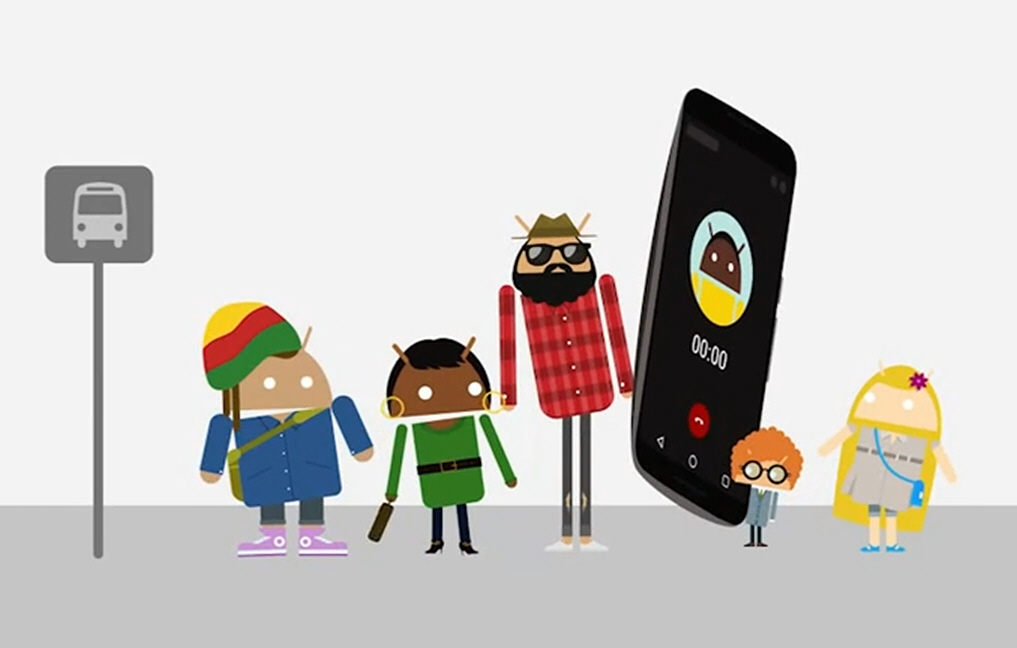
Why Google needs a bigger Nexus phone and phablet-optimized Android L
The point of the Nexus line is ambiguous now. Is it a developer line? Does it showcase what Google wants in an Android phone? Does it showcase the cutting edge of Android? Maybe in the beginning the purpose was clear, but now I don’t think even Google knows. The one thing I am certain of is that the forthcoming Nexus phone will not be just another phone.
The Nexus line so far has helped to give developers a pure experience of Android to work on. One where the OS followed and fostered an environment that placed emphasis on the guidelines set forth by Google, such as on-screen buttons and leveraging full screen mode. A developer using a Nexus would get a very different impression of Android than one using Samsung's TouchWiz on a Galaxy phone -- which would reflect in the app produced.

Mozilla will make Firefox 34 immune to POODLE, releases fix for older versions
Google yesterday disclosed a major security vulnerability it has found in the SSL 3.0 encryption protocol, that is still employed by many sites across the web, despite long being superseded. Dubbed POODLE (Padding Oracle On Downgraded Legacy Encryption), it allows attackers to steal private data, like cookies, and, possibly, use it to access user accounts on vulnerable sites. The search giant says its Chrome browser should be safe, but warns that others may be vulnerable.
Firefox is one of the vulnerable ones. To address this issue, Mozilla reveals that the upcoming version -- Firefox 34, to be exact -- will feature code which makes it immune to the POODLE attack. For those who use lesser versions of the open-source browser -- most users, basically -- the organization provides an optional fix.

Intronis ECHOshare brings simple, secure file sharing to SMBs
Sharing files among employees can be difficult for any business, but particularly for smaller ones which often end up adopting solutions like emailing attachments or using public cloud services.
These approaches can put data at risk and also cause problems for support staff. Backup and disaster recovery specialist Intronis has a new solution to help businesses share files safely in the form of ECHOshare.

WYSIWYG Web Builder 10 adds responsive web design, including mobile-specific design tools
Pablo Software Solutions has released WYSIWYG Web Builder 10, a major new version of its DTP-style web building tool for Windows users.
Version 10 adds support for responsive web design, allowing users to create different variants of pages optimized for a wide number of devices. Part of this includes integrated support for designing mobile-friendly web pages.

Don't overlook the most important cloud storage feature: Security
The craze in the world of cloud storage today seems to be rolling out lists of additional features that match the features of every competitor out there, and presenting them as new and improved. Every company strives to be appear as the best possible cloud option on the market by continually adding "new" features right alongside competitors, and in all of the competition it can be a simple mistake to overlook what these features actually mean.
Before you let these lists of newly-added features dazzle you into choosing one specific cloud storage option over another, do a little research into what these features actually do. You might be surprised to find that many aren’t precisely new ideas, and they don’t increase the most important cloud storage aspect of all: secure file storage.

Forgetting a password is more annoying than your phone dying or losing your keys
A new survey has revealed that forgetting online passwords is one of the most annoying things imaginable -- as setting and remembering passwords becomes an increasing burden.
This is according to a survey of 1,000 UK consumers, commissioned by Centrify Corporation, which found that forgetting a password was more of an annoyance than having a mobile phone battery run out of juice, losing your keys, or getting a spam email.

Popcorn Time fights back -- moves domain after takedown
There's no accounting for what will happen if you run a website, especially a questionable one. We've all witnessed the trials and tribulations suffered by the folks behind the Pirate Bay. Others have been more fortunate, though the outcome for the site has been the same -- a takedown. Some give up, while others move on and fight to survive.
Popcorn Time falls into that latter category. The company has so far thwarted efforts to remove it from the internet, but recently faced yet another hurdle. The site's domain name was taken down -- a common problem to the folks at the Pirate Bay. No problem, just get a new one. Move along, nothing to see here.

Security alert: Google drops SSL 3.0 after POODLE attack discovery
Google's security team has discovered a vulnerability in SSL 3.0 which can be exploited to steal secure cookies and other data. The 15 year old technology is still used as a fallback when connection problems occur as it helps maintain backward compatibility, but the security problems mean that Google will start to phase out support. Details of the exploit have been published and Chrome has today been tweaked to disable SSL 3.0 fallback.
Bodo Möller from Google's security team points out that this move will "break some sites" and that they will need to be updated. This does present some compatibility issues, and the advice is to support TLS_FALLBACK_SCSV instead, at least for the time being.

YouTube creators hit by 'Microstopped' take down requests -- Microsoft already fixing it
Creating content for YouTube is actually very hard and takes a long time to edit and upload. Even a simple-looking unboxing video can take hours from start to finish -- sometimes longer if you cut yourself opening the box and have to treat a wound. It is very disappointing to have your content removed for copyright issues, when you haven't actually violated anything. Even worse, it can be an impossibility to successfully dispute the bogus claim.
Today, many YouTube content creators were inconvenienced and upset by take down requests from an apparently overzealous company called "Marketly", acting on Microsoft's behalf. You see, all of the videos were Windows related, but not all of the removals were warranted. Of course, like all controversies, it has already been given a name and hashtag of #Microstopped.
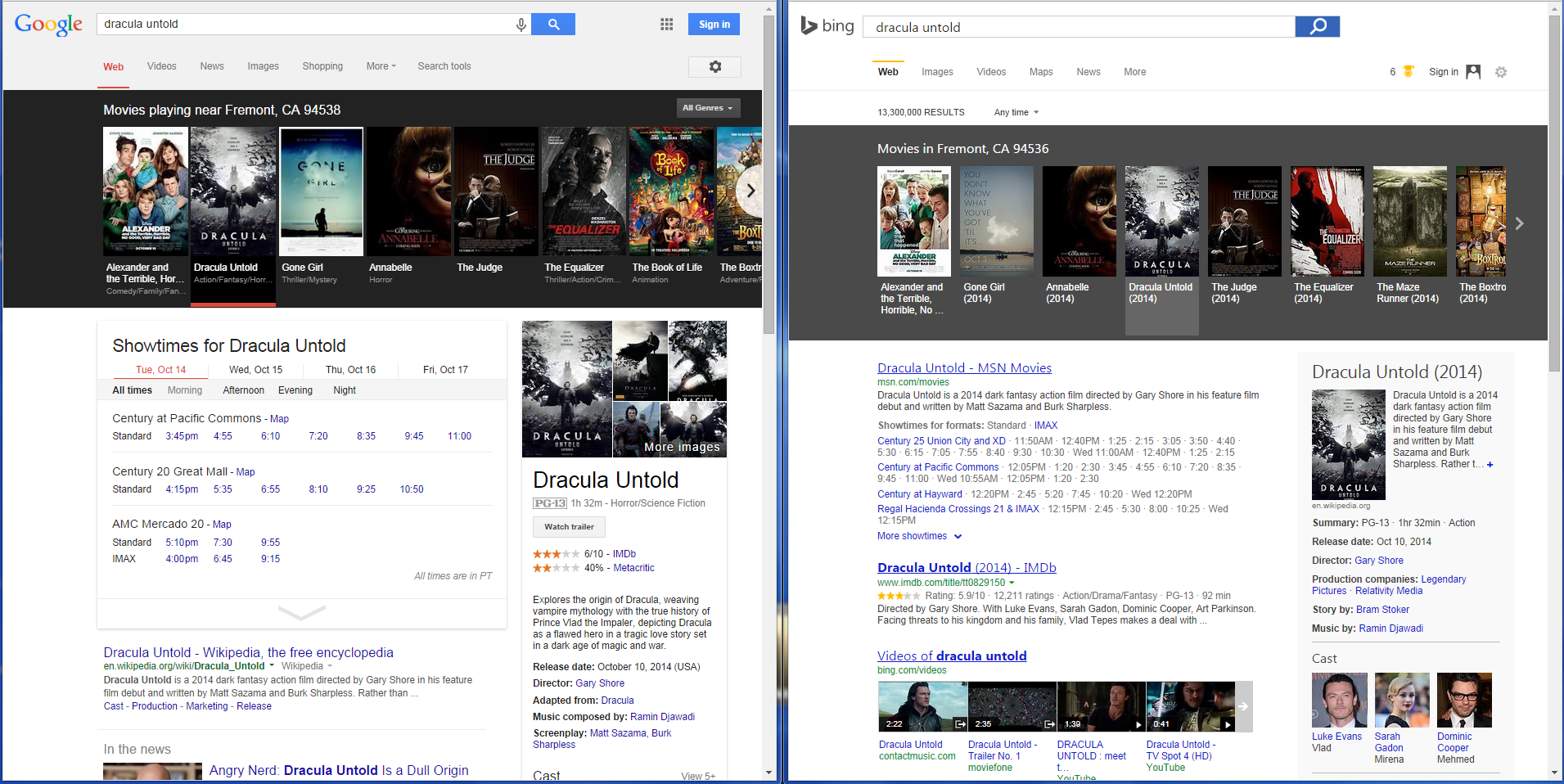
Is Microsoft trying to confuse users by having Bing look like Google?
Microsoft has been tweaking Bing's design for a while now. The latest design makes it seem that it wants Bing to be indistinguishable from Google. If you have Bing as the default on your browser (or accidentally clicked a Microsoft prompt to do so), and are not very tech-savvy, you may not even realize that you're using Bing -- especially if you think any type of internet search is "Googling."
Notice how each have a minimalist search bar at the top with options for different searches at the bottom with "Web" highlighted with a colored bar.

Google releases hilarious Android 5.0 teaser video -- there can only be one L
A company's "cool-factor" can vary wildly, but one has not yet lost its magic -- Google. Sure, privacy advocates decry the search-giant's long reach into the lives of many, but that is what makes the company's products so endearing -- Google needs that data to know you. It is the customized and tailored experiences that create a bond between the user and Google.
The biggest bond, however, is Android; the mobile operating system has been wildly popular, bringing Linux to a user base that no one thought possible. People are fans of Android, unlike any other operating system before it. Hell, people collect plastic figures of the mascot; that is dedication. We should soon be experiencing the final version of Android 5.0, which will have an "L" code name. Will it be lollipop? Lemon meringue? Well, today Google releases a cool video, which has fun with the Android 5.0 name.

Security firms have created the next dot com bubble by 'scaring their customers'
There are too many security firms offering insufficient security. At least that's what Ilia Kolochenko, CEO and founder of High-Tech Bridge thinks. He points to the splitting of Symantec as proof that security companies are struggling, and suggests that the emergence of so many firms competing for attention is the start of a new dot com bubble that could burst at any moment.
Security is important to both home computer users and enterprise businesses. There is a huge amount of money to be made in the field, so it is perhaps little wonder that the number of companies muscling in on the market is on the increase. Kolochenko says that at the end of the century a lot of tech companies sprang up overnight and "most of these businesses were designed to create artificial problems or boost non-existent demand in order to make quick money. They didn't actually solve any real problems". There is a danger that the same could happen in the security world.

Google says American teens love voice search -- some use it in the bathroom
Google voice search is awesome; I use it every day in the car or at home. If I want to know the weather, I just ask and it tells me. It helps me find the phone numbers for my favorite pizzerias and Chinese food restaurants, and when I am lost, I just say "take me home" and it does!
Like I said, it is awesome, but apparently, teens are using it more than adults. According to a new Google study, 55 percent of teens in the USA are using voice search; these young people are often the barometers of the next big thing. The search giant should be elated that this important demographic is embracing voice search; however, the study does not only include Google, but also Apple's Siri and Microsoft's Cortana.