



Two more cloud storage services close: Yahoo's Briefcase, HP's Upline
After the demise of AOL's Xdrive service just a few months ago, Hewlett-Packard's Upline and Yahoo's Briefcase will now bite the dust by the end of March.
Evidently, supply is exceeding demand in at least some segments of the nascent cloud storage market, particularly with users' time, patience and spending budgets increasingly exhausted by the deepening financial crisis.
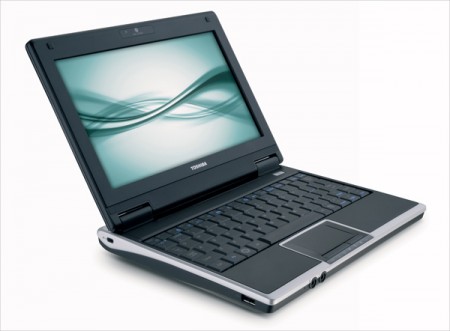
So that's why we can't call it 'netbook:' Intel suit exposes a trademark dispute
Intel filed suit against "Netbook" trademark holder Psion Teklogix late last week, hoping to free up the name for all the companies which make products in the unofficially named netbook device class. Intel contested that Psion Teklogix, a British company that makes handheld computers, hasn't made its trademark netbook in six years, and in that time, the term has become generic.
The company struck back at Intel with a countersuit of copyright infringement and unfair trade practices. Over the weekend, documents detailing Psion's counterclaim were released, where the company claimed it continues to sell its "netBook pro" product well into 2009. Note: the device in question is located in the discontinued products category, and the spec sheet is a fake link.
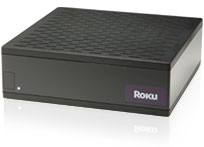
Amazon Video On Demand released to Roku's STB
Amazon's on-demand video streaming service on the Roku set top box began beta tests in early February, and today has officially been released to the public.
Roku announced today that software updates for its $99 set top box will be rolled out over the course of the week, giving customers access to a library of 40,000 movies on demand that cost between 99¢ and $3.99 per rental.
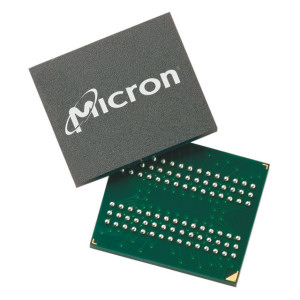
Confirmed: Micron in talks with Taiwan to create new DRAM 'entity'
A spokesperson for Boise, Idaho-based Micron Technology confirmed to Betanews this morning that it has submitted a proposal to the government of Taiwan to assist that country in the consolidation of its DRAM industry. That proposal, if agreed upon and carried out, would create something being referred to as a "new DRAM entity" that would be launched with an automatic joint research and development agreement with Micron, as well as the license to use some 2,000 patents from the company's portfolio of 17,000.
"Micron has talked a lot about seeing value in the memory industry," spokesperson Dan Francisco told us today. There's certainly value in Taiwan's ability to produce, and that is what Micron is interested in fostering. Negotiations are ongoing, Francisco said, and involve other leading companies in Taiwan's memory industry, though no names are currently being included on that list.
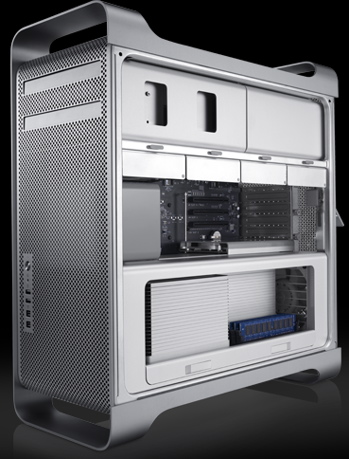
Apple refreshes its Mac desktops with Intel Nehalem CPUs
"The all-in-one for everyone." Three new additions to Apple's all-in-one desktop iMac were debuted today, in both the 20" and 24" profiles. The sole new 20" model will retail for $1,199, have a 2.66 GHz Intel Core 2 Duo processor with 6 MB L2 cache, 2 GB 1066 MHz DDR3 SDRAM which is expandable to 8 GB, a 320 GB 7200 rpm SATA hard drive, and an integrated Nvidia graphics processor (GeForce 9400M).
The 24" model got three new permutations, ranging from $1,499 to $2,199. They can come with a 2.66 GHz, 2.93 GHz, or a 3.06 GHz Intel Core 2 Duo processor, have 4 GB 1066 MHz DDR3 SDRAM, offer either a 640 GB or 1 TB 7200 rpm SATA drive, and three different Nvidia graphics cards. The base model comes with the same integrated GeForce 9400M as the 20", but the upgraded versions offer either a GeForce GT 120 or a GT 130.

Greener Gadgets: SunNight eyes powering radios with flashlights
Even a universal power supply couldn't support other devices for very long in the wilds of Africa, where there's a total absence of electrical wiring for charging up. But SunNight's flashlights, which combine solar power with nickel hydride batteries, are already powerful enough to entirely light a good-sized room, said SunNight CEO Mark Bent, speaking on Friday at Greener Gadgets Expo in New York City.
Texas-based SunNight sold about $1 million in ultra long-life flashlights in 2007. About 30% of the lights are now sold directly in Africa, while another 30 percent are distributed through humanitarian groups. The remaining flashlights go to other destinations, ranging from police forces around the world to US retail chains like Target.

Marine One docs fly to Tehran, but not from Lockheed
A Maryland company appears to have made it possible for sensitive information on Marine One -- President Obama's helicopter -- to turn up at an IP address in Tehran, according to Tiversa, a third-party monitor of peer-to-peer networks. Blueprints, avionics information and cost breakdowns were found on the Iranian computer.
A number of Bethesda-area firms are contractors or subcontractors to the Department of Defense, including Lockheed Martin, which is building the next iteration of Marine One and recently came under fire for spectacular cost overruns on the project. (The current fleet was designed by Connecticut-based Sikorsky.) But a continuing investigation by Rick Earle at Pittsburgh's WPXI says that according to Tiversa, Lockheed is not the source of the leak, which was apparently caused by a contractor who loaded a peer-to-peer client on her or his machine.

IndiEclectic musicians do end-run around distribution
Like music? Want to hear some more music like the stuff you like? IndiEclectic, which launches this week after a lengthy beta period, taps a powerful fount of musical knowledge: Actual working musicians. The site features independent artists who are recommended by, and in turn recommend, artists who have something in common with what they do.
Visitors can preview tracks; in our quick visit, all the tracks we previewed played full-length songs, not 30-second samples. For $20/year, members can download everything they find on the site, which is driven by the Artists Recommending Artists search engine. It's also sorted into categories, and the database is searchable by artist (including many who are on the site specifically to make recommendations, not sales).

English teachers embrace 21st century composition skills
The National Council of Teachers of English isn't merely acquiescing to texting, blogging, video journalism, and all that newfangled tech stuff. In a fiery policy paper on "Writing in the 21st Century," past NCTE president Kathleen Blake Yancey makes a positive case for teachers to rethink how they teach "composing" skills in the classroom.
Composing, in other words, means effective communication by any means available -- not only pen and paper. The paper (PDF available here) gives the example of a 16-year-old girl who combined e-mail and photos to alert authorities and the media to an imminent disaster in her hometown. Texting, video, e-mail, and blogging all have authorship, and all deserve to be considered, states the paper, as the culture moves away from more traditional ideas of who writes and why.

Is Forrester advocating for blogger payola?
A report released this week by Forrester raises the creepy echo of pay-for-play scandals of yore, recommending that companies exchange goods, gift cards or the like for blog coverage as part of "sponsored conversations."
The report detailing how companies can "Add Sponsored Conversations To Your Toolbox" drew the attention of Marshall Kirkpatrick at ReadWriteWeb, who started his blog post by stating that he "respectfully disagree[s]" with the analyst firm's findings, but has words such as "dangerous" and "unsavory" in play by the end of the next sentence.

TiVo tiptoes to its first full year of profitability
Revenue may be down 20% with more pain in store for next quarter, but give TiVo this: The company has at last reported its first consecutive four quarters of profitability.
The DVR pioneer lost $3.6 million, or 4 cents per share, compared to a loss of $6.4 million, or 6 cents, year-over-year. TiVo's net income for FY09, just ended, was $104 million compared to a year-over-year loss of $32 million. Subscriptions are down by about 125,000, which may or may not reflect similar drops at cable providers as the recession wears on.

Done deal: Good is now Visto's
In a move that some are saying may spare workers from further layoffs, Visto has already closed its acquisition deal for Good Technology, purchased from Motorola in a deal announced last week.
Visto's statement this morning gives the distinct impression that it plans to market Good Technology services as competitive against Research in Motion's BlackBerry. But analysts today were speculating on the likelihood that Visto would instead add Good to its bustling portfolio of intellectual property, and may use it instead to go on the warpath against RIM by expanding the scope of its current lawsuits.
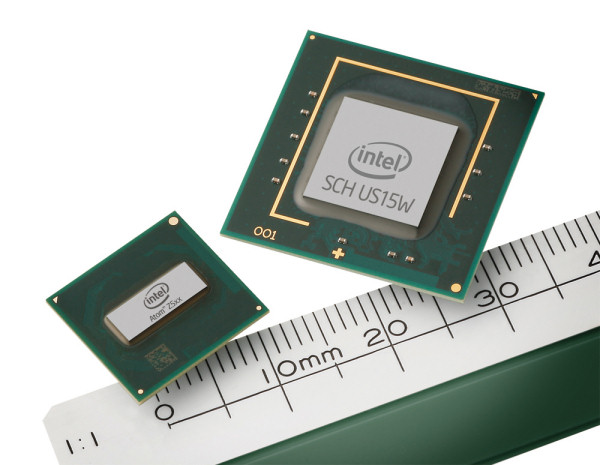
Intel's Atom finds new homes in embedded devices, Taiwanese factories
Today, small device manufacturers that don't have their own foundries rely on components makers to provide for them a kind of mix-and-match set of technologies upon which they can base their designs. One of the largest of these components companies is Taiwan's TSMC, which licenses its own intellectual property so that unique device manufacturers can leverage that IP to build their own designs. Up until today, the question of whether Intel could break into that market, making portable handset builders rely on its Atom processor the way motherboard producers rely on Core 2 and Xeon, has been up in the air.
No more. As the result of something called a memorandum of understanding between the two companies, Intel is permitting its Atom CPU core's IP to be ported to the TSMC Technology Platform -- the portfolio of IP that TSMC licenses to smaller firms. Now, these firms can build devices using Intel's Atom as their CPU, without having to also deal with Intel. It also makes TSMC effectively a co-opted foundry for Intel's hottest product line in this lousy economy.
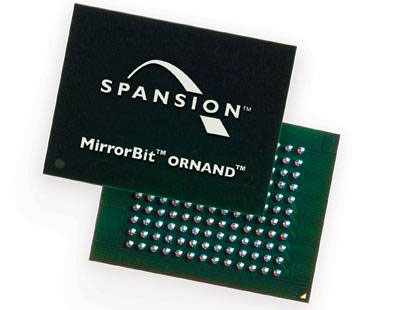
Spansion's Chapter 11 signals the erosion of the flash memory market
The company that was at one time the world's principal provider of NOR flash memory -- the more non-volatile variety -- had its own plans to go "asset light," to use a now familiar phrase, and to concentrate on licensing its intellectual property to companies with the muscle to do the heavy lifting. It sounds like a plan AMD just executed last month. As it turns out, Spansion had also been planning to license others to produce its designs.
Whether that remains the plan after a few months' time is now completely unknown. This morning, the company's Sunnyvale-based American arm announced it was filing for Chapter 11 bankruptcy protection, a month after its Japanese division applied for similar protection there.

So who's at DEMO this year?
The "class of '09" at DEMO, underway today in Palm Desert, numbers just 39 -- down from 70 last year. But it's an exciting group, with some familiar names debuting new ideas and some fresh names very much hoping to make an impression.
Hey, it's... You know Citrix, Qualcomm, and Symantec well, and you met Evri right here at Betanews. Citrix is debuting GoView, which the company describes as a simple way to create and distribute screencasts for training, presentations and the like. Qualcomm's MEMS subsidiary is demonstrating their ultra-low-power mirasol display tech, glimpsed in the form of G-CORE at CES in January.