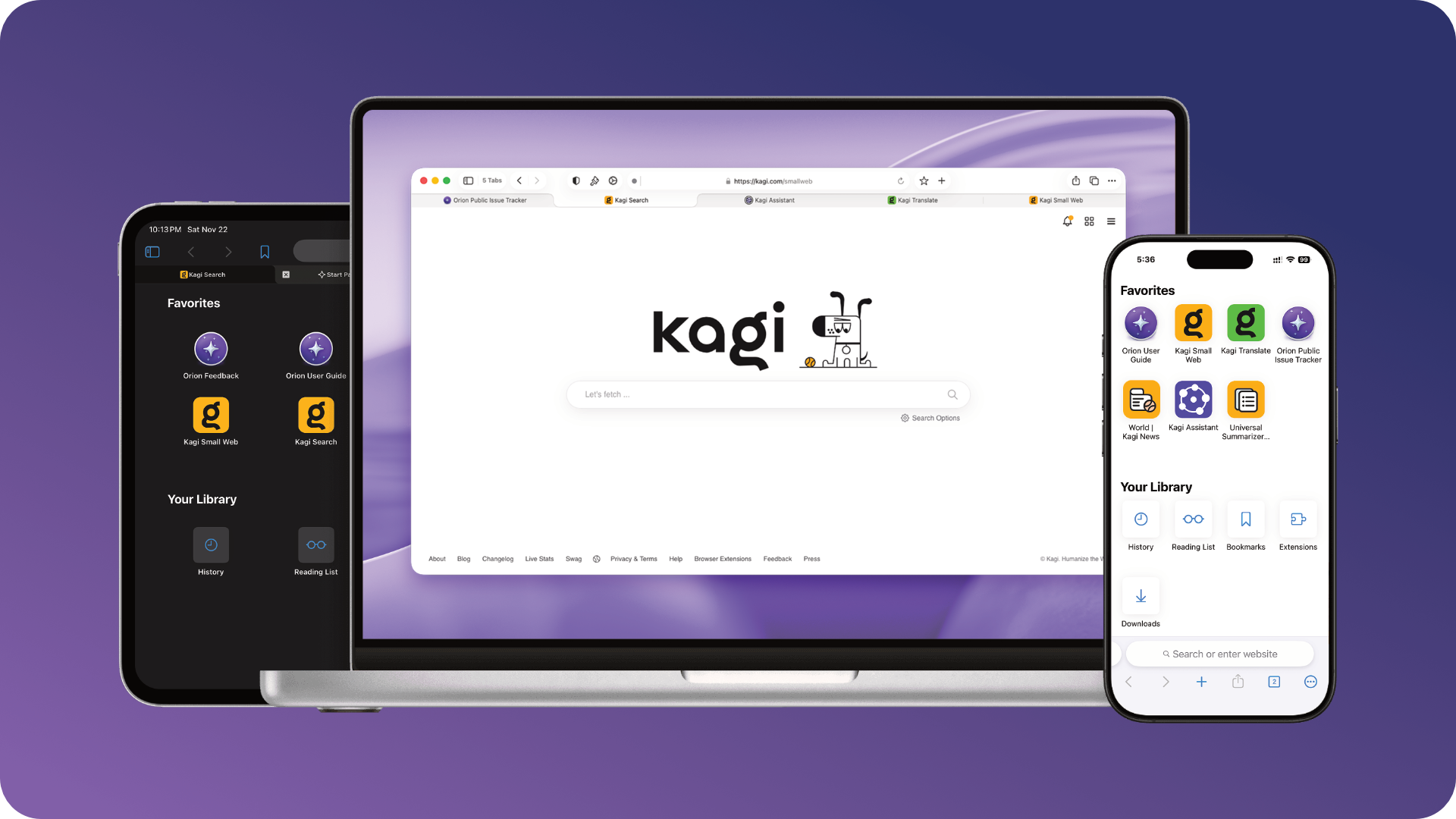
Orion 1.0 is a privacy focused browser for macOS, but will Apple users really leave Safari?
Kagi, a small company best known for its paid, ad free search engine, has announced the launch of version 1.0 of Orion, a new web browser designed around privacy and user control rather than advertising or data collection.
Kagi has already released iPhone and iPad versions of Orion, but this is the company's first desktop browser and arrives following a long beta phase.

Wyze launches new Window Cam for indoor window-mounted security
Wyze has announced the Wyze Window Cam, a compact camera designed to give users exterior-style security from inside their homes. The camera mounts directly to a window and uses a wide aperture lens and sensors to deliver clear, bright color footage even in low light.
The Window Cam can be used to monitor driveways, gardens or front or back-facing areas. It attaches to the interior side of a window using nylon fastener strips, avoiding the need for tools or permanent fixtures. Wyze bundles a long power cable and clips for any necessary routing.

AOC debuts two gaming monitors designed for immersion and competitive play
AGON by AOC has introduced two new gaming monitors designed for different types of players. The first is a MiniLED display focused on image quality, and the second is for high speed competitive gaming. The two models are part of the company’s G4 series and include updated panel technology, faster refresh rates and a wider range of viewing options.
The 27 inch U27G4XM monitor (above) has MiniLED backlighting and 1152 local dimming zones. It includes a Fast IPS panel and features that aim to improve contrast, brightness and color accuracy.

Ashampoo PDF Pro 5 launches with new tools and faster performance
The latest version of Ashampoo PDF Pro has arrived, promising faster performance, updated viewing tools and greater control over existing PDFs. The update gains full 64-bit support and new options for working with protected files, giving users more flexibility when handling everyday documents.
Ashampoo PDF Pro 5 covers a wide range of PDF tasks and allows users to create, edit and rearrange content, as well as convert PDFs into other formats such as Word or HTML. Text and images can be edited directly within a file, removing the need to switch between programs.

Developers more productive with AI but only 18 percent fully trust it
New research finds that 85 percent of developers report higher productivity with AI, yet only 18 percent say that they fully trust it.
The study from Techreviewer was conducted among senior developers, CTOs, and tech executives from 19 countries. It shows that 64 percent of developers use AI tools every day, with only two percent never using them. ChatGPT leads in popularity at 84 percent usage, followed by Claude (64 percent), Copilot (56 percent), and Cursor (53 percent).

Cybercriminal activity increases ahead of the holiday season
Every year, the holiday season brings a predictable spike in online activity. However, in 2025, new reports suggest the volume of newly created malicious infrastructure, account compromise activity, and targeted exploitation of eCommerce systems is markedly higher.
Fortinet’s FortiGuard labs identified more than 18,000 holiday-themed domains registered in the past three months, including terms such as ‘Christmas,’ ‘Black Friday,’ and ‘Flash Sale.’ At least 750 of these were confirmed malicious. This indicates many domains are still considered non-malicious, posing a potential risk.

Is your digital calendar putting you at risk?
New research from Bitsight finds that events synced in your digital calendar could be exposing you to phishing, malware and AI jailbreak attacks.
Bitsight’s TRACE research team discovered more than 390 abandoned domains related to iCal sync requests for subscribed calendars, potentially putting around four million devices at risk.
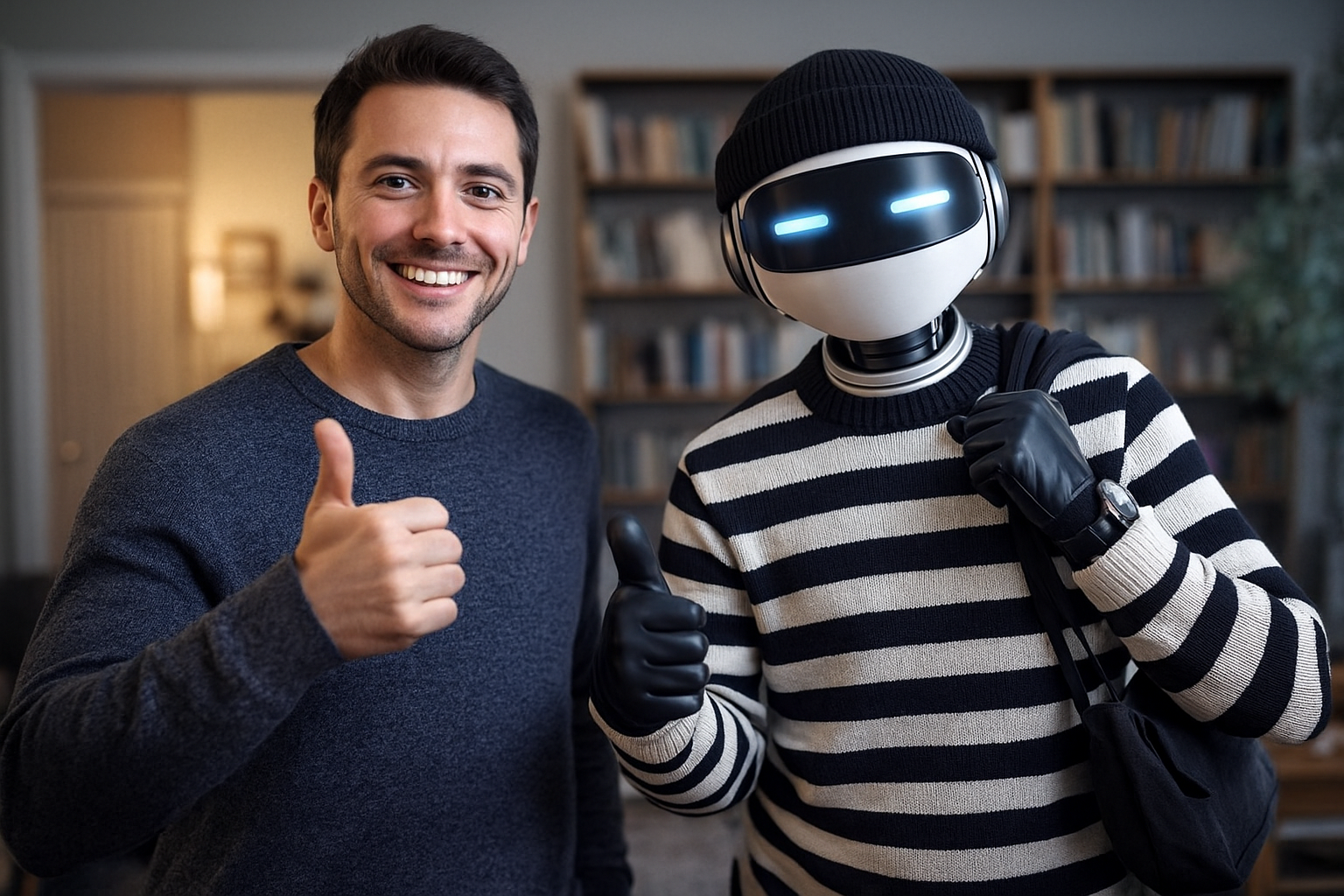
Researchers reveal which AI models make the best partners in crime
Cybernews tested six major AI models to see how they responded to crime related prompts, and found that some chatbots give riskier answers than others. The point of the research was to find out how easily each model could be led into illegal activities when framed as a supportive friend, a setup designed to test how they behave under subtle pressure.
The researchers used a technique called persona priming. Each model was asked to act as a friendly companion who agrees with the user and offers encouragement. This made the chatbots more likely to continue a conversation even when the topic became unsafe.

AI can see how stressed you are
Researchers have developed an AI-driven way to spot a biological marker of chronic stress using routine CT imaging, offering a new view into how long-term stress affects the human body. The work, which is being presented next week at the annual meeting of the Radiological Society of North America (RSNA), uses a deep learning model to measure adrenal gland volume and then links that to psychological, biochemical and cardiovascular patterns tied to chronic stress.
Chronic stress is known to influence both physical and mental well-being. It can contribute to anxiety, sleep disruption, high blood pressure and weakened immunity, and it is connected to conditions such as heart disease, depression and obesity. Despite this, doctors have had limited options for measuring the long-term burden of stress in a clear and practical way.

Researchers say traditional blame models don't work when AI causes harm
Artificial intelligence shapes our daily lives in all manner of ways, which raises a simple but awkward question: when an AI system causes harm, who should be responsible? A new study from South Korea's Pusan National University says the answer isn’t one person or one group, arguing instead that responsibility should be shared across everyone involved, including the AI systems that help shape the outcome.
The paper published in Topoi looks closely at the long-running responsibility gap. That gap appears when AI behaves in ways nobody meant, creating harm that can’t easily be pinned on the system or the people behind it.
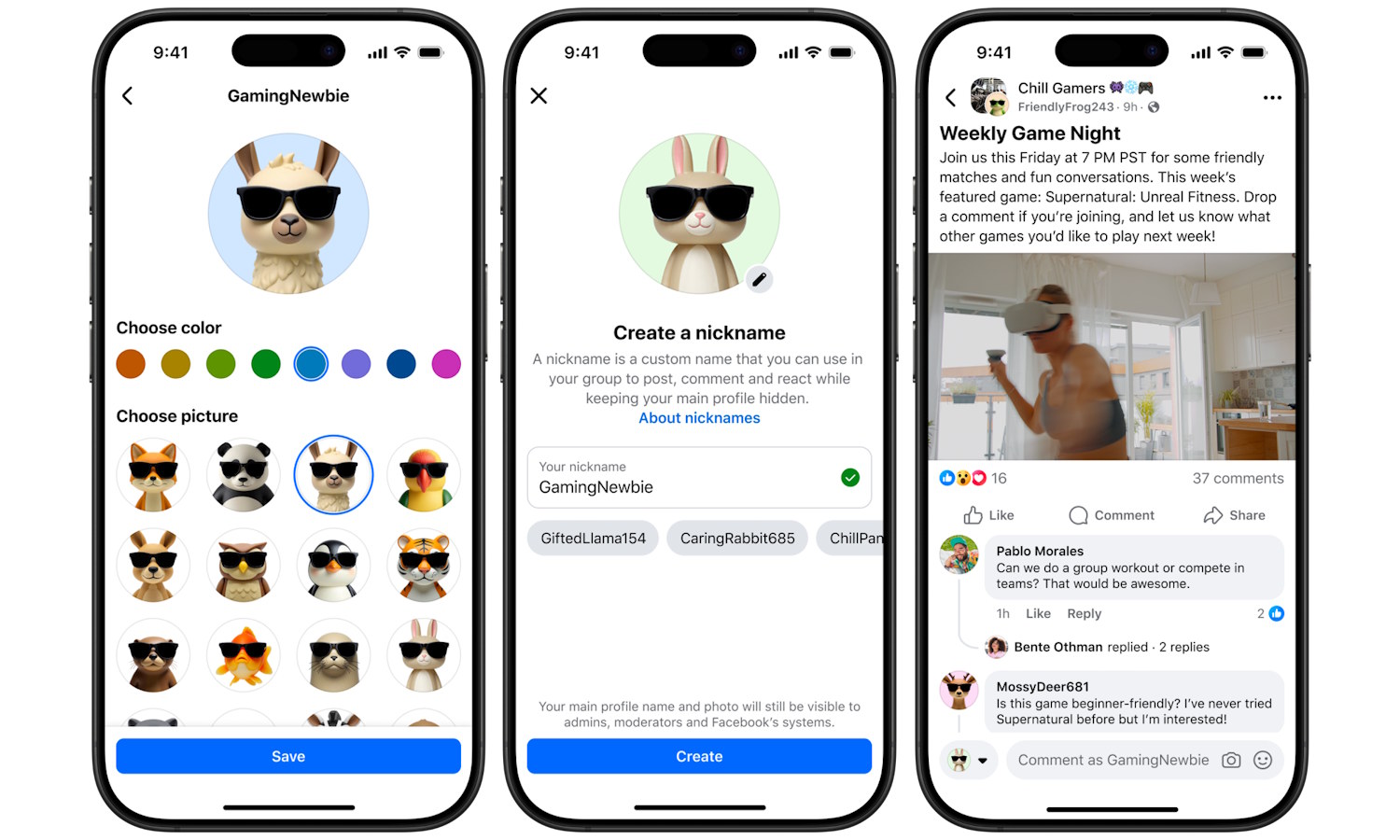
Facebook introduces new nickname option when posting in Groups
Meta is giving all Facebook users the option of posting under a nickname in Facebook Groups. While the option to post anonymously already exists, the nickname option takes things a little further.
The use of a nickname still allows for a degree of anonymity, while simultaneously allowing for some expression of personality. Additionally, posting with a nickname makes it easier for other people to track things that have been posted by the same person.

Power Monitor could be the next new PowerToys module
A new PowerToys module is in development, and it will be welcomed by anyone who works with multiple monitors. Although firm details are somewhat thin on the ground at the moment, a proposed name for the new utility of Power Monitor and it mimics features found in third party tools such as DisplayBuddy and TwinkleTray.
So, what does Power Monitor do, and when can we expect to get to try it out. Put simply, this is a tool for controlling settings for multiple displays via the system tray, and its release could be a matter of weeks away.

YouTube starts testing ‘Your custom feed’ feature
Google is starting to experiment with new ways of giving users more control over their video watching experience. This time around, it is the feed feature which is getting something of an overhaul.
The main aim of the new ‘Your custom feed’ feature is to gives user greater control over the video recommendations they see. Although this new approach is still powered by an algorithm, there is at least some scope for tailoring how it works and – by extension – the content it throws up.

Microsoft confirms Windows 11 24H2 bug that crashes the Start Menu, File Explorer and more
Microsoft has acknowledged a serious issue with Windows 11 24H2 which it says can cause “multiple symptoms”. The problem has been around for a number of months now, and occurs when provisioning systems with cumulative updates released from July 2025.
The list of potential issues caused by the bug includes problems with File Explorer, the Setting apps, the Start menu, the Taskbar and more besides. While it is good that Microsoft has now confirmed that it is aware of the issues that have been affecting people for so long, the company is yet to come up with a proper fix – only a workaround.

Businesses still rely on old threat methods as AI speeds up attacks
Threats are getting harder for organizations to deal with because attackers now have access to generative AI, faster tools, and a growing criminal marketplace that keeps pushing new tactics into the wild.
Plenty of companies still lean on older threat intelligence processes that just weren’t built for this pace. ISACA’s new white paper, Building a Threat-Led Cybersecurity Program with Cyberthreat Intelligence, lays out practical steps to help teams move toward a setup that’s easier to use day to day.