
Three's mobile ad blocking plan blocked by Europe
Mobile operator Three had hoped to roll out a network-wide ad blocking system that would prevent the appearance of up to 95 percent of adverts has been shot down by a European regulator.
Citing net neutrality, the Body of European Regulators for Electronic Communications (Berec) says that Three's plans were incompatible with providing an internet access service. The decision comes despite the fact that Three's ad blocker would have been optional for customers.

Make money on Twitter as the company starts to share video ad revenue with users
Twitter is to start sharing ad revenue generated by videos with the people who create those videos. The monetization model will start in the US for now, but it opens up a platform that was previously only available to big names such as the NFL and CBS.
All of the key players in social media are focusing their efforts on video, and in giving users the opportunity to make money through their footage, Twitter is really upping the ante. It's a move that pits the company against the likes of YouTube, and one that will be seen as a desperate bid to attract more users.
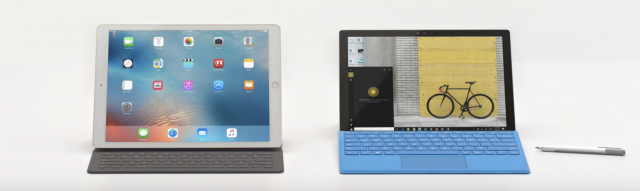
Microsoft Surface Pro 4 ad implies iPad Pro is not a 'computer'
Apple and Microsoft target the same crowd with the iPad Pro and Surface Pro 4, but they go about it from totally different directions. The former has repurposed a consumer-oriented platform to handle the heavier loads required by prosumers while the latter has tweaked its full-fledged PC operating system to work on a tablet touted to be a laptop replacement.
It is this difference in approach which has proven controversial and, to stir the pot once more, Microsoft has released a new Surface Pro 4 ad to suggest that it is a real "computer" while the iPad Pro is basically nothing more than a glorified iPad with keyboard support. Surprised?
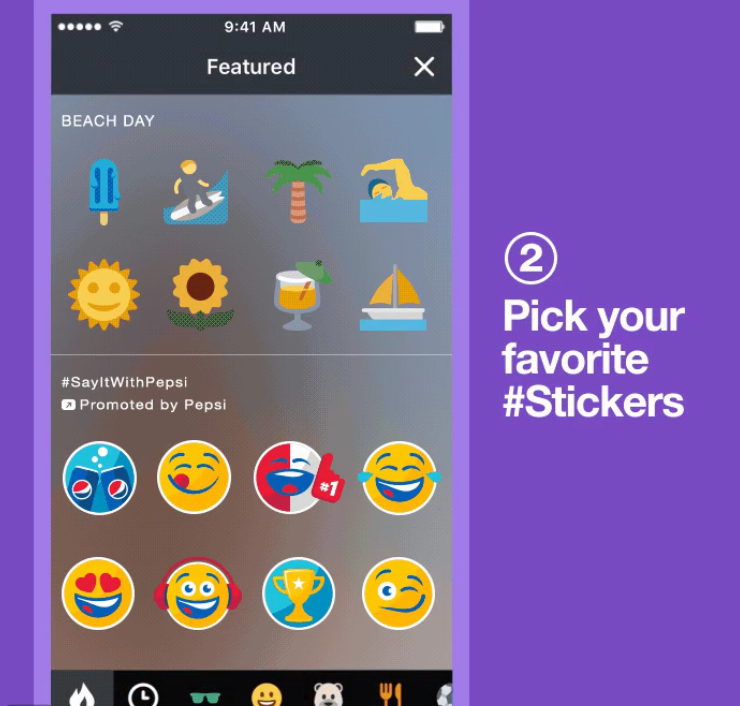
Twitter monetizes millennial nonsense with Pepsi-themed 'Promoted Stickers'
While I am technically not a millennial, I border on the cut-off. Actually, I think I am considered Generation Y, but I digress. Still, I can understand some of these young folks' likes and behaviors. While I cannot grasp the popularity of Snapchat, for instance, I totally love emoji.
Speaking of emoji, Twitter recently introduced "Stickers" which are really just emoji overlays for photos. In other words, you can jazz up your pictures on the social network with virtual stickers. Yes, it is arguably millennial nonsense, but it is actually quite fun. Today, Twitter announces 'Promoted Stickers' -- a way to monetize the feature. The first partner is Pepsi -- a sugar-water seller which once billed itself as "The Choice of a New Generation".

Adblock Plus says open source developers will fight for users' right to block ads on Facebook
Following on from Facebook's decision to override users' ad blocking tools, Adblock Plus has fired one more shot, saying that it will continue the fight for the right to an ad-free social networking experience.
After finding a way to prevent Facebook blocking ads, which Facebook then bypassed once again, Adblock Plus says that while the game of cat and mouse may continue, it wants to use what it describes as "probably be the last time we talk about it for a while" to say that the open source community will fight the good fight for users.

Ad blockers find a way to circumvent Facebook's ad blocking circumvention
Facebook's announcement that it would start to punch through ad blockers to make sure everyone sees ads was met with understandable condemnation and consternation. One of the best known ad blockers, Adblock Plus, soundly criticized the move, saying that it was an example of 'cat-and-mouse games'.
And so it begins. Facebook may have said that it will circumvent ad blocking tools, but now ad blockers are fighting back. The open source community has worked is magic and come up with code that circumvents Facebook's circumvention. How meta...

Adblock Plus responds angrily to Facebook's plan to circumvent ad blockers
Facebook's plans to show adverts to everyone regardless of whether they are using an ad blocker was always going to prove controversial. The decision to bypass the privacy and security tools that many people have put in place has riled one company in particular -- Adblock Plus.
Describing the social network's latest move as being 'all anti-user', Adblock Plus's Ben Williams says that it is an 'unfortunate move' that 'takes a dark path against user choice'. He goes on to pooh-pooh the idea that Facebook made the decision based on what users want.
Facebook's ads will bypass ad blocking software
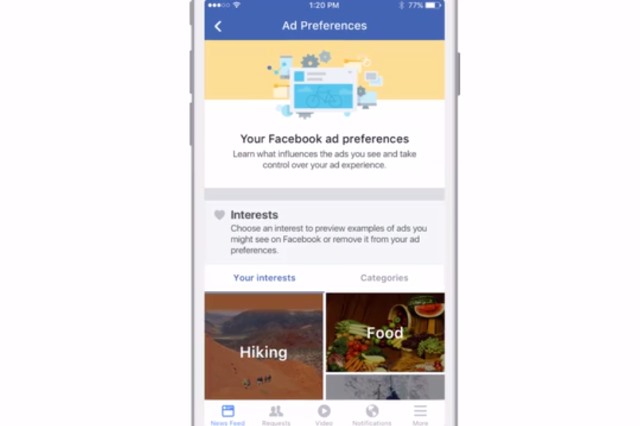
Advertising on Facebook has undergone many changes over the years, but the latest tweak is likely to prove particularly controversial. As well as announcing the rollout of new controls for users to set ad preferences, the social network today says that its ads will circumvent ad blocking software.
The idea of bypassing the likes of Adblock Plus will almost certainly rub many Facebook users the wrong way. In an attempt to sweeten the pill a little, the company says its new ad preferences controls will enable you to filter out irrelevant ads so you only see ads that might be of interest.

New platform aims to cut mobile ad waste
There's a famous quote from 19th century British soap magnate Lord Leverhulme which goes, "Half the money I spend on advertising is wasted, and the problem is I don't know which half".
Despite the array of technology and analytics tools available today, it’s still true that a good deal of advertising spend is simply thrown into the dark. Real-time mobile advertising platform Smaato is aiming to cut waste with the launch of its Smaato Demand Platform (SDX) that allows more accurate targeting of ads.

Spotify sells your personal and playlist data to advertisers making you the product
Much like Google, streaming music service Spotify is increasingly turning its attention to advertising. Announcing what it refers to as "programmatic buying", the company reveals that it is launching a targeted advertising program.
Advertisers -- or "buyers" in Spotify's nomenclature -- will be granted access to not only demographic data about users, but also access to information about playlists.
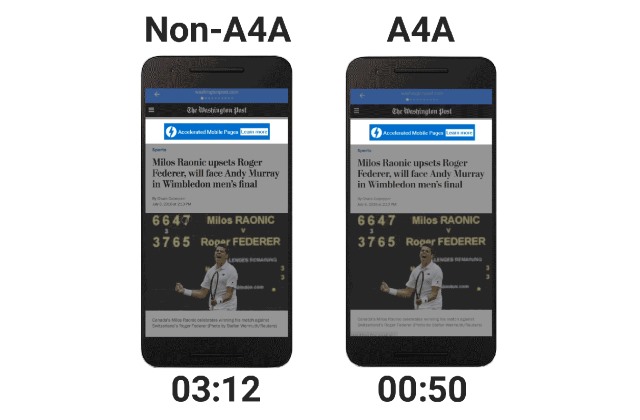
Google A4A will speed up the web by making ads far more efficient
These days, the web is all about advertising. Whatever type of site you visit -- news, entertainment, music, or whatever -- you are almost certain to encounter ads. Many people turn to ad blockers not just because ads can be irritating (and something of a privacy concern), but also because they can dramatically slow down browsing.
We've already heard about Google's Accelerated Mobile Pages project which looks to speed up the web for mobile users. But AMP is about more than just pushing page content to handsets quicker. Google has also developed a way to dramatically speed up the appearance of ads: AMP for ads, or A4A.

European trustbusters torpedo Google
Alphabet Admirals Sergey Brin and Larry Page had better tell Captain Sundar Pichai to close the watertight doors—lest the search and advertising ship sink in the North Sea, where depths reach 700 meters (2,300). Brrrr. Are the lawyers handing out life preservers? Will paralegals man the water pumps?
Today's expansion of the European Union Competition Commission's investigation into Google business practices makes a really bad situation much, much, much worse. Problems are these: Adding advertising to anticompetitive charges; expanding investigation to four monopolies (AdSense, Android, search, shopping services); citing exclusive contracts as violation of the law; and narrowing the applicable market for search shopping competition, thus blowing apart one of Google's major counter legal arguments. Kaboom!

New partnership extends reach of beacon advertising
Beacon advertising is becoming increasingly popular as a means of targeting consumers in specific locations with relevant messages.
It's now set to spread further as Freckle, the world's largest beacon technology company, announces a partnership with one of North America's largest mobile platform companies for publishers and media companies AirKast.

Web users would rather filter ads than block them completely
Blocking online adverts is a controversial subject -- yes, adverts can be annoying but they also represent the only revenue stream for many sites.
A new survey from Adblock Plus in conjunction with HubSpot Research reveals that 83 percent of users just want to block the most intrusive ads and 77 percent would rather filter ads than block them completely.
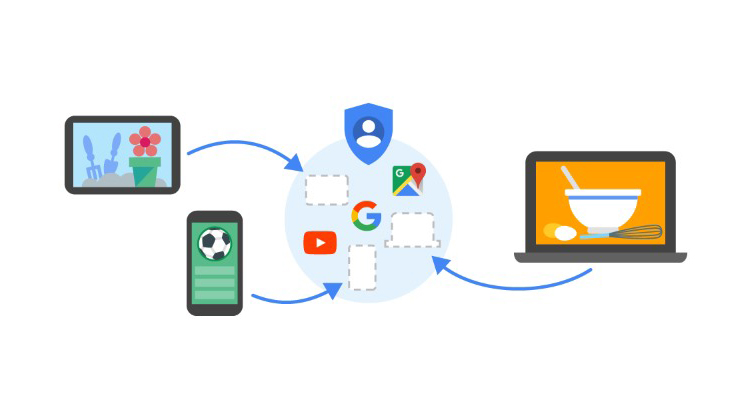
Ad personalization from Google -- giving power to the people, or a privacy nightmare?
Online ads aren’t going away anytime soon, and that'll keep the likes of Adblock Plus in business for the foreseeable future. But if you choose not to use an ad blocker and are therefore going to be bombarded with ads, they might as well be ads that are relevant to you, right?
Google is rolling out a new feature that enables users to choose the topics they are interested in so the ads they see will be more appropriate to them. But as well as improving the ad experience for users, the new scheme means that advertisers are handed even more information about people that can be exploited for financial gain. It also enables Google to use information it gathers about users to tailor ads.