ZTE agrees to pay $1 billion fine to stop US Denial Order
ZTE has been persona non grata in the US for some time now, with the Trump administration having slapped a Denial Order on the company preventing it from operating in North America. The president expressed a desire to get the Chinese firm "back into business" and today that is a step closer to happening.
Today the US Department of Commerce has come to an agreement with the company, which will pay a $1 billion fine for violating sanctions. In addition, ZTE will make changes to management, and put a further $400 million in escrow to cover possible future fines.
Facebook confirms data-sharing agreement with Chinese companies including Huawei
Facebook has confirmed that it has data-sharing agreements in place with at least four Chinese companies. Among these companies is Huawei, a firm that has attracted the attention of intelligence agencies in the US because of national security concerns.
The news comes not only in the wake of the Cambridge Analytica scandal, but also reports this week that Facebook shared data with device manufacturers. The social network said that in addition to Huawei, it has data-sharing contracts with Oppo, Lenovo and TCL -- despite the fact that Facebook is banned in China.
Trump to hit ZTE with $1.3 billion fine before it can operate in the US again
Having slapped Chinese company ZTE with a denial order which significantly hampered its US operations, President Trump has said that the firm will pay a $1.3 billion fine and change its board and management in order to continue to operate within North America.
ZTE had complained that the denial order was unacceptable, and Trump has more recently indicated a desire to get the company "back into business". Now it seems that the president has come up with a deal that involves the Chinese telecoms firm not only making security guarantees, but also buying components from US companies.
Apple removes apps using the CallKit framework because of Chinese regulations
Apple has bowed to pressure from China and started to remove apps from the App Store that use the CallKit framework.
There are strict cybersecurity laws in place in China which has already see VPN tools banned and led to a brief suspension of the popular WeChat app. While no specific reason has been given for the crackdown on the CallKit framework, it is suspected to be related to VoIP functionality.
Trump says he wants to get ZTE 'back into business, fast' despite putting a Denial Order in place
Donald Trump has caused confusion after using Twitter to indicate that he would like to get Chinese smartphone manufacturer ZTE "back into business, fast". This is despite the US Department of Commerce banning exports to the company for seven years, something ZTE says left it unable to continue running its main operations.
Trump now says that he's working with China's President Xi to help get the company back up and running. Unsurprisingly, the disparity between what Trump says in his weekend tweet and what the current US sanctions mean has led to a lot of questions.
US ban forces ZTE to close its main operations
ZTE's fall from grace has been fairly spectacular. Now -- just weeks after been blacklisted by both the US and the UK -- the Chinese telecom manufacturer has announced that it has ceased its "major operating activities".
The company blames the move directly on the US ban on sales to ZTE, but says it is talking to the US government to try to get the ban lifted. Without a supply of US-made components, ZTE is going to find it very difficult to operate for very long.
ZTE says Denial Order put in place by the US Department of Commerce is 'unfair' and 'unacceptable'
Earlier in the week, the US Department of Commerce banned American companies from selling hardware and software to Chinese firm ZTE. The company is understandably unhappy with the US move, and has issued a statement to express its disgust.
The US ban was implemented for -- the US says -- a violation of previous sanctions. ZTE says these allegations are simply not true, and has lashed out at the 'unfair' and 'unacceptable' action.
US and UK blacklist China's ZTE
The US Department of Commerce has implemented a ban on American companies selling components to ZTE. The Chinese telecoms firm is being punished for violating sanctions on Iran and North Korea after pleading guilty last year.
At the same time, the UK's cyber defense watchdog, the National Cyber Security Centre (NCSC), has warned UK telecoms firms that the use of ZTE equipment or services pose a risk to national security. The action taken by the two nations is expected to have severe implications for the company.
Weibo reverses homosexuality policy in China: 'We're no longer targeting gay content'
Following a huge backlash over the weekend, Weibo -- the Chinese equivalent of Twitter -- has announced a reversal of a policy that would have seen gay content banned from the platform.
Originally announced on Friday, the "clean-up" operation was due to last three months, and covered violence and pornography as well as homosexual content. Now, however, Weibo has felt the pressure of public outcry and backed down saying: "We're no longer targeting gay content".
Weibo bans gay content as part of 'clean-up'
Chinese microblogging service Sina Weibo has begun the process of removing gay content from its platform in order to comply with new laws. Violent and pornographic content is also subject to blocking or removal, and a lot of fan fiction has fallen victim.
Weibo -- comparable to Twitter -- has 392 million active monthly users, and a three-month campaign is now underway to help create what the company describes as a "clean and harmonious community environment" in accordance with China's "laws and regulations such as the Cyber Security Law".
Huawei statement dismisses US concerns about security
Huawei is being shunned by the US because of the perception that its hardware could be compromised and used by the Chinese government for espionage. The FCC has blocked US mobile carriers from using federal money to purchase products or services from the company on security grounds, and Huawei is understandably unhappy about this.
The smartphone maker has dismissed security claims as "simply not true" and says that it is "no security threat in any country". The Chinese company says that it is disappointed with the FCC's proposal, pointing out that it would give rural operators -- and, in turn, customers -- fewer options to choose from.
China manipulates vulnerability data to hide intelligence service involvement
It's long been known that the Chinese government has links to hacker groups, but new research into the country's national vulnerability database (CNNVD) reveals evidence of data being changed to hide influence by the country’s intelligence service.
Research by security intelligence specialist Recorded Future back in November finds that CNNVD is faster than the US national vulnerability database (NVD) in reporting vulnerabilities -- NVD trails CNNVD in average time between initial disclosure and database inclusion (33 days versus 13 days).
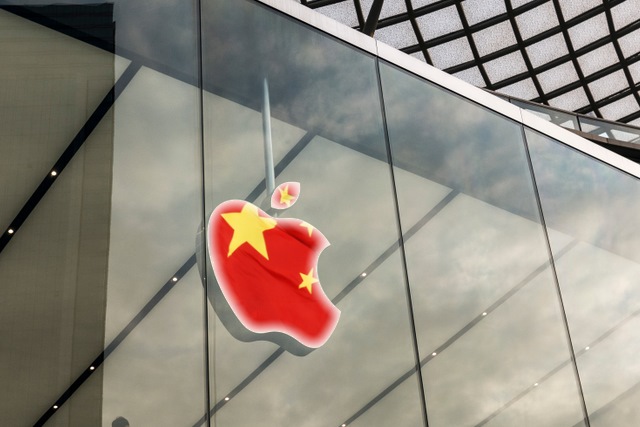
Apple to store iCloud keys in China, sparking privacy fears
There are only days until Apple begins storing the data of Chinese iCloud users within China, and concern is mounting about the human rights and privacy implications.
A new data center is due to open in China at the end of this month as Apple moves to comply with Chinese authorities. It means that iCloud data such as text messages, photos and emails will be stored in China -- as will the cryptographic keys required to access the data. These keys had previously been stored in the US.
Qualcomm wants to ban iPhone sales in China
In an effort to continue to charge Apple for the use of its patents in mainland China, Qualcomm has filed lawsuits against the company with the end goal of stopping the production and sale of iPhones in China.
The suits were filed by the mobile chip manufacturer in an intellectual property court in Beijing. Qualcomm claims that Apple has violated its patents and the company is seeking injunctive relief over the misuse of its IP.

China's ICO ban will not derail the cryptocurrency movement
There is a boom in initial coin offerings (ICOs) in 2017, where firms are mainly offering in-app tokens for investors. These arrangements only work in a given ecosystem and represent companies that are trying hard to not offer "securities" due to the SEC, regulations, etc.
Many firms have taken in funds through ICOs that are far more than their true value and with such a supply of offerings, the quality of the typical ICO event has dropped precipitously. ICOs work as a crowdfunding tool where a percentage of the newly issued currency is provided to new investors in exchange for traditional money or a different cryptocurrency such as Bitcoin. In response to this unregulated and seemingly out of control market, the Chinese authorities recently banned ICOs to slow down the market while regulations can be enacted.