
Chromebook self-browsing is for REAL
Google got me. Not because I didn't get the joke but for how far it actually goes. Perhaps you saw the April 1st post, "Re-rethinking computing", which introduces the project from a "rogue team of engineers...Today, we’re excited to announce a way to make your Chromebook self-browsing". Of course, it's an April Fools gag.
I first saw the post on my Nexus 9 tablet while exercising on the stationary bike. Later, thinking to post a quickie to Google+, I pulled up the URL from synced History on Chromebook Pixel LS. On the N9, I had clicked the post's last link, which did nothing special but when opened on the Pixel took me to the Chrome Web Store with option to install the self-browsing extension. Now that was unexpected. What to do, what to do?

The risk cloud partners pose to enterprises
Cloud security firm Skyhigh Networks has released its Cloud Adoption and Risk Report for Q1 2015, with some unsettling findings in terms of the risks businesses are taking.
The report is compiled by analyzing real-world cloud usage over some 17 million employees, and for the first time in this sixth report, it delved into the risk to enterprises posed by business partners connected via the cloud. This follows a spate of recent data breaches which have been the fault of a third-party, of course.
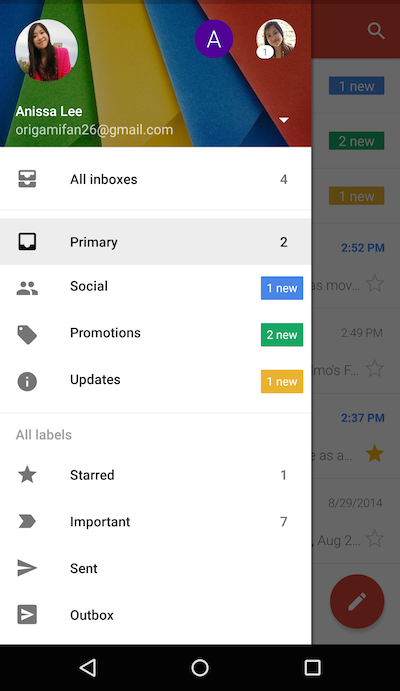
Gmail for Android gets unified inbox, Google Drive now lets you manage photos
Late last year, Google introduced support for multiple email providers in Gmail for Android, welcoming users of Outlook.com, Yahoo Mail and other such services to manage all their accounts using its app. There are plenty of folks who are not just Gmail or Google Apps users, after all. However, the app wasn't properly designed to handle all the extra accounts that users would set up.
The problem? Users had to switch between accounts every time they received new emails or wanted to reply to a message. Now, Google is finally correcting this by giving Gmail for Android a much-needed unified inbox.

Big data: All hype and no investment?
Although there's lots of talk surrounding the use of big data it seems that in many cases that's all it is and that companies aren't actually following through on deployments.
This is among the findings of a new report from Dimensional Research commissioned by data warehousing specialist Snowflake Computing which shows that whilst 91 percent of respondents have considered investments in big data, only 5 percent have actually put any investment into a deployment, and only 11 percent had a pilot in place.

Why moving to the cloud doesn't remove the need for backups [Q&A]
More and more businesses are moving their data to the cloud and adopting SaaS delivery models for software. In making this switch many assume that they're shifting the responsibility for looking after their data to someone else.
But companies still need to take charge of looking after their information. We spoke to Rob May, senior vice president of business development for Datto to find out more about how enterprises can protect themselves.

How the cloud can benefit smaller enterprises
Moving systems to the cloud is increasingly popular, but it can seem daunting for smaller and medium businesses with the added worry that it may not prove cost effective.
In an effort to make the move easier, Irish telephony and VoIP provider Speechpath has produced an infographic setting out the benefits that smaller companies can gain from a switch to the cloud.

New solution makes cloud-based storage and recovery accessible to SMBs
Enterprise standard data storage and recovery can be beyond the reach of smaller businesses with the result that they end up using compromise solutions often based on consumer products.
UK-based managed services provider ITS is launching two new services -- BlackCloud and BlackVault -- to offer affordable off-site data backup and disaster-recovery-as-a-service on its private cloud platform in the company's dedicated, secure data center.

Jitterbit streamlines enterprise cloud integration
Although the cloud is increasingly popular, few businesses run all of their systems in a cloud environment so there’s generally a need for some integration with on-premises IT.
California-based Jitterbit specializes in this type of integration and is releasing the latest version of its Harmony product offering increased speed, scale and reliability.
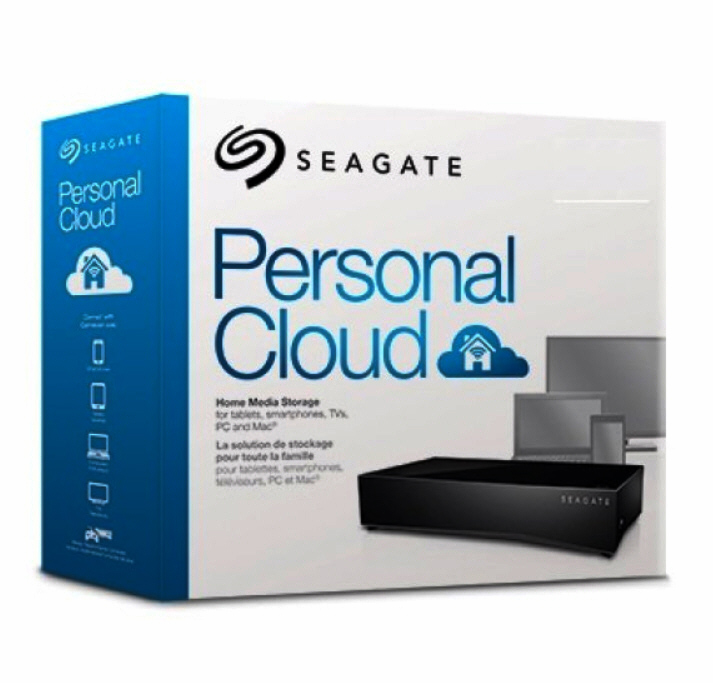
Seagate Personal Cloud: Home media storage done right [Review]
The average family has multiple devices capable of taking photos and videos. Seagate Personal Cloud from Ebuyer provides a central repository for all of this media, and can automatically back up content from your computers, smartphones and tablets.
You can access movies, music, photos and files from any supported device on your network, and stream media directly to Chromecast, Roku, Apple TV, and some Smart TVs. You can also access your files remotely over the internet, and sync content with cloud storage services.

Giving pirates free Windows 10 is a goddamn good idea
Meet the new Microsoft. Maybe the company really charts a new course under CEO Satya Nadella's leadership. Colleague Mark Wilson reports that even software pirates can upgrade free to Windows 10. Seriously? Reward the thieves who rob revenue from the platform's cradle? Hand robbers sacred possessions at the door? Give them the house keys and ask them to lock up after they take the tellie, silver, and jewelry?
Outstanding! I really am not being sarcastic, just pretending to be. The strategy is simply brilliant and too long coming, assuming nothing changes before Windows 10's summer release or Microsoft clarifies licensing rules to mean something different. Without even stressing a single synapse I can conjure up more good reasons for the upgrade plan than the fingers on my hands. But I'll keep the list a bit shorter for this post.

AnyMeeting lets you set up a conference call just by sending an email
AnyMeeting is making it easier for anyone to create and join a conference call, as today the company launches a new conferencing service which does not require setting up any account or using any special software.
To set up a conference call you only have to create a new email, add everyone you want to talk to as recipients and then cc talk@anymeeting.com.
Maturing of cloud technology leads to new opportunities for service providers
Most companies now think of cloud computing as being an established, mainstream technology. This also means that cloud service providers have new opportunities to extend their business beyond hosting and infrastructure.
According to a new study conducted by 451 Research for Microsoft nearly 70 percent of the opportunity for cloud service providers now centers on application hosting, managed services like backup and disaster recovery, and security services such as threat management.

Be a cloud storage tycoon with Google Nearline
If you have an entrepreneurial bent it’s hard not to see an opportunity to start the next big cloud storage company in last week’s Nearline Storage announcement by Google. I saw it immediately. So did Google make a big pricing mistake? Probably not.
Nearline storage usually means files stored on tapes in automated libraries. You ask for the file and a robot arm loads the tape giving you access to your data in a couple minutes. Google’s version of nearline storage is way faster, promising file access in three seconds or less. It doesn't say how it works but it makes sense to imagine the data is stored on disks that are powered-down to save energy. When you ask for the file they spin-up the disk and give it to you.

Predictive communication helps optimize online sales
Modern businesses spend a lot of money on customer service and on e-Commerce solutions, but often it seems that there's a disconnect between the two.
California-based company Altocloud has come up with a solution that combines machine-learning technology with real-time communications to predict the right time to interact with customers.

SoftWatch offers SMBs smoother transition to cloud office tools
For businesses moving to a cloud-based office solution the biggest problem can be understanding and controlling the licensing costs involved.
Cloud transition specialist SoftWatch has a solution for this in the form of its analytics tool which provides in-depth information on how businesses are actually using desktop-based and web based applications as well as cloud storage and web conferencing.