
Almost half of US healthcare organizations breached in the past year
A new report from information security specialist Thales e-Security reveals that 48 percent of US healthcare organizations reported getting breached in the last year, more than 2.5 times the rate from two years ago.
In addition 56 percent report feeling either 'very' or 'extremely' vulnerable to data breaches. More than three-quarters (77 percent) reported at least one breach at some time in the past. This is the highest percentage among all US vertical industries polled in this year’s report.
Cisco solution prevents malware from hiding in encrypted traffic
As businesses increasingly turn to cloud solutions they rely more on encryption to protect their data. Gartner predicts by 2019, 80 percent of web traffic will be encrypted, but that leads to a problem as it can allow malware to travel undetected.
Detecting malicious content in encrypted traffic is difficult without decrypting it, forcing network operators to choose between privacy and security. A new solution from network specialist Cisco solves this conundrum by allowing traffic to be scanned without decrypting it.

Authorities serve Apple with a warrant to access the Texas shooter's iPhone SE
Following the shooting in a Texas church a couple of weeks ago, it quickly emerged that the FBI was having trouble accessing data stored on the shooter's encrypted phone. While authorities refused to disclose the make and model of the device, when Apple said that it had contacted the FBI to offer help, it all but confirmed early reports that an iPhone was at the center of the case.
Now Apple has been served with a warrant to help local law enforcement officers to access messages, photos and other data stored on gunman Devin Patrick Kelley's iPhone SE.
US government uses Texas shooter's iPhone to support its case for encryption backdoors
The inability of law enforcement agencies to access encrypted data stored on smartphones is a relatively new one, but it's one that really came into the spotlight with the San Bernardino shooting latest year. With the recent shooting in Texas, the US government is talking about the issue once again.
We've already learned that the FBI has been unable to access data stored on the shooter's phone due to the fact that it's encrypted. We also know that Apple has been in contact with the FBI to offer help -- despite having previously said there was no way it could access encrypted data. Now it seems that the US government, specifically Deputy Attorney General Rod Rosenstein, is using the case to add pressure to phone manufacturers to include backdoors.
Apple has already contacted the FBI with help to access the Texas shooter's phone
Following the shooting at the weekend in a Texan church, the FBI revealed that it was unable to access the encrypted phone belonging to the gunman, Devin Patrick Kelley. While the FBI said that it did not want to reveal any specific details of the phone, it was widely believed to be an iPhone -- and now Apple has revealed that it has already been in contact with the agency.
The iPhone-maker says that it got in touch with the FBI "immediately" to offer help in accessing the gunman's phone.
FBI can't access data on Texas shooter's encrypted phone
With echoes of the San Bernardino shooting from a couple of years ago, the FBI has revealed that it is unable to break the encryption on the phone belonging to Devin Patrick Kelley, the gunman who killed 26 people in Texas at the weekend.
The agency has not said what make or model of phone they are not able to access, and this is information that will not be revealed -- and for very good reason, says the FBI. Despite the agency's desire for secrecy, there is strong speculation that the device is an iPhone.
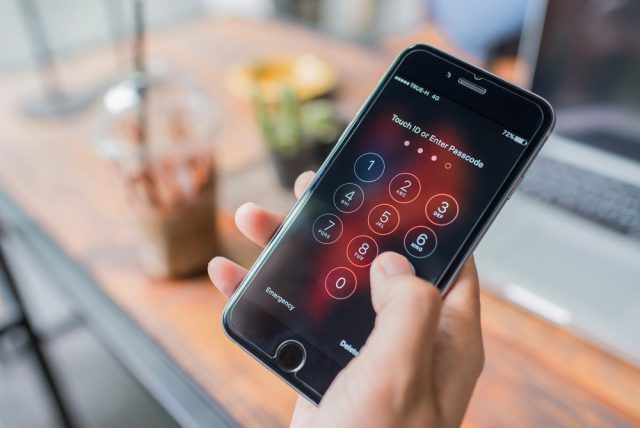
Encryption blocks the FBI from accessing 7,000 devices
The ongoing debate between law enforcement agencies and device manufacturers over customers' digital privacy was a major point of discussion during the San Bernardino terrorist attack in 2016 and now the FBI has revealed that it was unable to access almost 7,000 devices because of encryption in this year alone.
At the International Association of Chiefs of Police conference in Philadelphia, FBI Director Christopher Wray brought up the issue in a speech to highlight how law enforcement agencies are still at a loss as to how to access the data on mobile phones protected with encryption.
Google says the majority of Chrome traffic is protected with HTTPS
Google has already used Cybersecurity Awareness Month to announced details of a new bug bounty program for Android apps, as well as a new Advanced Protection Program for G Suite users. Now the company has revealed that most web traffic in its Chrome web browser is protected by HTTPS.
The precise figures vary from platform to platform -- with ChromeOS and macOS faring the best -- but between 64 and 75 percent is now secured. Google humblebrags about the results of its mission to "secure the web, one site at a time," after opting to mark non-encrypted pages as being insecure.
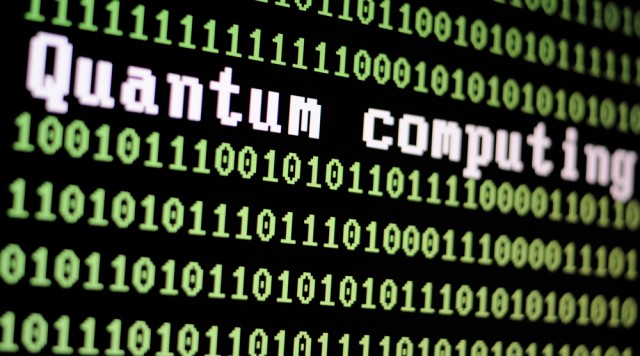
How secure is today's encryption against quantum computers?
Encryption is an excellent way of protecting sensitive data from compromise. It is commonly accepted that once information is securely encrypted, it is safe from prying eyes and sabotage both now and in the foreseeable future.
However, the long-term security offered by many encryption systems (also known as cryptosystems) is under severe threat. A new type of computer -- the quantum computer -- has been theoretically proven to break most of today’s commonly used cryptosystems, and such a computer is predicted to be available within 15 years.
UK government could imprison people for looking at terrorist content
Not content with trying to "combat" encryption, the UK government also wants to criminalize looking at terrorist content. The leading Conservative party has announced plans which threaten those who "repeatedly view terrorist content online" with time behind bars.
New laws will be introduced that could see consumers of terrorist content imprisoned for up to 15 years. The same maximum sentence would face those who share information about police, soldiers or intelligence agencies with a view to organizing terrorist attacks.

UK's confused Home Secretary doesn't understand encryption -- but wants to 'combat' it anyway
The UK Home Secretary, Amber Rudd, has admitted that she doesn't understand end-to-end encryption, but still wants to "to find the best way to combat" it anyway. Speaking at the Conservative Party conference, she said that Silicon Valley had a "moral obligation" to help fight the crime and terrorism she believes is abetted by encryption technology.
Despite having previously voiced support for back doors into systems such as WhatsApp, Rudd said she does not want such access, nor is she seeking to ban encryption. Saying "I don't need to understand how encryption works to understand how it's helping -- end-to-end encryption -- the criminals," she added that she wants technology firms to make it easier for police and security services to access encrypted data.
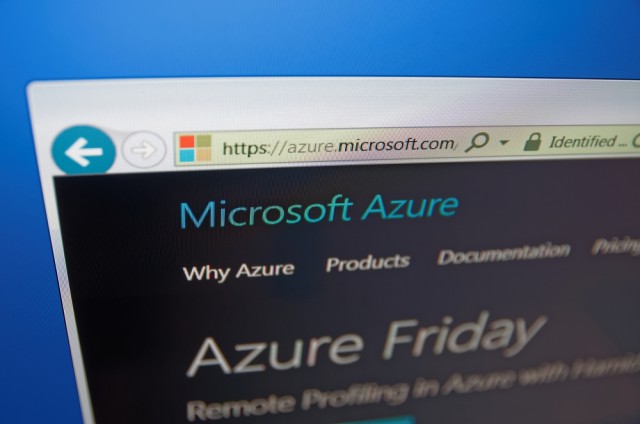
Microsoft adds Confidential Compute to Azure cloud platform
Microsoft has revealed a major new addition to its Azure cloud platform, aimed at keeping user data safe.
The feature, called Confidential Compute, will make sure the data is being encrypted even when it’s being computed on in-memory. So far, it’s been encrypted while stored or while in transit on a network.

New York State’s new financial services cybersecurity policy relies on encryption
As of August 28, certain financial services companies based in New York now have to comply with the state’s new cybersecurity requirements, known by the (very long) acronym 23 NYCRR 500. On the line for affected banks and insurers are both penalties for non-compliance and potential business loss if they continue to expose their businesses to cyber threats.
The regulations took effect March 1, but included a three-month grace period for companies to get organized before needing to meet the first wave of mandates. Companies will have ongoing deadlines over the next two years as further layers of compliance continue to take effect. Notably, affected financial services companies will need to have an encryption strategy in place by September 2018.
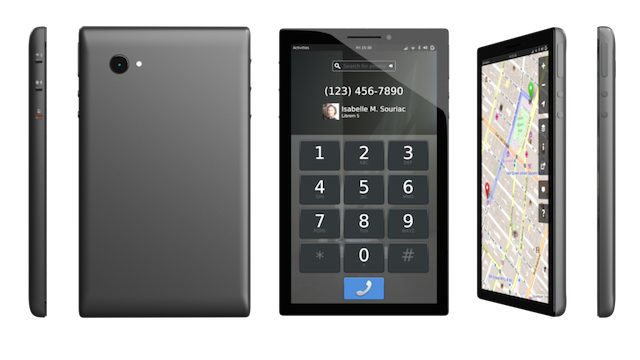
You can help Purism build the secure open source Linux-based 'Librem 5' smartphone
It used to be that very privacy conscious people were viewed as being a bit paranoid. Some of these evangelists for security and privacy would speak of conspiracy theories about governments and hackers accessing your email, private data, webcam feeds, and more. Well, it turns out many of these folks weren't crazy, and their conspiracy theories were actual fact. As Edward Snowden highlighted, some governments and other organizations are out to spy on you -- both for control and profit.
Thankfully, consumers are starting to wake up and become more aware, and some companies, such as Purism, are designing products to safeguard users. The company's laptops, for instance, run an open source Linux-based operating system, called "PureOS" with a focus on privacy. These machines even have hardware "kill switches" so you can physically disconnect a webcam or Wi-Fi card. Today, Purism announces that it is taking those same design philosophies and using them to build a new $599 smartphone called Librem 5. The planned phone will use the GNOME desktop environment and PureOS by default, but users can install different distros too. Sound good? Well you can help the company build it through crowdfunding.
72 percent of security pros say encryption backdoors won't stop terrorism
A new survey of information security professionals carried out at last month's Black Hat conference suggests that the majority think encryption backdoors are ineffective and potentially dangerous.
The study carried out by machine identity protection company Venafi finds that 72 percent of respondents don't believe encryption backdoors would make their nations safer from terrorists.