Google's Amazon Problem
I have long been a critic of the "Peak Google" argument because it is based on a flawed premise -- that deep engagement and consequently "brand advertising" are somehow a threat to Google's model of transactional engagement. While I strongly disagree with that line of reasoning, there are other threats that Google faces within the transactional realm.
Search advertising drives the vast majority of Google's revenue and the most profitable searches are frequently those that are made with the intent to purchase. These purchase-oriented searches are hardly monolithic but can broadly be categorized into B2B and C2B searches. C2B searches can be broken down further into products and services. Looking at taxonomy of transactional opportunities makes it clear that the threat from "deep engagement" is vastly overstated. Facebook is a great place to generate awareness but it's hardly a way to reach customers looking for something specific. Also, breaking down the gamut of transactional opportunities makes it easier to identify threats.
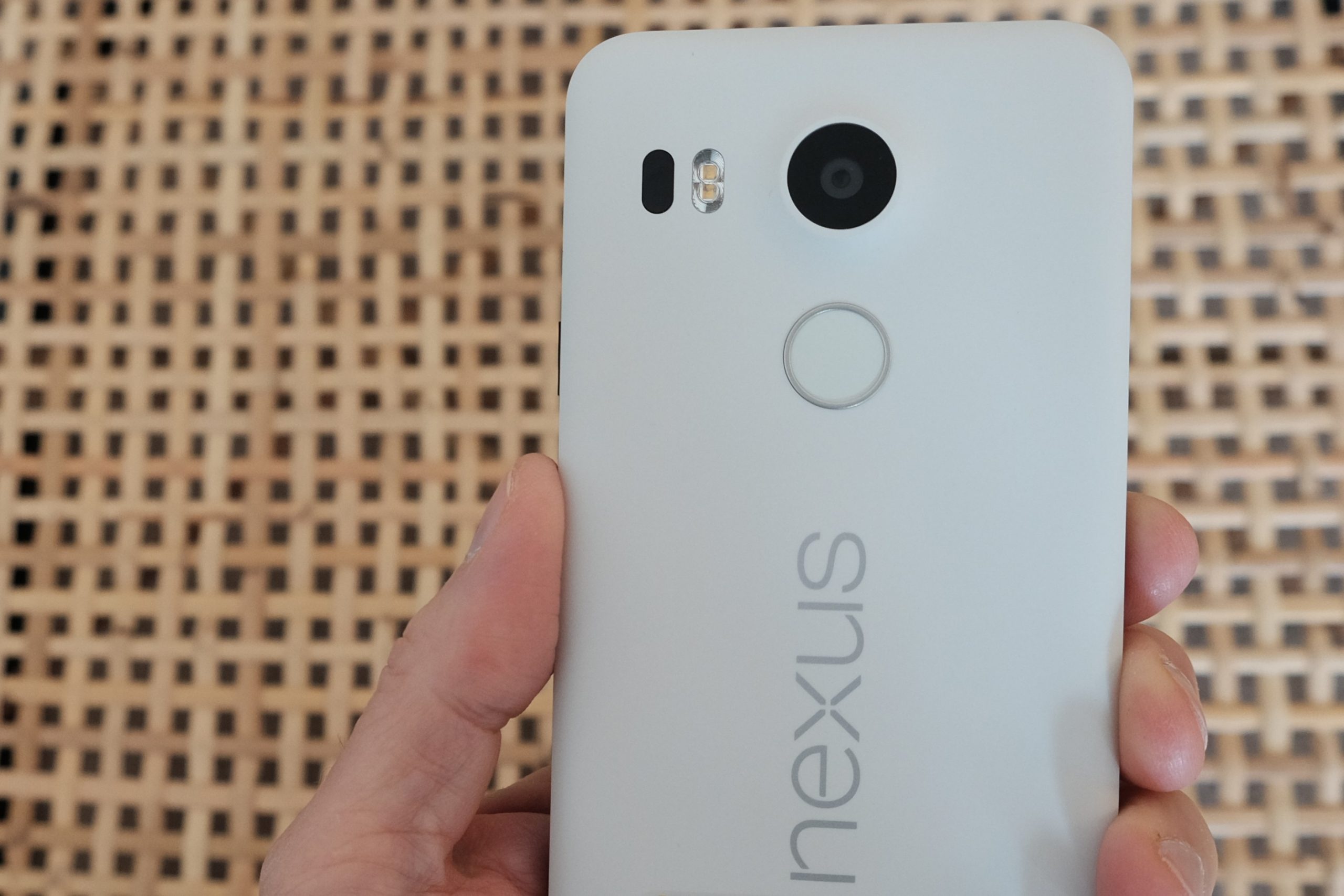
Nexus 5X first-impressions review
The question everyone should ask about Google-branded, LG-manufactured Nexus 5X: Who is it for? My first-impressions review primarily focuses on the answer. My wife is one person, and I am surprised. Because conceptually she steps down from the Motorola Droid Turbo, which by raw specs is the superior mobile. Budget buyers also should consider the 5X or anyone living the Google lifestyle or wanting stock Android.
The new handset course corrects last year's release blunder, when Google sized up to 6-inch screen with the Nexus 6, leaving many satisfied N5 owners in stunned silence followed by loud complaint. While a N6 fan, I agree: It is a huge phone that is overly large for the majority of prospective buyers. This year's solution is smart. Google released two smartphones: Nexus 6P, which while phablet-class is markedly more manageable in the hands than its predecessor; Nexus 5X, for people wanting something smaller and for N5 owners looking to upgrade.

Nexus 6P or iPhone 6s Plus?
If you asked me two months ago about using a Huawei smartwatch or smartphone, I would have scoffed. Yet, here I am doing just that. Timing on the latter is ironic. On Oct. 15, 2015, I bought a 128GB silver (and white) iPhone 6s Plus using Apple's 24-month finance plan, rather than paying in full up front. Huawei-made, Google-branded 64GB Nexus 6P arrived the next day for review. The following morning (the 17th), I hauled down to Apple Store and returned the iPhone for full refund. That act sums up my reaction to the new Android flagship running "Marshmallow".
I didn't expect to be so wooed by Nexus 6P, but Google got me by delivering superior contextual experience. This device, and Android 6, is all about context, starting with what for me is the killer function I couldn't part with: the fingerprint reader on the back of the phone. Picking up the device and placing my forefinger on the circular indentation wakes and unlocks the 6P. Wow-way is right! The mechanism beats the Hell out of Apple's two-handed jimmy from the Home button.

Nexus 6P first-impressions review
Finely balanced and contextually practical are the terms that best describe my first impressions of Google's flagship Android. Nexus 6P preorders are about to ship, and I was fortunate to receive a review model but with short embargo lift: Delivered Oct. 16, 2015 before every blogger and reviewer on the planet blasted out simultaneous reviews and first-reactions on the 19th. I choose the latter, because a scant three days isn't enough time to rightly evaluate the smartphone.
Much of my experience is cast in moving from the previous flagship, Nexus 6, although there was a day between them where iPhone 6s Plus and I fitfully danced. The 6P is in many respects what its predecessor should have been: Smaller. Much as I like the larger Motorola-made phablet, its Huawei-manufactured successor has greater physical and feature balance. Both are superb smart devices, but the newer Nexus is better tuned to practical purposes.

Court finds Google is not breaking the law by scanning books
Google's digital copies of millions of books from around the world has long been controversial. Copyright holders argue that in scanning their works, Google is breaking the law. This has been the focus of a court battle that has dragged on for ten years, but now an appeals court has ruled that Google is doing nothing wrong.
The book digitization project has been underway for some years, and has been the subject of litigation brought about by writers. Judge Pierre Leval and two other judges of the 2nd US Circuit Court of Appeals in Manhattan found that Google is not infringing copyright law, even when it digitizes books without the permission of the authors or publishers.

App Store revenue is 80 percent higher than Google Play
App Annie has released its mobile app market report for Q3, and the headline news is that Apple continues to make more money with iOS, whereas Google’s download numbers are increasing with Android.
It is, though, the money made which really counts, and the global indexed revenue from Apple’s App Store is now 80 percent higher than Google Play, according to App Annie’s figures.
Google Translate grows by two more language features
As much as you may want to know multiple languages, not everyone does. Fortunately for the rest of us there are translation tools to help out and Google is one of the more popular ones, plus it's available on multiple platforms.
Today Google rolls out new translation features, bringing English and German translations to Arabic via printed text -- conversations were already available.
Microsoft launches new Transparency Hub, details content removal requests
In the post-Snowden age, transparency reports are all the rage. After the privacy debate that followed the NSA surveillance revelations technology companies fell over themselves to publish everything they could about government data requests. Microsoft has already released transparency reports, but today unveils a new Transparency Hub.
This is designed to be a central resource through which a variety of reports can be accessed, including the Law Enforcement Requests Report and U.S. National Security Orders Report. Data for the first six months of 2015 is now available, and there is a new section dedicated to Right To Be Forgotten-style requests for data removal.

Hear the recordings Google stores of the voice commands you've said to your phone
OK Google, Siri, and Cortana all make it possible to control a phone simply by speaking to it. In the case of Google, what you might not be aware -- it's hardly something the company shouts about -- is that recordings of every command, question, and request are stored online.
Listening back through these could well be interesting, embarrassing, perhaps even nostalgic. You can step back in time and remind yourself of trips abroad, fun nights out, and the like, but you might also be concerned about privacy. If you would rather these recordings were not stored online, you can delete them; here's how.

Google street view goes across the US from coast to coast
Have you ever driven across the country? It's an adventure everyone should experience, going from the big city of New York to the majesty of Yosemite and even taking an opportunity to follow the path of Jack Kerouac. You obviously can't see everything so you need to plan the journey wisely.
If you miss things along the way then Google may be able to help. The company is boasting its Street View images that take you from the East to West coast and show you what is in between.

Would you rather disable your adblocker or pay to access content?
German tabloid Bild has made a bold move with its website -- blocking anyone using an adblocker from accessing content. Visitors to the site who want to use a tool such as Adblock Plus are now faced with a stark choice: add Bild.de to a whitelist so ads are displayed, or cough up for a €2.99 monthly fee to remove ads.
This is not a move that -- at the moment at least -- every website could get away with. Bild finds itself in the unique position of being the top-selling tabloid newspaper in Europe; it can afford to lose a few visitors with this experiment. With adblocking back in the limelight at the moment, it's time to ask the question: would you rather disable your adblocker or pay to access content?

Official videos show how the Google app can help your daily life
Google is so ubiquitous that it has become much more than just a company. It is a verb, an ecosystem, a way of life. But just as with anything that you experience every day, it's easy to take it for granted or overlook what's under your nose.
With your Android smartphone in your hand (or an iPhone for that matter), the Google app is a portal to a wealth of information; all you need to do is speak to your phone. It's easy to forget just how helpful the app is -- but Google is here to remind you that it is more than capable of taking on Siri and Cortana. The company has released a trio of videos highlighting what the app can do for you. And you know what? They're actually pretty decent.

Google's OnHub is basically a hacked Chromebook -- here's how to root it
One of Google's slightly more unusual hardware releases is the OnHub wireless router. At $200, it's a network device that some might consider expensive, but at the same time its performance has impressed. A router is a router is a router, you might say, but Google's OnHub is somewhat different to the majority.
A teardown by iFixIt revealed the guts of the router, showing that it's a TP-Link device (confirming what Google had already said) with a somewhat unusual antenna design. It's an intriguing piece of hardware that Exploitee.rs has referred to as being "at heart a Chromebook without a screen modified as a router". The good news for anyone who likes to get their hands dirty with some hardware hacking? It is rootable and Exploitee.rs reveals all.
Mozilla to drop NPAPI plugins from Firefox
Mozilla will kill "most" NPAPI plugins in Firefox almost two years after Google took the same action with Chrome. Back in September 2014, Google announced that NPAPI support would be removed starting in January 2015. Mozilla is now playing catch-up, and plans to end NPAPI support by the end of 2016.
When Google announced its decision, speed, stability, and security were cited as reasons for ditching plugins, and Mozilla is taking much the same line. The company also points out that many features and functions that only used to be possible through the use of NPAPI plugins can now be achieved through native web APIs. But what is this going to mean for users?

Mozilla sets out its proposed principles for content blocking
With Apple embracing ad blocking and the likes of AdBlock Plus proving more popular than ever, content blocking is making the headlines at the moment. There are many sides to the debate about blocking ads -- revenue for sites, privacy concerns for visitors, speeding up page loads times (Google even allows for the display of ads with its AMP Project), and so on -- but there are no signs that it is going to go away.
Getting in on the action, Mozilla has set out what it believes are some reasonable principles for content blocking that will benefit everyone involved. Three cornerstones have been devised with a view to ensuring that content providers and content consumers get a fair deal, and you can help to shape how they develop.