
Google partners with International Fact Checking Network to further tackle fake news
These days just about every tech company with the slightest connection to news is doing what it can to stem the flow of fake news. Mozilla, Microsoft and Facebook have all taken steps, and Google has already rolled out its Fact Check tag to highlight verified stories.
Today the search giant announces that it has joined forces with the International Fact Checking Network (IFCN) to take the battle even further.

Google releases Android Oreo 8.1 Developer Preview beta
It's not all that long since the launch of Android 8.0 Oreo -- not that many people have it on their phones -- but Google has already pushed out a developer preview of Oreo 8.1.
As this is an early beta, there are not a huge number of changes to see in Android Oreo 8.1 developer preview -- but under the hood, there's quite a lot going on. For now, compatibility is limited to the Nexus 5X, Nexus 6P, Pixel C, Pixel, Pixel XL, Pixel 2 and Pixel 2 XL, but for these handsets new features include a Neural Networks API to improve machine learning, improved autofill, and Android Go optimizations.
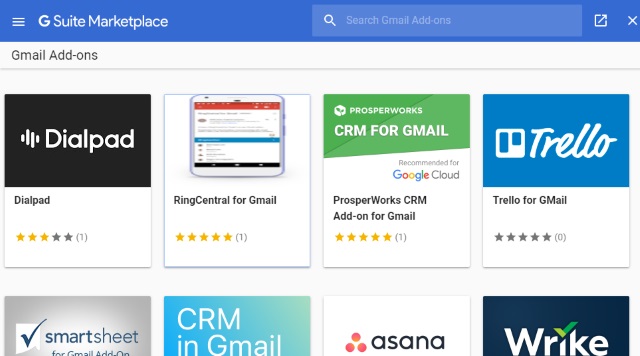
Google launches Gmail Add-ons and brings a range of business tools to the inbox
Integration is the name of the game these days, and Google is taking steps to ensure that its own services offer integration with the tools and services people need to get their work done. With this in mind, the company today launches Gmail Add-ons after a beta testing period as a developer preview earlier in the year.
Gmail Add-ons are extensions that bring a number of big-name services -- such as Trello, Wrike and Asana -- to your inbox. While there's a definite business and enterprise bias, it's something that is available to everyone, starting right now.

Display problems could make the Google Pixel 2 XL a tough sell
When you pay big bucks for a smartphone you expect it to be flawless. That's why people make a big deal out the problems they find on a flagship device. Things are no different with Google's new Pixel 2 XL, which exhibits some serious issues.
The problems stem from its display which, put simply, is not of the highest quality. Users have reported color shifting when looking at the screen from an angle, poor color reproduction and, most-recently, burn-in. That last bit is especially worrying because the Pixel 2 XL has only been around for a couple of weeks.
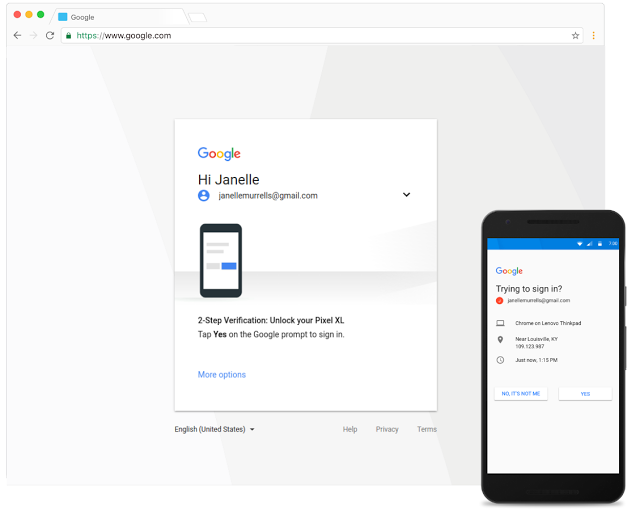
Google defaults to prompts for two-step authentication
Text messages are often used as a means of implementing two-factor authentication on websites and in apps, but now Google is actively pitching its own alternative, known as Google prompt, to customers.
Traditionally users would receive a one-time code on their mobile device contained within a text message which they would have to enter to gain access. With Google's solution though, they will receive a prompt asking if they are trying to sign in. Users trying to sign in will gain access while those not expecting the login prompt will be denied.
Google unveils Chrome User Experience Report to let developers see how visitors use websites
If you've ever wondered what happens to the data Google collects via Chrome, today's announcement gives you something of an idea. The newly unveiled Chrome User Experience Report is a collection of data from users who have opted in to usage statistic reporting, the idea being that developers will be able to see how users experience the websites they visit.
Google launched the new tool at the Chrome Dev Summit 2017 in San Francisco, and at the same time also announced Trusted Web Activity. This is essentially a way to provide app-like behavior in Chrome to create a more cohesive experience.

Google makes it easier for businesses to take online bookings
Businesses in the US now have a new way to sign up with one of Google's booking partners and to add a booking button to their search listing.
Anyone in the US with a Google My Business account can benefit from the addition of a booking button that enables people to book a reservation with a simple click. It's a continuation of the idea started with Reserve with Google, and the search giant is making it easy for businesses to track their online booking through their accounts.

Google officially introduces Data Loss Prevention API
Google has just released a new API that helps organizations protect and regulate sensitive data. The Data Loss Prevention (DLP) API, which has been in beta since March, has now been unveiled, together with a couple of new features.
The features include redaction, masking and tokenization. The API can enforce the principle of least privilege, or need-to-know access to data to production applications and data workflows. Its service can work with any data source or storage system.
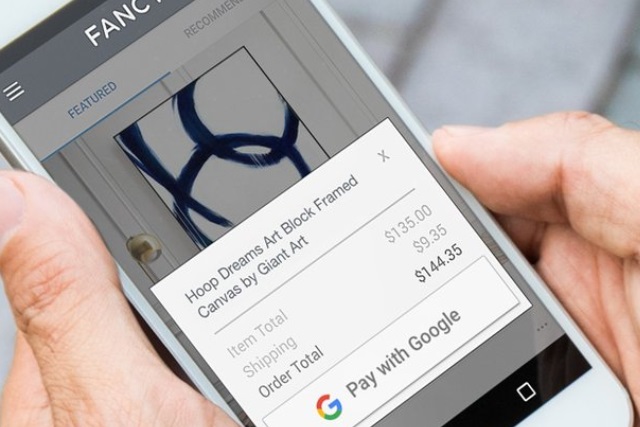
'Pay with Google' speeds up online payments for Android users
As promised earlier in the year, Google has launched its payment service to streamline the checkout process for Android users. Pay with Google aims to kill the frustration that can stem from having to fill out endless forms in order to complete a purchase.
To start with, Pay with Google is supported by 15 vendors including Instacart, Kayak, iFood and GameTime, but there are plenty more big names -- like StubHub, Deliveroo, Airbnb and Just Eat -- due to join. The service is available from today, and can be used in various Android apps, or Chrome on the web.
Google says the majority of Chrome traffic is protected with HTTPS
Google has already used Cybersecurity Awareness Month to announced details of a new bug bounty program for Android apps, as well as a new Advanced Protection Program for G Suite users. Now the company has revealed that most web traffic in its Chrome web browser is protected by HTTPS.
The precise figures vary from platform to platform -- with ChromeOS and macOS faring the best -- but between 64 and 75 percent is now secured. Google humblebrags about the results of its mission to "secure the web, one site at a time," after opting to mark non-encrypted pages as being insecure.
Support for 'Hey, Google' hotword rolls out to Android phones
Calling up the Google Assistant on your Android phone takes nothing more than bellowing "OK, Google" at your handset. But you may be someone who feels that this is just too many syllables to utter.
Google Home users have a slightly easier time. As well as "OK, Google" it is also possible to say "Hey, Google" -- meaning you can start getting help in two thirds of the time! Now the same option is making its way to Android phones.
Google will pay Android app developers more for retaining subscribers
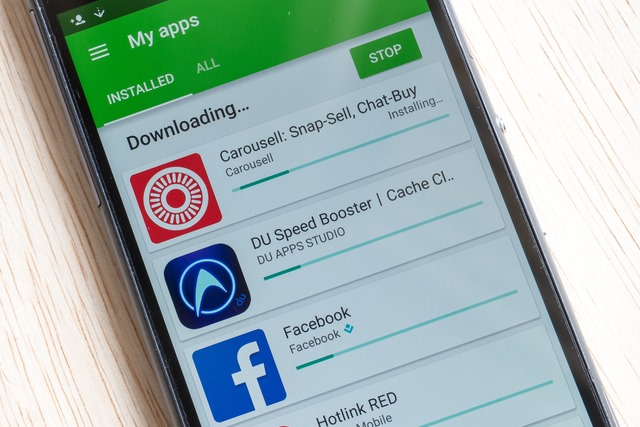
Developers who want to sell apps or offer in-app subscriptions on Google Play have to give 30 percent of the revenue up. It's the cost of doing business on Google's popular app store -- and the same goes for the App Store and Microsoft Store as well.
However, in a move that mirrors Apple's policy change last year, Google will soon take a lower cut from developers who retain subscribers for more than a year.
Instant Apps in Google Play let you try out apps without installing them
As well as unveiling a new bug bounty program for select Android apps, Google has also announced a number of changes to its Play Store. The first is the introduction of Instant Apps to Google Play, giving users the chance to try out apps without even having to install them.
The idea is to give people the opportunity to test out apps almost immediately without having to wait for them to download -- ideal for anyone with limited data or a slow connection. Instant Apps are essentially streamed to devices meaning they can be running in seconds.
Android hackers: Now there's a bug bounty program for Google Play
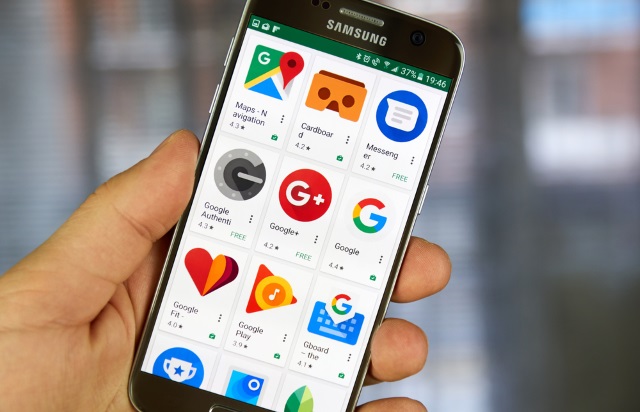
Google has announced that it is teaming up with HackerOne to bring a bug bounty program to the Play Store. Seeking to weed out problems with Android apps, the Google Play Security Reward Program pays out $1,000 for reported issues that meet certain criteria.
The program is a little different to other bug bounty programs as Google will pay out for problems that are found in third party apps, not just its own. At the moment there are a very small number of apps that are taking part, but Google is inviting developers to opt their apps into the program.
Google Calendar for the web finally gets a redesign and new enterprise features
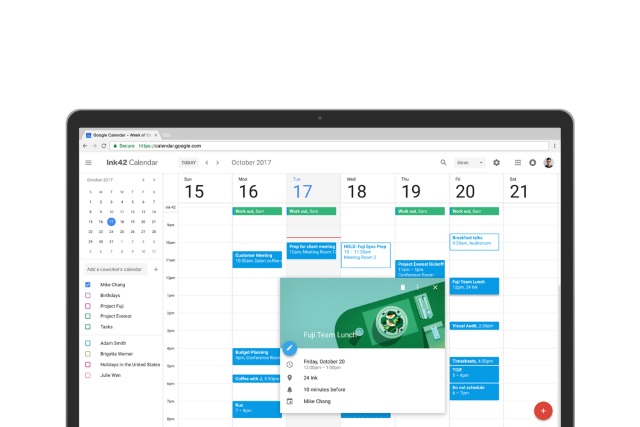
After years of little more than minor tweaks here and there, Google Calendar for the web is finally getting a long-overdue update. Inspired by the mobile app Google has developed, the revamped online version of Calendar gains a new color palette, as well as a layout rejig and a few new features.
The new look uses Google's Material Design scheme, and the update means that Calendar now intelligently resizes for different screen and browser window sizes. There are various new features for enterprise users, but there are also new views, and a focus on displaying more useful information than before.