Verizon to offer discounted deal on FIOS for a limited time only
Internet, TV and phone have become, perhaps sadly, some of the most important services in our lives. The problem for many of us is getting the service we want as it's limited in most areas -- in fact, many people only have one choice thanks to monopolies by area.
If you live in a location which has Verizon then you have access to one of the faster connections in the United States and now you can get a better deal on the service, although it's for a limited time only.

Slow websites risk retailers losing Black Friday sales
Poor page load speeds could be losing retailers business over the Black Friday period according to a new report.
The study by eCommerce agency Visualsoft looked at the UK's top 240 online retailers -- including major supermarkets -- and finds that 54 percent have poor page load speeds, taking over nine seconds.
Adblock Plus tries to entice UC Browser users to Adblock Browser
Adblock Plus is using the disappearance of the popular Android app UC Browser from Google Play to promote its own mobile web browser.
An open letter to people looking for the currently-unavailable UC Browser calls on mobile web users to give Adblock Browser a try. The privacy-focused browser includes, obviously, an adblocker and, as Adblock Plus cheekily points out, "we haven't been kicked out of the store."
Twitter outlines new verification policies and strips many right-wingers of their blue tick
After awarding the coveted blue tick of verification to a white supremacist, Twitter recently announced that it would be pausing its verification program. Making good on this promise, Twitter says that it is not only no longer accepting public requests for accounts to be verified, it is also introducing new guidelines, and removing the verification tick from accounts that do not make the grade.
This means that white nationalist Richard Spencer, far-righter Laura Loomer, English Defence League founder Tommy Robinson and others no longer have a blue tick next to their names. While Twitter is promoting this clamp down as part of its war on hate speech, some are complaining that the company is trying to silence right-wing voices.
Twitter pauses verification program after giving white supremacist the coveted blue tick
Head of Twitter, Jack Dorsey, has admitted that the company's verification system is "broken" after a blue tick was awarded to white supremacist Jason Kessler. There was a backlash this week after Kessler -- who helped to arrange the Unite the Right rally in Charlottesville earlier in the year -- had his Twitter account verified.
Responding to the negative reaction this prompted, Twitter announced that its verification program has been paused. The company also said that the verification tick had been largely misinterpreted by people.

Twitter more than doubles the length of user display names
Signing up for any service means facing the username battle. There are two obstacles: is your username still available, and does it meet the necessary requirements. With Twitter, getting an @YourName handle is tricky because there are simply so many users (and bots), but there has long been a highly restrictive limit on the length of names -- just 15 characters.
Twitter has long offered something of a compromise in allowing display names that are slightly longer -- but only up to 20 characters. Now, the company has announced that there are more than twice as many characters to play with. Display names can now be up to 50 characters in length -- usernames, unfortunately, remain unchanged.
Twitter lets everyone send 280-character tweets -- and infuriates with maddening circle icon
After a few weeks of testing with a limited number of users, Twitter is rolling out 280-character tweets to (nearly) everyone -- but says that very few of the testers reached this limit.
With the 140-character limit, says Twitter, just 9 percent of tweets hit the upper limit; with 280 characters to play with, this drops to 1 percent. The increase has divided opinion on Twitter, but the company's decision to replace the simple character countdown -- to warn how much more you could type -- with a bizarre circular icon has been given a rather negative reception.
Twitter blames a failure to take context into account for its block on LGBTQ searches
Over the weekend, users noticed that a number of search terms -- such as bisexual -- appeared to be blocked on Twitter. Having said "we've identified an error with search results for certain terms. We apologize for this. We’re working quickly to resolve & will update soon," Twitter has finally explained what happened.
Perhaps predictably there's -- assuming you believe Twitter -- nothing sinister going on. Instead, the company's latest policy changes, which took extra measures to block sexual content, meant that its automated systems were being rather heavy-handed in censoring certain content, completely failing to take context into consideration.
EFF: Twitter users have a First Amendment right not to be blocked by President Trump
The Electronic Frontier Foundation has told a court that Donald Trump's blocking of users who criticize him on Twitter is a violation of their First Amendment rights. The digital rights group says that people have a "constitutional right to receive government messages transmitted through social media and participate in the forums created by them."
The EFF argues that Trump's use of Twitter has become a hallmark of his presidency, and by blocking individuals he is denying them access to the policy details and other information he frequently disseminates through tweets.

Amazon applies its own discounts to third-party sellers
Amazon is gearing up for Thanksgiving and Christmas with a new discount scheme. The online retailer has introduced a new "Discount provided by Amazon" tag, discounting independent merchants' prices -- at its own cost -- by up to 9 percent.
This is the first time Amazon has taken control of third party pricing, and in shouldering the cost itself the company is helping to ensure competitive pricing across the board, keeping customers on the site.
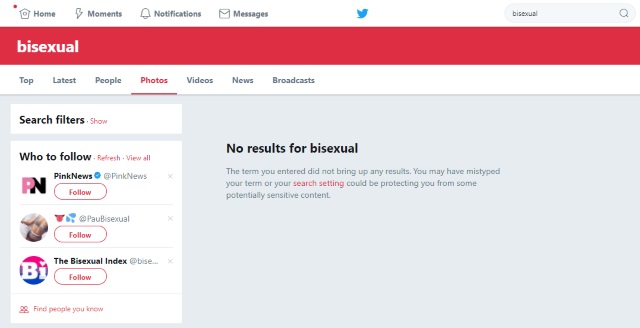
Twitter pledges to fix 'error' that hides bisexual search results
Twitter faced criticism over the weekend after it was discovered that the search term "bisexual" appeared to have been blocked. Users noticed that searching for the word returned no news or photo results, leading to claims of censorship and discrimination.
The company refers to the issue as "an error with search results for certain terms" and is "working quickly to resolve" it.
TorMoil flaw leaks IP addresses of Mac and Linux Tor users
If you're using Tor, you're almost certainly doing so because you're looking for privacy and anonymity. But a newly discovered critical vulnerability has been revealed in the Mac and Linux versions of the browser that means IP addresses may be leaked.
The bug was discovered by security firm We Are Segment and was reported to Tor. While a proper patch is yet to be created, a fix has been released, and Tor users are strongly advised to install it.
Twitter clarifies rules about abuse, violence, adult content -- promises a further update on November 22
Twitter seems to be fighting something of a losing battle against abuse on its platform, as well as failing to successfully clamp down on all manner of content that supposedly violates its terms of use. In its latest attempt to get things sorted, the company has -- once again -- updated its rules.
The company's latest changes specifically take in the issues of abusive behavior, self-harm, spam, graphic violence and adult content. The announcement is in keeping with Twitter's recently announced timetable for tackling abuse, as is the promise that further changes will be revealed on November 22.
WordPress users advised to update to version 4.8.3 following discovery of SQL injection vulnerability
Anyone running a website powered by WordPress is being told to upgrade to version 4.8.3 immediately after the discovery of a serious security issue.
The problem -- an SQL injection vulnerability -- affects millions of websites running WordPress 4.8.2 and older. In addition to installing the latest update, site owners are advised to update plugins that could be exploited.
Google makes it harder to search for results from other countries
For a long time, there was an easy way to conduct a Google search in a country other than the one you're in. If you wanted to get results specific to Japan, for instance, you would visit www.google.co.jp; to get Australian results you would visit www.google.com.au -- but this trick no longer works.
Google has announced that it will now always serve up results that are relevant to the country that you're in, regardless of the country code top level domain names (ccTLD) you use. The reason given is a little bizarre.