Facebook partners with LGBTQ group for Messenger suicide support, and expands mental health tools
In the US, May is Mental Health Awareness Month, and Facebook is using this to raise awareness of the tools it offers for those in need of help. The social network says that it wants to help people connect with the help they need to promote good mental health and well-being.
The company is also expanding its suicide prevention tools -- something it has offered for a decade now -- by working with new partners. The latest addition to the fold is The Trevor Project to help offer support to LGBTQ youth, and Facebook also says that its overall arsenal of tools has been improved by advancements in technology.

Pirated copy of Pirates of the Caribbean 5 used to hold Disney to ransom
Just a couple of weeks since a leak of season five of Orange is the New Black was held to ransom, the same is now happening with the upcoming Pirates of the Caribbean 5. Yesterday Disney CEO Bob Iger revealed that hackers had stolen one of the company's movies, and it has since transpired that it is the upcoming Johnny Depp flick.
Subtitled "Dead Men Tell No Tales", Pirates of the Caribbean 5 is due to hit the big screen next week, and hackers are demanding a ransom from Disney to avert a leak ahead of the official launch. This is the latest move in the world of piracy that shows a marked shift from the previous aim of release groups simply wanting to be the first to push out a decent quality rip of a movie.

Data breach at DocuSign leads to massive phishing campaign
E-signature and security firm DocuSign has confirmed a data breach in which attackers gained access to a database containing customer email addresses. The company says that no other data was revealed in the security breach, but it led to a large phishing campaign.
Attackers used the stolen email addresses to spam people with emails containing an infected Microsoft Word document. The company insists that its core service remains secure, but coming in the wake of the WannaCry ransomware attack, people around the world are on high alert.
Facebook cleans up News Feeds by reducing links to 'low quality', clickbait content
When it's not being accused of being used for propaganda or peddling fake news, Facebook is often criticized for being home to meaningless clickbait that exists only to generate ad revenue. As part of an on-going drive to make people's News Feeds more useful and pleasant to use, the social network is clamping down on what it refers to as "links to low-quality web page experiences."
Facebook wants to cut back on content that is "misleading, sensational and spammy" and links to web pages that contain "little substantive content and that is covered in disruptive, shocking or malicious ads." Starting right now, you should start to see fewer of these links.

Facebook shuts down abortion group's page for 'promotion or encouragement of drug use'
Just yesterday we wrote about the repeated closure of an atheist Facebook group by the social network. Now, in a similar act that has more than a slight whiff of censorship to it, Facebook has "unpublished" the page of Women On Web, a group that puts women who live in places that have abortion restrictions in contact with doctors.
The doctors that women are connected with can provide them with abortion pills, and it seems that because of this the group, Women On Web, has been found by Facebook to be engaged in the "promotion or encouragement of drug use". The group describes itself as "a place for the pro-abortion rights, pro-choice, and reproductive justice communities to engage in discussion and share news."

Digital inclusion in developing markets: Is satellite Internet the answer?
In today’s era of globalization and ever increasing interconnectedness, the demand for affordable connectivity is growing around the world. The ability to have access to an affordable means of communication is essential for economic and social development across the globe.
Today, we take for granted the free access to information almost anywhere and at any time. Thanks to mobile connectivity we are able to communicate with people across the world at the tap of our fingertips.
BBC to clamp down on licence fee avoidance by requiring password for iPlayer
Within the next few weeks the BBC is planning to introduce password protection to iPlayer. The system is intended to prevent people from using the streaming TV catch-up service without paying a licence fee.
The corporation says that it does not plan to introduce "mass surveillance techniques or ask internet providers for IP addresses," but is merely interested in ensuring people comply with the law. The system should also help the BBC to reduce the number of people from outside the UK using iPlayer for free.

Atheist group claims Facebook keeps deleting its page
An atheist Facebook page with more than 1.6 million fans is being repeatedly deleted by the social network, claims the group behind it. Atheist Republic says that a coordinated campaign has resulted in the page being removed at least three times.
It is thought that Facebook’s automated removal process may be to blame, with algorithms taking the page offline after a series of reports. The page is used to actively criticize religion, and it is believed that an orchestrated fightback from religious groups is leading to its repeated automatic removal.
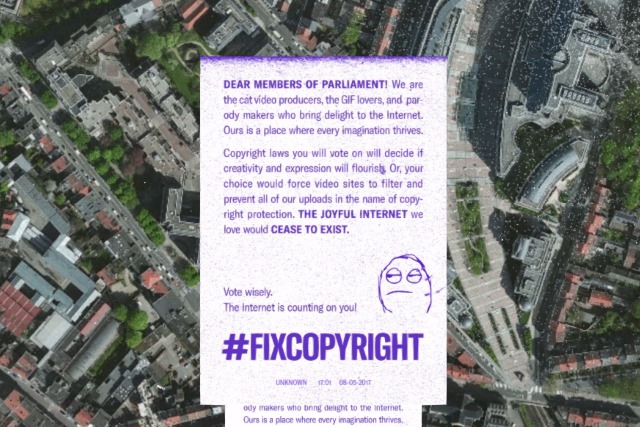
Mozilla's Paperstorm campaign calls for copyright reform to save the internet
Mozilla has teamed up with design studio Moniker and launched a new "digital advocacy tool" called Paperstorm with the aim of modernizing copyright laws in Europe. The tool makes it easy for ordinary internet users to carpet bomb European lawmakers with virtual leaflets demanding change.
The campaign is looking to drop millions of leaflets on cities around Europe to send a message to EU policymakers. The timing is important because copyright laws are due to undergo amendments, and proposals need to be in by the end of the year. Mozilla says that existing rules are outdated, and now is the time to make sure the laws are appropriate to modern needs.
Open source password strength meter could help boost account security
It's no secret that most people are rubbish at choosing passwords -- it's something that's proved time and time again when the annual list of common passwords is released. To help overcome the problem, and hopefully increase the security of people's accounts, a team of researchers from the Carnegie Mellon University and the University of Chicago have created an open source password meter that provides advice about how to strengthen a password.
While it's quite common to encounter online forms that require you to create passwords that meet certain criteria, it still does not necessarily mean they are secure. CyLab Usable Privacy and Security Laboratory (CUPS), in conjunction with the Institute for Software Research, has created a tool that provides real-time feedback that helps to explain why a password is insecure, and offers tips about how to strengthen it.

Online daters receive explicit emails after Guardian Soulmates website suffers data breach
A number of people who were members of the dating website Guardian Soulmates had their email addresses exposed following a data breach. The exposure of usernames and email addresses led to some users receiving explicit emails.
Human error has been blamed for the breach, with site owner Guardian News and Media (GNM) saying that the problem stemmed from a third-party technology provider. The issues meant that private details were made available via users' public profiles.
Google just made offline browsing a whole lot easier in Chrome for Android
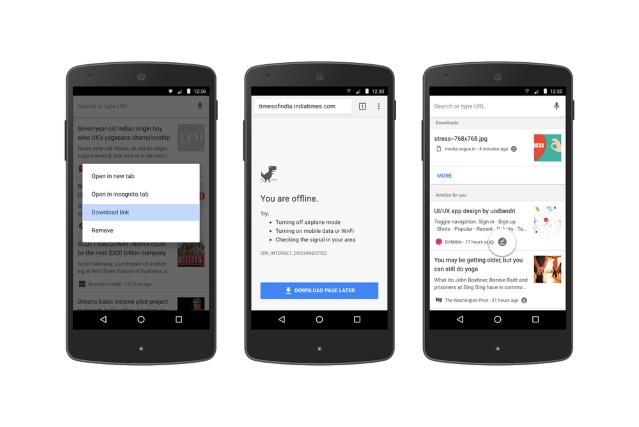
Offline web browsing is a useful feature, particularly on a smartphone, so it was little surprise when Google added website downloading to the Android version of Chrome. Today the company launches a number of improvements to make the whole process even easier.
The latest update to the app introduces a couple of new ways to download pages for offline viewing. It also provides easier access to the content you have earmarked for offline reading, encouraging more people to make use of the feature.
Facebook uses newspaper ads to warn about fake news and gives tips to help spot it
Facebook's fight against fake news has been taken to the printed press. The social networking giant has taken out a series of ads in UK newspapers giving tips about how to spot fake news. The ad campaign comes as Brits prepare to go to the polls and vote in the snap General Election in a month's time.
The issue of fake news really came to prominence in the run up to the US election, and research has shown that Facebook has become a tool that is used as part of campaigning to spread propaganda. In addition to the print ads, Facebook has also closed down thousands of UK accounts and is also expanding its automated system for spotting fake news to the UK.
Microsoft patents technology to block pirate material from cloud storage
A new patent from Microsoft could enable the company to not only identify and block pirate material from being shared via cloud services, but also to identify repeat offenders and take action against them.
The patent specifically refers to the ability to identify and block the sharing of "prohibited content," and this could be used to mean copyrighted material, or files that a company simply does not want to be shared. The technology relies on a fingerprinting technique which makes it possible to identify files rather than having to worry about trying to track down and delete files to prevent further sharing.

Facebook to hire just 3,000 more people to moderate the content of its 1.9 billion users
There's been a lot of disturbing content on Facebook in recent weeks and months -- murders, rapes, assaults, shootings and more. After a fatal shooting was shared on the site, Facebook vowed to do more to combat this sort of material.
As the social network announced that it now has 1.9 billion users, it also announced that it is to employ an extra 3,000 people to help moderate content. This brings the company's total number of moderators to 7,500. Can this possibly be enough to manage the posts of nearly 2 billion people, and who on earth would want to be tasked with viewing some of the most gruesome content to determine whether or not it should be removed?