
Mozilla ditches Aurora release channels for Firefox; new and beta code will hit users faster
Mozilla has announced plans to eliminate one of its release channels for not only Firefox but also Thunderbird and SeaMonkey. Starting today, the Aurora release channel will no longer be updated, and the Developer Edition of the web browser will be based on the Beta build.
The change is part of a drive to streamline the release process, and to make sure that stable new features make their way out to not only developers, but also normal users faster than before. Mozilla says: "Developer Edition users will maintain their Developer Edition themes, tools, and preferences, will keep their existing profile, and should not experience any disruption."

Investigation finds Facebook mods fail to remove illegal content such as extremist and child porn
That Facebook is fighting against a tide of objectionable and illegal content is well known. That the task of moderating such content is a difficult and unenviable one should come as news to no one. But an investigation by British newspaper The Times found that even when illegal content relating to terrorism and child pornography was reported directly to moderators, it was not removed.
More than this, the reporter involved in the investigation found that Facebook's algorithms actively promoted the groups that were sharing the illegal content. Among the content Facebook failed to remove were posts praising terrorist attacks and Islamic State, and others calling for more attacks to be carried out. Failure to remove illegal content once reported is, under British law, a crime in itself.

Google Image Search gets fashion-conscious with 'style ideas' on Android and the web
You'd be forgiven for thinking that Google is entirely pre-occupied with fake news and the fact-checking thereof these days, but there are still rather more interesting changes and additions being made to search. The latest new feature is "style ideas" which makes its way to the web and Android today.
Google says that the aim of the feature is to help "boost your search style IQ" -- because, after all, "when it comes to fashion, it’s hard to know where to start." What this means in practice is that when Image Search is used to track down a particular product, such as shoes or a bag, Google will show off images with those items paired with different products or displayed in different situations.

Google kills off Octane JavaScript benchmark due to 'diminishing returns and over-optimization'
Google has announced that it is to retire the Octane JavaScript benchmark. The company says that while the benchmark was useful when it was introduced back in 2012, "over-optimization" by developers means that it is far less meaningful.
Google goes as far as saying that developers were essentially cheating the system. It says that compiler optimizations needed to achieve high benchmark scores have become common and, in the real world, these optimizations translate into only very small improvements in webpage performance.

Google AutoDraw is like autocomplete for your doodles
Machine learning has been put to lots of powerful uses, but Google has a new way to make use of the technology. AutoDraw is the company's "fast drawing" tool for everyone, and it works much like autocomplete on your phone.
AutoDraw is a web-based drawing tool that uses the same technology as Google's Quick, Draw! AI experiment and it helps you to quickly create an image by "guessing" what it is you’re trying to draw. If this all sounds a bit mad, that's because, well, it is really. But it's also unique enough to make it well worth checking out.

Brexit voter registration website may have suffered DDoS attack at the hands of Russia or China
The Brexit process is now officially underway, but there is still a good deal of talk about the validity of the outcome. A number of members of parliament have expressed concerns that a foreign government may have interfered with the referendum, making it difficult or impossible for people to register to vote.
The Commons public administration and constitutional affairs committee (PACAC) has published a report which looks at the possible causes for the crash of the "register to vote" site last year. It suggests that the crash bears the hallmarks of a DDoS attack, and notes that this is a tactic employed by both Russia and China in the past.

Payday loan site Wonga hit by security breach affecting 270,000 in UK and Poland
Wonga.com -- the payday loan website -- is investigating a security breach which exposed the personal details of tens of thousands of customers. Up to 270,000 customers in the UK and Poland are believed to have been affected by the breach.
The incident happened last week, but Wonga initially played down its significance. However this weekend the company determined that customer data was involved, including names, addresses, phone numbers, bank account numbers and sort codes and started an investigation.

Government drops demands to unmask @ALT_USCIS after Twitter files lawsuit
Just one day after Twitter filed a lawsuit to block the US government from forcing it to reveal the identity of who is behind the @ALT_USCIS account, the government has dropped its request.
News of the lawsuit saw the account's follower count more than quadruple as Twitter users jumped to see what was being posted by what are believed to be United States Citizenship and Immigration Services employees. As a result of the government dropping its request, Twitter has stopped the lawsuit.

YouTube: no ads until your channel has 10,000 views
YouTube is more than just a source of cat videos and hilariously painful-looking accidents caught on camera: for many people it is a source of extra income, or even a living. But the YouTube Partner Program (YPP) through which advertisements can be used to generate money is also open to abuse.
The Google-owned site has a plagiarism problem whereby popular content is stolen and re-uploaded to a different channel to generate money for a third party. In a bid to stop this practice, YouTube is banning channels from displaying ads until they have managed to hit 10,000 views.

Trump signs resolution permitting ISPs to share your web history without consent
Donald Trump has forged ahead and done what privacy advocates hoped would not happen. The US president has signed a resolution rolling back FCC privacy rules, meaning that ISPs are now free to share and sell customers' browsing histories without express permission.
The signing of the bill into law comes after the Senate and then the House voted to allow ISPs to share customer data without consent. The White House has confirmed that Trump has reversed the Obama-era rules, so closely targeted advertising is now not far away.

Amazon Cash lets you pay for Amazon shopping with cash rather than a bank card
Amazon today announced details of Amazon Cash, a new way to shop online that does not require shoppers to have a bank card. The system allows shoppers to print out a barcode -- or display it on the screen of their iOS or Android phone -- and make a payment in brick-and-mortar stores.
Launching in the US, Amazon Cash can be used to add money to a customer's Amazon Balance, and a number of big names including CVS Pharmacy, Speedway and Sheetz are among the stores participating in the scheme.

Android is more popular than Windows... for getting online
We already know that interest in Windows 10 is on the wane, but now Android is more popular than any version of Windows with Internet users. Google's mobile operating system has overtaken Windows as the preference for getting online for the first time.
Usage figures published by StatCounter show that Android accounted for 37.93 percent of the worldwide OS Internet usage share in March. Windows is not far behind at 37.91 percent, but Android taking the lead is being described as a "milestone in technology history."

Microsoft, Google, Twitter and Facebook to work with UK government to tackle extremist content
Following UK home secretary Amber Rudd's suggestion that encrypted messaging service WhatsApp was 'a secret place to hide' for terrorists, four major technology companies met with the minister to discuss the removal of extremist material from websites and social media.
Microsoft, Google, Twitter and Facebook met with Rudd amid calls from civil liberties groups for greater transparency. Following the meeting, senior executives from each company signed a statement indicating that they are ready to work with the government to tackle the problem. The matter of backdoors into encrypted apps and services, however, remained off the table.
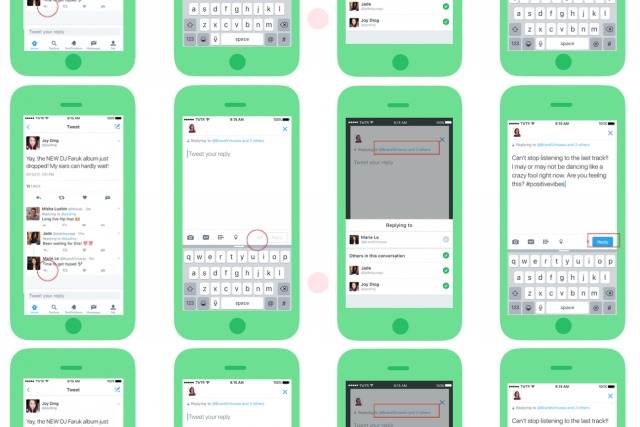
Twitter tweaks replies to give you more characters and greater clarity
Recent changes at Twitter have focused mainly on clamping down on abuse and trolling, but there have also been adjustment tweaks that allow users to send longer messages. Now the site is introducing another change that effectively means you are able to send longer replies to people.
The latest change does not mean that you are given more than 140 characters to play with, but the 140 character limit is now put to better use. In short, all 140 characters are available for you to reply with as @usernames no longer count towards the total.

Facebook introduces 'personal fundraisers' so you can raise money for yourself
If you need money for something, you might think about using a service such as GoFundMe to ask people to donate cash to you. But now you can turn to Facebook instead, as the social network launches a new "personal fundraiser" feature, as well as Donate buttons in Facebook Live for Pages.
As the name suggests, a personal fundraiser is a way for individuals to raise money for themselves -- or someone they know. To start with, Facebook says that it is only possible to raise money for "critical financial needs" that fall under one of six headings, but this may expand over time. So how do you go about looking for donations through the social network?