
The real cost of downtime
One of the best things about today? Stuff just works.
Consider the hours you once spent tapping your pen to the tune of broadband dial-up. And what about blowing on your Sega cartridge to get the game to load? These are a thing of the past.

US House votes to destroy the privacy rights of web users
Last week, the US Senate voted to permit ISPs to share -- or sell -- customers' browsing histories and other data without permission. Now the House has gone ahead and voted the same way, so internet users' privacy is now up for sale.
Just as the Senate vote to overturn privacy rules was close (50 votes to 48), so was yesterday's: 215 to 205. The repeal of the FCC-approved rules had President Trump's support, and the latest vote means that all manner of personal information is now able to be sold for marketing and advertising without individuals' consent.
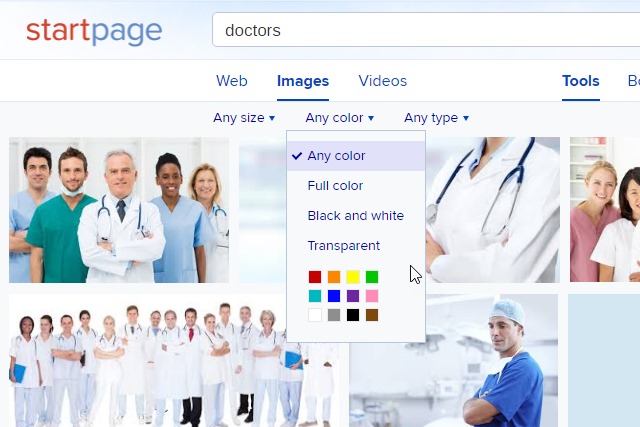
StartPage.com launches 'the world's best private image search' and Instant Answers
Privacy-focused search engine StartPage has launched an upgraded private image search feature. With extreme concern mounting about plans for ISPs to be granted permission to sell customers' browsing histories without express permission, interest in untrackable browsing is on the increase.
Based in the Netherlands, StartPage is outside the reach of US law enforcement agencies, and it uses a secure connection so there is no way to tell what users have been searching for, and also secures click-throughs using a proxy. In addition to the private image search enhancement, StartPage has also launched Instant Answers to provide searchers with easy access to key information.

Internet outages cost the UK economy £7 billion in 2016
Organizations in the UK have had a total of three days of Internet outages in 2016 each, according to a new report by Beaming. The UK economy lost £7 billion because of it, while companies lost productivity and had to cover for extra overtime.
More than 75 percent of companies polled for the report say they experienced at least one connectivity failure that stopped them from accessing crucial services. In 2016, on average, a company suffered four outages, waiting six hours for each one to be fixed.

Privacy warning: US ISPs could sell and share your browsing history without consent
In a major blow for privacy advocates and individual rights, the US Senate has voted to permit ISPs to sell or share customers' data -- including their browsing histories -- without consent.
The vote overturns a Federal Communications Commission rule that banned such activity. While there are still legislative hoops to jump through before the result of the vote is ratified, ISPs will be rubbing their hands in glee at what the Senate has done.

US companies start to pull ads from Google and YouTube over extremist content controversy
Last week saw the start of a backlash against Google after advertisers voiced concern that their ads were appearing next to extremist content. The Guardian, the BBC and the British government were among the first to start to pull their ads from the network, and the trend has spread to the US.
AT&T and Verizon are among American companies that have now announced that they are boycotting YouTube by pulling their ads. After concerns about being associated with terrorist and other extremist content, an increasing number of big names are calling on Google to make guarantees about ad placement.
The hidden impact of DNS on internet users
According to a new report, 92 percent of UK companies have limited visibility into the impact DNS performance is having on their internet users and visitors to their online resources.
The study by cyber security company Neustar and research firm Quocirca shows that although DNS is a fundamental utility supporting the internet, and relied on by all businesses, visibility is hampered by complexity with 45 percent of organizations having as many as eight different ways of provisioning their DNS infrastructure.
Google says it will 'raise the bar' for ad policies after controversy over extremist content
Google has announced plans to introduce safeguards for advertisers after complaints from many big names that their advertisements were appearing next to extremist content. The Guardian, the BBC, and the UK government are among those to have withdrawn advertising from Google and YouTube, and the company has been battling to get companies back on side.
Google's Chief Business Officer, Philipp Schindler, has admitted that while there are policies in place controlling the ad network, "at times we don’t get it right." He says he understands that advertisers don't want their ads to appear next to content that is not in keeping with their values, and more will be done to ensure this doesn't happen.
Google scrabbles to appease advertisers after drawing ire for inappropriate ad placements
Yesterday, the Guardian withdrew advertising from Google and YouTube after its ads were placed next to extremist content. The British newspaper was not alone -- broadcaster Channel 4, and even the British government soon followed suit.
Now Google is scrabbling to calm down the situation. Advertisers are unhappy that their ads have been placed next to extremist content and hate speech, and Google says it will improve the controls advertisers have over ad placement. At the same time, the company says: "we believe strongly in the freedom of speech and expression on the web -- even when that means we don't agree with the views expressed."
Mozilla: people have no idea how to protect their privacy and security online
Privacy and security are major concerns when it comes to life online, but a survey by Mozilla reveals that a worrying number of people do not know how to stay in control of them. The company also found that a third of people feel they have no control over their information online, with a similar number confessing to knowing "very little" about encryption.
But these are not the only concerns of internet users. Mozilla also asked about people's greatest online fears. Topping the list is "being hacked by a stranger" (a fear held by 80 percent of people), and "being tracked by advertisers" (61 percent). As well as presenting the results of its survey, Mozilla also has some important advice.
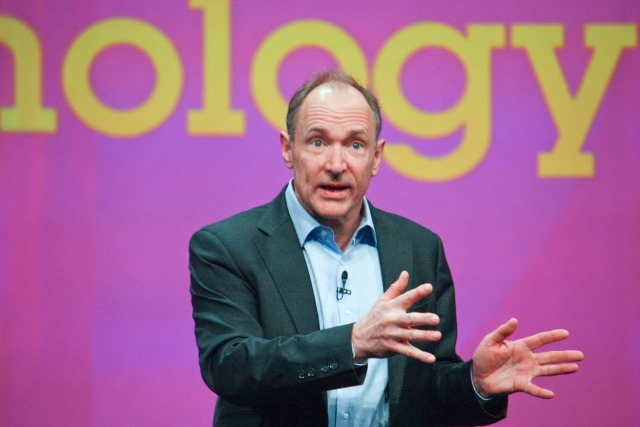
Worldwide web inventor Tim Berners-Lee's biggest concerns: privacy, fake news and political ads
It was 28 years ago that Tim-Berners-Lee submitted his proposal for the worldwide web. What he envisioned as an open platform that would break down global barriers has become a wild beast with endless problems. Talking on the anniversary of his invention, Berners-Lee has spoken about his concerns for the web.
He has three problems in his crosshairs, and he says the trio of issues is something "we must tackle in order for the web to fulfil its true potential as a tool that serves all of humanity." But he does not come armed with solutions; it's at least partly down to us to sort things out.

Ever Sentinel notifies you when companies change privacy policies or terms and conditions
Changes to terms and conditions or privacy policies happen all the time, and this presents a few problems for consumers. As well as having to negotiate through the often impenetrable language used in these documents, it can be near impossible to work out what has changed, and what the implications are. This is where Ever Sentinel can help.
The service monitors the terms and policies for a number of popular websites and services, and not only alerts you when they change, but highlights exactly what has changed. It's part of a drive to encourage greater transparency in terms and conditions and privacy policies, and it's free for you to use to keep yourself informed.
Facebook asks BBC for sexual images found in Facebook groups; calls police when BBC complies
Facebook, like just about any other social network -- and, indeed, countless websites -- is home to all manner of objectionable and even illegal content. A BBC investigation found that Facebook was failing to remove sexualized images of children from groups after they were reported, calling into question Facebook's moderating procedures. Accounts for convicted pedophiles also remained online after they were reported.
When the BBC pointed out to Facebook that less than 20 percent of the reported images were removed, Facebook asked to see the images that were being investigated. When the BBC complied with the request, Facebook reported the corporation to the police for distributing illegal images. The social network's response to the investigation has been derided as "extraordinary".
Mozilla says Trump's revised immigration Executive Order damages the global technology industry
When, shortly after his inauguration, Donald Trump signed an Executive Order blocking immigrants from numerous Muslim-majority countries, Mozilla was among those who filed an amicus brief against the move. Now the organization has spoken out against the president's revised travel ban.
While the new Executive Order drops Iraq from the list of black-listed countries, immigration is still banned from six countries, and the US refugee program remains suspended. The not-for-profit group says it "damages Mozilla, the United States, and the global technology industry", going on to say that "these restrictions are significant and have created a negative impact to Mozilla and our operations."

Officials say it's time for the Great Firewall of China to ease up on censorship
The Great Firewall of China is famed for the restrictions it places on what Chinese citizens can access online. If a site provides access to news from the west, conflicts with state propaganda, or criticizes China or its ruling Communist party in any way, it is blocked. But some officials are now suggesting that it's time things changed.
The impetus is not a sudden softening of the political agenda, but a suggestion from the leading advisory body the Chinese People’s Political Consultative Conference that censorship is damaging China's progress in terms of the economy and science.