
Children are at risk from online predators as UK government fails to implement sexual grooming laws
The UK government has failed to implement promised laws that would help to protect vulnerable children from online predators in England and Wales. Back in 2014, the then-Prime Minister David Cameron said he would introduce a new criminal offense of sexual communication with a child, effectively ensnaring paedolphiles.
The law would help to reduce the problem of "grooming", the practice of luring in a child and gaining their trust with a view to later abusing that trust. Cameron's announcement more than 18 months ago was welcomed as it eliminated a legal loophole, but now children's charities are unhappy that laws that could prevent sex abuse have not been written onto the statute.

Google's updated privacy policy means personally identifiable ad tracking is now go, go, go!
That Google encroaches on user privacy is not a startling revelation by any stretch of the imagination. But a recent change to the company's Privacy Policy means that information from DoubleClick ads can now be used to identify individuals and track them online.
The changes to the policy have not been hidden -- the details and alterations are visible in an archived copy of the document -- but it has not been advertised either. The implications of the change are huge. Since purchasing DoubleClick back in 2007, Google kept identifiable user data separate from anonymized ad tracking. This is no longer the case.
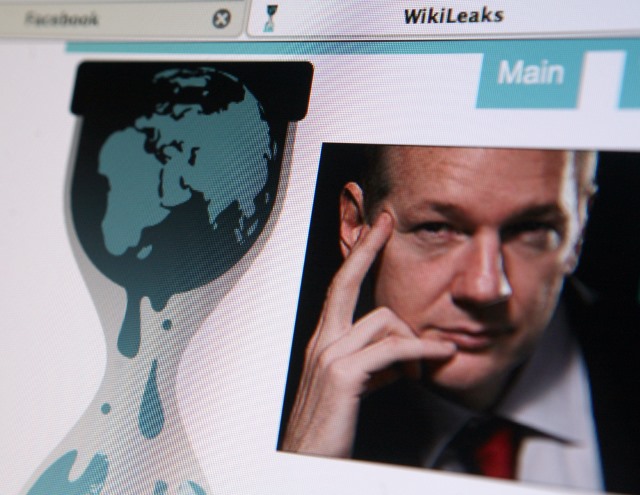
Ecuador severs Julian Assange's internet connection to prevent US election interference
News emerged this week that WikiLeaks founder Julian Assange had been cut off from the internet. Now Ecuador -- in whose embassy he is holed up in London -- has said that it is responsible.
The move comes after WikiLeaks continued with its threats to release damaging information about Hillary Clinton, which could possibly boost the popularity of Donald Trump. The country is keen not to be seen to be interfering with, or allowing interference with, the US election, saying it "respects the principle of non-intervention in the internal affairs of other states".

Lost for words? Facebook Messenger suggests conversation topics at the cost of privacy
Facebook is keen for people to keep talking. Recently the company has been pushing its Messenger app as a way for people to stay connected in a variety of ways, but it has also noticed a problem -- people don’t always have something to talk about.
But Facebook (of course!) has a solution. To help those who struggle with small talk, an experiment is underway whereby Facebook Messenger will suggest possible topics for conversation. These are, obviously, not just random suggestions, but topics based on the activities of the participants -- opening up the usual privacy concerns that tend to be associated with Facebook.

Facebook on the frontline: livestreaming Iraqi and Kurdish forces trying to wrestle Mosul from ISIS
When Facebook Live launched as a service available to everyone (after a celebrity-only debut) it didn’t take long for people's fears of terrible incidents being broadcast to come true. We've had celebrities livestreaming, we've had death, injuries and accidents livestreamed. What next? War.
Over in Iraq, the city of Mosul is currently under the control of ISIS. Iraqi and Kurdish military forces are in the process of attacking the city to regain control. What's unusual -- and particularly disturbing -- about this is that the whole event is being livestreamed on Facebook by Kurdish media group Rudaw -- complete with viewers' reactions in the form of cartoon emoji.

Google will show different search results to mobile and desktop users in the coming months
At the moment it does not matter whether you perform a Google search from your phone or from your computer; you'll see the same results. But in a few months this is set to change. The company is set to launch a new mobile search index that will be more up to date than the desktop index.
The news came at Pubcon, a social media and optimization conference, via Google's trends analyst Gary Illyes. It was an idea that was floated last year, and after a little experimentation, Google is almost ready to launch the new search index.

Game of Thrones actress Faye Marsay is bullied into quitting social media
The latest high-profile victim of online abuse is actress Faye Marsay, famous for her portrayal of the Waif in Game of Thrones. After finding herself on the receiving end of hate and harassment, she has announced that she is to quit Facebook.
Marsay's decision comes after guidelines were unveiled to help determine whether criminal proceedings should be brought against individuals engaging in online hate crimes.

Yahoo locks in users by disabling email forwarding to other accounts
Yahoo has had a dramatic fall from grace in the last couple of weeks. While far from the most popular email service out there, it maintains a relatively healthy user base -- but all of this changed with news of a security breach resulting in the theft of 500 million account details, and the revelation that the company secretly scanned emails for the NSA.
While there has not exactly been a mass exodus away from Yahoo, many users have started to question their loyalty to the company and investigate the alternatives. If you are thinking about abandoning Yahoo, the company has put something of an obstacle in the way -- it has disabled email forwarding, saying the feature is now 'under development'.

Trolls, sexters and doxxers could face prosecution for social media hate crimes
The UK's Crown Prosecution Service (CPS) has today published new social media guidelines that set out online offenses for which people could be prosecuted. Launched as part of Hate Crime Awareness Week, the guidance will be used to decide whether criminal proceedings should be brought against individuals.
Among the offenses outlined in the document is 'virtual mobbing' -- encouraging others to engage in online hate campaigns. The CPS points out that anyone doing this could face charges under the Serious Crime Act 2007. Also published today is the Public Policy Statements on Hate Crime which is due to be put to public consultation and will focus on hate crimes against disabled people, as well as attacks of a racial, religious, homophobic and transphobic nature.

Mirai botnet code used to launch DDoS attack on Krebs On Security leaks online
Fears are mounting that there could soon be a rise in large scale DDoS attacks after the source code used to launch the recent crippling attack on Krebs On Security was shared on a hacker forum.
Brian Krebs' website was hit by what has been described as the largest ever DDos attack recently, and the Mirai botnet source code has now been made available for anyone to make use of. The style of attack is particularly interesting as it involves using compromised Internet of Things devices such as webcams and other connected IoT hardware.

Facebook Marketplace takes on eBay and Craigslist
Today, Facebook launches a new way to buy and sell goods online -- Facebook Marketplace. While the service may not win any prizes for the originality of its name, it provides a more efficient and effective way to find things that are for sale near you than currently exists on the social network.
To start with, Facebook Marketplace will be available to mobile app users on iOS and Android, but it will also come to Facebook on the desktop eventually. Facebook is taking a very hands-off approach to buying and selling, and is not getting involved in the murkier aspects of transactions such as payments or handling feedback.

Facebook launches Messenger Lite to reduce data usage
Facebook may have the rather lofty goal of wanting to "empower people all over the world to stay connected", but for most people the social network is just about chatting. Facebook Messenger has proved massively popular, and to cater for people with slower internet connection, the company now has Facebook Lite.
As you would probably guess from the Lite tag, this is a slightly cut-down version of the messaging tool but it still offers all of the core features. As well as helping out those with slow internet connections, it's an app that will appeal to people with more basic Android smartphones.
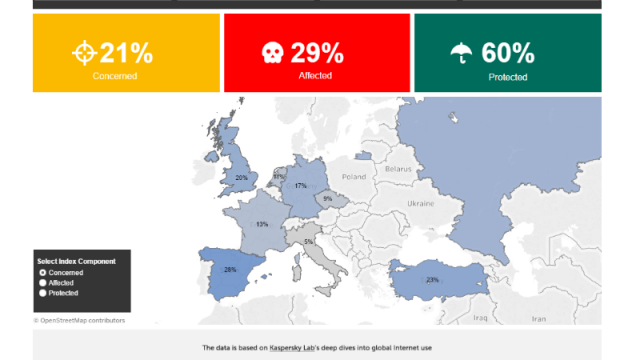
Few users are concerned about their online security
Just 21 percent of Internet users feel threatened by anything online, including malware, viruses, fraud, etc. At the same time, 29 percent have actually fallen victim to cybercriminal schemes, out of whom eight percent have had an account hijacked, and 22 percent have had malware on their devices.
On top of it all, a total of 60 percent of all people online use protection, in form of a cybersecurity solution for all devices accessing the internet. These figures were unveiled by Kaspersky Lab which has, together with B2B International, released a report on the current level of cyberthreats faced by internet users, called Kaspersky Cybersecurity Index 21 – 29 – 60.

New law requires IMDB to respect actors' privacy and remove ages on request
If you've ever got into an argument about the age of an actor, or you've just been curious about how old someone is, you may well have hit IMDB to find out. But starting next year, the Internet Movie Database will have to comply with requests to remove age details from profiles after the state of California passed a new anti-discrimination law.
The bill, AB-1687, requires that all sites that have paid subscriptions that allow people to post resumes and other information respect requests to remove information relating to age -- or just not post this information in the first place. Welcomed by some, the new legislation has also been criticised for being a violation of free speech.

YouTube Heroes program rewards people who report videos
Google has launched a new reward scheme that offers incentives for users to report videos that violate the site's guidelines. YouTube Heroes program also enables YouTubers to earn points for doing things like adding subtitles to a video and responding to questions in the help forums.
While the promise of rewards for helping to "create the best possible YouTube experience for everyone" is appealing, critics are not happy with the fact that users will now have an added incentive to report videos.