Privacy: Google updates Safe Browsing rules so apps must warn when they collect personal data
Google is introducing changes to its Safe Browsing policies, requiring Android apps to display their own privacy warning if they collect users' personal data. The company says that if app developers refuse to comply, Google will display a warning of its own.
Developers have been given 60 days to comply with what is described as an expansion of Google's existing Unwanted Software Policy. Interestingly, it does not matter whether apps are featured in Google Play or they come via other marketplaces.

Privacy: UK government to tweak Snooper's Charter after conceding it is illegal in its current form
The highly controversial Snooper's Charter -- also known as the Investigatory Powers Act -- is, the government has been forced to admit, illegal under European law in its current form.
The Brexit process may well be underway, but at the moment, the UK is still subject to EU law. As such, the government is making changes to the law. While the tweaks will not change the level of surveillance people are subjected to, they will restrict who has automatic access to that information.
Google faces class action lawsuit for gathering personal data from millions of iPhone users
A group going by the name Google You Owe Us is taking Google to court in the UK, complaining that the company harvested personal data from 5.4 million iPhone users.
The group is led by Richard Lloyd, director of consumer group Which?, and it alleges that Google bypassed privacy settings on iPhones between June 2011 and February 2012. The lawsuit seeks compensation for those affected by what is described as a "violation of trust."

Facebook may start using selfies to verify logins
Some Facebook users have reported that the social network is asking them to upload a selfie as a means of verifying their identity.
It seems that the company is testing out a new form of captcha as it asks that you "upload a photo of yourself that clearly shows your face." Just like Facebook's recent idea that users could protect themselves against revenge porn by uploading naked images of themselves, the test is likely to raise concerns about privacy.
Privacy: a huge proportion of Android apps are secretly tracking you
A joint research project between Yale University's Privacy Lab and French non-profit Exodus Privacy has uncovered widescale tracking in a large number of Android apps. The likes of Tinder, Spotify, Uber, Twitter and Snapchat -- as well as masses of lesser-known apps -- were found to be riddled with snooping components relating to no less than 25 well-known trackers.
In all, around three quarters of apps were found to gather personal information about users via a variety of third-party tracking techniques. Researchers have published their findings online so Android users can check if their favorite apps are snooping on them.
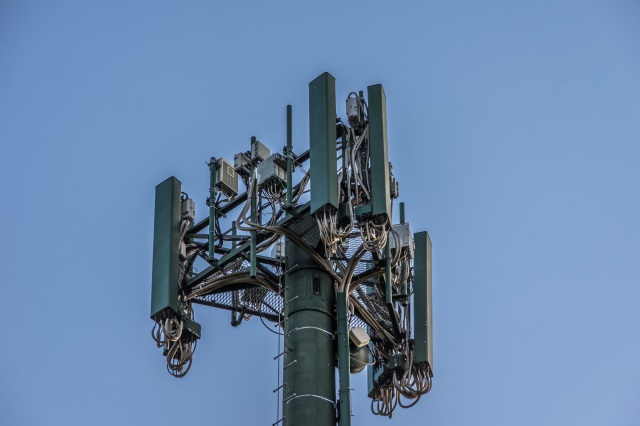
Privacy: Google caught tracking Android users' whereabouts even if location services are disabled
For those concerned about their privacy, location services is just one more setting to disable on their phone. But Google has now revealed that it is not only able to, but actually does track the location of Android users even if location services are disabled.
More than this, Google records the addresses of nearby cell towers -- thereby giving a very good idea of location -- even when there is no SIM card in a phone and no apps are used. This data has been collected since the beginning of the year.

Privacy: Use of session replay scripts means many websites essentially have built in keyloggers
The idea that what you do online is not a secret is something that we have all -- just about -- come to terms with. That said, most people still expect a modicum of privacy, and they certainly don’t expect literally every keystroke they type to be logged by the websites they visit.
But, say researchers at Princeton University, this is exactly what is happening. Hundreds of the most popular websites are using "session replay scripts" that record every single thing a visitor does. They are designed to monitor how visitors interact with a site to help gather information that could improve page design, and the incredibly extensive data that is collected is sent off to a third party for analysis.

MediaProjection vulnerability leaves 77 percent of Android phones open to screen and audio recording attacks
More than three quarters of Android phones are vulnerable to screen and audio recording by attackers. By exploiting the MediaProjection service, an attacker can easily trick a user into granting the relevant rights to a malicious app.
Although the vulnerability has been fixed in Android 8 Oreo, users running Lollipop, Marshmallow or Nougat remain at risk. MediaProjection is -- by design -- able to capture screen activity and audio, and it does have legitimate uses, but by using a technique known as tap-jacking permission can be given for it to be used for more nefarious things.
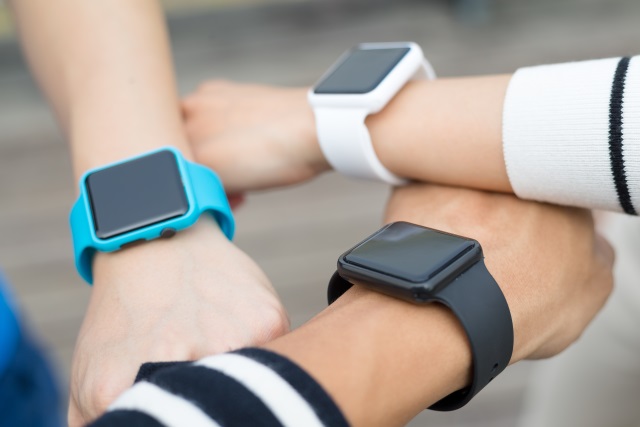
Privacy: Germany bans kids' 'spying' smartwatches
Regulators in Germany have introduced a ban on children's smartwatches citing privacy concerns. Telecoms regulator the Federal Network Agency (FNA) describes the wearables as "spying devices" and advises parents to destroy them.
The FNA said that parents had been using such smartwatches to listen in on their children at school, and warned teachers to be on the lookout for them. But a lack of regulation of the devices means that many have poor security, meaning they could be used by others to spy on wearers.

If you send nudes to Facebook for revenge porn protection, the photos will be checked by humans
Facebook caused more than a little eye-rolling with its anti-revenge porn program which requires users to upload the naked images of themselves that they would like to protect. It had been assumed that the entire process would be automated, making use purely of algorithms to analyze images and protect privacy. This assumption was wrong.
Facebook says that in actual fact an employee -- an actual human being -- will have to review the nude images that are sent in.

Facebook: send nudes and we'll protect you against revenge porn
Revenge porn is one of the latest online problems, and it's one to which it would seem difficult to come up with a solution. Facebook, however, thinks it has the answer. If you're willing to share your nude photos with the social network, it will use them to protect you against revenge porn attacks.
It's an idea that sounds like utter madness, but Facebook is at pains to convince users that it's actually a brilliant solution. Compromising images that are shared with Facebook will be hashed to create a digital fingerprint which the company can then use to identify the same images if they are uploaded by someone else.

TorMoil flaw leaks IP addresses of Mac and Linux Tor users
If you're using Tor, you're almost certainly doing so because you're looking for privacy and anonymity. But a newly discovered critical vulnerability has been revealed in the Mac and Linux versions of the browser that means IP addresses may be leaked.
The bug was discovered by security firm We Are Segment and was reported to Tor. While a proper patch is yet to be created, a fix has been released, and Tor users are strongly advised to install it.

Privacy: 'Bottom feeders' could exploit the access Apple gives developers to iPhone X facial data
With the iPhone X due to ship to those who have pre-ordered tomorrow as well as being available in stores in limited numbers, it has emerged that Apple is allowing app developers to access facial data.
Concerns have already been voiced about the privacy of Face ID and how facial data is used, but Apple responded to these saying the data remains on the iPhone X and is never sent to the cloud. But contracts seen by Reuters show that app developers are permitted to take facial data off phones, providing certain criteria are met.
Top American banks have significant gaps in GDPR website compliance
GDPR affects all companies that engage with EU citizens, even if they have no physical presence in the EU, but a new study reveals that some major US firms still have websites that don’t comply.
The research by digital threat management company RiskIQ looks at 25 of the 50 largest banks in the US (as of 2017) and finds significant security gaps in personally identifiable information (PII) collection.

Purism Librem 13 v2 privacy-focused Linux laptop -- great hardware, frustrating software [Review]
As a computer user in 2017, privacy is always on my mind -- as it should be. I suppose I have always cared about securing my information and data, but in recent years, we have learned so many troubling things about government hackers -- including the USA -- that it seems more important than ever. Patriot Edward Snowden really shone a light on the unfortunate state of privacy, or lack thereof, in modern days.
This is why I was very intrigued by the Purism line of laptops. These are computers that are designed with privacy in mind. The Librem 13 v2, which I have been testing, features two hardware kill-switches -- one will cut the webcam and microphone, while the other kills the Wi-Fi and Bluetooth radios. By cutting access on the hardware level, hackers cannot access these things when switched off. Instead of using a traditional bios system for booting, it even leverages Coreboot. It runs a Linux-based operating system called "Pure OS" which aims to be very secure and private. Unfortunately, the OS ends up being a little too secure, and the weak link of the overall package. But does that really matter?