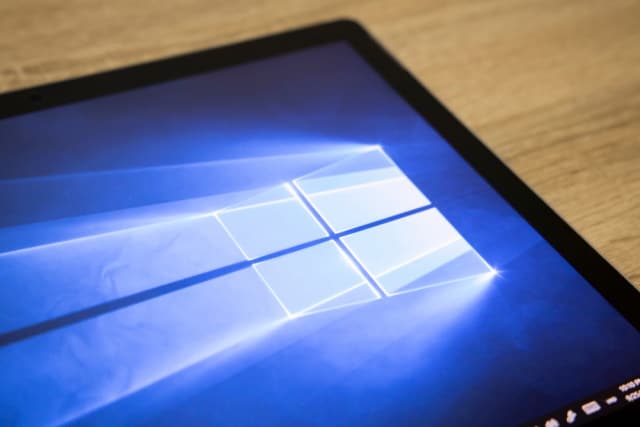
Windows 10 is pretty much forcing users towards Microsoft accounts rather than local ones
The recent news about Windows 10 has been focused primarily on a series of faulty updates that caused a range of problems for users. But now something new has come to light that will take attention away from Microsoft's shoddy quality control -- the fact that it is starting to practically force users into using an online Microsoft account rather than a local, offline one.
The change was noted in the Home edition of Windows 10 version 1903 (Windows 10 May 2019 Update). During the installation of the operating system, users are presented with the option to "Sign in with Microsoft", with no mention of alternatives. So, what's going on?
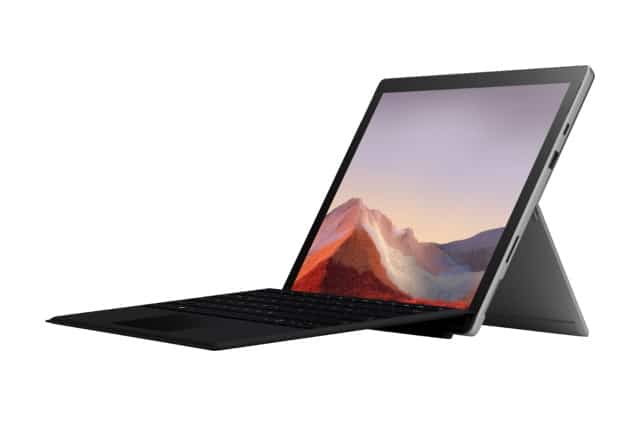
Leaked: here is the Microsoft Surface Pro 7, Surface Laptop 3 and new ARM-powered Surface
Following the leak of marketing material for Microsoft's upcoming Surface devices, another batch of images has leaked. They show off the Surface Pro 7, Surface Laptop 3 and new Surface based on ARM ahead of tomorrow's launch event.
Just as the first set of leaked images came from a well-known name -- Walking Cat -- the same is true of this second leak. This time around it is Evan Blass who gives us a glimpse of Microsoft's latest additions to the Surface range.
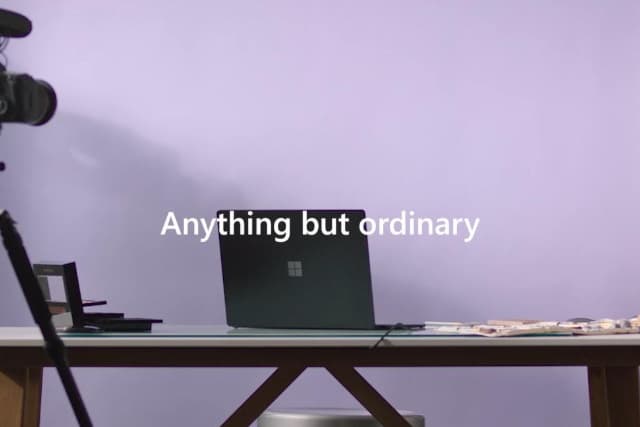
Leaked Microsoft images show the new Surface lineup will be 'anything but ordinary'
It's only a couple of days until Microsoft's hardware event at which it is going unveil the latest Surface devices. But no reveal would be complete without a leak or two.
True to form, serial Microsoft leaker Walking Cat has shared four marketing images for the latest additions to the Surface range. From the ads, it seems we can expect to see at least a new Surface Laptop, and a Surface Pro tablet later this week.
Windows 10 version 1903 is now ready for broad deployment
Microsoft has announced that Windows 10 version 1903 (Windows 10 May 2019 Update) has been designated "ready for broad deployment". This means that all Windows 10 users can now download the update from Windows Update.
Despite the change in status, there are still a handful of issues with the release, some of which are still being investigated, and others which have only been mitigated against rather than fixed.
Game audio problems in Windows 10? Microsoft has a fix for that
There's no denying that recent updates for Windows 10 have caused more problems than usual. In the last few weeks, updates have led variously to issues with the Start menu, screenshots, high CPU usage and more.
Gamers found that the KB4515384 update for Windows 10 version 1903 was causing problems with in-game audio. The company was fairly swift to suggest some workarounds, but it is only now that a proper fix has been released to address the issue.

Modified PcShare backdoor replaces Windows Narrator to gain full control of systems
Security researchers have discovered a modified version of the open source backdoor PcShare which seems to originate from a Chinese advanced persistent threat (APT) group.
The malware has been used to target technology firms, and it is deployed via side-loading by a legitimate NVIDIA application. As part of the attack, a Trojanized version of Windows' Narrator screen reading tool is used to gain remote access to systems without the need for credentials.
Cybercriminals target Thomas Cook customers in the wake of the company's collapse
The collapse of travel firm Thomas Cook has caused chaos for hundreds of thousands of holidaymakers around the world. But if losing out on planned trips was not bad enough, cybercriminals are taking advantage of the confused situation to scam customers out of their money.
There have been numerous reports of fraudsters pretending to be representatives of either Thomas Cook or a bank, using the promise of a refund to get people to part with bank account details.
Google Chrome update to blame for unbootable Macs
Earlier in the week, Variety reported about a mysterious problem with Macs in Hollywood. As the issues -- which prevented systems from rebooting -- affected television and film editors in LA, it was initially thought that the Avid Media Composer software was at fault.
But in fact, it was Google that was to blame. A buggy update for the company's Chrome browser caused issues for a number of Mac users whose systems met certain conditions. Google has published details of a workaround for those hit by the problem which saw the Chrome update damaging the macOS file system.
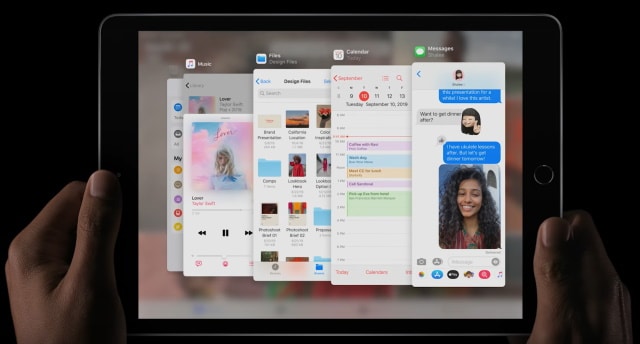
Apple shows off iPadOS 13.1 in new video
With iPadOS 13.1 available to iPad owners around the world, there's a lot to discover in the latest update.
To help tablet owners learn about the new features and options, Apple has shared a new video showcasing what's on offer. From swipe typing to full page screenshotting, Apple is continuing to push the iPad as a serious alternative to a laptop.

How to use Windows 10's Cloud Download recovery feature
The Windows 10 20H1 update (or Windows 10 May 2020 Update) is due for release in the first half of next year, and one of the biggest new features being touted by Microsoft is the Cloud Download recovery option.
This new recovery method is an alternative to the relatively slow "imageless" recovery in which a new copy of Windows is created from the existing installation. The Cloud Download option can not only be significantly faster, but it is more reliable as there is no chance of it being impeded by a corrupt Windows installation.

Apple iOS 13 and iPadOS bugs grant third-party keyboards 'full access'
If you're using a third-party keyboard on your iPhone or iPad, Apple has a warning for you. A bug in the recently released mobile operating system means that such keyboards could be granted "full access" permissions.
The bug means that third-party keyboards could capture any and all keystrokes entered by a user, including sensitive data such as usernames and passwords.
Microsoft bans CCleaner from its support forums
Microsoft has blacklisted the CCleaner utility and links to the software can no longer be posted in its support forums.
An email sent out to community moderators reveals a total of 11 domains which Microsoft censors with its blacklist filter. If an ordinary user attempts to post a link to a banned site, that post will be removed.

Replacing the screen of a Samsung Galaxy Fold might not be as expensive as you feared
Beset by a seemingly endless list of problems and delays, the Samsung Galaxy Fold will surely go down in technological history as one of the most troublesome launches ever.
For anyone who stuck things out and was willing to part with the best part of two grand, there is some good news. Despite the unique technology used in the handset, Samsung has revealed that for early purchasers it has a special, low price for replacing a broken screen... the first time it happens, at least.
Court rules Google need only apply the 'right to be forgotten' in Europe, not worldwide
Google has won a case in the European Court of Justice meaning the company does not need to apply the controversial "right to be forgotten" on a global basis.
In a case between Google and Commission Nationale de l'Informatique et des Libertés (CNIL ) -- a French privacy regulator -- the court ruled that Google need only remove links from search results within Europe.
Microsoft releases emergency patches for Internet Explorer zero-day and Windows Defender flaw
Microsoft has released a pair of emergency patches, one for a remote code execution zero-day in Internet Explorer, and one for a denial of service vulnerability in Windows Defender.
In the case of Internet Explorer, the security flaw -- discovered by Clément Lecigne from Google's Threat Analysis Group -- is being actively exploited. Microsoft describes it as a "scripting engine memory corruption vulnerability", and has assigned it CVE-2019-1367.