
Are we really in danger of losing our history to the cloud?
If Google's vice president is to be believed, we are in danger of losing an entire generation of information to the digital realm. Look to the history books, and you do just that -- look in a real, physical book. Pictorial histories can be found in photo albums. The works of Oscar Wilde, Samuel Pepys, and Charles Dickens are stored in real, tangible formats.
But now just about everything is stored digitally. Photos are rarely, if ever printed; millions of words are published online each day on blogs, online newspapers, and message boards. These are all important social, political, literary, and historical records. There's no guarantee that the sites, apps and technology needed to access all of these records will still be available in 50 years or more. Could our history be lost to the cloud?

Kaspersky Lab says malware is used to steal millions of dollars from banks
However much money you have flowing through your bank account, you probably take measures to keep it secure. You protect your PIN, you use secure passwords for online banking, and ensure that your computer is free from keyloggers and malware. It's only right that you expect your bank to be similarly eagle-eyed about security... right?
A new report from security firm Kaspersky Lab shows that banks' security is not up to the standard that many would expect. In fact Kaspersky says that sophisticated malware has allowed criminals to help themselves to up to $1 billion. Has your bank been hit? The affected financial institutions are now aware of the attacks, but non-disclosure agreements and on-going investigations prevent them from being named.

Work with images from Explorer with XnShell
XnShell is a handy Explorer shell extension which makes it easier to view, process and generally work with images.
The program allows you to preview any picture, in just about any format, directly from its right-click menu. No need to turn on Icon View, enable the preview pane or open the full image (which may not work, anyway, if it's not supported by your default viewer): just right-click, select XnShell, and you'll see a thumbnail in the context menu.
How Google and Facebook are breaking net neutrality to game their way into emerging markets
After proving their dominance in developed nations, technology giants are now eyeing emerging markets -- regions where a vast majority of people are yet to access the internet. Earlier this week, Facebook partnered with RCom to launch Internet.org in India to bring free internet access to millions of people who weren’t previously connected to the internet, and now we’re learning of a similar plan by Google. As The Information reports, the Mountain View-based company is working with carriers and developers to lower or eliminate the data usage and data charges in emerging markets like India.
Known in the industry as zero-rating, Google is essentially trying to act as a middleman between carriers and app developers to reduce the data charges as well as other expenses sought by app developers to ensure that the price of using these services by users is minimal. The company would be closely monitoring data usage when a person uses any of the app partner’s app and would pay the carrier the fee.
Microsoft removes restrictions from OneNote free edition
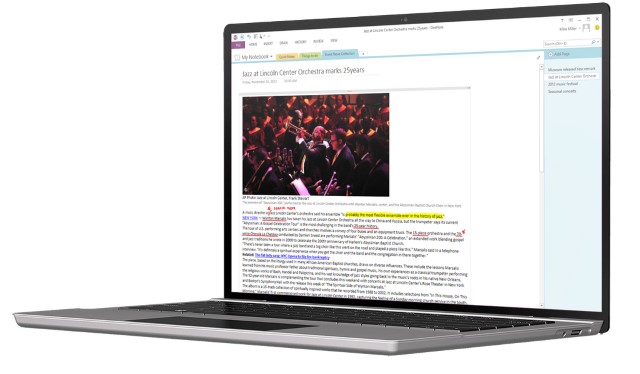
Since its release as a free tool, OneNote has gained a massive following. The note-taking, clip-organizing, jack-of-all-trades tool fits neatly into Office, but can also be used as a standalone tool. Although it has been available free of charge for some time, there were a few features reserved for paying customers -- now this has changed.
Microsoft is making OneNote "even more free" by adding options such as password protection and new audio and video options. All previous restrictions that existed in the free version of the app have been removed.

Google Helpouts to be consigned to history
Google is shutting the door on its Helpouts service. Just two and a half years after launching the help and support extension to Hangouts, it has been decided that there just is not enough interest to warrant keeping it running.
Designed as a platform for experts to offer their paid service to people, Helpouts failed to gain the traction needed to make it viable. The shutdown will not take immediate effect, but there's quite a short deadline for users to seek out an alternative.

Highlight text file changes with Text Compare
You’re looking at two copies of a text file. They’re different sizes, so you know something has changed. But what?
Text Compare is a tiny (<50KB download), free and portable tool which should be able to tell you more.
Is Apple really worth $1,300,000,000,000? Activist investor Carl Icahn believes so
A major Apple shareholder and activist investor, Carl Icahn, believes Apple is worth much more than it is currently valued.
He believes the American company’s stock should be valued at $216 (£140), which is far more than the current price of $124.92 (£81.32). At $216, the company would be worth $1.3 trillion (£845 billion), which is about the size of South Korea’s gross domestic product, Reuters writes.
Microsoft updates photo sharing app Xim for all mobile platforms
When it comes to sharing photos services like Instagram and Flickr spring to mind, but there are countless others buried beneath the waves of information and programs available these days. Many fly under the radar, and some of those may be better than the big name alternative you're using.
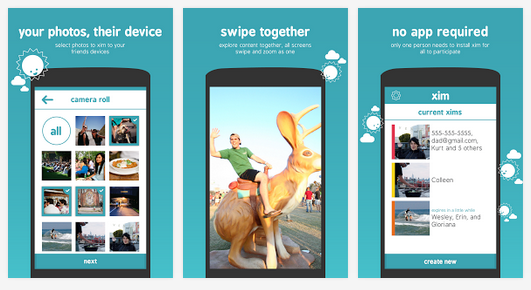
All of that is not say that Microsoft's Xim is better -- that's simply a matter of personal taste. What I am saying is that you've likely never heard of it. The app has one simple mission -- "share your photos, not your phone". It goes a bit further, promising that the recipients of your shares don't need to have the app to view your images.

Facebook now lets you buy and sell stuff in Groups
Step aside, eBay, Facebook is here. The social media giant announced it’s rolling out new features for Groups, allowing users to buy and sell stuff using Facebook.
People posting in groups on Facebook will now have the option to add whether they're buying or selling a certain item, and include prices and shipping methods.
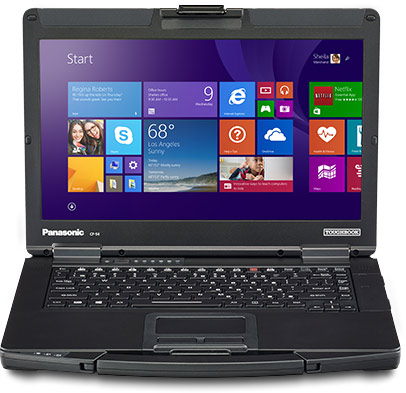
Panasonic Toughbook 54 is durable and svelte -- has 5th Gen Intel Core i5 vPro
Panasonic's durable Toughbook line of laptops are legendary. Not only are they designed to take a beating, but are extremely functional too. To the average home user, the massive body and weight can seem like overkill. If you are sipping latte's all day in a coffee shop, it may seem that way. In reality, much work happens outside of safe places like an office or Starbucks; blue collar workers use technology too, and the Toughbook series is built for these workers.
Today, Panasonic announces the Toughbook 54. This semi-rugged machine is actually quite svelte (for being a semi-rugged Toughbook), which may make it more attractive in situations where a job is rough and dirty, but not overly so. Best of all? It is powered by a 5th generation Intel Core i5 vPro; durability meets performance and impressive battery life.

Cast your vote in Linus Torvalds' Linux version numbering poll
When Microsoft launched Windows 10 Technical Preview, the name came as something of a surprise; everyone had been, understandably, expecting Windows 9. Over in the world of Linux, as we know, things work a little differently.
The world of Linux-based operating systems is a fragmented one, but Linus Torvalds -- whose loins were partly responsible for giving birth to Linux -- is asking the community how version numbering should be handled moving forward. Should things be kept simple, or should version numbers just keep getting longer, and longer, and longer, and longer?

HERE for Android gets slew of improvements as it graduates from beta
In less than a week, HERE has seen two major updates. The first brought more accurate maps to Android and Windows Phone users, making way for turn-by-turn navigation in more countries. And the second brings a slew of improvements to HERE for Android as the app finally drops the beta label.
Having used HERE on Android right from the start, I have to say that there is little that I miss compared to what the app suite has to offer on Windows Phone. Still, this hasn't stopped Nokia from making some tweaks here and there. Here's what the latest update brings to the table.
There is no smartwatch market
A few months ago, I wrote a post comparing the early sales of smartwatches to those of tablets and modern smartphones (early iPhone and Android models). As I expected, the numbers didn't bode well for smartwatches. Now that we have another year's worth of data to play with (from Canalys this time), we have an opportunity to test the validity of my previous analysis.
The chart above plots smartwatch shipments against smartphone and tablet shipments for two years after the point when each category was meaningfully conceived. Data on smartwatch shipments has been combined from multiple sources including Canalys, Strategy Analytics and ABI Research. Now compare this updated chart with my previous observations.

BowPad is an easy-to-use Notepad replacement
If Notepad isn’t enough for your text editing needs then there’s no shortage of possible replacements (we’ve covered plenty before). But most developers seem to focus on functionality above all else, cramming in as many features as they can, which means the end results aren’t always easy to use.
BowPad is a refreshing change. It doesn’t try to do everything, but for many people it’ll do enough, and a well-designed interface ensures the program is a comfortable place to work.