
4 vital ways collaboration can save your business
Since the global recession, many businesses have struggled to recover. For those that have survived, there are several areas where improvements must be made and belts must be tightened in order to ensure the business gets back to, and exceeds, 2007 levels of profitability and success.
There are several areas which businesses struggle with today, such as cutting costs, increasing efficiencies, and satisfying clients and employees. The adoption of enterprise cloud collaboration software can help businesses to address these issues and ensure that they stay strong and grow increasingly successful. Here are four areas where enterprise cloud collaboration software can help businesses improve and ensure they stay afloat during the tough times.
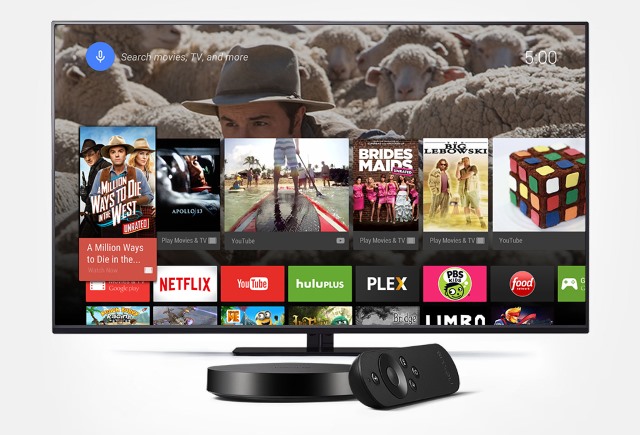
Google and Asus launch Nexus Player for video, music and game-playing
Well... Android Lollipop (née Android 5.0), the Nexus 6 and Nexus 9 were expected, but Google managed to sneak a little 'one more thing' addition to today's batch of announcements. Nexus Player, as you'd probably guess from the name (and certainly from the headline), is a streaming media device. But in addition to catering for all your video and music streaming needs, the device also doubles up as a games console.
In many ways the Nexus Player is an extension of Chromecast -- there is even casting support. Google has teamed up with Asus to bring us a device that not only streams media, but also streams games from phones and tablets. And this aims to be more than a console for casual gamers; there's even a gamepad that's very reminiscent of the Xbox One controller.

New Intel technology helps safeguard the payment process
Recent high profile data breaches involving retailers have led many people to have doubts about the security of transactions.
Chip maker Intel has today announced a new data protection technology that will both address these concerns and help speed up the roll out of internet of things devices in retail environments.
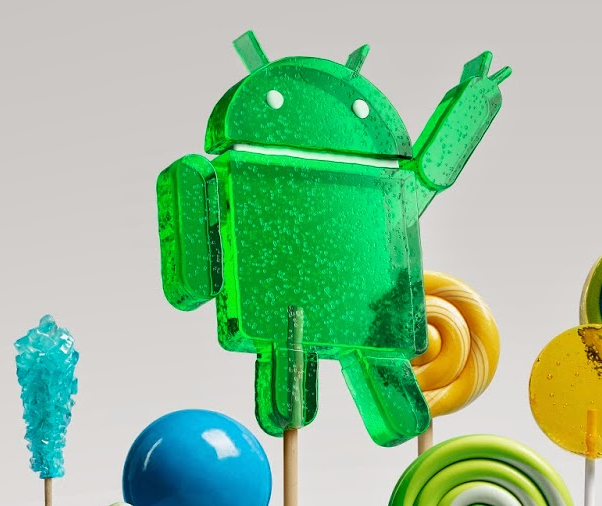
Google wants you to suck it -- reveals Android 5.0 Lollipop
Android 5.0 has been highly anticipated; fans of Google's operating system have been speculating for months about what it would be like. Hell, people have even been wondering what the name may be. You see, Google sticks to an alphabetized convention using tasty treats -- Cupcake, Jellybean, KitKat -- you get the idea.
Android 5.0 is the letter L and after much wonder, the name is revealed -- Lollipop. I guess you could say that the new version of the operating really sucks, eh? Actually, it looks quite incredible and the new version furthers Google's lead over Apple's iOS from a features perspective.
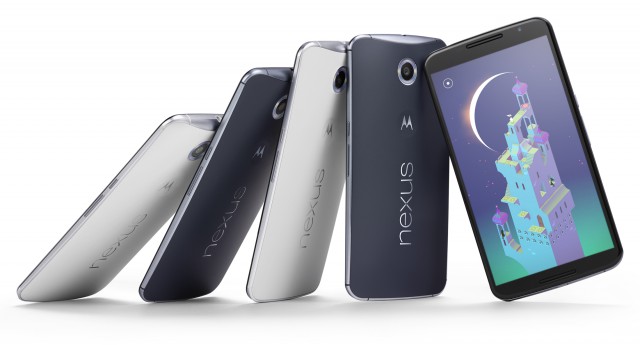
Google takes the wraps off Nexus 6, Nexus 9 [Update]
It is estimated that one in three smartphones shipped in 2018 will be a phablet, which is more than double their projected share for 2014. For Google -- with Android still likely to run on the majority of phablets -- helping developers to properly optimize their apps for larger screens has become a top priority. Ensuring that Android phablets provide a great user experience is paramount; otherwise, users may jump ship to Apple's iPhones or Microsoft's Windows Phones.
So, today, Google takes the wraps off its first phablet, Nexus 6. It is the embodiment of all the great features we have come to expect out of a phablet from late-2014: super high-resolution screen, super fast processor, solid cameras, very thin bezels and a huge battery. As expected, Google also announced a new tablet, the first one to come since July 2013, called Nexus 9. It does not disappoint either. Of course, both run the new Android 5.0 Lollipop, which is shipping in the next few weeks.
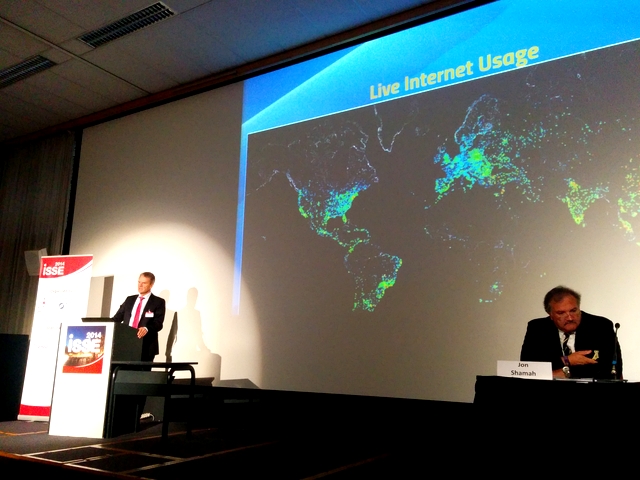
Why the government needs access to your data
We are in Brussels at the 27th annual Information Security Solutions Europe Conference (ISSE), one of Europe's largest gatherings of cyber security experts.
Troels Oerting of the Danish police gave a fascinating opening keynote defending the right of the police to use surveillance over the Internet. It certainly ruffled some feathers in Brussels, but here are some of the highlights so you can make up your own mind.

Cut the cord -- HBO will offer standalone streaming service in 2015
Cable providers see the writing on the wall. They will eventually become internet services and nothing more, but for now each is fighting this future. The battle took a turn against those TV services recently. HBO has dealt the latest blow.
For the moment, the HBO app requires the user to verify a subscription by adding information for a cable or satellite provider. That's bad for cord-cutters -- it means they simply can't get the HBO service. However, that requirement will be changing in 2015.
Cloud-based security and why it's here to stay
As the popularity of cloud services has grown, so have concerns over the security of the data that's stored on them. This has led security vendors to adapt and develop solutions for the new environment.
A new report by security company NSS Labs looks at the rise of cloud security solutions and at the business demands driving their adoption, as well as the limitations and potential hidden costs in their use and recommendations for enterprises.
Ireland in tax clampdown targeting Microsoft, Apple, Google, and more
The Irish government is phasing out the so-called 'Double Irish' finance scheme that currently enables companies such as Google and Apple to slash millions (or even billions) of dollars from their tax bills. The scheme works by companies, regardless of where they may be operating in the world, collecting their profits through an Irish office (where tax is already low), and then funneling the money through a subsidiary company located in another tax haven by means of royalty payments.
Companies, like individuals, are understandably keen to keep their tax bills down as much as possible, and will jump through lots of hoops to reduce the amount of tax they have to pay. Offshore bank accounts, subsidiary companies and the like might sound like the makings of something illegal -- which it can be -- but it's a legitimate way to reduce costs. But the fact that something is legitimate doesn't mean that it's popular. At least it's not something that is popular with governments.
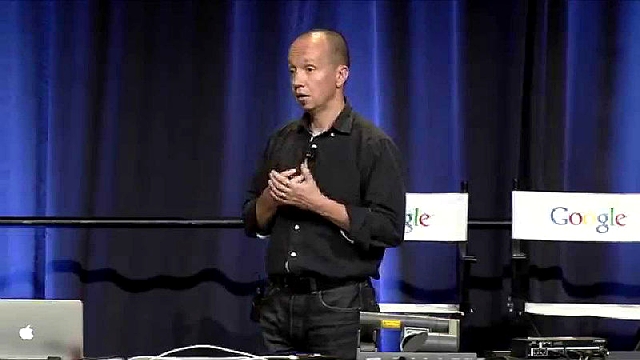
Thinking unconventionally is how you protect an entity the size of Google
We are at the 27th annual Information Security Solutions Europe Conference (ISSE), one of Europe's largest gatherings of cyber security experts.
Stephen Somogyi of Google Safe Browsing gave an amazing keynote speech about how Google goes about protecting its billions of users around the world. Here are some of the highlights:
Bitcoin will do nicely -- the state of Russian cyber crime
Banking fraud is down, mobile threats are up and cryptocurrency is the preferred payment method in the world of Russian cyber criminals.
Fraud prevention and cyber crime investigation specialist Group-IB has released a report on the Russian high-tech crime market in 2014. The report provides detailed assessments of the who, what, where and how of high-tech crime, who is behind what crimes, where they originate and who they target.

Samsung's 5G is now 25 times faster than 4G
Samsung has made good progress on its 5G cellular technology, increasing transfer speeds to a whopping 7.5 Gbps from a tad over 1 Gbps in April 2013. To put things into perspective, the next-generation cellular networks are now more than 25 times faster than the fastest 4G (LTE Advanced) networks in use today.
The 7.5 Gbps transfer speed represents a new record for 5G cellular networks; it was achieved during the first successful outdoor test. Samsung says that stable transfer speeds of 1.2 Gbps were registered while traveling at 100 kph (62 mph), which is a more accurate representation of how fast the current 5G technology is in actual practice.
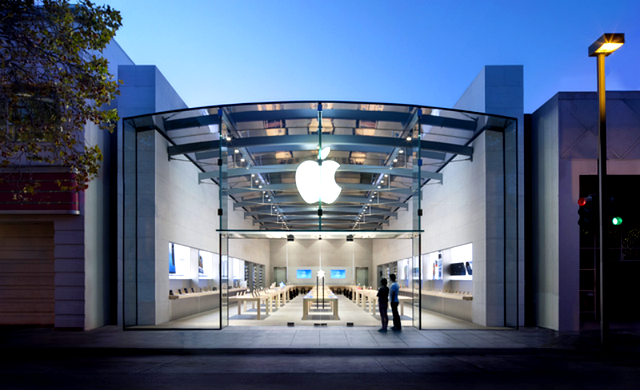
How Apple's iPhone language has evolved over the years
Over the years, Apple has become well known for its tight control of the message in new product launches. Increasingly, one word or concept has become a signature that is carefully woven throughout the keynote, press and marketing material.
Here is a look at some of the language used for each iPhone launch since 2007 and how we can learn from what Apple is really good at; controlling the message.

Tracking and tackling Ebola using mobile phone surveillance
Mention web or mobile surveillance, and you're sure to raise a few hackles. But the current Ebola outbreak is showing that the data collected from handsets can be extremely useful. The idea of tackling a disease with 'big data' gathered from mobile phones might seem a little odd, but it's actually an incredibly valuable source of information. Telecom firms such as Orange have been working with data scientists, using anonymized data gathered from phones to track population movement in regions affected by Ebola.
The BBC points out that even in relatively poor countries in Africa, mobile phone ownership is still high. Experts have been able to use this data to determine the best places to set up treatment centers, and it's an idea that has been pounced upon by the CDC.
Why Google needs a bigger Nexus phone and phablet-optimized Android L
The point of the Nexus line is ambiguous now. Is it a developer line? Does it showcase what Google wants in an Android phone? Does it showcase the cutting edge of Android? Maybe in the beginning the purpose was clear, but now I don’t think even Google knows. The one thing I am certain of is that the forthcoming Nexus phone will not be just another phone.
The Nexus line so far has helped to give developers a pure experience of Android to work on. One where the OS followed and fostered an environment that placed emphasis on the guidelines set forth by Google, such as on-screen buttons and leveraging full screen mode. A developer using a Nexus would get a very different impression of Android than one using Samsung's TouchWiz on a Galaxy phone -- which would reflect in the app produced.