
LeEco enters US smartphone market with $399 Le Pro3 flagship
Chinese tech giant LeEco is making its entrance in the US smartphone market. The first device to be officially available is its high-end Le Pro3, which features cutting edge hardware at an appealing price. It costs $399, but on launch day the Le Pro3 will actually be offered for just $299, after a $100 rebate is applied.
LeEco's approach is no different to that of other Chinese vendors, like Xiaomi, as it also delivers flagship-grade hardware at a price that undercuts its premium rivals by hundreds of dollars. But, unlike many of its home rivals, LeEco will soon have an official presence in US, which will make a big difference when it comes to consumer trust and sales in the country.

US Presidential debate launches latest Twitter meme
The US has perhaps grown used to the political season, complete with its ugly mudslinging. The name-calling-laced tirades become something that many just tune out, sometimes in fear for their own sanity. 2016 has become an example of gutter-talk that will be held up for many years and it has fueled late night comedians like no previous campaign.
If nothing else, the debates alone have kept Saturday Night Live relevant, though one candidate no longer thinks a show he once hosted is very funny anymore and has even stated that it should be taken off the air.

New platform guards against in-memory endpoint attacks
Cyber attackers know that the weakest point of an organization's security is usually the endpoint and they'll increasingly try to hide malware's presence from security tools by running it only in memory.
Endpoint security specialist Endgame is releasing an update to its platform which expands coverage of the attacker lifecycle to anticipate innovations.

Emsisoft ships Emsisoft Anti-Malware 12 with 3-for-1 license deal
Emsisoft is celebrating the latest editions of its consumer security suites, Emsisoft Anti-Malware 12 ($39.95) and Emsisoft Internet Security 12 ($49.95), with a limited-time launch deal -- buying one license will cover you for up to 3 PCs.
The new builds aim to keep you safe from even the very latest ransomware with their improved behavior blocking.

What you need to know about cognitive computing
The ability to think is one of the things that marks us out as human, "I think therefore I am", as the philosopher René Descartes put it. But what if machines were able to mimic human thought processes? This is the basic premise behind cognitive computing.
In order to replicate human thought processes, cognitive computing uses techniques like pattern recognition, data mining and natural language processing. The ultimate goal is to be able to make computer systems that are capable of solving complex problems without needing human assistance to prompt them in the right direction. Computing giant IBM, which is one of the leaders in the field, describes this as "systems that learn at scale, reason with purpose and interact with humans naturally".
Why anti-malware protection isn't a 'thing' you can buy [Q&A]
Threats like ransomware means it’s more important than ever to keep your computers safe both online and off.
Emsisoft has just released Anti Malware 12, the latest version of its respected anti-malware software, and Christian Mairoll, the company’s CEO, took time to speak to me about the ever evolving threat landscape, the best ways to keep your system safe, and the benefits of paid versus free solutions.

New cloud platform streamlines enterprise digital transformation
If you only have a few websites and mobile apps to handle looking after them is a fairly straightforward task.
But businesses that need to handle multiple digital properties with proper governance and security -- at the same time delivering a consistent, personalized customer experience -- face a major challenge.

What you need to know about IT infrastructure library
Bringing information technology into line with the needs of the business is frequently a problem. ITIL -- originally known as Information Technology Infrastructure Library -- is aimed at resolving this by establishing a set of rules for IT service management (ITSM).
The ITIL framework is geared to standardizing the choosing, planning, delivery and support of business IT services. The intention is to deliver greater efficiency and predictable service levels.

LYNK & CO's new 01 is a shareable electric SUV with an open API
Think of electric cars, and it's Tesla that naturally springs to mind. But Geely, the Chinese parent company of Volvo, wants this to change. Today the company launches a new car brand, LYNK & CO, along with not just a new electric vehicle, the 01, but a whole new ownership model.
The 01 -- which will be followed, of course, by the 02, 03, and so on -- is a compact SUV designed for sharing, and it even has its own app store. With connectivity in mind, the 01 has an open API so developers can get to work creating their own apps. Partnerships with Microsoft, Alibaba and Ericsson led to the creation of the platform, and the vehicle offers Apple CarPlay, Mirror Link and Android Auto compatibility.
Fedora 25 Beta Linux distro now available for Raspberry Pi -- here's how to install it
The Raspberry Pi computers are extremely popular. It isn't hard to see why people like them -- they are small, inexpensive, and very useful for various projects. While they are arguably under-powered for use as, say, a full-time workstation, the diminutive machines aren't really meant for that.
If you do want to use it as a workstation, however, I have good news. Fedora 25 Beta Workstation is now available for both the Raspberry Pi 2 and Raspberry Pi 3. In addition to the Workstation image, Fedora 25 Beta Server is available too. Owners of ARMv6-powered Pi models, such as the Pi Zero, are out of luck, as the operating system will not be made available for them.

Windows 10 Insider Preview Build 14951 for PC and Mobile arrives on the Fast ring
The previous two Windows 10 Insider Preview builds -- 14942 and 14946 -- introduced some fairly major new features to the OS, including the ability to collapse the App list in the Start menu, longer Active Hours settings, and precision trackpad improvements.
Today, Microsoft rolls out yet another new build, keeping up the weekly frequency. Build 14951 introduces yet more big improvements, including two large updates to the Windows Subsystem for Linux.

How do you FEEL about Samsung Galaxy Note 7's demise?
I sold my sister's T-Mobile HTC M9 earlier today. Nan lives in Vermont, where Verizon delivers consistently better coverage and where the market for a used smartphone is much smaller than here in San Diego. The buyer had previously owned the Samsung Galaxy Note 7, which she really enjoyed. While waiting until late November or early December for her matte black iPhone 7 Plus order, the woman has a Samsung Galaxy J7 loaner and hates it. She is familiar with the M9 because her mom owns one.
This lady is the fifth person I've met in just a few days who had bought Note 7. They're everywhere—and a sorry lot of disappointment, too. Every one switched to an iPhone. What? Has no one read reviews claiming Google's Pixel handsets are the Android iPhones everyone waited for?

What you need to know about IT service management
In the early days of business computing, the technology was seen as a supporting tool to help speed up processes like preparing accounts or controlling stock. But as information technology has found its way into more and more areas of business, it’s become increasingly important that IT should be aligned with the needs of the business and be able to deliver added value.
For this to be effective businesses need to have policies and procedures in place to plan, deliver, control and operate the IT services they offer either internally or to outside customers. All of these activities can be drawn together under the umbrella title of IT service management.

What you need to know about CRM
For the vast majority of organizations, customers should be the number one priority. Without their support, revenue streams dry up and businesses quickly fail. For small businesses that have a face-to-face relationship with their clients keeping them happy is straightforward, but in larger organizations ensuring that the relationship between business and customer is as positive as it can be is not always easy.
Imagine being in charge of a global, multi-national company with thousands of customers in disparate locations. Each of these customers has their own specific needs and businesses can’t afford to treat them all as a single homogeneous entity. At the other end of the scale, even growing businesses can struggle to manage their customer relationships because of limited resources. Fortunately, customer relationship management software is on hand to help businesses of all sizes and across a wide range of industries.
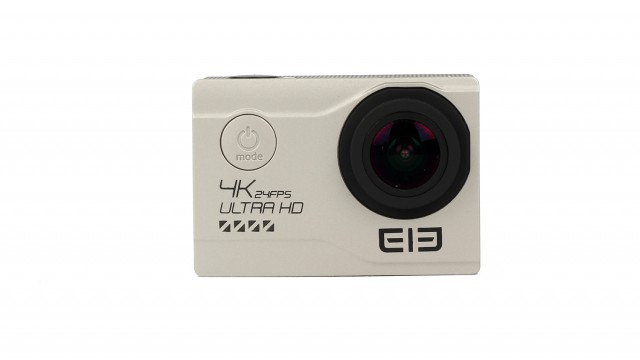
Elephone EleCam Explorer Elite action camera review
In trying to compete with more premium brands, some action camera makers are pushing the envelope in terms of quality at lower price points. Some of the best devices in the affordable category, while not on the same level as the latest GoPros, come reasonably close to the leading players, but at a fraction of the cost.
One of those devices that is touted to offer great value for money is the Elephone EleCam Explorer Elite. It comes in below the $70 mark, so it certainly delivers on the cost front. And, being powered by a proven and competitive chipset in the entry-level market, it seems to have what it takes to deliver quality videos. But, how does it perform in real life?