
Office Universal apps preview coming to Windows 10 for phones very soon
Microsoft comes under fire quite often for seeming to favor Android and iOS over its own mobile platforms. Apple and Google's mobile operating system have been first in line for all manner of Microsoft apps and services, and it was much the same story with the mobile versions of Office.
Today Microsoft is taking steps to allay the concerns of Windows Phone users -- you have not been forgotten! Specifically, the company says that the preview version of Office Universal apps will, or at least should, be made available for Windows 10 for phones by the end of the month.

Reflector 2 adds Android mirroring, Google Cast support
Squirrels has announced Reflector 2.0 with new support for mirroring connections from Google Cast-enabled Chromebooks and Android devices.
As before, the program can mirror iPads and iPhones to Windows or Mac, and users are able to connect both iOS and Android devices simultaneously.
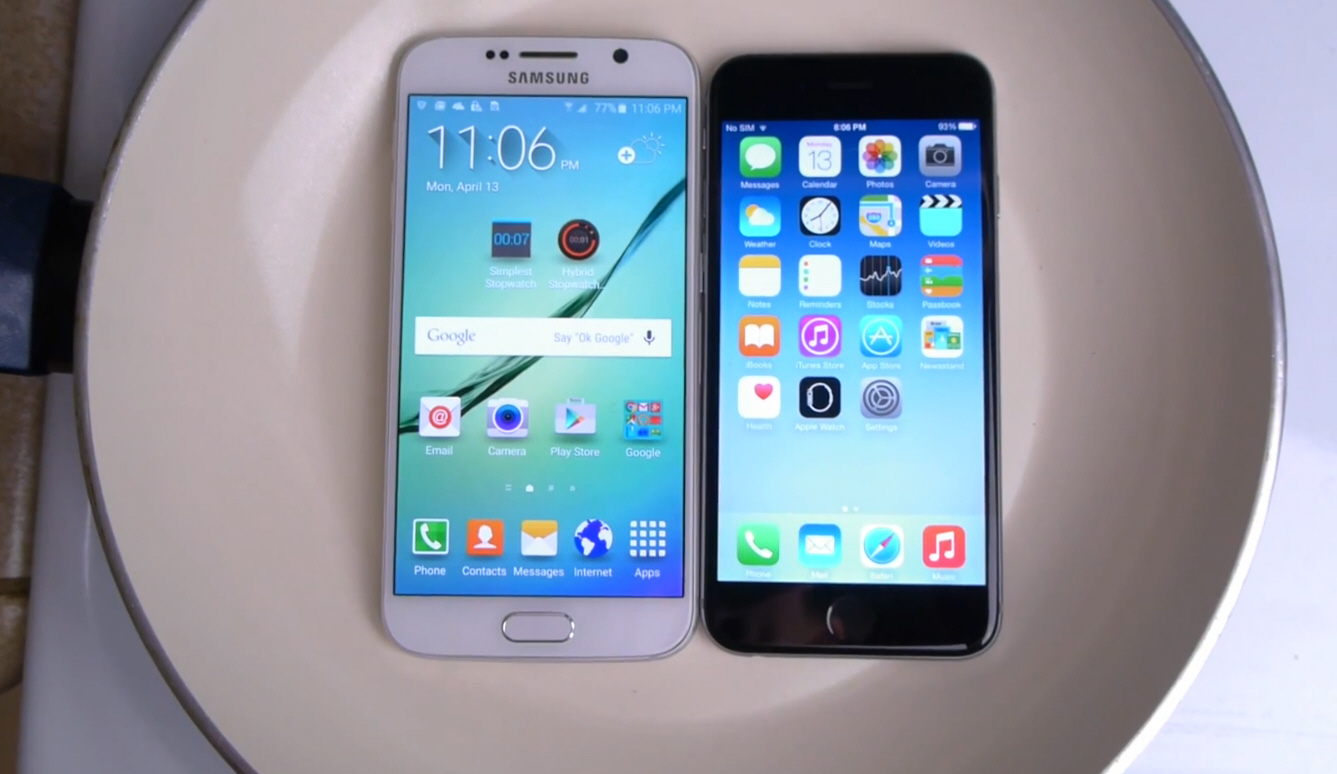
Does it boil? Samsung Galaxy S6 and Apple iPhone 6 in hot water
The Galaxy S6 has been subjected to a number of different stress tests since it hit shelves, including full-on bend tests, and simple drop tests -- plus being run over by a car in one case, which it survived and still remained usable.
And here’s another -- this time, the Galaxy S6’s foe is boiling water, which it’s being dipped into alongside an iPhone 6. So which handset will be able to stand the boiling heat for longest?

Google cleans up URLs in mobile search results with breadcrumbs
Google is revamping the way URLs appear in search results on mobile devices. Smaller screens have a tendency to truncate lengthier URLs, and even when this doesn’t happen diminutive screen size can make addresses difficult to read.
To combat this problem, the search giant is introducing a new breadcrumb trail presentation with a view to making the information easy to absorb at a glance. But what does this change actually mean?
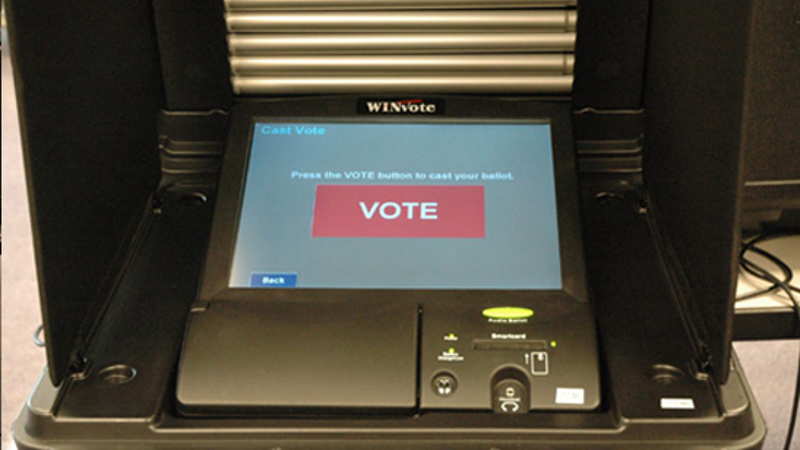
US electronic voting machines incredibly easy to hack
Electronic voting machines used for US elections between 2002 and 2014 would have been extremely easy to hack, according to reports.
The AVS WinVote machines were used during three presidential campaigns in the state of Virginia and would receive an "F-minus" for security, with many using "abcde" or "admin" as passwords.

Security professionals worry about technology sprawl as threats evolve
A new study of nearly 14,000 information security professionals worldwide shows that two-thirds of respondents are concerned about the addition of multiple security technologies, often referred to as sprawl.
The Global Information Security Workforce Study (GISWS) produced by (ISC)² a not-for-profit membership body of certified information and software security professionals worldwide, is largest study of the information security profession ever conducted.

Best Windows apps this week
One-hundred and twenty seven in a series. Welcome to this week's overview of the best apps and games released for Windows in the past seven days.
This week saw the release of several high profile apps and games such as the latest addition to the Halo franchise, Halo: Spartan Strike, and the relaxing Game Over.

Zuckerberg says Internet.org is not anti-net neutrality... but it is
A few days ago Mark Zuckerberg conducted a Q&A on Facebook. Despite tens of thousands of comments, very little of interest came out of the session -- he works 50-60 hours a week, likes Oculus (surprise, surprise), and he stands behind his Internet.org project which is providing internet access to people all over the world, including those in remote and developing locations. As is to be expected from a Q&A session, Zuckerberg also found that he had criticism levelled at him in addition to questions, including criticisms of his beloved Internet.org.
Some people pointed out that even in the US there is still a digital divide, while others complained that Internet.org goes against the principles of net neutrality. This obviously struck a nerve because the Facebook founder felt the need to defend the program and express his support for net neutrality. My colleague Manish Singh wrote about this, but is Zuckerberg right? Can Internet.org and net neutrality really live happily side by side?

Google Chrome on Windows XP support extends until the end of 2015
Believe it or not, a year has passed since Microsoft stopped supporting Windows XP. And even though the 13 year-old operating system no longer receives security updates -- at least not officially -- it is still being used by roughly 17 percent of Windows users. For some companies it is reason enough to continue to support Windows XP today, even though its maker has long left it for dead. And Google is one of them.
Six months after Windows XP support ended, Google announced that its Chrome browser would continue to be supported on the OS with "regular updates and security patches until at least April 2015". That was done in order to give its users more time to finish migrating to a newer Windows release, one that would, hopefully, be officially supported by Microsoft for many more years to come. Obviously, that hasn't gone as expected. But instead of pulling the plug, Google is now giving Chrome users on Windows XP another reprieve.

Red Canary seeks to bring simpler endpoint security to businesses
The endpoint is the most vulnerable link in enterprise security, constantly under attack and prone to human error. Yet the security products designed to protect it are subject to high levels of false positives.
The result is that providing effective protection can be complex and stretch the resources and budget of even quite large organizations.

Huawei P8 vs Samsung Galaxy S6: Which should you choose?
Huawei has officially announced the P8, the flagship for 2015. It is the Chinese company’s attempt to compete with Apple’s iPhone 6 and Samsung’s Galaxy S6, two of the biggest devices this year.
Even though Huawei won out against Samsung last year in China and some other markets, the Galaxy S6 is a formidable smartphone and shows the South Korean giant is back in business -- but which flagship is better?
Microsoft Studios and 343 Industries release Halo: Spartan Strike for Windows and iOS
When I was a young man, I loved video games more than anything. Not only did I play the games, but I bought magazines about them and had fun discussing them with friends. Back then -- in the 80s' and 90's -- things were much simpler. You put in your cartridge, started the system and were playing in seconds. Nowadays, however, games take forever to load, are super complicated and offer in-game purchases. It can feel like a huge money-grab. Hell, sometimes you spend more time installing updates than playing the actual games!
When Microsoft Studios and 343 Industries released Halo: Spartan Assault last year, I was in heaven. The game was a throw-back to the glory days of gaming -- pick up and play. You shot stuff and tried not to die; a wonderful concept! Today, the follow-up to that game, Halo: Spartan Strike, sees release. You can download the game now for Windows, Windows Phone, iPad and iPhone. The best part? A paltry $5.99 price tag (and no in-game purchases)!

Instagram is OK with a little nudity, preferably at a distance
Photo-sharing site Instagram has updated its community guidelines to make it clear what sort of images are acceptable. If you were hoping to use your account to supply your followers with a stream of pornography pics, you're out of luck, sadly. Nudity is -- for the most part -- out (we don’t allow nudity on Instagram), including "close-ups of fully nude buttocks"; distant shot of butts are, seemingly OK, as are close-ups of partially clothed cheeks.
Whether we're talking about Twitter, Facebook, Instagram or any of the other countless social networks out there, users frequently fall foul of acceptable content guidelines. Images of nudity and violence are frequently complained about and Instagram's latest guidelines now make it abundantly clear what’s OK and what's not.
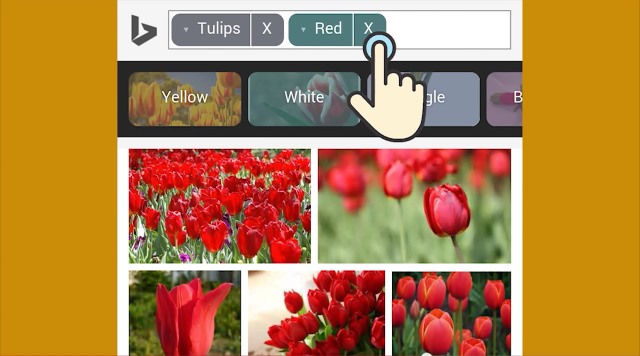
Microsoft makes mobile image searching a (nearly) typing-free experience
Microsoft thinks that typing on a mobile device is difficult. At the same time it understands that "you love to discover images" on the very same devices. To help make your mobile searches a little easier to conduct, the company is introducing a number of tweaks and changes to the iOS and Android Bing app.
Of course it is not possible to entirely eliminate the need to input words in order to conduct a search, but Microsoft has taken steps to reduce it to an absolute minimum. How has this been done? Enter simple search terms and you're provided with a couple of new ways to drill down to exactly what it is you're looking for with just a few taps.

Bing lobotomizes Yahoo Search, while Google stands by laughing
Yahoo's search deal with Microsoft just gets worse by the day. Six years ago, when announced, I called the agreement "Christmas in July" for Google. My prediction then: The combined entity would cannibalize from Y while taking little from G. Bing would be the big beneficiary, and its painful gains have been punishing.
March 2015 U.S. search share figures are out from comScore, raising a milestone that is no cause for celebration. Bing reached 20.1 percent, or about where Yahoo was in the months before announcing its deal with Microsoft, which essentially came to power Y searches. Yahoo is 12.7 percent. Combined they're at 32.8 percent, which is up from 28.6 percent five years earlier. The dent to Google is minimal, with share falling to 64.4 percent last month from 65.1 percent in March 2010. Aggregated gains came from other providers, such as AOL. not from the market leader. In fact, if not for Mozilla swapping G for Y as Firefox's default search engine, there would be no meaningful gains from Google whatsoever.