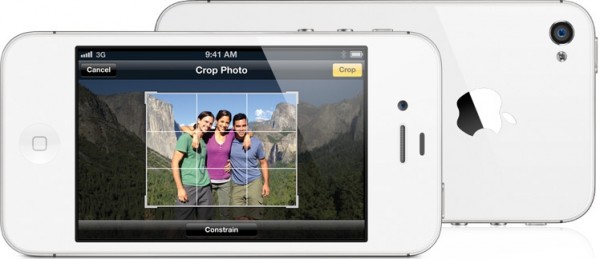
You can lose money selling iPhone, just ask Sprint
Be careful what you wish for, because you might get it -- as the old adage goes. Sprint wanted iPhone and got it, and paid dearly during the first quarter of sales.
This morning, before the opening bell, the nation's third-largest carrier announced holiday quarter results and another big operating loss. There, iPhone heavily contributed. The carrier reported a $1.3 billion loss, or 43 cents per diluted share, on revenue of $8.7 billion. Profit margins plummeted to 9.5 percent from 16 percent a year earlier, and iPhone largely accounted for the decline. Sprint loses would actually have been more, but the carrier gained fewer new subscribers than Wall Street expected.

OneNote for Android is here -- get it now or live with regret
For years, OneNote seemed like a promise without purpose. Microsoft developed a fresh, flexible application capable of pulling together content from many sources and in a way that made creative sense. Sure the Office family member imitated note-taking software already available for the Mac, but with surprising approachability for Microsoft-developed Windows software. But who really used OneNote?
Then during the Office 2007 release cycle, Microsoft swapped out Outlook for OneNote in the low-cost consumer edition and millions of users discovered the promise. But not the purpose. Microsoft would later imbue that quality quite unexpectedly by connecting OneNote to SkyDrive. Sync is the software's killer capability -- that gives purpose to promise behind great usability and remarkable flexibility. Where OneNote and SkyDrive really, well, sync is on mobile devices. Windows Phone, then iPhone, iPad and, today, Android. Yeah, if you use OneNote on the PC and are a two-timing Android user, grab the phone. Microsoft has got a treat for you.

Has the 'App Economy' landed you a job?
A new study from CEO network TechNet suggests that the surge in smartphone and device app development has created 466,000 jobs since 2007, welcome news for those looking for positives in an otherwise tough economy. But has it landed you a job?
The study, conducted by former chief economist for BusinessWeek Dr. Michael Mandel took into account not only the "pure" app development firms like Zynga, but also companies where apps have become a necessary secondary business such as Electronic Arts or Amazon, and even those providing infrastructure and platform support for the App Economy including Google, Apple, and Facebook.
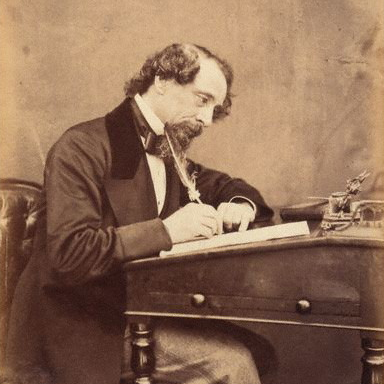
What's behind Google's Charles Dickens doodle?
One of England's most celebrated authors was born 200 years ago today. Google is commemorating Charles Dickens with a little (Oliver) Twist. There's a doodle, as would be expected, but behind it links to free ebooks from the search and information giant's own bookstore. Eh, what's up with that? Is it favoritism?
That's a question I've heard often asked recently about Google, as the amount of cross-product, cross-service integration increases. The practice jumped quite dramatically after Larry Page returned as Google CEO in April 2011, and it's not abating. Favoritism should be a concern, given that impartiality -- and with it trust -- is crucial to Google's core product (search) and profit center (search ads and keywords). What the Dickens is going on here?
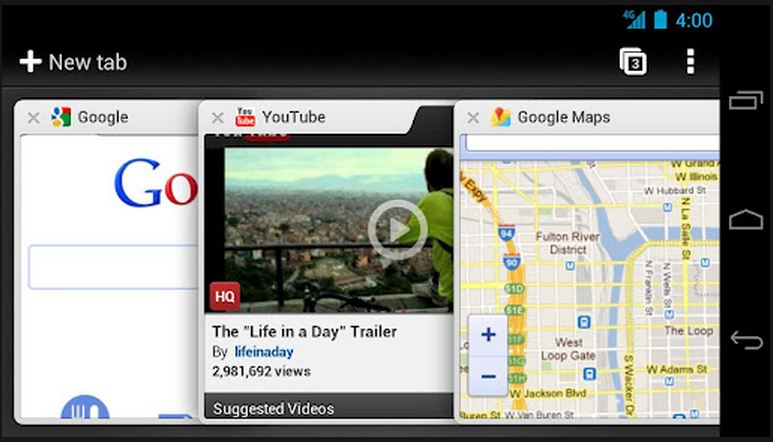
Google Chrome for Android launches in beta
Big news came from Google on Tuesday as the company released the very first beta version of its Chrome web browser for Android. Like the mobile versions of Opera and Firefox for Android, browser tabs and favorites from the user's desktop version are synced to the mobile browser, providing a unified experience across platforms.
The beta version is currently only available on Android 4.0 Ice Cream Sandwich in the US, Canada, Mexico, UK, France, Germany, Spain, Australia, Japan, Korea, Argentina, and Brazil, so if you don't have ICS at your disposal right now or you're in a country not listed, we'll follow up with some first impressions to let you know how it fares against all the other Android browsers.
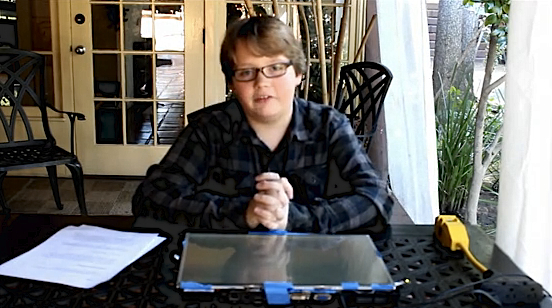
All you need is a good idea and a little Kickstarter
As a software developer I can appreciate how important it is to have good ideas. The challenge is making them reality. Also it is not enough just to be taught a skill, one needs to be able to put it to work doing something valuable to others. Some of the best ideas come from people who aren't just trying to make a buck, but who love what they are doing and see the real value in it.
Sadly many a good idea never makes it beyond the drawing board. But some people don't give up so easily and with a little Kickstarter amazing things can happen. Recently, I discovered two unique examples of very good ideas turned into reality by taking advantage of this unique website.

Microsoft and 24/7 Inc. team up to build a better automated customer service platform
Yesterday, with the announcement of Microsoft's Dynamics CRM Mobile, I touched on the big developments taking place in mobile sales, marketing, and support. The ever-increasing power of smartphones is shifting the way businesses and customers interact in nearly all forms of commerce (B2C, C2C, B2B, and so forth) because both ends rely on their mobile devices as the primary method of communication.
An important component in this customer relationship model is automated communications, and Microsoft on Tuesday announced it has formed a long-term equity partnership with 24/7 Inc. that focuses on that aspect. Microsoft and 24/7 Inc. have joined up to develop a next-gen automated customer service platform that pairs big data analytics with touch, speech, and gesture interfaces for a more mobile-friendly self-service customer experience.

Waterfox 10 -- 64-bit browsing for your Windows PC
When it comes to operating systems, 64-bit is becoming increasingly popular. The ability to access additional, and ever-more-important, memory is a big draw, as is the added security and stability. But despite a general move to 64-bits for OSes, there is still relatively little 64-bit software that has been written to take advantage of them -- well, Windows. This is also true in the browser arena, but it is something that is being addressed by Waterfox 10, a 64-bit version of Firefox.
While it is true that there are already 64-bit versions of Firefox available, this is only the case in the less stable Nightly and Aurora channels, and this is not something that everyone will be comfortable using. It is also worth noting the existence of Pale Moon, which is another Firefox-based web browser that also has a 64-bit version available. Waterfox is fully 64-bit and is based on the latest Firefox code -- this means that the two browsers are all but identical, save for the color and labeling of the Firefox/Waterfox menu button.
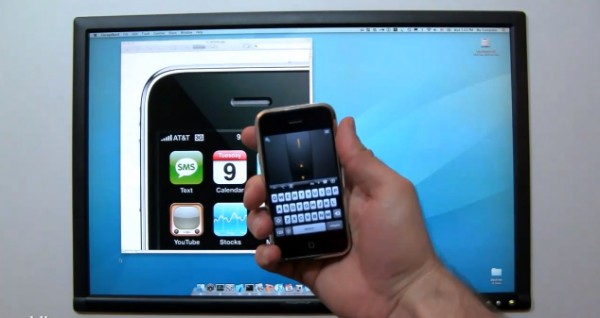
Mobile Mouse: Control your PC with smartphone or tablet
The advent of big-screen HD TVs has made it easier than ever to watch video on your computer through your television. The only downside is physically hooking up your computer to your TV, followed by having to get up from your comfortable seat to take control. Why go to all that hassle when you can configure your mobile or tablet to act as a wireless remote control, mouse and keyboard with the help of a tool called Mobile Mouse?
Mobile Mouse comes in two parts: Mobile Mouse Server for your PC or Mac, and then the mobile app for iPhone/iPod touch, iPad or Android.

Amid its fastest growth ever, Amazon slashes prices on S3 cloud storage
Amazon on Tuesday reduced the price of its Simple Storage Service (S3) cloud-based storage platform by between 12 and 13.5 percent for U.S. customers. With the reduction, the retailer-turned-cloud-services-provider is attempting to draw the attention of businesses utilizing on-premises storage solutions with a more affordable and scalable cloud platform.
As a bonus, current customers also get a nice reduction in their monthly bill. It applies to both private enterprise and users of AWS GovCloud.

Ad-Aware 10 definitely needs to be on your shortlist
Lavasoft has today released one final beta of Ad-Aware 10, the latest incarnation of its flagship anti-malware package. The program will soon be available in three versions -- Ad-Aware Free Antivirus+, Ad-Aware Personal Security ($12 per year) and Ad-Aware Pro Security ($36 per year) -- but, unusually, it’s the free release this time around that sees the most significant change.
Many technologies previously reserved for the commercial editions only are now available in the free build, for instance. So real-time process protection will detect and block malware before it can launch; Registry protection looks out for potentially risky Registry changes, and real-time network protection blocks connections to blacklisted IP addresses. Ad-Aware 10 Free gains advanced rootkit protection, too, and the new (to this edition) Game Mode means the program can maintain all this without hassling you with extra alerts.

Screw you, too, AT&T
Long-time iPhone users, take note. If you have unlimited data, you want to read this: the company will throttle you for more than 2GB of usage in any given month. Do you feel better now about the thousands you've handed over to AT&T for the past several years?
Users are alerted to the throttling via text message. "Your data usage is among the top 5 percent of users. Data speeds for the rest of your bill cycle may be reduced", it reads.
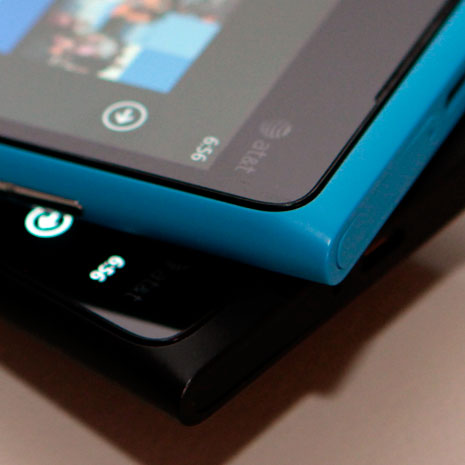
Will you buy Nokia Lumia 900 Windows Phone? [poll]
Today, Microsoft Store started taking pre-orders for the Lumia 900, Nokia's flagship Windows Phone. There's a $25 reservere for the handset, which, according to my local shop will be available some time in March. Microsoft Store had no official launch date to give.
My question: Will you buy the Lumia 900? Nobody is saying how much the smartphone will cost. That $25 is blind faith the final price will be reasonable enough. Who knows? Given Microsoft's and its partners' marketing commitment, the faithful might see a serious discount for their leap to pre-order. Will you be among them? You can answer the question(s) and give your reasons why or why not in comments below and answer the poll below. Lumia 900 will be available in the United States on AT&T.
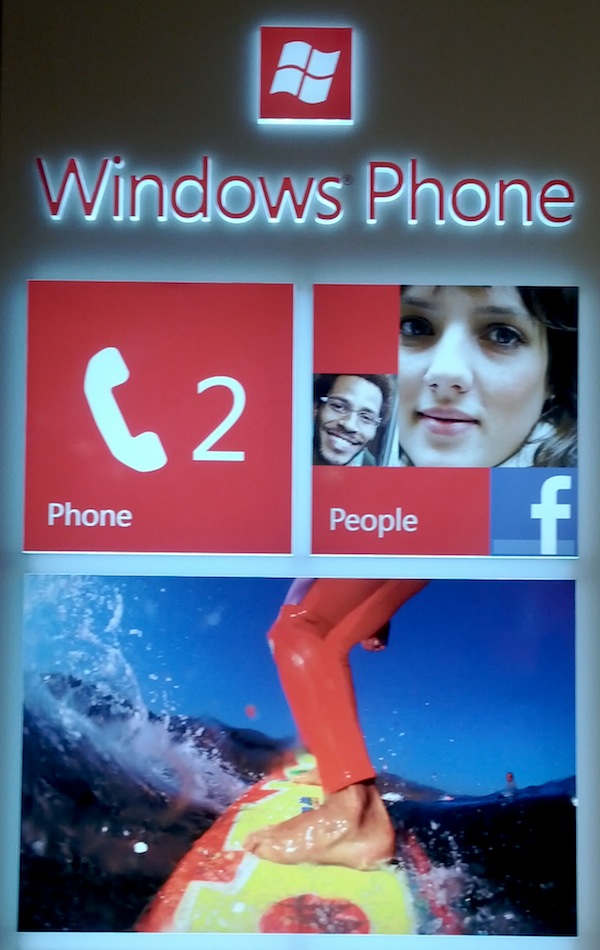
Windows Phone can't save Nokia
All those analysts predicting Windows Phone as No. 2 smartphone OS in 2015, lifted by Nokia magic, need a reality check. Put away the crystal balls and peer into the present. Today, IDC released fourth-quarter smartphone shipment data, whoa, is the data chart scary.
Shocker is Nokia's smartphone death spiral, which no Windows Phone has yet lifted. The once mighty Finnish handset maker ended the quarter with 12.4 percent market share, down from 27.6 percent, and plunging from first place a year earlier to fourth at end of 2011. This is the same quarter Nokia launched its first Windows Phones, the Lumia 710 and 800. Right now, looks like Windows Phone can't save Nokia, which cuts the other way, too: Nokia can't save Windows Phone.
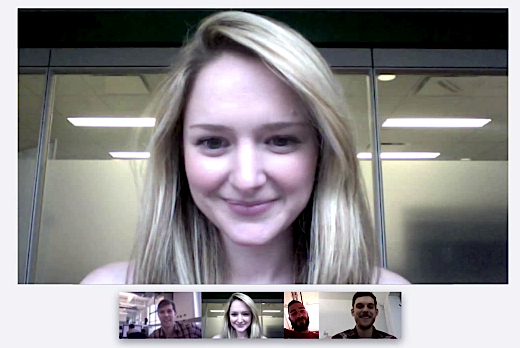
Hangout at the Google+ developer page
Well, it took long enough. Google waited until passing 100 million G+ users before opening a platform developer page. What? You think only Facebook has a social network platform agenda? Google has ambitions, too.
Perhaps the big thing will be the weekly Hangouts, where Google+ developers can get the lowdown. It's nothing on the scale of Microsoft's Channel 9 (Say didn't Vic Gundotra have a hand in both Nine and G+?). Channel 9 is more about broadcasting developer information, while Hangouts are live and more interactive.