
CopyTrans Manager puts you in control of your iPhone or iPod
Love for the iPhone and the rest of the Apple portable device family appears to know no bounds, but as soon as you connect it to a computer the niggles start. While an iPod may be sleek and user friendly, the same can't be said of iTunes. Simply adding a new album or removing a couple of tracks can become a deeply frustrating experience with long sync times and annoying waits. It seems very irritating that you can't simply drag and drop the MP3 files that you want to play into your device.
With CopyTrans Manager, this is precisely what you can do. It's a free component of the larger CopyTrans Suite that provides a wider range of iPod/iPad/iPhone management functions. You have to pay for the additional functions, but the ability to manage tracks on your iPod is free. Even more impressing is that the program enables you to manage multiple devices on the same computer without undue fuss.

Advanced System Care: Does the first public beta do enough?
IObit has released the first public beta of Advanced SystemCare 5, its comprehensive PC maintenance and optimization suite.
The main addition in this release is ActiveBoost, a technology that aims to automatically improve PC performance by "intelligently managing system resources" in real time. Technical details are sparse so far, but we suspect ActiveBoost is tweaking process priorities and RAM use when it thinks this might be helpful. If that's the case then it can be a useful strategy in some situations, but didn't make any noticeable difference to us.

Real people react to Google's Motorola Mobility acquisition
Some of the best commentary about the pending Moto merger is taking place on Google+. So I've collected some of the more insightful opinions so that you don't have to search the social network for them.
The responses are about as "real people" as the geekfest of commentary going at Google+ today can be. I've randomly pulled reaction from journalists, IT admins, Android enthusiasts and mobile gearheads; surprisingly, or perhaps not because of the social venue, they're enthused. I actually expected more criticism, but maybe I'm in the wrong Plus Circles for that.
Microsoft aims to engage developers with Windows 8 blog
Aiming not to repeat the mistakes of its past, Microsoft pledged Monday to engage the developer community as well as consumers during development of its upcoming Windows 8 operating system. As part of that, the company has launched a new blog called "Building Windows 8."
The company will use that to discuss what technologies its building into the next-generation OS. It mirrors a similar effort undertaken by the Redmond company for Windows 7, following what many call a disastrous rollout of Vista.
A history of Motorola: From a warehouse in Chicago to Google's arms
Across its 83 years in business, Motorola has spent all of it focusing on mobile technologies, and nearly 65 years in the cell phone business. You could argue that the company was a pioneer in the sector, possibly the reason why it became so attractive to Google.
We've put together this (somewhat) comprehensive list of Motorola's activities in the sector to give you an idea of just how important of a role the company has played in mobile technology.
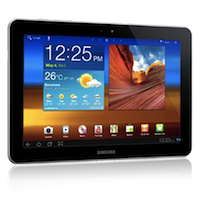
Apple lied to get that injunction against Samsung Galaxy Tab 10.1?
What? Is MG Siegler on holiday? TechCrunch's Jordan Crook has a sizzling story about Apple's bullying Samsung in German courts, not exactly the kind of stuff her Mac-loving colleague writes. I almost never re-report from another publication, but, damn, Crook makes sense out of what didn't make sense to me last week.
On August 9, a German court issued a preliminary injunction, banning sale of Galaxy Tab 10.1 in the European Union, with exception of Netherlands. Apple filed the complaint under the EU's "community design" provision enacted in 2002 and 2003, This is not a patent dispute, per se, but one of look and feel -- does one product essentially immitate, or copy, another. That baffled me for two reasons: The tablet form factor has been around for more than a decade and Tab 10.1 is longer and narrower in portrait mode than iPad. They're not the same shape. As soon as you pick up iPad 2 and Tab 10.1 you feel the difference, and I wondered how much that matters with "community design".
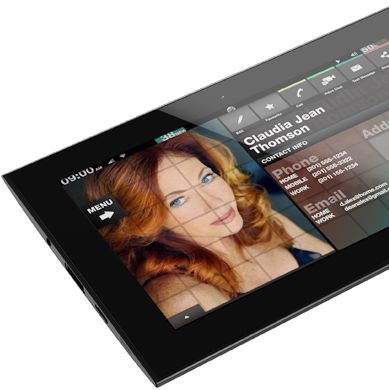
Fusion Garage (aka 'TabCo') debuts Android-based GridOS, tablet & phone
Several months ago, a mysterious tablet by a mysterious company began showing up in a campaign called "Who is TabCo?" which included fake focus group videos, a video that poked fun at Apple engineer Gray Powell who lost his iPhone 4 prototype at a bar last year, and a sky writer at Apple's WWDC conference. The videos purportedly advertised a new tablet, but said nothing about the device or the company that made it.
As at turns out, "TabCo" is Fusion Garage, the company responsible for the fiasco that began as the CrunchPad and ended as the JooJoo, a tablet which reportedly only 90 people had ordered before it began its end-of-life.

NSS tests claim IE9 blocks 96% of social engineering attacks, Firefox 8%
Three months ago, Microsoft published some statistics pulled from Internet Explorer 9's SmartScreen Filter anti-phishing and anti-malware tool which led the IE9 team to conclude that the browser cuts malware threats by 95%. Today, research firm NSS Labs released a study that backs up Internet Explorer 9's internal statistics, and gives IE9 a block rate of 96.2%, putting it far ahead of Chrome 12, Firefox 4, Safari 5, and Opera 11.
NSS used the same "live testing" methodology it debuted in 2009, and has used for bi-annual tests since that time. In addition to traditional threat detection rates, it uses a metric called "time to defense" which measures the time between when a security vendor first classifies a potential new threat and when protection to that threat is added to consumer products.

Larry Page has got some kind of balls to buy Motorola Mobility
Google's CEO proved his mettle today, just four months after assuming the role from Chairman Eric Schmidt. Google's $12.5 billion Motorola Mobility acquisition is bold for its risks, which are no less great than the benefits.
There's something fitting about the merger. Motorola Droid, backed by $100-million Verizon ad blitz, made Android. Google launched Android on a single handset (the G1) from a single carrier (T-Mobile) in autumn 2008. Moto Droid launch came about a year later. The operating system really took off -- really started wooing consumers, developers and handset makers -- following the Droid line's stunning success. In 2010, Android sales grew 888.8 percent according to Gartner. Android shipped on 48 percent of smartphones in second quarter 2011, according to Canalys.
What Google CEO Larry Page has to say about Moto Mobility buy
Google CEO Larry Page on Monday outlined the importance Motorola has played in the foundation of Android and its growth across the world, and the role it will play moving forward. This is a repost of content that Page posted both in the official Google Blog and on his Google+ feed, but we all felt it was a very important statement about today's landmark acquisition, and that it should be read in its entirety.
Since its launch in November 2007, Android has not only dramatically increased consumer choice but also improved the entire mobile experience for users. Today, more than 150 million Android devices have been activated worldwide--with over 550,000 devices now lit up every day--through a network of about 39 manufacturers and 231 carriers in 123 countries. Given Android's phenomenal success, we are always looking for new ways to supercharge the Android ecosystem. That is why I am so excited today to announce that we have agreed to acquire Motorola.
Nuance goes after Central America, Europe with Loquendo acquisition
Speech-based computing company Nuance Communications on Monday announced that it acquired Telecom Italia subsidiary Loquendo, a company specializing in text-to-speech (TTS), automatic speech recognition (ASR) and voice biometrics solutions mostly for Romance languages.
Though Nuance already has support for more than 80 languages across its various text-based solutions like FlexT9, this acquisition gives the company broader support for speech-based actions in Latin languages, and its most popular product Dragon Dictation could support even more Romance languages. Currently, the application supports fifteen languages and is available in eighteen countries.

Network admins stunned and reeling from repeated Firefox upgrades
What, another major Firefox release? Tuesday will see the release of Firefox 6.0, eight weeks after the release of 5.0 and less than 5 months after the release of 4.0 which they have already end-of-lifed.
It's all Google's fault. Version 1 of Chrome released on December 11, 2008. Here we are, less than 1,000 days later, with version 13 as the stable release. Of course Mozilla is the descendant of Netscape which invented the idea of releasing products formally designated as beta, which Google extended to having some products never leave beta. Together the two have taken any meaning out of version numbers.

When Apple's AirPlay isn't enough, Air PlayIt
Apple's various iOS devices are great for watching videos, but there are drawbacks. The process of transferring videos onto your device can be a lengthy one, and in many instances you may well have to convert to a format that can be played in iOS. Battling with iTunes is something that most iPhone and iPad owners want to avoid as much as possible, so the video streaming app Air Playit is likely to be welcomed with open arms.
Air Playit in fact comprises two components -- server software that must be installed on your Mac or PC and an app for either your iPhone or iPad. The server software can be used to manage your video collection and choose which individual files and folders should be made available. PIN protection can be used to prevent unauthorized access, or to prevent the kids from watching videos that are not suitable.

Google buys Motorola Mobility, Android's top supporter
Google thoroughly rocked the smartphone world on Monday morning by announcing it will be acquiring Android phone maker Motorola Mobility for approximately $12.5 billion. Motorola Mobility has existed as a standalone entity for just 8 months, and has produced some of the most successful Android smartphones such as the first Droid with Verizon Wireless.
Most importantly, though, Motorola Mobility holds one of the most valuable wireless patent portfolios in the business, and this acquisition serves as a follow up to the Nortel Patent auction where Google placed bids, but lost out to a consortium of bidders that included Apple, EMC, Microsoft, Ericsson, Research in Motion, and Sony.
Why wait until tomorrow, when you can download Firefox 6 today
Although not due to be officially released until tomorrow, Mozilla has placed Firefox 6 Final on to its download servers. The latest version of Mozilla's open-source browser -- the third major release in five months -- sports a brand new Permissions Manager, which allows users to set privacy controls on a site-per-site basis.
Developers can make use of a new scratchpad window for testing Javascript snippets, while domain names are highlighted in the Address bar to aid identification of websites. Other changes are mostly beneath the hood, designed to improve compatibility, performance and security.