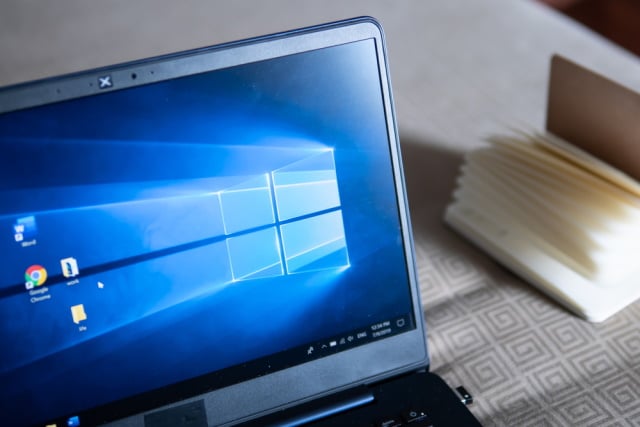
Microsoft patches serious NTFS drive corruption flaw in Windows 10... but there's a catch
Around a month and a half ago we reported about a serious flaw in Windows 10 that could be exploited to corrupt the contents of an NTFS drive. With Microsoft dawdling in its response, it was down to security researchers from OSR to produce a third-party patch.
But now Microsoft has stepped up to the plate and, finally, come up with an official fix for the flaw. Sadly, it's not all good news as the fix is not currently available for everyone.

2021 Prediction #6: COVID-19, Clubhouse, and The Great High School Reset
To this point in my tech predictions for 2021 I have ignored COVID-19, which we all do at our peril. Now that we know the pandemic is real, that it won’t just disappear, and that half a million people in the US (so far) are dead from it, what are predictable longer-term impacts? I see plenty changing in how we work, how we use social media, and how education has generally failed. Coming out the other side of this mess several aspects of life will be different, but school probably won’t be one of those.
I have an unusual perspective on these times since I am a parent of three sons (19, 16, and 14), I have a background in IT, yet my first job out of college 48 years ago was teaching high school biology, chemistry, physics, and vocational agriculture. Oh, and I home-schooled two of my kids for two years ending about 18 months before the pandemic began.

Mageia 8 Linux distro ready for download
I've never seen a kangaroo in person, but I know they exist because I have seen them on the internet. The same goes for Mageia users. Never in my travels have I encountered someone that regularly uses that Linux-based operating system. True, meeting any fellow desktop Linux user in public is rare in and of itself, but when I have, they typically use something more common, such as Ubuntu or Fedora. I have only witnessed Mageia users on the internet.
So, yeah, Mageia is hardly the most popular Linux distribution, but it is fairly well-known -- by people in the Linux community, at least. For fans of that operating system, I have what should be very exciting news; following a fairly lengthy development period, and several pre-release versions, the stable Mageia 8 is finally ready for download!
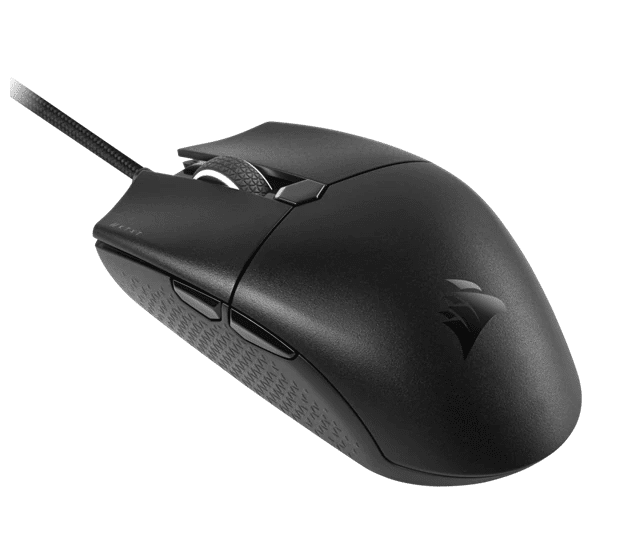
CORSAIR releases KATAR PRO XT gaming mouse
Do you ever get tired of the flashy designs that many gaming products have these days? I know I am personally fatigued by it sometimes. Look, I enjoy RGB lighting and computers that look like alien spaceships as much as the next guy, but sometimes I crave a more conservative design style.
And that is why I am very intrigued by Corsair's newest gaming mouse. Called "KATAR PRO XT," the device has a no-nonsense design that makes it appropriate for an executive's desk without being entirely boring. Best of all, it is very affordable -- you will be shocked by the low price.

Apple releases macOS Big Sur 11.2.2 to fix serious hub and dock issues
It may only be four months since macOS Big Sur launched, but already Apple has released its fourth significant update.
Big Sur 11.2.2 is here, and it's an important update for owners of certain MacBook Pro and MacBook Air laptops. There have been numerous reports of problems with third-party USB-C hubs and docks.

Intel wireless and Bluetooth driver updates fix blue screens and connection problems in Windows 10
There have long been problems with Intel drivers for Wi-Fi and Bluetooth, with users experiencing blue screens (BSODs) in Windows 10 as well as unstable connections.
Now Intel has released a pair of driver updates that should address the issues once and for all. The company has new update for the Intel PROSet/Wireless software as well as the Intel Wireless Bluetooth software. In addition to fixing stability problems, these are also security updates, so users of affected Intel hardware are being encouraged to get the updates installed as soon as possible.

North star metrics for security operations
The Solarwinds case has cemented the role of enterprise security in protecting business risk and advancing resiliency. As security continues to elevate and garner a seat at the board-level, we need to rely less on articulating the Fear, Uncertainty and Doubt (FUD) and rely more on communicating in terms of clear operational metrics as a way of establishing a baseline and goals in language the board can understand.
In the last year, we’ve seen a step-change in adoption of Mean-time-to-Detect and Mean-time-to-Respond as the core metrics forward-thinking security leaders are adopting as the north star metrics for their organization.

5 emerging smart industries in 2021
Though almost all businesses use technology to some degree, some take it to new heights by creating an entire smart industry. With the COVID-19 pandemic as a leading factor that’s forcing change, 2021 will solidify five main smart industries as norms.
Now, as tech leads these industries into the technological future, it’s likely that the smart changes will remain after the pandemic ends.

Illumio partners with BT to offer businesses micro segmentation
Zero trust and micro segmentation have gained in prominence in the past year as working patterns have shifted to a remote model. Illumio has announced that its micro-segmentation solution, Illumio Core, is to be made available as part of telecoms giant BT's portfolio of security solutions
Illumio Core provides application visibility, micro-segmentation, and control of all network communications across any data center, container, VM, or cloud environment. its micro-segmentation technology, delivered with BT Security’s support and services, enables a broad range of customers to prevent lateral movement and the spread of breaches within their networks.

I caused the guy who created Bitcoin to go into hiding -- by accident
Back in 2010 I was a freelance journalist. I took work where I could find it. One of my jobs was to write news stories for PC World’s Bizfeed and Newsdesk blogs.
The goal with the blogging was simple and primitive: Break news stories before anybody else.

Best Windows 10 apps this week
Four-hundred-twenty-seven in a series. Welcome to this week's overview of the best apps, games and extensions released for Windows 10 on the Microsoft Store in the past seven days.
Future Windows 10 updates will incorporate Servicing Stack Updates (SSU) to streamline the installation process. Windows Update does take care of this automatically, but administrators who installed updates manually ran into installation issues from time to time if a particular update required a specific SSU that was not installed.
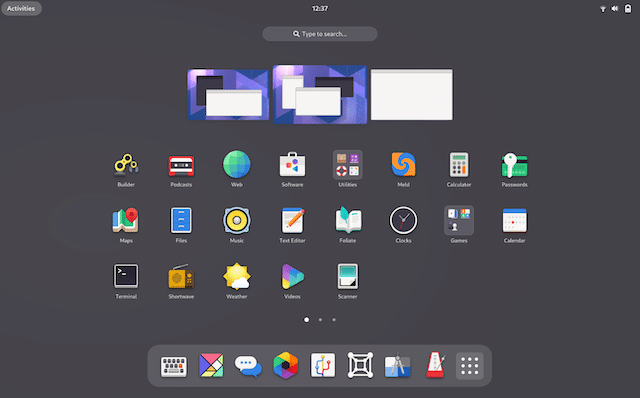
GNOME 40 beta is here -- the best Linux desktop environment is getting better
There are a lot of great desktop environments for Linux, such as Cinnamon, KDE Plasma, and Xfce to name a few. With that said, only one can be the best, and that is GNOME. If you prefer a different environment, you are simply wrong or ignorant on the subject. You know what? That's fine. As they say, ignorance is bliss, so if you are happy not using GNOME, more power to you.
For those of us superior Linux users that prefer GNOME, it is time to get excited. You see, the GNOME 40 beta is finally here. Yes, the next version of the desktop environment will be forty thanks to a new confusing naming scheme. This version of the DE is most notable for a series of UI changes, such as a horizontal workspace switcher and the movement of the Dash (favorites launcher) to the bottom of he screen (like the dock on macOS).
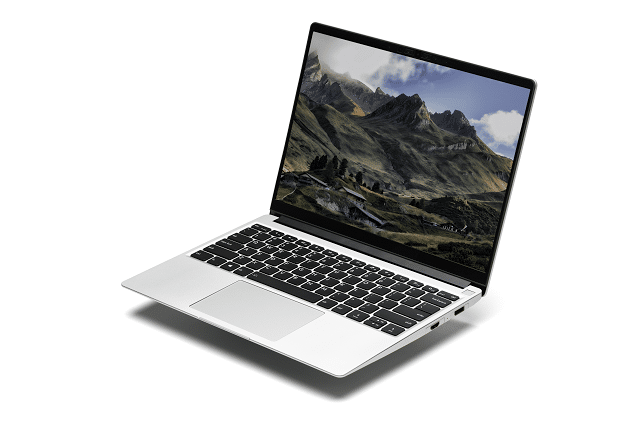
Framework Laptop is upgradeable, repairable, good for the environment, and Linux-friendly
It used to be, when you bought a computer, you could upgrade or repair parts when needed. Running out of storage? Upgrade the hard disk or solid state drive. Not enough memory? Add some RAM. Laptop battery no longer holding a charge? Just replace it. Over time, however, manufacturers have increasingly turned to soldering in components, making them virtually impossible to upgrade or replace.
Of course, we largely have Apple to blame for this trend, but other manufacturers are guilty too. We also must take a look at ourselves for enabling this customer unfriendly behavior. Hell, I bought a Mac mini recently that can't be upgraded at all. If the SSD, RAM, or other component fails, I will pretty much have to toss it in the trash. So, yes, I am personally guilty of this landfill-filling behavior.
Microsoft now bundles Windows 10 servicing stack updates with cumulative updates
There are many different types of update for Windows 10, some of which are more important than others. To make things easier to manage, both for the company itself and for end users, Microsoft is now integrating servicing stack updates (SSUs) into the latest cumulative updates (LCUs).
Cumulative updates should be familiar to most Windows 10 users, but SSUs are not something that everyone will be aware of. Nonetheless, the change Microsoft is introducing is a important one that should help to reduce update problems in future.

Microsoft is killing off a pointless feature of Windows 10 with 21H2
It is now five and a half years since Windows 10 was released, and we've seen a lot of changes to the operating system over this time. There have been endless additions, numerous changes, and the occasional removal of dead wood.
Among the things that have been killed off so far are various elements of the Control Panel and ways of accessing it, causing upset with many users. But now Microsoft is turning its attention to things which the vast majority of people regard as completely unnecessary. The company has seemingly realized that very few people are interested in 3D modelling and is indulging in a little spring cleaning.