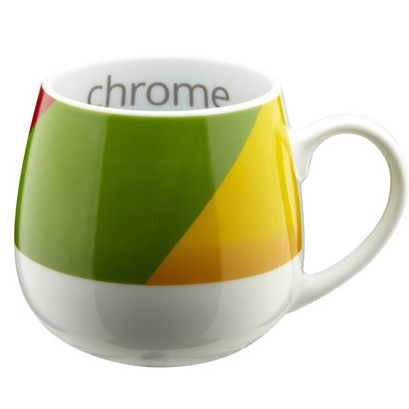
Frak, yeah, I'd use iPad if there was Google Chrome
What timing. I posted my iPad for sale on Craigslist over the weekend -- and two people are jockeying to get ahead of the other to buy it today. But I'm suddenly unsure about selling, after seeing a Macquarie Capital report claiming that Chrome will come to iOS as early as this quarter. Hot damn!
I rarely make decisions based on rumors, nor should you. Besides, the "timing is unclear, but it could be as soon as Q2 and is very likely to be a 2012 event", according to Macquarie Capital. "Could" be this quarter and "likely" this year stink of pure speculation -- or big back door should there be no Chrome for iOS this year. In the end, I'll likely sell the iPad, but must convey this: Chrome would be a very good reason to buy an iOS device but be akin to Google cutting off one limb to save another.

Don't miss one of the week's exciting 25 software downloads
The second week of May has passed, and it was as busy as ever in the world of software. If you haven’t kept your finger on the pulse, we have put together this roundup to bring you back up to speed.
Windows users looking to bring one of the features of OS X to their PCs will be interested in TweakNow DriveShortcut 1.0.0, which can be used to automatically create desktop shortcuts whenever removable media is inserted. If you’re looking to clean up your hard drive, the release of GeekUninstaller 1.0.0.2 is very timely, while EASEUS Todo Backup Free 4.5 has been updated with support for Windows 8 -- if you want to protect your valuable files. In a similar vein is Acronis True Image Home 2012 (Update 2) v15.0.7119, which has been enhanced with a number of tweaks and new features.
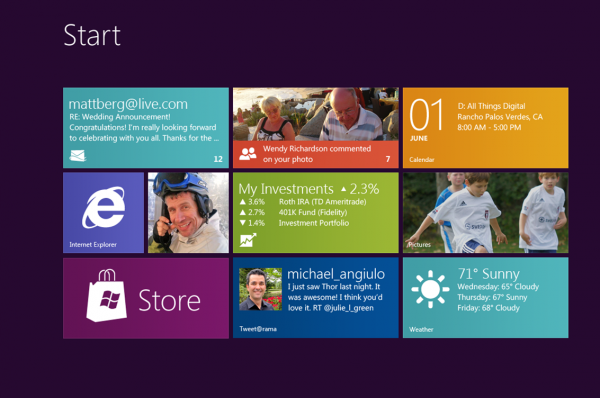
Unfair maybe, but Microsoft has the right to bar browsers from Windows RT
Suddenly, the new Microsoft doesn't look all that different from the old one. During court proceedings for the 1998-2001 antitrust trial, government lawyers accused Microsoft of playing favorites by providing its developers access to information not available to third parties -- thus giving Internet Explorer unfair competitive advantage over Netscape. The company's browser policy regarding Windows RT isn't just much the same, it's much more. IE gets hugely exclusive access. The question: Is it anticompetitive?
The answer isn't as simple as some people might think. For example, look at Apple. Is it anticompetitive that the company effectively bars competing browsers from iOS? It's a Safari-only platform, lest browser developers work by proxy, like Opera does. Windows has an acquired monopoly on Intel-based PCs. Apple imposes one in part, by controlling everything on its platform, which is exclusive to its own hardware. Something else to ponder: Microsoft doesn't have a monopoly on ARM as it does on x86. There's no position of market dominance to exert anticompetitive behavior, as could be defined under US antitrust law. Microsoft is within its rights to shut out Chrome, Firefox and other browsers while favoring Internet Explorer. But that doesn't make it right.

The mobile web is dead
Today, comScore released startling data about the mobile web, which bodes poorly for the browser. In March, the web browser accounted for just 18.5 percent of time spent online among US smartphone users. Mobile apps accounted for the rest. Now we know why Safari for iOS capabilities advance so sparingly: Apple sees it as irrelevant. Stated differently: Safari is to mobile what Internet Explorer 6 was to the desktop 10 years ago. Apps matter more to both developers.
Qualifying that one country does not the whole world make, the US data nevertheless foreshadows future trends and illuminates the past, demonstrating the wisdom of Apple's 2008 turnabout. When iPhone launched in June 2007, cofounder Steve Jobs couldn't say enough about Safari as a key user benefit. But by early 2008, Jobs and company shifted emphasis to the App Store, which launched in July of that year. In essence, Apple bet against the web after foaming at the mouth about open standards. Apps better fit Apple's "our way or the highway" approach to end-to-end hardware, software and supporting services. Only Google can save the mobile web now.

Start May off right, with one of these 27 downloads
They say April showers bring May flowers, and perhaps that's true of software, particularly supporting the cloud. For sure, the month started with lots of new applications to explore.
There has been a recent resurgence in interest in cloud storage following the unveiling of Google Drive, but if you are looking for a way to secure data you have backed up to the cloud, Cloudfogger 1.1.1291 may be just what you have been looking for. Unimpressed with Google Drive et al? Check out Amazon Cloud Drive 0.3.28 which can be used not only store files but also backup your MP3 purchases. Last week’s stable release of Dropbox has been followed up with Dropbox 1.4.2 to address problems. Proving that you don’t have to have an Internet connection around the clock the benefit from the internet, GMapCatcher 0.7.7.2 enables you to cache online maps for offline viewing.

Chrome marketing is exceptional
Love makes the world go round, and, c`mon, who doesn't love a good relationship story? But love stories aren't easily told -- one reason there are so few classics. But Google has done just that in 90 seconds. Take a moment to watch the embedded video over your morning coffee and bagel, donut or scone and tell me if you agree.
I don't even recall where I saw the commercial -- it was during some program I had recorded then watched on Monday evening. But as I fast-forwarded through the adverts, something about this one caused me to stop. Perhaps it's subliminally related to the long length, seeing as most TV spots are no longer than 60 seconds. I actually rewound and watched a second time. Now that's marketing.

Internet Explorer rises from the dead, and, whoa, that's not good for Firefox
What seemingly started as a fluke, suddenly is a trend. In April, Internet Explorer gained usage share for the fourth consecutive month, reversing a long, steady decline. That's the view presented by April browser usage data Net Applications released today. IE share rose to 54.09 percent -- that's up from 53.83 percent in March and 51.87 percent in December. The question: Are these gains sustainable? Can IE rise up, after loosing more than 40 points of share over 7 years?
I'm wondering if Internet Explorer's share rise is coincidence or convergence. Recent gains coincided with Chrome's stunning setback. In January, following a minor paid-link scandal involving a third party promoting Chrome, Google responded by treating itself like other advertisers, by reducing Chrome's search PageRank for 60 days. The effects were immediate. In January, the browser's usage share fell, ending 14 months of consecutive gains. Meanwhile, IE usage share rose.
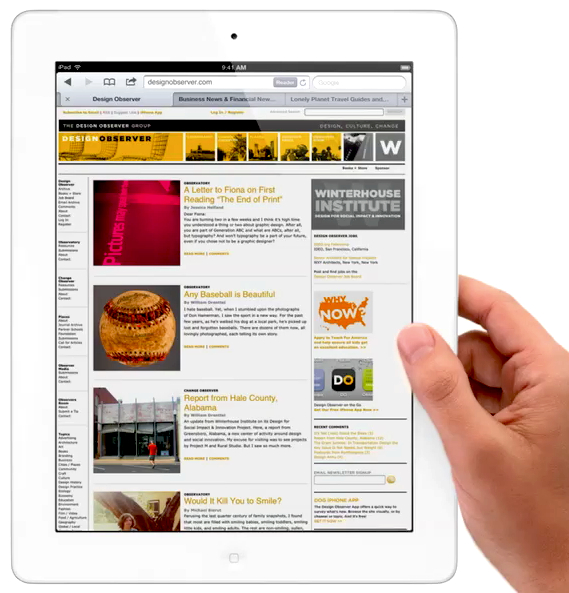
iPad leaps ahead of iPhone browser usage, Opera Mini collapses
New iPad tipped the mobile web browsing balance, according to April data Net Applications released today. Apple's tablet now exceeds iPhone for browser usage share among mobile devices. That's 33.7 percent to 27.4 percent, after being neck and neck for the previous three months. iPad had nudged in front during February and March, but in April leapt ahead of iPhone.
Considering how much larger is iPhone's install base, or Android's for that matter, iPad's ascension is quite remarkable. Cumulative iOS device shipments reached 365 million during first calendar quarter -- nearly 67 million of them iPads. In all, iOS devices give mobile Safari tremendous usage share in the category: 63.84 percent, that's up from 52.36 percent in June 2011.

Want more from Firefox 12? Try Pale Moon or Waterfox
If you were unimpressed by the fairly unexciting appearance of Firefox 12 last week, then today does at least bring some browsing alternatives by way of the performance-optimized spinoff projects, Pale Moon 12 and Waterfox 12. And although the lack of additions to the broader code base means they’re both essentially maintenance releases, there is still some interesting news here.
Pale Moon 12 notably has not moved to a silent install method, for instance, which means it won’t provide the maintenance service. The developer tells us there are several reasons for this, not least “the fact that Pale Moon has always been in favor of giving users the choice when and where to download and install an update to what is for most people the heart of their on-line experience”.

Say goodbye to April with one of these 36 downloads
Cloud was the big news this past week, and there were exciting developments in the world of online storage. After what seems like years of waiting, Google Drive 1.0 finally released, extending the idea of Docs and providing users with the opportunity to store any files they want online and keept them synched with their computers. There’s also a mobile version of the app available, Google Drive for Android 1.0.77, that enables access toyour files on the move.
Ubuntu One 2.0.3 has nothing whatsoever to do with the operating system of the same name, but provides you with 5GB of free space for storage and backups. Cloud storage stalwart Dropbox 1.4.0 has been updated and finally becomes stable, as well as adding batch uploading and importing of photos Meanwhile, Microsoft released Microsoft SkyDrive 2012 v16.4 and Microsoft SkyDrive 2.0 iOS with reduced storage levels.

Get ready for exciting changes coming to Firefox 13, 14 and 15
Following on from the release of Firefox 12 FINAL, Mozilla has updated its developmental branches to versions 13 (Beta), 14 (Aurora) and 15 (Nightly/UX), respectively. Those looking for major changes in version 12 will may be disappointed, but future builds promise a number of radical new features, including redesigned Home and New Tab pages, plus panel downloads manager and inline preferences screen.
Get a head’s up on what’s coming and discover which build is best for your personal needs with our essential guide to what’s coming up in the near future for Mozilla’s open-source, cross-platform browser.

Opera 12 gets opt-in hardware acceleration
It is only a week since Opera 12 added support for cameras, and since then two new builds have been released that push the development of the browser even further. Performance is of utmost importance for every computer user, and the latest builds of Opera Next have been improved with the implementation of hardware acceleration. Interestingly, hardware acceleration is an opt-in feature.
A new DirectX backend is available instead of OpenGL and the hardware acceleration is used to not only improve the rendering time for pages, but also boosts the speed of the user interface. In addition to the performance gains that come from the implementation of this new feature, overall performance of the browser has also been tweaked and stability problems arising from the use of plugins have been addressed.

Firefox and Thunderbird turn 12 -- get them now!
Mozilla has released new final versions of Firefox 12 and Thunderbird 12, its open source browser and email messaging tools. Neither update, despite the new version number, contains much in the way of exciting new features, but developments on future builds suggest version 13 could be a landmark release for both.
Firefox 12 introduces one notable change for Windows users -- the advent of silent updates with no User Account Control dialog getting in the way, while Thunderbird 12’s headline new feature is the ability to view message extracts in global search results.

So long Read It Later, Hello Pocket
Do you find that you never have time to read the articles you discover online? In the past you may have turned to Read It Later to bookmark a site so that you can refer back to it later, but now there is a new analogy to work with. Read It Later has been re-launched as Pocket, so you can now ‘pocket’ those stories you don’t have time to read right now and save them to your online account ready for when you have more spare time.
The rebranding is more than just a change of name; there are also new features that you can take advantage of as well as a redesigned interface. Whether you are surfing the web in your preferred browser, or you discover an interesting link on Twitter or Facebook, Pocket enables you to quickly and effectively bookmark pages, images and videos so you can easily access them later. Content can be saved using a browser extension or using the dedicated iOS or Android apps.

Smile for the camera, Opera Next is watching you
Things continue to develop apace in the world of Opera, with the latest snapshot of Opera Next showcasing camera support. The latest addition to the browser means that developers will now be able to use JavaScript to access webcams, which opens up new levels of interactivity with web pages -- everything from using your webcam as a color picker to simplifying the process of uploading a picture of yourself.
There are obvious privacy concerns when web pages are allowed to access webcams, but Opera Next ensures that users are kept informed about what is going on and are given the chance to block or permit connection as they see fit. Whenever a page attempts to access your camera you are warned by the appearance of a popup that gives you the opportunity to block or allow the site on a permanent or one-off basis.