Ransom32 is JavaScript-powered ransomware affecting Windows, Mac and Linux
Cross-platform viruses and malware are something of a rarity, but now there's a first-in-its-class JavaScript-based ransomware that can infect Mac, Windows and Linux. Ransom32 uses the Node.js runtime environment running on the NW.js platform to burrow into the target operating system and hold files to ransom.
While on the face of it, this is just another example of ransomware that encrypts files and seeks Bitcoin payments to decrypt them, it is more than that. The NW.js framework not only allows for cross-platform infections, but also means it is harder to detect. Ransom32 bears some resemblance to CryptoLocker and has been dubbed Ransomware-as-a-Service.

Microsoft is backing up your encryption keys in the cloud, but you can prevent this
Microsoft, like many companies, ships some of its products with disk encryption and that's a good thing given the state of today's world. The vast majority of customers have nothing to hide, but they also don't wish to be watched by the prying eyes of governments and others.
However, it is being reported that the Windows maker is storing encryption keys in the cloud. While that doesn't necessarily mean a problem, it's also a bit scary because of the potential for what can go wrong -- a Murphy's Law scenario. This issue was first reported by The Intercept, which notes that your keys "may" be stored in the cloud -- not everyone's are.
China passes law requiring tech firms to hand over encryption keys
Apple may have said that it opposes the idea of weakening encryption and providing governments with backdoors into products, but things are rather different in China. The Chinese parliament has just passed a law that requires technology companies to comply with government requests for information, including handing over encryption keys.
Under the guise of counter-terrorism, the controversial law is the Chinese government's attempt to curtail the activities of militants and political activists. China already faces criticism from around the world not only for the infamous Great Firewall of China, but also the blatant online surveillance and censorship that takes place. This latest move is one that will be view very suspiciously by foreign companies operating within China, or looking to do so.
Tim Cook: Apple will not budge on encryption
With many U.S. lawmakers calling for an end to encryption, Tim Cook has decided to reiterate Apple’s stance on the matter. Apple’s CEO believes that when it comes to encryption there is no trade-off between privacy and national security.
During CBS’ program 60 Minutes, on Sunday Cook defended the need for encryption and how it important it is to Apple and its consumers. According to Cook, there is no reason why Americans should not be able to have privacy while simultaneously protecting America’s national security.
Apple wants the UK government to rein in snooper's charter
Tim Cook is a vocal opponent of any form of encryption weakening, and now Apple has spoken out against the UK government's Investigatory Powers Bill -- otherwise known as the snooper's charter. Currently in draft form, the bill would require ISPs to retain customers' browsing histories for a year, and would require technology companies to implement backdoors that would allow encryption to be bypassed.
Apple says that it has serious concerns about the proposed bill in its current form, and calls for sweeping changes to be implemented. The company has famously refused to allow access to encrypted iMessage chats, and this is a stance it is reiterating.

BlackBerry's privacy stance is yet another reason to avoid the company
We are living in a post NSA-world (and I am a post-NSA girl...) and privacy is in the public consciousness more than ever before. After the government surveillance revelations that came courtesy of Eddy Snowden, most tech companies have been trying to stress to customers and clients just how willing they are to stand up for privacy.
But not BlackBerry. Company CEO John Chen has used a blog post to lash out at his contemporaries for supporting strong encryption. He makes a thinly-veiled reference to Apple, accusing that an unwillingness to comply with law enforcement requests put us all in a "dark place". Chen says that "our privacy commitment does not extend to criminals", seemingly failing to recognize that privacy is very much an all-or-nothing concept.
Why not use open source encryption?
There’s a lot of talk about encryption these days. Often the issue arises when moving data to the cloud, using solutions like Dropbox or Box. We start to wonder if our information will be safe if it’s no longer stored locally on computers in our offices. We are confident that Dropbox and Box store everything in a secure way -- we have little reason to believe that they don’t, right?
Next, we think, "OK, what happens when information leaves or enters the cloud? Is our communication safe? Maybe that information should be encrypted, too". Actually, there’s no question about it. Data should be encrypted when it moves in and out of a network and when it’s stored in the cloud.
Most mobile apps have encryption flaws
Encryption is not all it’s cracked up to be according to a recent security report, with coding flaws introducing a number of vulnerabilities into smartphones and their software.
Seven in eight Android apps and 80 percent of all iOS apps have encryption flaws, claims Veracode’s State of Software Security report.
Chimera crypto-ransomware threatens to share your private files online
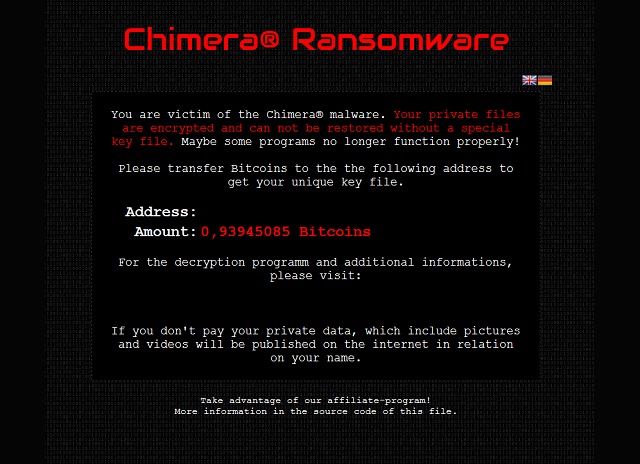
Crypto-ransomware is one of the latest trends in the world of malware. Encrypting and holding files to ransom provides a way to extort money from victims, but a new example takes things one step further.
Chimera not only locks users out of their files until a ransom is paid, but also threatens to release unencrypted copies of the files online if payment is not made. Security company Trend Micro says this is the first instance of this type of threat. Interestingly, Chimera also seems to be part of an affiliate program.

ProtonMail: banning encryption won't stop terrorism
In the panic that followed the attacks on Paris by ISIS there have been calls for various measures to be put in place to stop similar atrocities happening in the future. As well as calls for an increase in online surveillance, politicians have also suggested that encryption should be weakened or banned entirely.
Secure email service ProtonMail found itself the subject of unwanted attention when it transpired that ISIS recommended using it to evade detection. The company has remained silent about the post-Paris backlash; until now.
Tim Cook: Apple won't weaken encryption, but is willing to cooperate with UK government
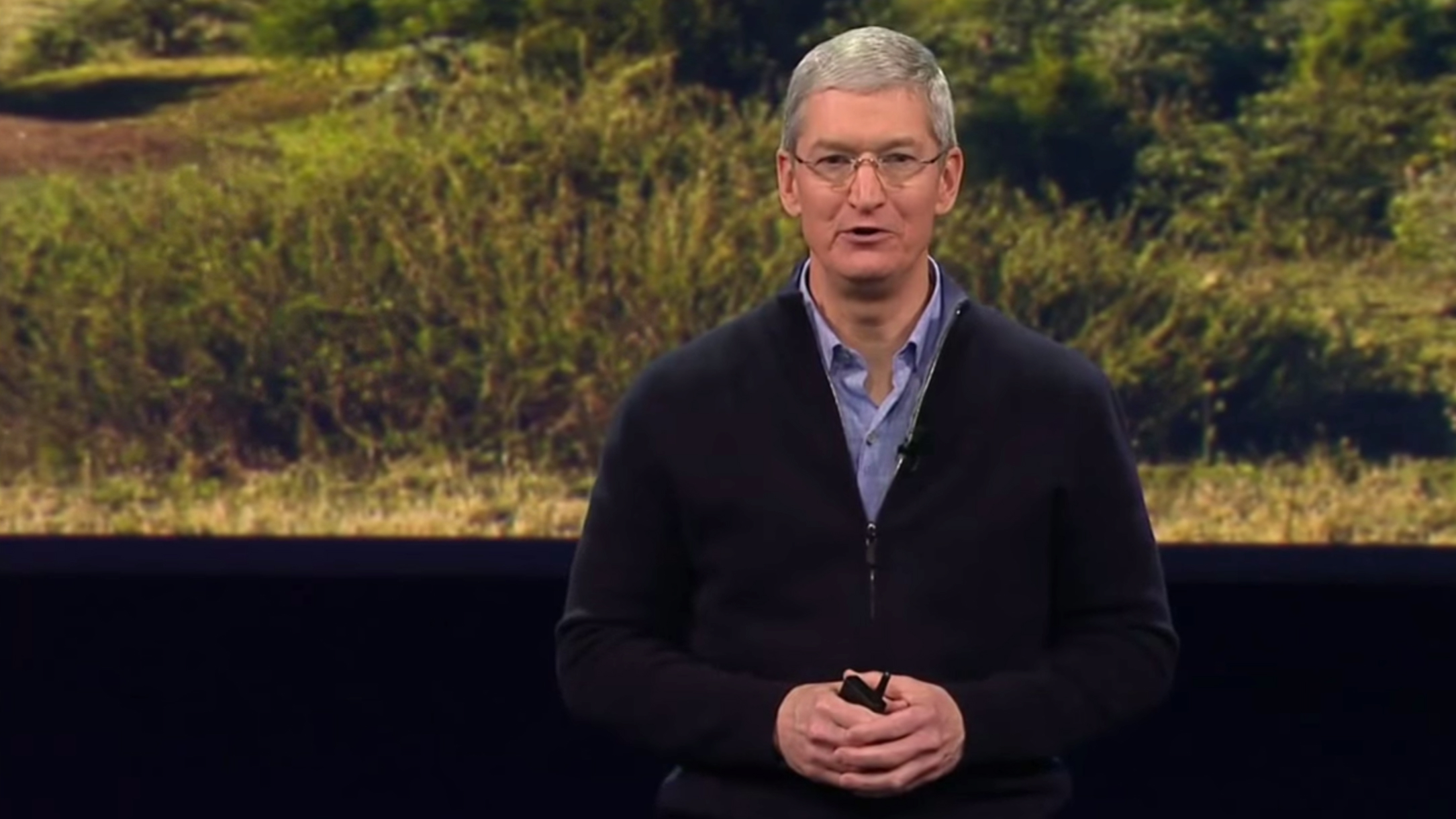
In a recent interview with the Irish Independent, CEO Tim Cook has once again said Apple will not weaken the encryption it uses in its mobile communication devices.
He did, however, say that the company he runs will work closely with the UK government to help create a quality legislation.
SecuSUITE for Enterprise enables secure calling and messaging
BlackBerry and its subsidiary Secusmart have announced the release of SecuSUITE for Enterprise, a new voice encryption solution that protects mobile calls on the Android, iOS and BlackBerry operating systems.
By using the VoIP, software-based, cloud-hosted solution, employees will be able to conduct secure conversations worldwide and be able to send encrypted text messages of any length.

Microsoft details four commitments to help rebuild trust in the cloud
In a lengthy, rambling blog post, Microsoft President Brad Smith explains how what has happened in relation to security over the past year is shaping the company's attitude to the cloud. He says that "it's time to rebuild the world's faith in the technology that empowers us all".
He takes a while to get to the point, meandering slowly around anecdotes about Windows 10, Edward Snowden, terrorist attacks in Paris, hacking, and governmental desires to weaken encryption. He says that these and other events "show it's crucial to have a conversation about worldwide information security".

How to avoid online surveillance -- the essential guide
It would appear that mass surveillance of the Internet is here to stay. We can rage against the machine, but ultimately we're powerless to stop the likes of the NSA and GCHQ prying into whatever they want to pry into. More and more people are turning to the dark web to help cover their tracks, but even the supposedly anonymous haven of Tor can be cracked for a price.
Last week in the UK, the draft Investigatory Powers Bill was published outlining proposals for ISPs to retain user's browsing histories for a full year. Governments want to weaken encryption. The FCC ruled that Do Not Track requests are essentially meaningless. The NSA finds and takes advantage of vulnerabilities. It's little wonder that privacy groups are up in arms -- the erosion of online rights continues with terrifying speed. But all is not lost. There are still things you can do to help maintain your privacy. If you're concerned, here's what you can do.

Gmail to issue warnings about emails sent without encryption
Google, like many other companies, is pushing people towards using secure internet connections. HTTPS is becoming the norm, but not everyone has caught on. To keep the security-conscious informed, Gmail is set to issue warnings about emails that are received through unsecure connections that do not use encryption.
A joint study involving Google, University of Michigan and the University of Illinois found that email is "more secure today than it was two years ago", with an increase in the number of encrypted emails sent. That said, there are still plenty of people who are not using secure connections and Google is keen to keep its users informed when they receive communication through unencrypted channels.