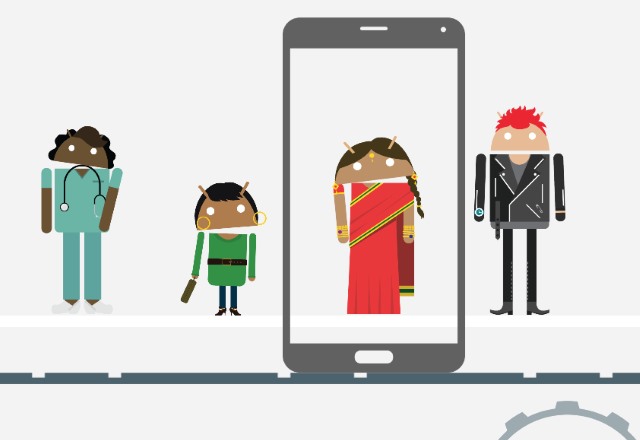
Google helps you find the best Android phone
While choosing which iPhone to buy is a fairly simple decision -- there just aren't many options to choose from -- it's a very different matter for Android fans. The wealth of hardware manufacturers producing an endless stream of handsets means that a trip to the phone store, physical or online, can be overwhelming.
Today Google launches a new tool that can be used to home in on the perfect Android handset for you. Answer a few simple questions about the types of thing you need from a phone, and the wide selection of devices will be whittled down to those that are just right for you.
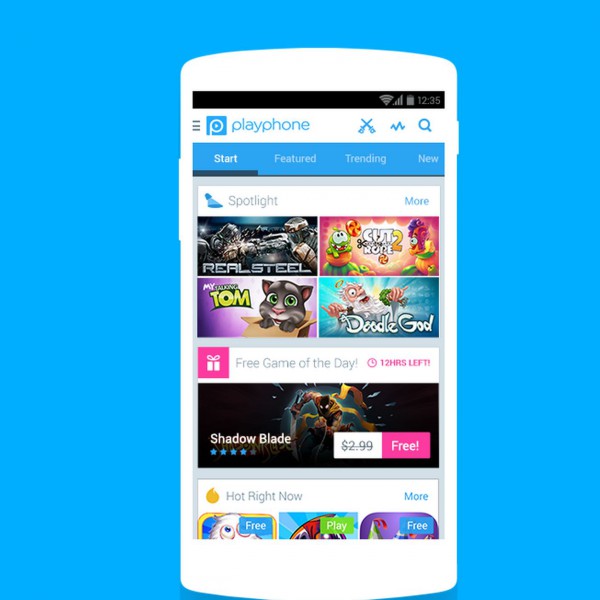
Cyanogen Inc partners with Playphone -- a Google Play Store competitor
If you are an Android user, there is a good chance you have downloaded apps and games from the Google Play Store. For many users, the search giant's store is probably their only known way to install apps on their devices. In reality, however, there are many alternative app stores, with one of the most popular coming from Amazon.
Today, an app store called Playphone -- focusing on distributing games -- announces a partnership with Cyanogen. Yes, the CyanogenMod maker will be distributing Playphone with its Cyanogen OS in select markets. This alternative app store is home to popular developers such as SNK Playmore and Square Enix. Will this anger Google?

Apple hits Google where it hurts
I have some advice for the European Union Competition Commission: Lay off. You don't need to reign in the Google monopoly. Apple will correct the market around search and mobile. That's one of two related takeaways from Monday's WWDC 2015 keynote. iOS 9 and OS X El Capitan up Apple's push into search and proactively-delivered information in big ways. That is if delivery is as good as the company promises.
The other takeaway harkens back to what I told you last week about Tim Cook's piracy rant against unnamed Facebook and Google alongside the friggin U.S. government -- plural if thinking beyond the Feds: It's BS marketing. Apple prepares a major competitive assault against Big G, hitting where damage can be severe: Perception and profits. I cannot overstate Google's vulnerability, which ironically is where the search and information giant exploited Microsoft during this Century.
OnePlus One is best Android value -- gets permanent price cut and DropBox Pro option
While the world awaits Apple's WWDC conference to learn of all the new iOS news, many of us Android users are simply shrugging our shoulders in a collective "meh". Sure, Apple makes great products, including the iPhone, but they are very expensive. Android is better positioned for those of us with more meager bank balances.
One of the best value smartphones is the OnePlus One. Normally $299, the company recently offered a temporary price drop to an eye-popping $249 for the 16GB model. Guess what fellow bargain hunters? Today, the company makes that price drop permanent. However, the fun does not stop there. You can also get a majorly discounted year of DropBox Pro if you buy the 64GB model -- a $99 value.

The Apple PR machine wheels out women from the shadows for WWDC
Diversity is one of the latest buzzwords that tech companies are keen to throw around whenever the chance arises. If you were to knock back a shot of something every time it cropped up in press releases, keynote speeches, and company reports, rates of global alcoholism would shoot through the roof. Now a follower rather than a leader, Apple is ready to jump on just about any bandwagon that happens to be passing.
Google, Microsoft and other companies have recently waxed lyrical about the diverse sexual and racial makeup of their workforces -- it looks great for public relations, after all -- and Apple wants a slice of that pie for itself. It's a company that is highly adept at capturing the zeitgeist; as my colleague Joe Wilcox puts it, Tim Cook is an opportunist. The latest attempt to curry favor with the in-crowd, it seems, is to wheel out a few token women at today's WWDC keynote.
I bought a $200 Android 'flagship' smartphone and it changed everything
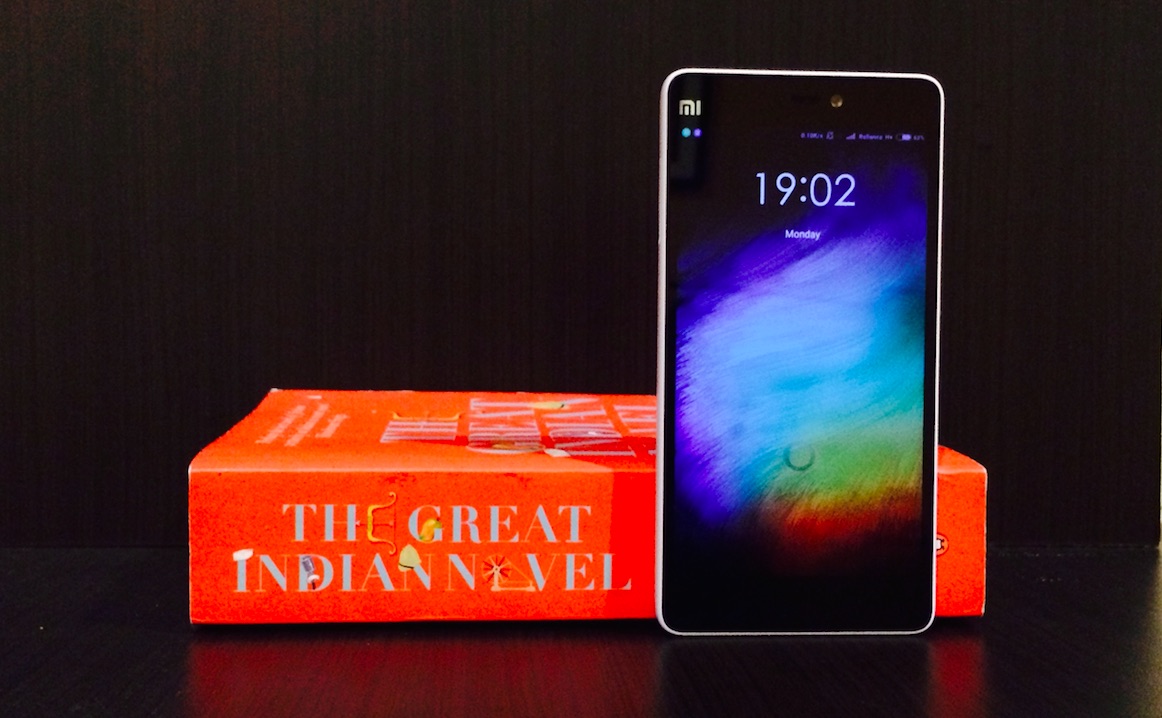
A few weeks ago my one-and-a-half-year-old Nexus 5 started to misbehave. Its power button wasn't holding up well, forcing the phone to switch off a dozen times, while also making it a chore to turn the phone back on again. I realized the phone was on its last leg. I also have an iPhone 5s, but I mostly use it to listen to podcasts, take phone calls, and take photos. Suffice to say I'm an Android guy. With OnePlus announcing its plan to release the successor of its One flagship in Q3 later this year, and LG reportedly working on the successor to Nexus 5, I decided to purchase a cheap phone running Google’s software to keep my boat floating until these much-anticipated smartphones begin to trickle up on the market. This led me to purchase the recently launched $200 Mi 4i smartphone from Chinese conglomerate Xiaomi. After using it for a couple of weeks, I don't think I want to upgrade to a new phone this year.
The smartphone market has seen many new forces arrive in the last couple of years. These new players have changed the landscape entirely, pushing new phones with top-notch capabilities at an increasingly competitive price point. We now have plenty of options in both the low and mid-tier categories. The dirt-cheap $100 Moto E is a decent entry-level smartphone, and the $180 Moto G entices users looking for a more efficient phone. The Lenovo A7000 offers 4G LTE capability for less than $150, and $100 Android One smartphones from Micromax, Karbonn Mobiles, and Lava offer the up-to-date software and reasonably good specs. But I wanted a phone that offers a high-end processor and top-of-the-line hardware modules; Xiaomi was offering me just that.
UK government switches to Google rather than Microsoft for cloud storage
The UK's HMRC -- the government department responsible for tax -- is switching allegiances in its choice of cloud storage providers. Her Majesty's Revenue and Customs is switching to Google Apps as more and more departments move away from Microsoft services.
Earlier in the year, the Cabinet Office and Department for Culture, Media and Sport ruled out using Office 365, but found Google offered more suitable collaboration options. As reported by The Register, the move illustrates the government's increased trust in Google's ability to securely store sensitive data offshore.

Google improves Chrome's power consumption
Google Chrome may be one of the most powerful and reliable browsers around, but it is also one of the biggest offenders when it comes to energy consumption. It does not matter if you are using a PC or Mac, or even iPhone or iPad, its impact on battery life is considerable.
Google is well aware of Chrome's shortcomings, now announcing that it is rolling out a number of changes in the coming months that are meant to improve the browser's power consumption. The first improvement targets Adobe Flash.
Yahoo kills Pipes, Maps, and some TV and Music services in prioritization drive
Yahoo today announced that it is fine-tuning its focus moving forward, and this means that some products and services are being dropped. In its Q2 2015 progress report, the company explains that it looking to dedicate its energy and resources to "search, communications and digital content".
One of the most surprising casualties is Yahoo Maps -- the site will close at the end of June. Despite the closure, maps will still be supported by other Yahoo products such as Flickr, but it illustrates Google's dominance in this arena. Other victims of the cull include Yahoo Pipes, Yahoo Mail on old versions of iOS, as well as Yahoo Music and Yahoo TV in some regions.

Tim Cook is an opportunist
Nine years ago, a NPR interviewer asked me about Google and other U.S. companies censoring search results in China. The question was one of morality -- to which I gave answer she didn't expect. That response, or my recollection of it, is appropriate for rather ridiculous and self-serving statements that Apple CEO Tim Cook reportedly made two days ago.
"We believe that people have a fundamental right to privacy", Cook said, Matthew Panzarino reports for TechCrunch. "The American people demand it, the constitution demands it, morality demands it". Oh? What is moral? The answer I gave NPR in 2006 applies: There is no moral high ground in business. The high ground is quagmire, because all public companies -- Apple surely among them -- share a single, moral objective: Make profits for stockholders. Plain, pure, and simple.
Google+ is slowly being killed
After three years of hard pushing, Google has accepted the failure of Google+ and is starting to dismantle the overbearing social network.
Google’s service no longer directly links to users' Google+ profile, instead the forename and surname takes over as a placeholder, although it is unclickable. Google has not said what it plans to add in Google+' place.

Want to get rich making Android apps? Take these free Google-approved training courses!
Have you ever dreamed about getting rich from creating and selling apps? Me too. Unfortunately, I have literally zero coding skills. In other words, even if I had a brilliant idea for an app, I could not create it, and that is just sad.
Being illiterate with programming is something that I am both ashamed of and regret. Luckily, I am not dead yet, so this is still a skill I can achieve. Thanks to Google and Udacity, I may even be able to do it for free. Yes, free training courses are now available! Check it out.
Google makes it easier to control privacy and security settings
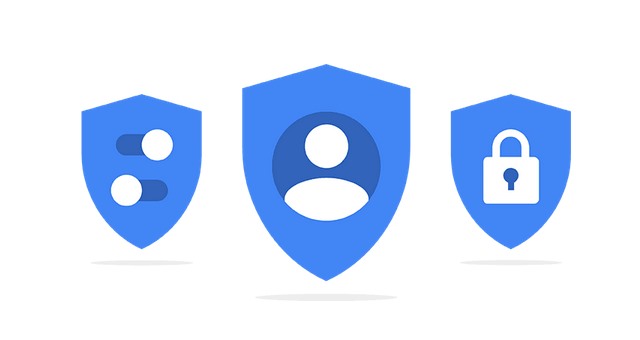
Taking a leaf out of Facebook's, er, book, Google today unveils a revamped privacy checkup page. Google and privacy are not words that belong in the same sentence for many people, but the search giant wants to change that. Users are invited to answer a series of simple questions to control how their data is stored, collected, and shared.
The company wants to place users back in control, and at the heart of today's announcement is the My Account page which is now central to configuring privacy settings. In the interests of transparency, Google has also set up a page dedicated to revealing how and why data is collected.
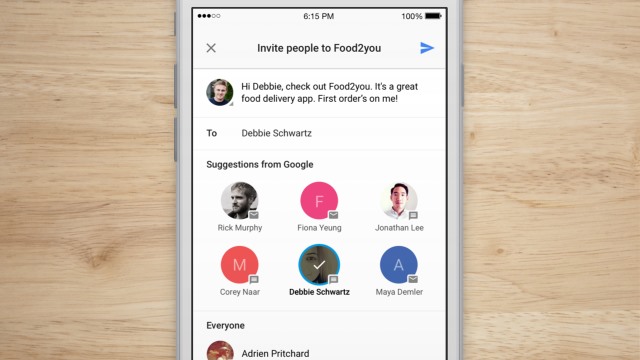
Google brings app invites to iOS and Android devs
You've just discovered an incredible app or game and want to tell everyone you know about it... what do you do? Email your friends with a link to the relevant app in the App Store or Google Play? Make an announcement on Facebook to your contacts? With the introduction of App Invites, Google is bringing this sharing right into apps themselves.
Launched in beta at I/O 2015, App Invites is a feature that does very much what it says on the tin: it enables users of compatible apps to invite their contacts to install an app by sending out notifications via SMS or email. It's a feature that will be welcomed by developers as it opens up one of the most valuable forms of advertising -- word of mouth.

The truth about Google Photos
Google Photos is more than an exciting -- and hugely transforming -- new product. The app/cloud service is a metaphor for an escalating mobile business model that, with perhaps the exception of Facebook, no competitor has the capacity to match.
Users gain tremendous time-saving utility, such as the ability to meaningfully search using innocuous terms like "dog" or "Washington", all without the need to manually add metadata tags by way of applications like Photoshop. Meanwhile, Google gets access to quantifiable information, in the image and accompanying metadata, around which to sell advertising and related contextual content or services.