
Big Ass Fans hooks up with Google's Nest for some big ass savings
Air conditioning is one of the greatest inventions of all mankind. As a fat guy, I love keeping my house like an igloo. However, as great as being cool is, conditioned air takes some of the fun out of summer. As someone who grew up without air conditioning, I learned to appreciate having an open window and enjoying the sounds and smells of the season. Crickets chirping, thunder in the distance, and the smell of fresh-cut grass are lost when you shut the windows and turn on the artificial cool air.
While I am too far gone to ever return to life without an air conditioner, I am still quite conscious of the extremely high electric bill that it causes. Today, Big Ass Fans, a fan manufacturer, announces that one of its fans, the Haiku with SenseME, can now work with the Nest thermostat to lower bills. If this fan can give me big ass savings, I'm all for it!
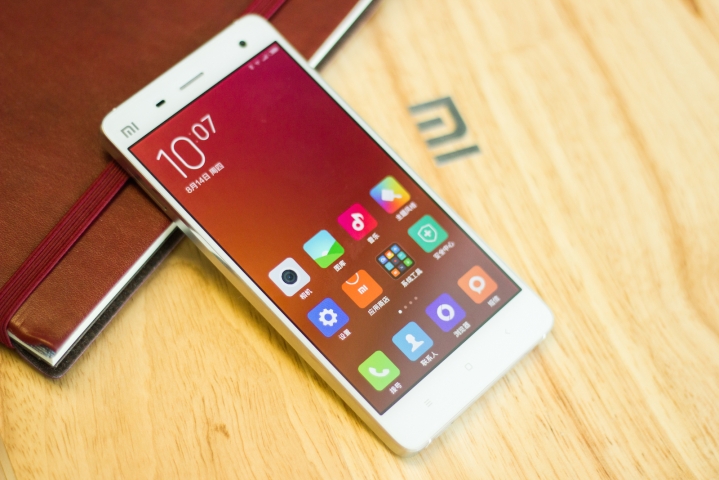
Xiaomi's MIUI 6 beta is here and the Android ROM shames Google's stock experience
As a Linux user and lover, I prefer Android smartphones to iOS. While I love the freedom and functionality of Google's mobile operating system, there is one thing I hate -- the UI. That is a pretty big deal and usually a deal-breaker for a consumer. However, I put up with the dreary UI and clunky app drawer because I can customize it with different launchers, wallpapers and icon packs. While this is passable, I long for a redesign to mimic something similar to iOS 7. I crave beauty and art, but alas, Google seems disinterested in doing anything radical -- Android L "Material Design" seems too safe and boring.
The design savior for many years has been the Chinese-born ROM, MIUI; however, as more and more devices ship with impossibly hard-to-hack locked bootloaders, the gorgeous ROM has not been ported to as many devices; even unofficially. And so, users have been limited to MIUI-styled launchers, but not the full experience. Excitingly, MIUI 6 is now released in beta form, but sadly, most Android users will not be able to flash the beta, or the final version for that matter. This locked bootloader nonsense is a tragedy, as MIUI 6 is sexy as hell and puts Google's vision of Android to shame.

Google vs the British government and the fight to be forgotten
The current uproar around various facets of data collection and use -- be it "the right to be forgotten" or the emergency data legislation being considered by Prime Minister David Cameron in the UK -- is divisive to say the least.
If your only source of information is the mainstream press, you’d be forgiven for thinking it comes down to two immiscible sides of an argument. On one side there’s the posited right for governments and people to access whatever information they need, whenever they need it. On the other side are those who believe that they have an absolute right to privacy, whatever the threats governments say we’re facing.

Chrome to start protecting users from additional malicious downloads
Google’s Safe Browsing service protects users from malicious websites and warns against potentially dangerous downloads in Chrome. According to Google, over three million download warnings are being viewed every week, and because it’s available for other browsers, this technology is helping to keep 1.1 billion people safe.
From next week, Google says it will be protecting users from additional malicious software, delivering warnings whenever you attempt to download something that might try and make unwanted changes to your browser or computer.
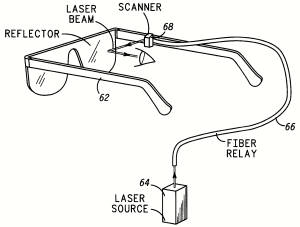
For future computing, look (as always) to Star Trek
"The step after ubiquity is invisibility," Al Mandel used to say and it’s true. To see what might be The Next Big Thing in personal computing technology, then, let’s try applying that idea to mobile. How do we make mobile technology invisible?
Google is invisible and while the mobile Internet consists of far more than Google it’s a pretty good proxy for back-end processing and data services in general. Google would love for us all to interface completely through its servers for everything. That’s its goal. Given its determination and deep pockets, I’d say Google -- or something like it -- will be a major part of the invisible mobile Internet.

Gmail enables unicode recognition to block links to suspicious sites
Email can be inherently dangerous, as less savvy users can, and do, click links that can lead to nefarious locations on the web. The links are frequently a bit hidden -- characters are slightly altered, such as "0" instead of an "O".
Last week Google rolled out support for non-Latin characters, a great addition, but one that enhances this problem, as well. With that in mind, the company is attempting to protect its email customers, by now enabling recognition of bad links through Unicode checks.
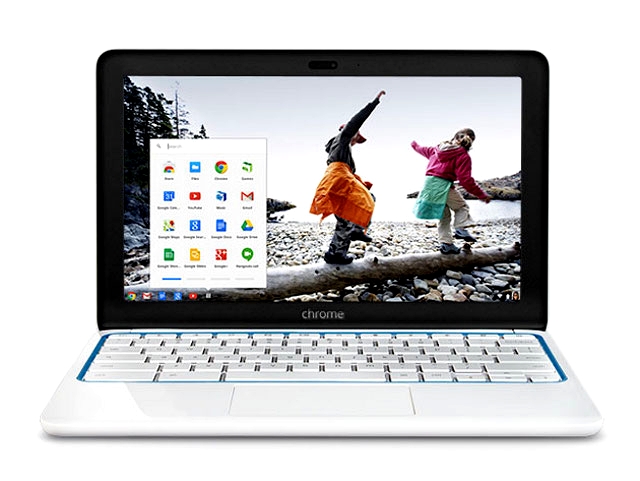
Chromebook on the rise, with sales set to triple by 2017
Google's Chromebook is on the up and up, according to the latest report published by analyst firm Gartner.
This year, Gartner estimates that total Chromebook sales will hit 5.2 million, which is up 79 percent from 2013. Looking further out to 2017, the number of units sold should reach 14.4 million, in other words we're looking at a near tripling of sales inside three years. Which has to be music to Google's ears...

Acer announces Chromebook 13 -- world's first Chrome OS laptop with Nvidia Tegra K1
The concept of a Chromebook is awesome. All of your files are stored in the cloud -- family photos, office documents and videos to name a few. This opens up an entire new way of thinking, where nothing seems impossible. Hell, even most of the apps are web-based and that is enough to blow someone's mind. Since local apps cannot be installed, this makes Chrome OS extremely secure and an ideal platform for accessing sensitive information.
Unfortunately, as great as the operating system is, the hardware has been lacking. Most models require the user to make a compromise for the sake of cost. Poor quality screens, not enough RAM and questionable build quality are the issues that are most apparent. For some reason, manufacturers equate Chromebooks with "cheap" and this is not the case. People really do want a midrange Chromebook and not just throwaway, disposable tech. Today, Acer announces a Chromebook that may be the one we have been wishing for (fingers crossed); the unimaginatively named Chromebook 13. It is the first-ever Chrome OS laptop to have the Nvidia Tegra K1 ARM processor.
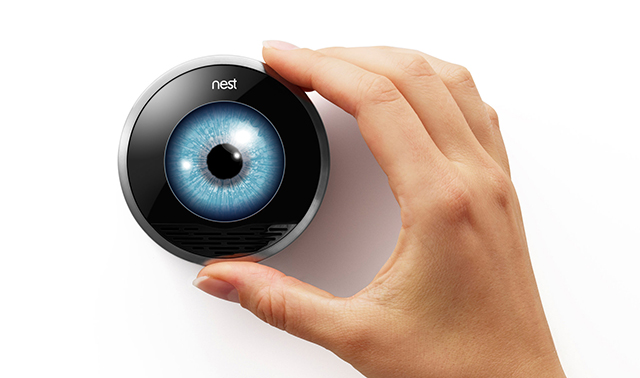
Google's Nest Thermostat can be easily hacked to spy on owners
When Google bought Nest Labs for $3.2 billion seven months ago, I described the move as the start of a home invasion. Google already knows a lot about you, including where you live, what your interests are, where you go on the Internet and in the real world (via Android), and its acquisition of Nest, which makes smart thermostats and (not so smart) smoke detectors, meant it would potentially also know what you get up to in your own home.
As it turns out, Google using Nest products to find out what customers are doing is just one worry. A team of researchers has discovered an easy hack that allows anyone to gain control of Nest’s smart thermostat and turn it into a spying device which can reveal when you’re at home or away, and even divulge your Wi-Fi credentials.

Google Chrome launches into space with 'A Spacecraft for All'
Google seems to be on a bit of a space travel kick lately. The search-giant recently launched Google Maps for Mars and the Moon. At first, that seemed a bit odd; I mean, other than some NASA nerds, who really cares to view those terrains? Before you raise your hand and say you do, please know I did it extensively as a test, and saw nothing but rocks and craters. Quite frankly, I would sooner explore Dollywood; at least there is something to see.
Sure enough though, Google seems committed to space, as today, the company announces that users of Google Chrome can get involved with ISEE-3. Don't know what that is? I didn't either. Google explains it by saying, "originally launched in 1978 to study the Sun, it was the first spacecraft in the world to fly by a comet and has been orbiting the sun for billions of miles since 1986". Damn, it's been travelling since the last time the Mets won the World Series!

Google Fit Preview SDK is here -- developers, please get nerds into shape
Nerds and exercise are like oil and water. This is why it is fairly comical that Google is planning a fitness platform. Even though Android enthusiasts will probably line up to take advantage of Google Fit compatible apps and devices, I doubt they will actually use them for anything other than a tech demo. I can picture sloth-like teenagers laying on the couch watching TV and tweeting about how awesome Google Fit is, as they suckle on a Gogurt.
Today, Google announces that a preview of the Google Fit SDK is available. No, this does not mean that users can start utilizing the platform. What it does mean though, is that developers can finally get started at developing for the platform. For the sake of the world, I hope I am wrong and that this actually gets people in shape (including me).

Google Maps with Street View could be putting college students in danger
The world is not a perfect place. Unfortunately, there are many bad guys in the world leveraging technology in nefarious ways. This is a shame, because many technological advances are created with good intentions. As an example, cell phones are used to keep friends and family in touch, but terrorists use them to detonate bombs. Tiny cameras can assist doctors in surgical procedures, but perverts hide them in bathrooms.
In other words, no matter how positive something is, it can usually be used in a negative way. Today, Google announces that it is bringing Street View to 36 new college campuses. In theory, this makes it easier for prospective parents and students to check out a school that they are interested in. The reverse of the coin, however, is that creeps can use it to familiarize themselves with the campus and plan attacks.

Google makes it easier to unsubscribe from email lists
Gmail is undergoing another change, but this time it's a fairly minor tweak -- and one that is likely to be broadly welcomed. Unsubscribing from mailing lists is about to become simpler. Rather than having to hunt through the small print at the end of an email, or scouring the text for a hidden link, you'll soon find the unsubscribe option right at the top of emails. Announced via the official Gmail Google+ page, Google describes the change as "a win for everyone".
The new feature is not something that mailing list creators need to opt into, or indeed do anything about at all. Providing an email features an unsubscribe link somewhere in its text, Gmail will automatically add it to the top of a message next to the From field. Google explains that "when a sender includes an 'Unsubscribe' link in a Promotions, Social or Forums message, Gmail will surface it to the top", so it's not clear if the feature will work with every single mailing list.

Content Raven adds control and security to Google Drive
Storing data in the cloud is convenient and makes for easy sharing and collaboration but it inevitably raises security concerns, especially when using public services.
Content Raven produces a cloud-based file distribution toolkit which adds an extra layer to provide content control, security and deep analytics to files stored in the cloud. It already integrates with Box and Dropbox but from today adds support for Google Drive too.
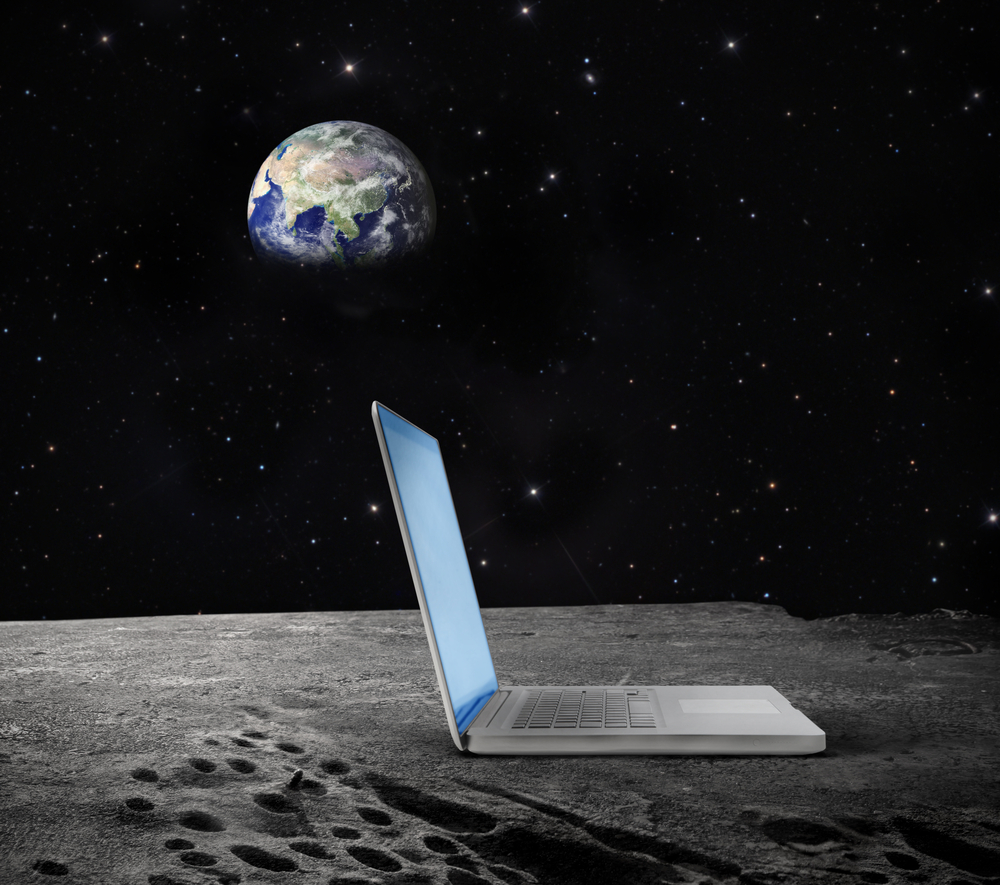
Google Maps goes to space -- explore Mars and the Moon
We recently celebrated the 45th anniversary of the Apollo 11 landing, which saw Neil Armstrong become the first man to set foot on the moon. As a young man, I remember respecting astronauts, such as Mr. Armstrong, as American heroes. Quite often, I would stare into the night sky and dream of exploring the moon's surface like them. Sadly, from what scientists have told me, it is not made of cheese.
Even without mozzarella or muenster, I still want to experience other planets and moons. While private trips to space are becoming a reality, it is reserved for the super-wealthy. Average working folks, like you and I, will just have to keep on dreaming, right? Not so fast. Today, Google announces the ability to explore Earth's moon and Mars in Google Maps. Your impossible dream of space travel can now be achieved!