
Google Glass apps I really want to see
Your iPhone/Android is cool -- this we know. But, they wouldn’t be half as cool without apps. Apps are the icing on a smartphone -- minus the calories -- and we have a ravenous appetite for them. But cool apps aren’t isolated to just phones any more, as we’ve seen with new tech products like Google Glass.
Glass already has the usual suspects of apps, but what Glass really needs is to go nuts with apps that sound too good to be true.
Microsoft shouldn't do Office for Android
Seven months ago, when rumors burned hot, I explained why "Microsoft Office for Android and iOS is a Trojan Horse" -- that any mobile suite would be all about the cloud service. Sure enough, today Microsoft released the strangely named "Office Mobile for Office 365 Subscribers" to the App Store.
Office 365 is the productivity suite's future. Microsoft now claims to be a "devices and services" company. Smartphones are devices, Office 365 is a service and required for the iOS app. What more reasoning is needed? The Redmond, Wash.-based company provides more functionality than I predicted, but does so strictly in mobile context that doesn't diminish the PC product. That said, what Microsoft gives to iOS should be withheld from Android.
Goodbye Google Reader -- I'm switching to Readable.cc
It really doesn’t make any sense for Google to be shutting down such a widely used and cherished feeds subscriber as Google Reader, but the web giant isn’t going to change its mind unfortunately, so we must look towards alternatives that we can adopt.
But with countless options to choose from, where should one even begin looking? An excellent place to start is a website called Readable.cc.

Backupify's Migrator lets you easily move data between Google accounts
Migrating data between two Google accounts is not the easiest of tasks -- there's no simple switch that one can flip. Folks have to use various tools provided by the search giant to move a Google+ profile with circles, backup important emails and Drive content or transfer the Voice number and data. Based on my experience, it takes quite a bit of time too.
This makes it especially problematic for business users who wish to seamlessly migrate data from a standard Google account to Google Apps. Backupify wants to address this issue with the latest update for its Migrator tool, released today, which now introduces support for Google to Google Apps (and vice-versa) migrations.

Shifting software to the cloud could slash energy use
If all US companies were to move their core systems from in-house servers to the cloud the amount of energy used could be reduced by up to 87 percent a new report claims.
The research carried out by Lawrence Berkeley National Laboratory finds that if all the email, CRM and productivity software in the US were running in the cloud it would save 326 petajoules of energy. Just in case you were wondering a petajoule is around 278 gigawatt hours or the amount of energy you get from burning 34,121 tonnes of coal.

Google wants you to know it has nothing to hide
Google was one of numerous tech companies implicated in last week’s PRISM scandal, and despite issuing a carefully worded denial, many people still believe the search giant provides the NSA with unfettered access to its servers.
Unhappy with the situation, Google has written a letter to the offices of the Attorney General and the Federal Bureau of Investigation, asking them to give the company permission to publish in its transparency reports at least some information about the FISA national security requests it receives. This will prove, Google hopes, that it complies with legal requests, but no more.
Google's stock Android keyboard hits Play store as a free standalone app
Finding the right keyboard for Android can turn into a lengthy mission. There are few stock keyboards that cut the mustard and timesaving, gesture-friendly alternatives such as Swype and SwiftKey have gained a massive following in recent months. Not wanting to feel left out, Google is making its own stock Android keyboard available in the Play store.
Despite being a stock keyboard, Google Keyboard is surprisingly good -- Nexus users should not be surprised at this as this is the keyboard they are used to working with. Unlike many native keyboards, this one goes above and beyond being a basic onscreen input device for typing letter by letter. Well above and beyond.

Wearable cloud tech makes users feel more self-confident, clever... and sexy?
A study by CAST in conjunction with Rackspace reveals that users of wearable technology -- such as the Nike+ FuelBand and Jawbone UP -- feel using such devices boost their intelligence levels. The study looks at residents of the UK and US, and finds the wearable tech users not only feel cleverer, but also more self-confident.
These are not the only benefits the study unearths. US participants were generally rather more impressed with the benefits of wearable technology -- 71 percent of American users felt their health and fitness had improved as a result of using such devices, compared to 63 percent of those in the UK. More than half (53 percent) of US users believe wearable tech helps to improve intelligence, compared to just 39 percent of UK users.
Gmail for Android unveils radical new design, adds support for tabs
Google has released Gmail for Android 4.5, a radical new version of its Google Mail client for Android smartphones. At the present time, the update is slowly making its way to users through the Google Play store, with the intention being all users will be able to update or install the latest version within the next few weeks.
We’ve managed to get hold of a sneaky copy, and can reveal it’s as radical an update as anticipated, with a revamped user interface and support for new features such as Gmail tabs and pull-to-refresh. As expected, these new features require a handset or tablet running Android 4.0 (Ice Cream Sandwich) or later -- those running earlier versions of Android get version 2.3.6, with minor bug fixes.

Shock survey: 37% of orgs plan to adopt Office 365 within 24 Months
The war for the hearts and minds of potential cloud email users at organizations worldwide is far from over. Both Microsoft and Google are winning small field skirmishes for their respective corners over the past few years. Most recently, Microsoft won huge contracts with the State of Texas and the City of Chicago moving to Office 365's vision for the cloud. Conversely, Google Apps chalked up big converts in the form of CBC Radio Canada and the US National Archives.
UK business technology website Computing.co.uk has published the results of a survey it ran across 160 IT decision makers from organizations of all shapes and sizes. While the survey sheds light on numerous opinions surrounding the major cloud email platforms, its most shocking finding is that a whopping 37 percent of organizations moving to the cloud for email are opting for Office 365 over all the major players. Other cloud vendors included in the survey results were Google Apps, Apple iWork, and QuickOffice.

Another reason to hate Gmail’s new tabs -- unavoidable adverts in your inbox
Yesterday my colleague Mark Wilson wrote a scathing article on Gmail’s new tabs feature. In it he complained about the total lack of customization options, the wonky sorting, and most damning of all -- the way it’s no longer possible to tell at a glance exactly how many new messages you have.
This morning, in checking my email -- with the tabs active -- I found another reason to hate the latest addition to the webmail service, and it’s likely the reason that Google even introduced tabs in the first place -- advertising messages in your inbox.

Google gets it terribly, terribly wrong with Gmail tabs and makes me angry
Like many Gmail users, I greeted the news of the introduction of tabs to the interface with a degree of anticipation -- now it was just a matter of waiting for the feature to roll out so I could try it for myself. Earlier today I was randomly signed out of my Gmail account, and after signing back in and checking the settings menus, I could see that tabs were now available to me. Excitement was short-lived, however; it quickly became apparent that this new feature is a disaster.
On the face of it, there's a lot to be said in favor of adding tabs to one's inbox. The idea is that emails that match certain criteria are automatically sorted so your inbox is easier to manage. I have an enormous number of filters configured that sort and label messages but the prospect of having a series of tabs to access certain types of mail was definitely appealing.

Google takes business photos on vacation to Europe and Asia
If you have ever searched for a business on Google, you'll have noted some have images available -- carefully staged ones of course. These are especially popular with hotels and restaurants who wish to portray their establishments in the best light.
Google's Business Photos program makes this possible by letting firms hire one of the Trusted Photographers or Agencies to grab the images and get them up online. The service uses Google Street View technology to create panoramic images from the photo shoot and upload them. These results can be found on Google.com, Google Maps, Google Maps for Mobile and on the Google+ page or Places for Business listing. Photographers can also sign up to become 'Google verified'.
Motorola confirms X-phone launch for October
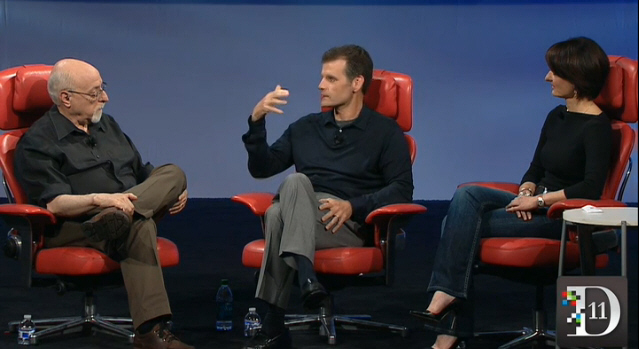
Speaking at the D11 conference in California, Motorola CEO Dennis Woodside has confirmed the existence of the company's long-rumoured X-phone. The device is to be called the Moto X and is set to launch in October.
This is the first major product launch from the company since it was bought by Google in 2011. Woodside teased delegates saying, "It's in my pocket but I can’t show it to you." He did confirm that the phone will be packed with sensors so that it will be able to detect when it’s taken out of a pocket or when it’s travelling in a car, for example, allowing it to adapt its behavior. No details of exact specs have been released.

Has software version numbering spiralled out of control?
Software versioning has changed a great deal over the years. It used to be that version 1 of an application would be released and it would be followed in around a year's time by version 2. You might well find that updates would be released in the interim -- versions 1.1 and 1.2 for example -- but it didn't take long for things to start to get more complicated.
Minor versioning changes became more and more common, so you might well encounter versions such as 1.2.13. In many respects this was a good thing. It was easy to compare the version of an application you had installed with whatever the latest version was.