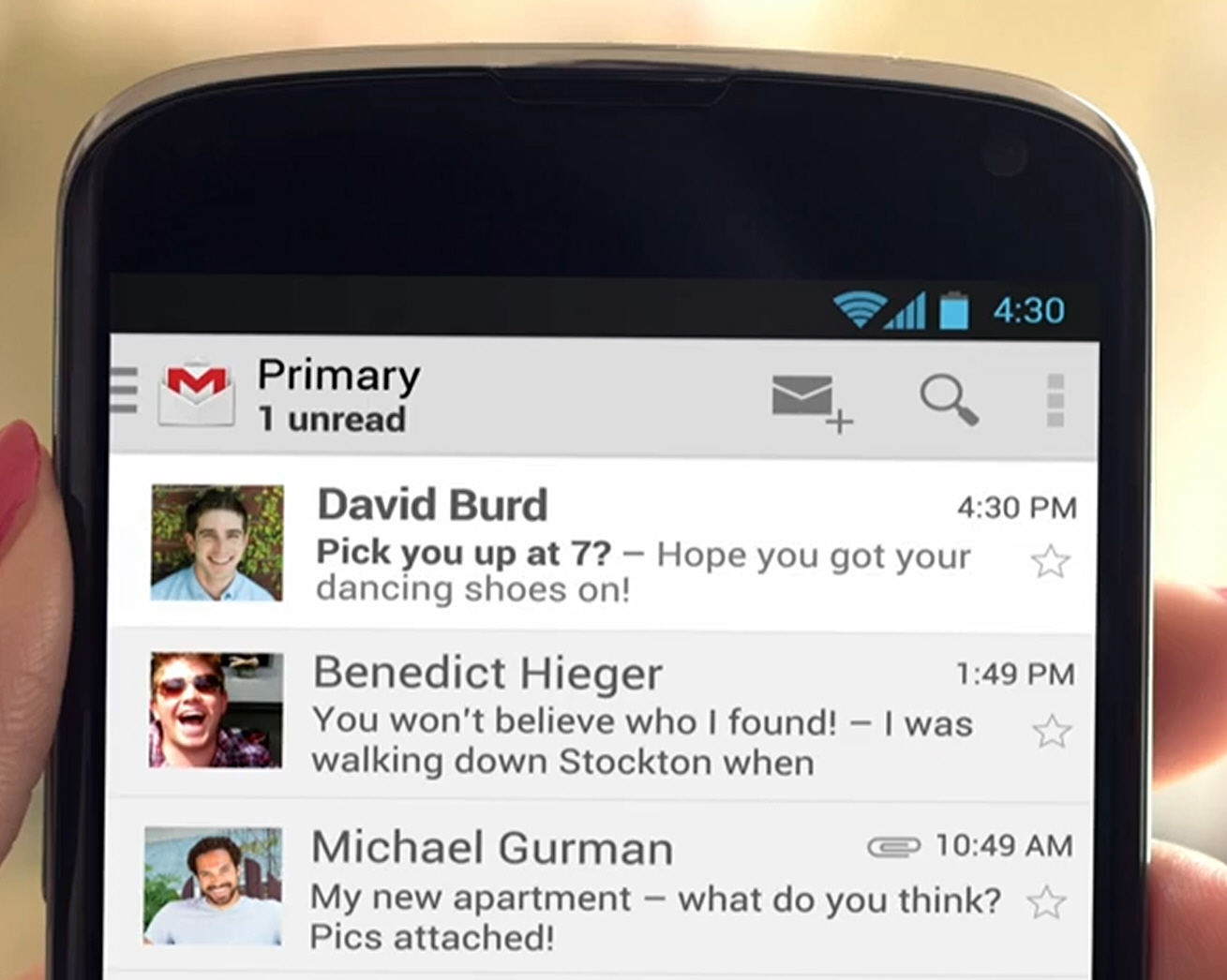
Google brings tabs to Gmail for web, iOS and Android
A move to Gmail frequently results in temporary disorientation. The labels feature takes getting used to, especially for those arriving from Outlook, which allows for the creation of folders. Now Google aims to clean things up a bit and help customers be better organized with the load of email received daily.
Itamar Gilad, Product Manager at Google, announces that "on the desktop, the new inbox groups your mail into categories which appear as different tabs. You simply choose which categories you want and voilà! Your inbox is organized in a way that lets you see what’s new at a glance and decide which emails you want to read when".

Google Reader, I'll follow you to the very end
On July 1 Google pulls the plug on Reader and, like many other users, I have decided not to be caught unprepared by its rapidly-approaching demise. Shortly after the search giant revealed its execution plans I migrated all my RSS feeds to Feedly, telling myself "OK, now's the time to move on". Skip forward a couple of months and Reader is still open in a Chrome tab.
I can't really move on. The RSS feed aggregator holds a very special place in my heart as I rely on it every single day to write news stories and catch up on things that I'm passionate about. It's like the perfect relationship except for that one tiny detail (huge actually) -- the expiration date is near.
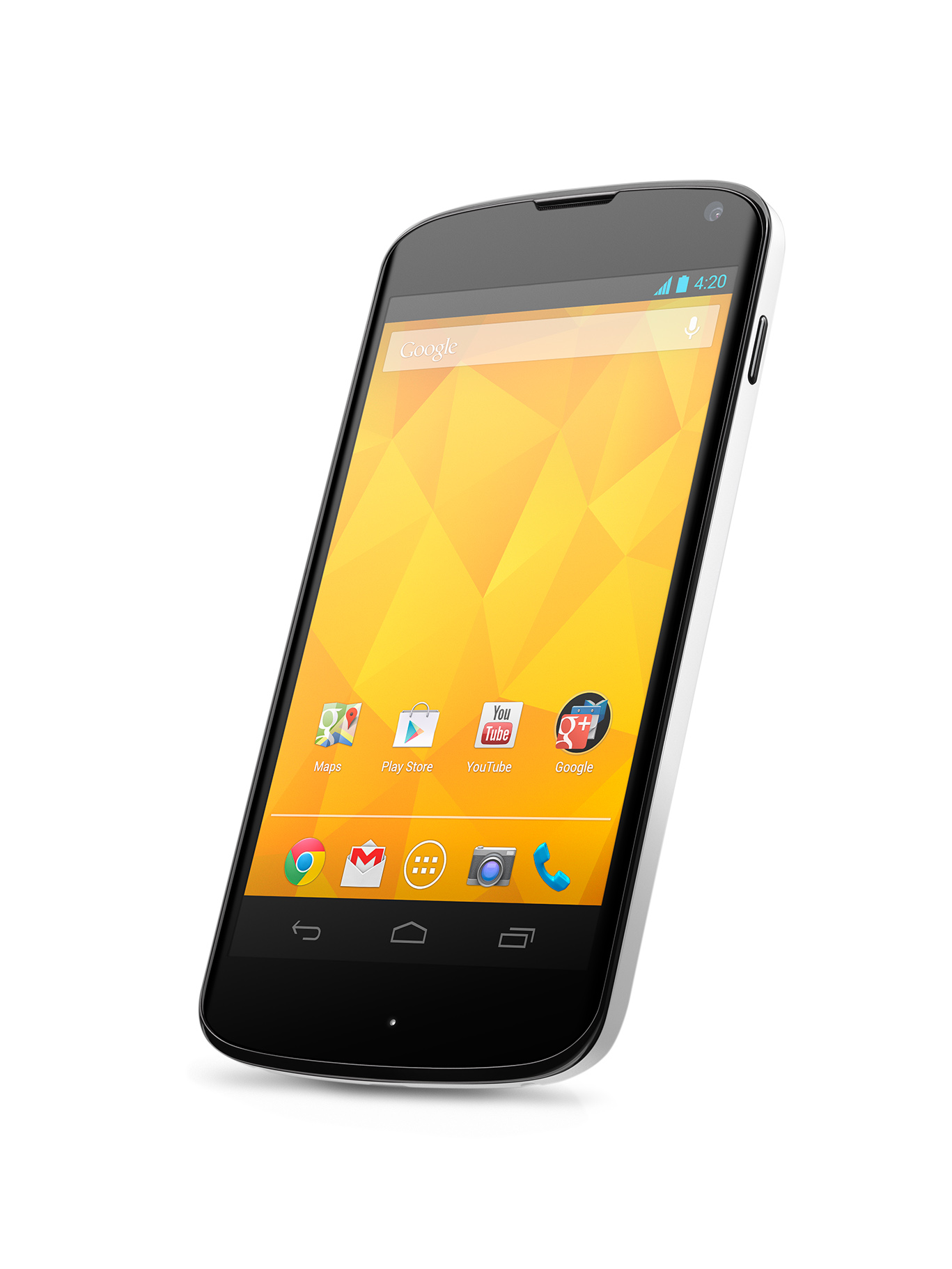
LG takes the wraps off Nexus 4 White
The rumors were true! On Tuesday, South Korean manufacturer LG revealed the new Nexus 4 White. The smartphone features the same hardware specifications as its black sibling, which was announced in late-October, and runs Android 4.2 Jelly Bean.
"Nexus 4 set the standard for Android 4.2 Jelly Bean smartphones", says LG's Jong-seok Park. "Nexus 4 White delivers the same Google experience to consumers in a stylish and attractive color option". The handset follows its predecessor, the Samsung-made Galaxy Nexus, in also sporting a white color trim.

Microsoft: Compliant YouTube Windows Phone 8 app coming, meanwhile take the dreadful old version back
Following a cease and desist letter sent by Google little over a week ago, today, Microsoft reaches out to me and announces a new update for its homebrew YouTube Windows Phone 8 app. You might want to contain that burning desire to hit the "Update" button though.
"Microsoft and YouTube are working together to update the new YouTube for Windows Phone app to enable compliance with YouTube’s API terms of service, including enabling ads, in the coming weeks", says the Redmond, Wash.-based corporation. This comes two days after the passing of the deadline to remove the app from the Windows Phone Store.

Canalys: BlackBerry and Windows Phone must prioritize 'app quality not quantity'
App store numbers grab headlines, but don't matter to users. Both BlackBerry and Windows Phone boast constant ecosystem growth with more than 100,000 apps available in each store, yet neither of the two platforms has managed to assert itself as a viable alternative to Android or iOS. Why? Well, Canalys says that it's the quality of the apps that matters not the quantity.
"At a certain point, how many apps are in a store becomes irrelevant. Offering 100 different unit converters or weather apps is not a valuable choice", says Canalys senior analyst Tim Shepherd. "What is now far more important for BlackBerry and Microsoft is to focus on plugging inventory gaps and making sure they offer the right apps; to focus on quality and local relevance, not quantity". According to the company's latest report, both BlackBerry and Windows Phone fail to offer many of the popular titles available today, hindering their appeal to potential users.
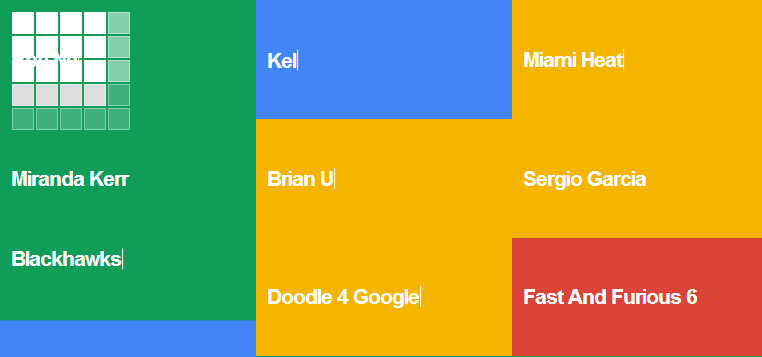
Spy on the world's web searches with a Google Trends screensaver
Google is all about searching. Well… not "all" about, but it's what the company is known for. Any firm that logs information about how customers are using its services are usually berated, but Google Trends can provide a fascinating insight into how the rest of the world is using the internet. This tool has been available for a while but there's now a sexy new full screen mode available -- and you can turn it into a screensaver.
If you've ever been curious about what people in other parts of the world are searching for, head over to the full screen visualization tool and you can find out. At the bottom of the screen you can choose from one of several countries, or opt to see an overview of global searches.

Android users rejoice! BBC iPlayer 1.7 brings support for your 10-incher
A week ago BBC iPlayer finally made its debut on Windows Phone 8, but the existing Android version has been far from forgotten about. BBC iPlayer 1.7 has hit Google Play and now boasts support for 10 inch tablets.
While owners of larger tablets previously had to pay a visit to the iPlayer website, UK viewers can now enjoy their favorite programmes directly in the app. If you're nursing a smaller 7-incher, there's no need to feel left out. The UI for more diminutive tablet and phones has been updated with a few tweaks as well.
Chrome for Android 27 introduces fullscreen on phones, tab history on tablets
Google has released Chrome for Android 27, a major update to its open-source browser for Android smartphones and tablets. Version 27 boasts several key new features, including full-screen support on smartphones and the ability to access a history of previously opened tabs on tablet machines.
A key improvement on all platforms is the simplified searching tool. When using the omnibox to search the net, it will remain visible when displaying search results, making it easier to both view and edit searches.

Google X acquires flying turbine company Makani
Google may be most readily associated with the Internet, apps and mobile devices, but the company has many more strings to its bow. Google X -- the secretive research and development division best known for Project Glass and the driverless car -- has acquired Mikani Power, a green energy company that generates power with flying turbines.
Ground-based wind turbines are common all over the world, but Mikani Power takes a slightly different approach. Using wings fitted with miniature turbines it is possible to generate power with a series of self-piloted kites. Successful tests have been conducted on a 30kW prototype model, with plans to scale up to 600kW in the future.

Kim Dotcom does the patent two-step to fund his trial
Kim Dotcom enters the spotlight once again after claiming that Google, Facebook, Citibank and Twitter, among others, infringe upon his patent for two-factor authentication. The man is one of the founders of controversial Megaupload and Mega cloud storage lockers and is currently under indictment in the US for copyright infringement.
Dotcom decided to reveal the alleged wrongdoing and mention the patent yesterday, after Twitter enabled the security feature: "Twitter introduces Two-Step-Authentication. Using my invention. But they won't even verify my Twitter account?!". The patent in question was filed in 1998 by Kim Schmitz (Dotcom's birth name) and is named "Method for authorizing in data transmission systems".

If Microsoft can’t beat them, it bashes them
Microsoft has been on a roll lately in its sad attempt to publicly bash Google. From the "Scroogled" campaign, to "Bing It On", the company is more focused on the current king of online search than solving its own problems. Focusing on Google internally is fine enough, but is classless to do so publicly. You should never have to bash a competitor’s products to further advance your own.
With that said, Microsoft continues the desperation in the latest Bing blog entry entitled “The Grand Bargain”. Stefan Weitz, Bing senior director, explains that your information being sold to advertisers is the price paid for Google services. However, Weitz further claims Microsoft does it too but it is OK because the software giant isn't "solely an advertising-driven company". This implies that Google is strictly an advertising-driven company. While advertising is a huge source of Google’s revenue, it is not the company's sole source. Microsoft's statement is simply not true.
Microsoft caves in, cripples YouTube for Windows Phone 8 with the latest update
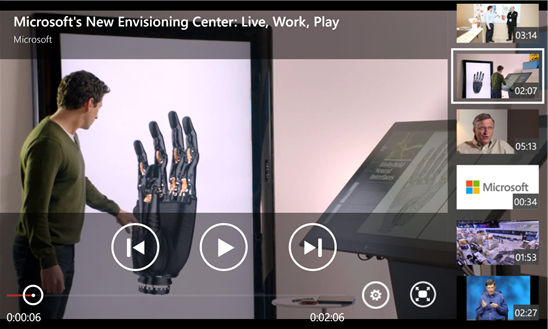
On Wednesday, Microsoft rolls out an update for its YouTube Windows Phone 8 app which takes away the ability to download content from the popular video-sharing website. The latest iteration arrives one week after Google sent Microsoft a cease and desist letter, demanding the removal of the app from the Store. The deadline passes today.
Google's grievances regarding the Microsoft-developed YouTube app focus on the removal of playback restrictions "on certain platforms", the lack of ads and the ability to download videos. Microsoft only resolved the third complaint and, despite the rapidly-approaching deadline, the company hints that YouTube will continue to be available to Windows Phone 8 users.
Google rolls out a 'smoother' Drive app for Android
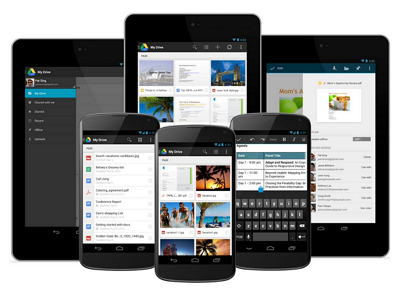
The competition for your cloud business continues between Google, Amazon, Microsoft, Dropbox, Box and other competitors. Today Google takes its next step, with an attempt to make the experience better for Android customers with, what it terms, a "smoother" experience.
The search giant claims that Drive files will now be displayed in a clean, simple card-style. This will allow users to swipe between files to see large previews that will permit them to quickly review and discover the information they are looking for. If a customer wishes to keep some Drive files on his or her Android device, they will now be able to "download a copy" from the actions menu inside settings.

KiSSFLOW adds quick action workflow buttons to Google Apps
Last week at Google's annual I/O conference in San Francisco the web giant launched a new feature called quick actions for Gmail which recognizes certain types of messages and lets you take immediate action on them directly from the inbox -- RSVP to an invitation, or quickly see flight info for example.
Third-party developers are able to add their own actions, and OrangeScape announces it is doing exactly that with its self-service workflow builder, KiSSFLOW.
Chrome 27 released, now 5 percent faster
Google has released Chrome 27 for Windows, Mac and Linux. And while the previous build was less than exciting, this one delivers multiple improvements which see the browser’s page display time improve by 5 percent.
Much of this acceleration is down to smarter scheduling, with Chrome 27 making more intelligent decisions about what it loads, and when. Previously, for instance, the browser might tie up bandwidth downloading a vast number of images in parallel. Now it focuses on visible images, and limits parallel downloads to a maximum of 10, so the details you need should be displayed noticeably faster.