
Brave browser accuses Google of using hidden web pages to track users
Google stands accused of using hidden web pages to circumvent EU privacy regulations, secretly sending users' personal data to advertisers.
The accusation comes from the privacy-focused Brave web browser which says it has, "uncovered what appears to be a GDPR workaround that circumvents Google's own publicly stated GDPR data safeguards". Evidence has been handed to the Irish Data Protection Commission that allegedly shows Google using hidden web pages to share data on its Authorized Buyers exhange, formally known as DoubleClick.

Firefox will improve battery life for MacBook users
macOS users who have been disappointed with the power consumption of Firefox have something to look forward to. Developers say that power usage has been dramatically reduced in the latest nightly build, meaning that when the release goes public, MacBook owners can expect to see a jump in battery life.
There have long been complaints about Firefox Quantum sapping batteries, and now it finally seems as though the problem has been addressed.

Facebook may hide Like counts
The Like button and its associated counter have become a quick and easy way to judge the popularity of Facebook posts and online content. But now the social network is considering hiding the Like counter.
Reverse engineering of the Facebook app revealed that Facebook is experimenting with the idea of keeping the number of Likes content has a secret, and it comes after the company introduced the same policy on Instagram.

New solution delivers improved website defenses
DDoS attacks remain a major problem for businesses and can have serious consequences.
Data center services supplier US Signal is launching a new cloud-based offering. Building on the company’s partnership with Cloudflare it delivers a robust, customizable service that protects organizations against online threats including DDoS, ransomware, malicious bots and application-layer attacks.

How to access Google's secret Wizard of Oz Easter egg
Yesterday was the 80th anniversary of the theatrical debut of the seminal movie The Wizard of Oz. To celebrate the release of the 1939 classic, Google has hidden a movie-related secret in its search engine.
Whether you're a friend of Dorothy, a lover of the cowardly lion, or just a hater of the Wicked Witch of the West, it's a cool little Easter egg that's well worth checking out. Repeat after me: "There's no place like home!"

Google Calendar spam is a thing; here's how to protect yourself
Spam is something we've become used to in our email inboxes as well as via SMS, but it's certainly not the only way we can be pestered, harangued and irritated. Even Google Calendar can be used to spam you with ads.
The phenomenon is not entirely new, but it has been in the spotlight recently. Google Calendar spam takes advantage of a default setting that Google puts in place. By disabling this, you can protect yourself against unwanted intrusions... but there are side-effects to consider.

Web host Hostinger resets 14 million customer passwords following data breach
Hosting company Hostinger has reset passwords for all of its customers after a data breach in which a database containing information about 14 million users was accessed "by an unauthorized third party".
Hostinger says that the password reset is a "precautionary measure" and explains that the security incident occurred when hackers used an authorization token found on one of the company's servers to access an internal system API. While no financial data is thought to have been accessed, hackers were able to access "client usernames, emails, hashed passwords, first names and IP addresses".

Google seeks to make the web more private for Chromium users with Privacy Sandbox
Google is not a company synonymous with privacy, but the company increasingly recognizes the importance people place on it. With this in mind, it has launched a new initiative called Privacy Sandbox which aims to increase online privacy.
The bold goal is to "develop a set of open standards to fundamentally enhance privacy on the web", and one of the first proposals seeks to limit online track of users. It will limit fingerprinting, change the way targeted advertising works, and more.

Privacy: Apple now treats WebKit tracking circumvention as a security issue
Apple has updated its WebKit policy, increasing the company's focus on privacy. The new WebKit Tracking Prevention Policy now states that any circumvention of its anti-tracking feature is treated in the same way, and as seriously, as security issues.
The aim is to prevent web tracking completely because "these practices are harmful to users because they infringe on a user's privacy without giving users the ability to identify, understand, consent to, or control them". Apple says it wants "to see a healthy web ecosystem, with privacy by design".

Americans would rather get food poisoning on vacation than not have internet access
I'm a big fan of raw clams and oysters on the half shell. For the most part, I have had a good experience eating them. True, eating raw mollusks is sort of like playing a game of Russian Roulette, but I have historically been very lucky. One time, however, I got violently sick -- the day before I was to take a plane from New York to Florida. Believe it or not, I still took the trip, but having intestinal distress when flying is absolutely horrid. Flight aside, I spent a good portion of my time in Florida in the fetal position, sweating and swearing off raw clams (I have since eaten them again).
Since I know how horrific food poisoning can be, I am quite perplexed by a new study commissioned by Roku. Apparently, Americans would rather get food poisoning while on vacation than not have internet access. Think about that for a second -- people would rather get violently ill while vacationing than not have access to Instagram and email. Really, America?

Verizon sells Tumblr to WordPress owner, Automattic
A mere two years after acquiring it, Verizon is selling Tumblr. Full details of the deal have not yet been revealed, but the micro-blogging service is being bought by Automattic, the company behind WordPress.
Tumblr came into the spotlight last year when it introduced a ban on all adult content, and anyone hoping for this to change is going to be disappointed. Automattic says the ban will remain in place.

The hard truth about mass shootings and the internet
"You can’t handle the truth!" That iconic line from the 90’s era Tom Cruise legal thriller, A Few Good Men, is what comes to mind as I mull over the headlines of the past few weeks. From El Paso, Texas to Dayton, Ohio, from Gilroy, California to Christchurch, New Zealand, sick and twisted individuals are committing horrendous acts of violence against innocents. And, as I struggle to understand the seemingly disparate motivations of these despicable individuals, a singular thought keeps popping into my head:
This sort of stuff didn’t happen before the internet.

Cloudflare terminates 8chan over links to mass shootings
Cloudflare has announced that it is terminating its services with controversial site 8chan. The move comes after the mass shootings in El Paso, Texas and Dayton, Ohio.
There have been numerous calls for 8chan to be taken offline in the past, and Cloudflare has previously considered removing its protective services from the site. What has now tipped the company's decision is the fact that the shooter at El Paso "appears to have been inspired" by 8chan, and even posted a racist manifesto on the site.
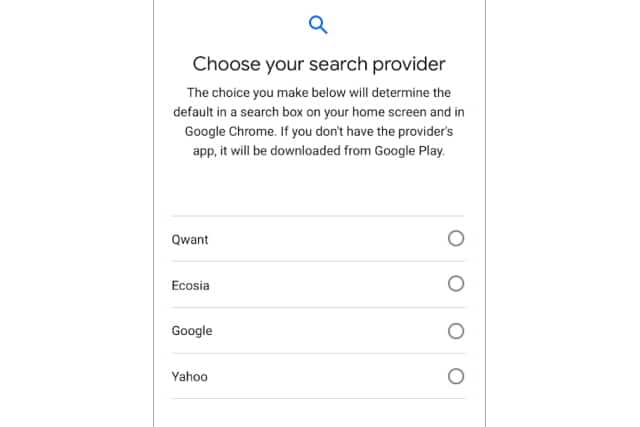
Google to let Android users in Europe choose their default search engine -- and will make money in doing so
In response to a $5 billion fine for antitrust violations in Europe, Google has announced that it will introduce a new "search engine choice" option next year. It's an idea that is similar to the Browser Choice screen Microsoft introduced following anti-competition complaints about Internet Explorer.
Google will "introduce a new way for Android users to select a search provider to power a search box on their home screen and as the default in Chrome (if installed)" in Europe starting in 2020. The search engines that appear in the list will be determined by auctions. Google rivals will have to bid to be featured in the list, meaning the company will -- controversially -- make money from giving users choice.

NordVPN brings WireGuard-based NordLynx to Linux users
NordVPN has announced an important new option for users of the Linux version of its eponymous VPN tool. The company is introducing a new technology called NordLynx which is based on the WireGuard protocol.
The company says that it successfully combines the highspeed connection offered by WireGuard with NordVPN's own privacy-protecting double NAT system.